
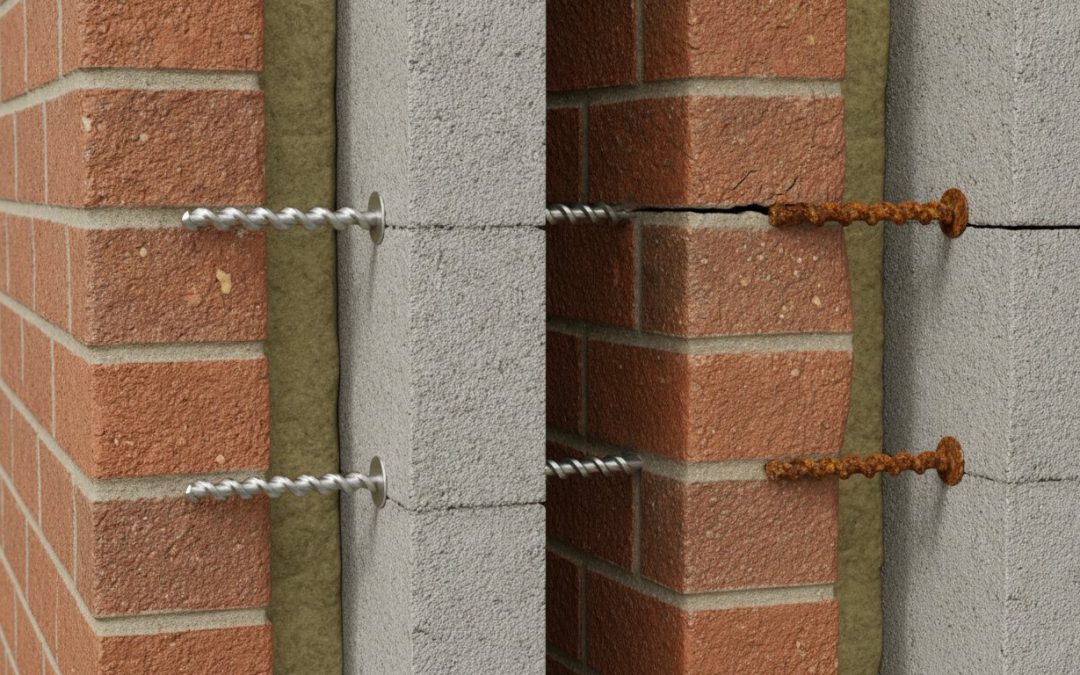
Could the very components holding your home’s exterior together be slowly deteriorating behind the brickwork? For many property owners, the first sign of trouble is a thin horizontal crack or a slight bulge in an external wall. You might find yourself asking what are wall ties and why they suddenly matter to your home’s safety. These small but essential metal connectors bridge the gap between your internal and external walls, providing the necessary structural link to keep the building stable. When they fail, usually due to corrosion in older mild steel ties, the results can be both visible and dangerous.
It’s understandable to feel concerned when technical survey reports mention structural instability or corrosion. You deserve a clear explanation that moves past the jargon and addresses the health of your property directly. This guide outlines the critical role wall ties play in maintaining structural integrity and teaches you how to spot the early warning signs of failure. We will cover the current standards for masonry structures, the difference between galvanised and stainless steel, and the non-disruptive methods specialists use to ensure your home remains a secure, long-term asset.
Key Takeaways
- Understand exactly what are wall ties and how these metal connectors serve as the internal skeleton that keeps your home’s masonry walls stable.
- Learn to recognize the visual indicators of structural failure, including horizontal mortar cracks and bulging brickwork caused by corroding metal.
- Discover why a professional wall tie survey using specialist borescope technology is the only reliable way to assess hidden structural health.
- Understand the remedial replacement process and how modern stainless steel ties provide a permanent solution for long term property safety.
- See how removing defective cavity insulation can prevent future corrosion and protect the structural integrity of your masonry.
Defining Wall Ties and Their Role in UK Cavity Walls
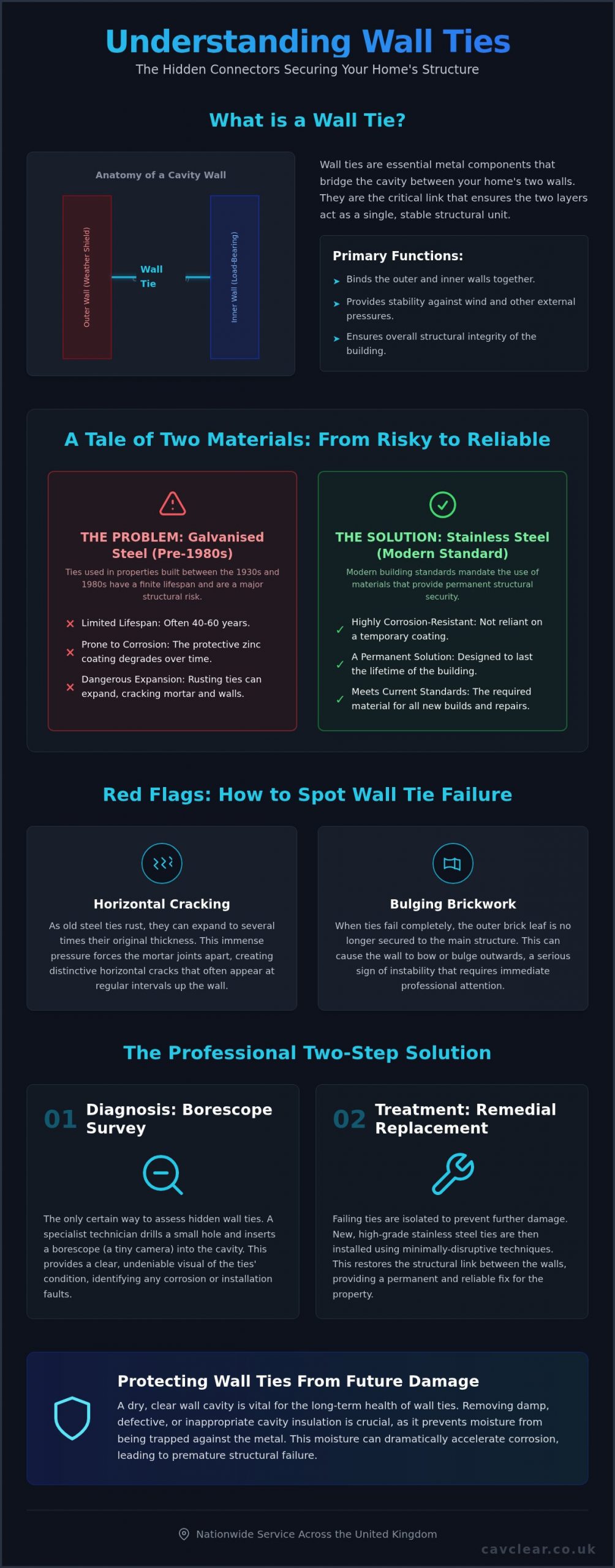
Understanding what are wall ties begins with looking at how modern British homes are built. Most properties constructed over the last century use a cavity wall design, which consists of two separate walls with a gap between them. A wall tie is the essential metal connector that prevents the outer brick leaf from collapsing outward or bowing. Without these ties, the outer layer of your home would essentially stand as a tall, thin, and unstable screen of masonry. By bridging the cavity, wall ties ensure that both leaves of the wall act as a single structural unit. This collective strength is vital for resisting wind loads and supporting the weight of the building. Beyond simple stability, these components are engineered to allow for the natural thermal expansion and contraction of the masonry, ensuring the facade remains intact as temperatures fluctuate throughout the year.
The Anatomy of a Cavity Wall
A standard cavity wall features an inner leaf and an outer leaf. The inner leaf is usually the load-bearing element, supporting the floors and roof, while the outer leaf serves as a weather-protecting shield. The air gap between them is crucial for UK homes because it prevents moisture from bridging across to the interior. Understanding what is a wall cavity helps explain why this gap is essential for weather resistance in our damp climate. Wall ties cross this gap at regular intervals, but they often include a drip feature to ensure water cannot travel along the tie from the wet outer leaf to the dry inner leaf. If this gap is compromised, the risk of damp and tie corrosion increases significantly.
A Brief History of Wall Tie Usage
The UK saw a significant shift from solid wall construction to cavity walls in the early 20th century as builders sought better ways to combat damp. As construction methods evolved, so did the regulations governing a Tie (cavity wall), including its material composition and spacing. Properties built between 1930 and 1980 represent a specific area of concern for structural specialists. During this period, ties were often made from mild steel with a thin galvanised coating. These materials have a finite lifespan, often between 40 and 60 years. As this protection fails, the steel beneath begins to rust. This corrosion causes the metal to expand, which eventually forces the mortar joints apart and compromises the structural integrity of the entire wall.
Modern building standards now require the use of stainless steel ties, which offer much higher resistance to the elements. However, for those living in older housing stock, knowing what are wall ties and how they were originally installed is the first step in identifying whether your property requires a professional structural assessment.
Types of Wall Ties and Materials Used in Construction
While the basic premise of what are wall ties remains consistent, their physical design has evolved significantly to meet changing building standards. In many older UK properties, you will find fishtail ties. These are heavy duty steel strips with split ends that resemble a fish’s tail, providing a robust mechanical grip within the mortar. Another common historical design is the butterfly tie, a wire based connector shaped like a figure eight. These were specifically designed to prevent moisture from tracking across the cavity by providing a minimal surface area for water to follow. Modern construction typically uses vertical twist ties. These designs offer superior grip and include a central twist that acts as a highly effective moisture shedder, ensuring water cannot reach the inner leaf.
The material used to manufacture these ties is the most critical factor in their long term performance. Early cavity walls relied on mild steel, which had almost no protection against the damp environment of a wall cavity. Later, builders used galvanised steel, which features a zinc coating intended to sacrifice itself to protect the steel core. However, this protection is temporary. Current standards, as detailed in Approved Document A (Structure), now mandate the use of austenitic stainless steel for most new builds and repairs. Stainless steel does not rely on a coating; its corrosion resistance is inherent throughout the metal, making it the only reliable choice for permanent structural stability.
Metal Corrosion: The Primary Enemy
Corrosion occurs when the galvanised coating on older ties eventually breaks down. This leaves the steel core vulnerable to oxygen and water, triggering a chemical reaction that creates iron oxide, or rust. This rust can expand up to ten times the original thickness of the steel. As the metal grows, it exerts tremendous upward pressure on the masonry, often lifting the bricks and causing horizontal cracks in the mortar joints. This is why stainless steel is now the industry standard for remedial wall ties, as it eliminates the risk of expansive corrosion and protects the building’s future value.
Design Features for Moisture Control
Every wall tie includes a ‘drip’ feature located in the centre of the cavity. This is a deliberate bend or twist designed to force any water travelling along the tie to drop off into the cavity base rather than reaching the internal wall. Problems arise when poor workmanship allows mortar droppings to accumulate on the ties during construction. These ‘mortar bridges’ create a direct path for penetrating damp, bypassing the cavity’s natural protection. If you suspect your property is suffering from damp or structural movement, a professional wall tie survey can identify whether your ties are still performing their dual role of providing stability and moisture control.
Identifying the Signs of Wall Tie Failure and Corrosion
Wall tie failure is often a ‘silent’ issue that only becomes visible once structural damage is advanced. Because the corrosion occurs within the dark, damp environment of the wall cavity, the metal can degrade for decades without any obvious external symptoms. By the time a homeowner notices a change in their brickwork, the structural integrity of the facade may already be compromised. Understanding what are wall ties and how they fail is vital for early detection, as the most common visual indicator is horizontal cracking in the mortar joints. These cracks appear because the iron oxide from corroding mild steel ties occupies more space than the original metal, physically lifting the bricks above them.
Beyond cracking, you might observe a bowing or bulging of the external brickwork leaf. This happens because the ties lose their ‘pull’ strength or snap entirely, leaving the outer wall without its necessary lateral restraint. In severe cases, this lack of connection causes the masonry to lean away from the building’s frame. You should also look for the separation of window frames or door reveals from the surrounding masonry. As the outer leaf moves, it pulls away from the internal structures, creating gaps that allow draughts and water to enter the home. Knowing what are wall ties and recognizing these patterns allows you to act before the damage becomes catastrophic.
Visual Red Flags for Homeowners
When inspecting your property, pay close attention to the ‘lifts’ of the brickwork. Rhythmic horizontal cracks that appear every 4 to 6 courses are a classic sign of expansive tie corrosion. You should also check for sagging lintels above windows or cracks appearing near the roofline, which suggest the outer leaf is no longer properly supported. These structural shifts often create pathways for water, leading to internal dampness. If you notice unexplained moisture on your interior walls, a professional damp survey can help determine if failing ties are the underlying cause.
The Role of Cavity Insulation in Failure
Retrospective cavity wall insulation is a significant factor in accelerated wall tie failure. While intended to save energy, these materials often trap moisture against the metal ties, creating a permanently wet environment. This constant exposure to dampness speeds up the corrosion process in older galvanised ties, leading to structural issues much sooner than expected. Because of these severe structural risks, CavClear maintains a strict stance against recommending retrospective insulation. We focus on restoring the health of the cavity by removing wet or defective material to protect the long term stability of your property.
How a Professional Wall Tie Survey Identifies Hidden Issues
Identifying structural issues requires more than a casual glance at the brickwork. While homeowners can spot red flags, a specialist uses a methodical diagnostic process to confirm what are wall ties doing inside your specific cavity. An external visual inspection serves as the first step, where we map crack patterns and identify subtle wall movements that suggest the outer leaf is detached. We then use high-precision metal detection to locate every tie within the masonry. This allows us to verify if the original builders adhered to the correct spacing and density requirements, or if previous repairs were inadequate. This methodical approach ensures that we base our recommendations on the actual condition of the building’s skeleton.
The gold standard for structural diagnostics is the borescope inspection. Endoscopic cameras allow specialists to see the condition of the ties inside the cavity without removing bricks. This non-invasive approach provides a clear view of the metal surface, showing whether the protective coatings are intact or if the steel has begun to flake and expand. It’s a precise methodology that removes the guesswork from property maintenance, framing the survey as a vital investment in the property’s future health rather than a mere expense. By seeing the fault directly, we can specify a solution that addresses the exact degree of decay found within the walls.
The Borescope Inspection Process
During the borescope inspection, our technicians drill small, discreet holes in the mortar joints to insert the camera lens. We evaluate the degree of corrosion based on industry-standard grading scales, typically ranging from grade 1, where the tie is clean and unaffected, to grade 4, which indicates advanced failure and significant metal loss. This process also allows us to check for ‘snots’, which are excess mortar droppings that can bridge the cavity, and the condition of any existing insulation. Identifying these hidden factors is essential for determining why the ties are failing and whether moisture is bridging the cavity to cause internal damp.
Why Independent Specialist Surveys Matter
Choosing an independent specialist survey is critical for receiving an unbiased assessment of your property’s health. You should avoid the pitfalls of ‘expert’ surveys that may lack technical rigor or serve as a simple lead-generation tool for general building contractors. A professional survey provides a detailed, written report with photographic evidence, which is essential for buyers, sellers, and mortgage lenders who require documented proof of structural stability. This transparency ensures that any remedial work is based on fact, not speculation, protecting your long-term asset health and restoration of comfort. If you suspect your home’s integrity is at risk, you can arrange a professional wall tie survey with our accredited nationwide team today.
Remedial Wall Tie Replacement: Restoring Structural Stability
Once a survey confirms failure, the focus shifts to a permanent structural remedy. Understanding what are wall ties in a remedial context means looking at how we restore the connection between the inner and outer leaves without damaging the existing masonry. We follow a strict three-step process: isolation, replacement, and making good. Simply adding new ties is insufficient. We must isolate the old, corroding ties, typically by using a metal detector to locate them and then applying an isolation sleeve or removing the corrosive material. This prevents the expanding iron oxide from continuing to crack your mortar joints, a problem that persists if old ties are left active within the wall.
Modern remedial techniques allow us to perform these repairs with minimal disruption to your daily life. We drill small, precise entry points into the mortar joints, install the new stainless steel ties, and then colour-match the mortar to ensure the repair is virtually invisible. This meticulous approach preserves the aesthetic value of your home while reinforcing its structural skeleton. By choosing the correct methodology, we transform a failing facade back into a stable, single structural unit that can withstand the elements for decades to come.
Remedial Tie Installation Techniques
The choice of tie depends on the specific masonry type found during our initial inspection. Mechanical expansion ties are ideal for solid brick and blockwork, as they use a torque-driven mechanism to grip the walls securely. For more fragile structures or perforated bricks, we use resin-bonded or chemical ties. These rely on a high-strength adhesive that creates a secure bond without exerting internal stress on the brickwork. Precision is vital during this stage. Our technicians ensure every tie is embedded at the correct depth in both leaves to meet current structural standards and provide maximum lateral restraint. Knowing what are wall ties and which type fits your home is the difference between a temporary fix and a permanent solution.
Long-Term Asset Protection
Investing in high-grade stainless steel wall ties is a decision that protects your property’s future. Unlike the mild steel used in the mid-20th century, stainless steel provides permanent resistance to corrosion. This ensures that the structural integrity of your home is no longer a source of stress. This work is a vital investment in your property’s health and market value, as a house with a documented history of professional remedial work is far more attractive to future buyers and mortgage lenders. We take pride in rectifying poor workmanship and restoring the safety of homes across the country. Protect your property’s future by booking a specialist wall tie survey with our nationwide team.
Securing Your Home’s Structural Future
Understanding what are wall ties is the first step toward maintaining a safe and stable home. These essential components act as the internal skeleton of your property, and their health directly impacts the long-term longevity of your masonry. By recognizing the early signs of corrosion and moving beyond visual guesswork with specialist borescope diagnostics, you can address structural faults before they become costly emergencies. Our accredited remedial technicians utilize a clean, non-disruptive methodology to restore structural integrity, ensuring your property remains a secure asset for years to come.
With our nationwide UK coverage, expert help is always available to provide the technical clarity and professional resolution you need. You don’t have to face structural uncertainty alone; the right diagnostic approach removes the stress of property maintenance. Secure your home’s structural integrity with a CavClear wall tie survey and take the proactive step toward restoring your peace of mind today. Your home deserves the protection of a permanent, specialist fix that prioritizes safety and structural excellence.
Frequently Asked Questions
How long do wall ties usually last in a UK home?
The lifespan of these connectors depends heavily on the material used during construction. Older mild steel ties with a thin galvanised coating typically last between 40 and 60 years before corrosion begins to compromise their strength. In contrast, modern austenitic stainless steel ties are engineered to last the lifetime of the building, providing a permanent solution for structural stability. When asking what are wall ties in the context of older properties, it’s vital to remember that many are now reaching the end of their functional life.
Can I see wall ties from the outside of my house?
No, you cannot see the ties directly because they are embedded within the mortar and hidden inside the cavity. However, you can spot the physical symptoms of their failure. Look for horizontal cracks appearing every few courses of brickwork or visible bulging in the external wall. A specialist uses metal detectors and borescopes to locate and inspect them without causing damage to your facade, providing a clear view of their condition behind the brickwork.
What happens if I ignore failing wall ties?
Ignoring the signs of failure leads to progressive structural instability that won’t resolve itself. As the ties continue to rust and expand, they force mortar joints apart and cause the external brick leaf to bow or lean away from the building’s frame. In extreme cases, the outer wall can collapse entirely during high winds or storms. This poses a significant safety risk to residents and can lead to far more expensive emergency reconstruction costs.
Does wall tie replacement cause a lot of mess or disruption?
Modern remedial techniques are clean and remarkably non-disruptive to your daily routine. Specialists drill small, discreet holes into the mortar joints to install the new stainless steel ties, which means no bricks need to be removed. Once the installation is complete, the technicians fill the entry points with colour-matched mortar. This process makes the repair virtually invisible and ensures your property remains tidy throughout the project.
Will failing wall ties affect my ability to get a mortgage or sell my house?
Yes, structural issues like failing ties are frequently flagged during pre-purchase surveys. Mortgage lenders often view these faults as a risk to their security and may withhold funds until a specialist report is provided or repairs are completed. Addressing these issues early protects your property’s market value. It also ensures a smoother transaction for both buyers and sellers by providing documented proof of structural integrity.
How much does a typical wall tie survey cost in 2026?
Survey costs vary depending on the size and location of the property. You should view a professional assessment as an essential investment in your property’s long-term health rather than a simple expense. A specialist survey provides a detailed diagnostic report with photographic evidence from borescope inspections. This level of detail is far more reliable than a visual estimate from a general builder and is often required by lenders and insurers.
Can cavity wall insulation cause my wall ties to rust faster?
Yes, retrospective cavity wall insulation often traps moisture against the metal ties, creating a permanently damp environment within the wall. This constant moisture exposure causes older galvanised ties to corrode much faster than they would in a clear, ventilated cavity. We frequently see cases where defective insulation leads to premature structural failure, which is why we maintain a strict stance against its installation and focus on its safe extraction.
Is wall tie replacement a DIY job for a confident homeowner?
No, wall tie replacement is a complex structural repair that requires specialist equipment and calibrated installation. Confident homeowners may misidentify what are wall ties appropriate for their specific masonry or fail to embed them at the correct depth, which can compromise the building’s safety. Professional technicians use borescope technology to ensure every tie is correctly installed and that the old, corroding ties are properly isolated to prevent further cracking.
Recent Comments