
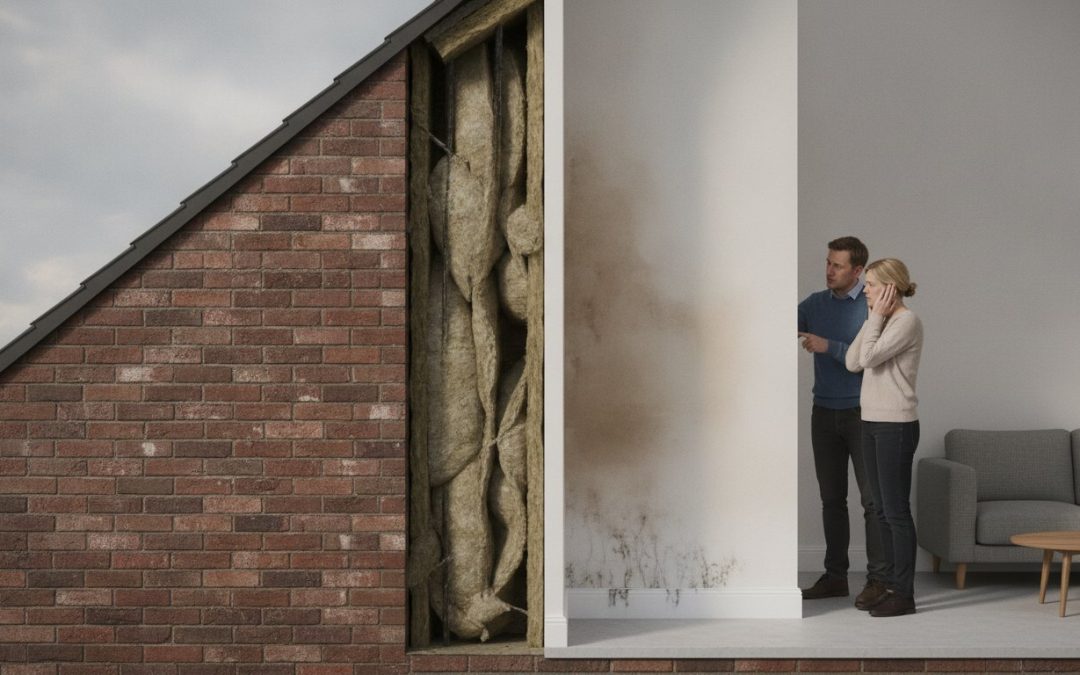
Your home’s insulation is intended to be a thermal barrier, but for many UK property owners following the record wet winter of 2025-2026, it has become a significant structural liability. It’s disheartening to face persistent black mould growth and high heating bills when you’ve already taken steps to protect your home. Recognising the specific signs of failed cavity wall insulation is the first step toward restoring your property’s health and structural integrity.
We understand the stress that unexplained cold spots and dampness cause, and we’re here to provide a clear, expert diagnosis. This 2026 guide will help you identify the critical warning signs of defective material and explain the professional, non-disruptive steps required to rectify the issue. You’ll learn why material settlement occurs, the risks of leaving saturated insulation in situ, and how specialist extraction provides a permanent solution for your property’s future. We’ll also look at how recent standards like PAS 2035 and Awaab’s Law are shifting the focus toward better property maintenance and long-term asset health across the country.
Key Takeaways
- Learn how to spot the primary signs of failed cavity wall insulation, including persistent internal damp patches and black mould growth that indicates a breach in your property’s thermal barrier.
- Understand how defective insulation materials can act as a bridge for moisture, transferring external dampness directly to your internal walls during periods of heavy, wind-driven rain.
- Identify the hidden structural risks associated with wet cavity fill, such as the accelerated corrosion of wall ties which can lead to significant masonry cracking.
- Discover why a professional borescope inspection is the most effective, non-disruptive method for diagnosing the condition of your insulation and the health of your wall ties.
- Recognise why specialist cavity wall insulation extraction is often the only permanent solution to restore your home’s structural integrity and long-term asset value.
Identifying the Primary Signs of Failed Cavity Wall Insulation
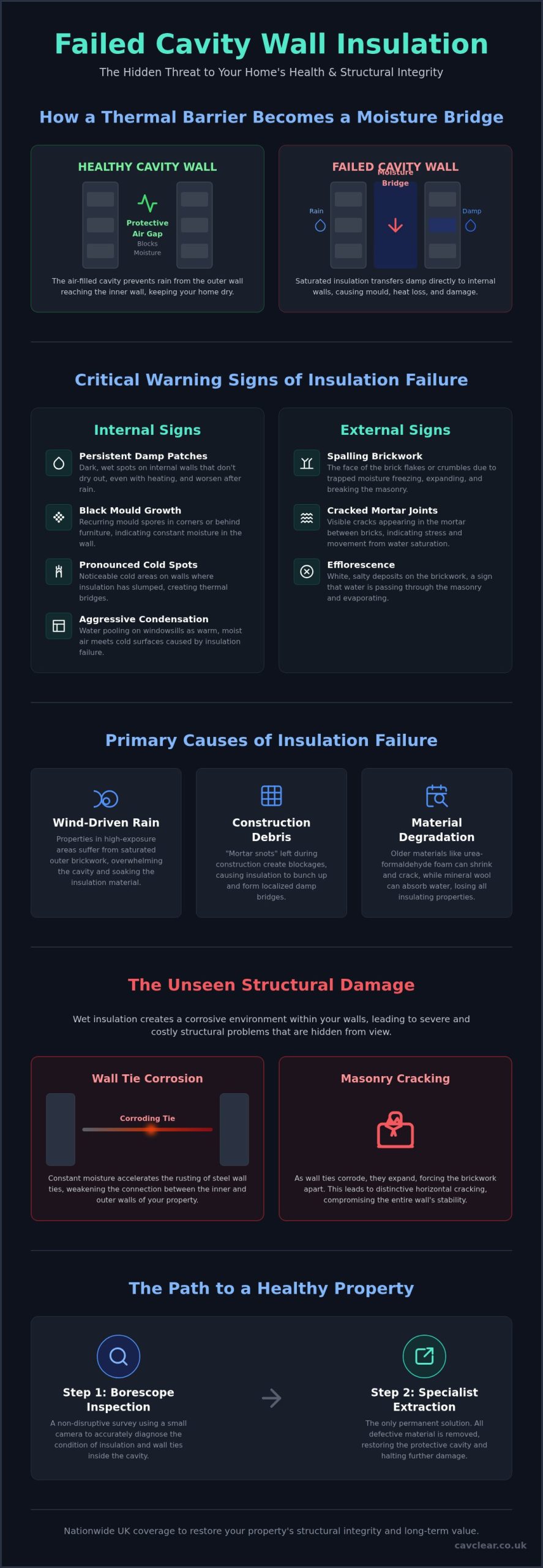
A standard cavity wall is designed to act as a weather barrier, using an air gap to prevent moisture from traveling from the outer leaf to the inner leaf of a property. When insulation is retrospectively installed and subsequently fails, it creates a physical bridge that allows water to migrate directly into your living space. Recognising the signs of failed cavity wall insulation early is vital to prevent long-term structural decay and the degradation of your home’s internal environment.
Common indicators of a failing system include:
- Persistent damp patches: These often appear as dark, wet spots on internal walls. Unlike surface condensation, these patches remain even when the heating is active and typically worsen after heavy rainfall.
- Rapid black mould growth: Mould thrives in damp, stagnant conditions. If you notice recurring spores in corners or behind furniture, it suggests the wall behind is holding significant moisture, often due to saturated mineral wool.
- Pronounced cold spots: These occur when insulation has slumped or was never correctly distributed. You’ll feel a sharp drop in temperature on specific areas of the wall compared to the surrounding surface.
- Aggressive condensation: Failed insulation disrupts the thermal balance of a room. This often leads to water pooling on windowsills and dampness forming on the walls as warm air hits the cold, uninsulated sections of the masonry.
Visual Clues on the External Masonry
The condition of your external brickwork often reveals what’s happening inside the cavity. One common sign is ‘spalling’, where the face of the brick begins to flake or crumble. This happens because moisture trapped within the insulation undergoes a expertze-thaw cycle, expanding and breaking the masonry from within. You might also notice cracked mortar joints or white, salty deposits known as efflorescence. These indicate that water is saturating the outer leaf and likely penetrating the insulation layer, compromising the property’s structural integrity.
Internal Décor and Comfort Issues
Inside the home, the damage often manifests as peeling wallpaper or bubbling paintwork. This isn’t just an aesthetic problem; it’s a sign that moisture is being pushed through the plasterboard by the saturated material within the wall. Many homeowners report a persistent musty smell that lingers despite regular ventilation. You may also experience drafts. While it seems counterintuitive for an insulated home, voids in failed material allow air to circulate within the cavity, creating convection currents that pull heat away from your rooms. Our nationwide teams frequently find that these issues are exacerbated in properties exposed to high winds and driving rain across the UK.
Understanding Why Cavity Wall Insulation Issues Occur
Cavity wall insulation failure occurs when the material within the wall transitions from being a thermal insulator to a moisture bridge. In a healthy property, the air gap between the two masonry leaves prevents water from crossing into the interior. However, when insulation becomes saturated or degrades, it facilitates the continuous transfer of dampness. This process is frequently cited among the Top 5 problems with cavity wall insulation, as it fundamentally compromises the original design of the building.
A primary driver for these issues across the United Kingdom is wind-driven rain. Properties in high-exposure zones, particularly in coastal or elevated areas, face intense weather that can saturate the outer masonry. If the cavity is filled with absorbent material, this moisture has nowhere to go but inward. Structural debris, often referred to as “mortar snots,” also plays a significant role. These droppings, left behind during the original construction, create catch-points for insulation, leading to uneven distribution and localized damp bridging.
Older materials are especially prone to failure. Urea-formaldehyde foam, common in previous decades, tends to shrink and crack over time, creating gaps. Similarly, loose-fill mineral wool installed in the 1980s and 1990s can absorb significant amounts of water if the outer leaf is breached. If you suspect your property is suffering from these issues, a professional cavity wall survey can provide a definitive diagnosis of the material condition.
Poor Installation Practices and Voids
The “slumping” of insulation is a frequent cause of thermal failure. Over time, gravity and moisture cause the material to settle at the bottom of the cavity, leaving empty pockets at the top of the walls. These voids create cold bridges where internal heat escapes and condensation forms. Conversely, over-packing material during installation is equally hazardous. It reduces the natural breathability of the wall and traps moisture against the inner leaf, accelerating the signs of failed cavity wall insulation such as internal damp and mould.
Geographic and Structural Unsuitability
Not every property is a candidate for retrospective insulation. Buildings in exposed western coastal regions or high-altitude sites are at a much higher risk of failure due to the sheer volume of rain they endure. Certain porous brick types also absorb moisture more readily, making the internal cavity fill vulnerable to saturation. Many failures are also linked to blocked air bricks or insufficient ventilation, which prevents the cavity from drying out naturally after wet weather. This lack of airflow ensures that any moisture entering the cavity remains trapped against the structural timbers and wall ties.
The Hidden Risks to Structural Integrity and Wall Ties
While surface dampness is a serious concern, the most significant threat posed by saturated material is the accelerated degradation of the building’s internal skeleton. Cavity walls rely on metal wall ties to bind the outer masonry leaf to the inner structural wall. When insulation fails and becomes waterlogged, it holds moisture directly against these metal components, creating a permanently corrosive environment. This trapped moisture triggers oxidation, transforming a simple insulation failure into a serious structural liability that compromises the safety of the entire property.
As steel wall ties corrode, the resulting iron oxide occupies a much greater volume than the original metal. This expansion exerts immense pressure on the surrounding mortar, leading to horizontal cracking along the bed joints. If left unaddressed, this structural instability can significantly impact the property’s marketability and long-term asset value. Specialist surveyors frequently identify these defects during pre-purchase inspections, often resulting in lower valuations. Addressing the root cause through a clean and non-disruptive extraction is the only way to halt this cycle of structural decay.
Wall Tie Corrosion and Its Consequences
Corrosion often presents as ‘stepped’ or horizontal cracking in the external brickwork, which are clear signs of failed cavity wall insulation affecting the structural core. Because the wet material prevents the ties from remaining dry and protected, the metal continues to weaken regardless of external weather conditions. We strongly recommend a professional cavity wall tie inspection whenever insulation failure is suspected. This allows our technicians to assess the level of oxidation and determine if a full wall tie replacement is necessary to restore the building’s stability and ensure it remains a safe investment.
Masonry Damage and Spalling
The presence of wet insulation also triggers the damaging expertze-thaw cycle within the walls. During cold winters, the water trapped in the material expands as it turns to ice, exerting outward pressure that causes the brick faces to flake or crumble, a process known as spalling. This results in the loss of the ‘outer leaf’ protection, making the wall even more porous and susceptible to further water ingress. Many property owners attempt to mask these signs of failed cavity wall insulation with surface repointing. However, without removing the saturated core, the internal moisture remains trapped, and the structural degradation continues unabated. Professional extraction ensures the masonry can breathe and dry naturally, preserving the long-term health of the property.
Professional Surveys: Identifying the Extent of Insulation Failure
A professional diagnosis is the only way to confirm if the issues you’re seeing are indeed signs of failed cavity wall insulation. Because dampness can originate from multiple sources, it’s vital to conduct an independent damp survey before committing to any remedial work. This process allows our technicians to rule out alternative causes like rising damp or simple plumbing leaks, ensuring the focus remains on the structural health of your walls.
Our specialists employ a range of non-destructive tools to map out the condition of the hidden cavity. Thermal imaging cameras are particularly effective; they detect temperature differentials across the wall surface, pinpointing exact areas where insulation has slumped or become saturated with water. We supplement this with moisture meters to measure the humidity levels within the masonry. These technical readings provide an objective data set that moves beyond visual guesswork, allowing for a precise assessment of the property’s environmental state.
If you’re concerned about the integrity of your home’s thermal barrier, you can book a nationwide cavity wall survey to receive a definitive report on your property’s condition.
The Borescope Inspection Process
The most reliable method for inspecting the internal cavity is a borescope inspection. This involves drilling small, discreet holes into the mortar joints, through which a high-definition camera is inserted. This technique is entirely non-disruptive and allows technicians to see exactly what’s happening inside the wall. We can identify the specific type of insulation used, observe if it has settled into dense clumps, and check for “mortar snots” or construction debris that might be trapping moisture. This visual evidence is the cornerstone of a reliable diagnostic process.
Technical Reporting and Remedial Plans
Following the inspection, you’ll receive a detailed technical report. This document includes photographic evidence from the borescope and a map of moisture readings across the property. A clear remedial action plan is essential, not just for your peace of mind, but also for property records and future resale. It’s important to distinguish between insulation failure and black mould caused by internal lifestyle factors like poor ventilation. Our reports provide the transparency needed to justify a professional extraction, ensuring that the solution addresses the root cause rather than just the symptoms.
Cavity Wall Insulation Removal: The Path to a Healthy Property
Surface-level treatments like specialist damp-proof paint or external repointing fail to address the core issue of defective material. When the signs of failed cavity wall insulation manifest as internal damp and mould, the only permanent solution is the physical extraction of the saturated material. Leaving wet insulation in situ ensures that moisture continues to bridge the gap between your masonry leaves, regardless of how many cosmetic repairs you perform. Our nationwide technicians focus on a clean and non-disruptive methodology to restore your home’s structural health.
Professional cavity wall insulation removal is an engineering process designed to return your property to its original design specifications. By clearing the wall cavity, we reinstate the vital air gap that prevents moisture transfer. This restoration allows the inner leaf of the property to remain dry, protecting your internal décor and, more importantly, your long-term asset value. We view this service not as a simple repair, but as a vital investment in the property’s future structural integrity.
The Extraction Methodology
The extraction process begins with the strategic removal of specific bricks at the base of the wall to create extraction points. We then use high-pressure compressed air through the existing injection holes to agitate and break down the defective material. Industrial vacuums simultaneously pull the debris out from the bottom of the cavity. This top-to-bottom approach ensures that every trace of saturated mineral wool or degraded foam is cleared. Our specialists take particular care to remove “mortar snots” and other construction debris that may have caused localized moisture bridging. This thorough cleaning is essential to prevent the recurrence of damp issues once the project is complete.
Post-Extraction Drying and Protection
Once the cavity is empty, the drying process begins naturally. Depending on the level of saturation, it can take several months for the masonry to release all trapped moisture. We reinstate the access bricks and mortar using materials that match your property’s existing aesthetics, ensuring the repair is virtually invisible. The long-term benefits of this process extend beyond just solving dampness. You will notice improved internal air quality as mould spores are eliminated at the source. Furthermore, removing the moisture source halts wall tie corrosion, preserving the structural safety of the building. This methodical approach provides the long-term assurances every property owner needs to move forward with confidence.
Restoring Your Home’s Structural Integrity
Identifying the signs of failed cavity wall insulation is the first step toward safeguarding your property from long-term environmental and structural damage. Whether you’re dealing with persistent black mould or the hidden threat of wall tie corrosion, these issues require a specialist’s attention to prevent further masonry decay. A professional diagnosis ensures you aren’t just treating the symptoms but addressing the root cause within the wall structure itself.
Our nationwide specialist technicians provide the clarity needed through detailed technical property reports and clean, non-disruptive extraction technology. We focus on restoring the health of your home by returning the cavity to its original, functional state. This methodical approach protects your asset’s value and ensures a dry, comfortable living space for the future. Take the proactive step to secure your building’s future today.
Book your professional cavity wall survey with CavClear today and receive the expert guidance necessary to protect your home. We’re here to provide the permanent fix your property deserves.
Frequently Asked Questions
Can failed cavity wall insulation cause health problems?
Yes, failed insulation is a primary cause of internal dampness and black mould growth. These conditions release spores into the air that can lead to respiratory issues, allergies, and asthma. Recent standards like Awaab’s Law emphasize the necessity of addressing these hazards promptly. Removing saturated material eliminates the damp environment where mould thrives, significantly improving your home’s air quality and protecting the health of all occupants.
How long does it take to remove failed cavity wall insulation?
A typical semi-detached property usually takes between one and two days to complete. The exact duration depends on the volume of material and the accessibility of the elevations. Our technicians use high-pressure compressed air and industrial vacuums to ensure the process is efficient and thorough. Larger detached homes or properties with complex structural layouts may require additional time to ensure the cavity is completely cleared of all debris.
Will my house be colder after the insulation is removed?
You won’t notice a significant drop in temperature because failed insulation has already lost its thermal efficiency. When material is saturated, it actually pulls heat away from the inner leaf through conduction, making the room feel colder. Removing the wet bridge allows your masonry to dry out and function as originally intended. Most homeowners find their property feels warmer and more comfortable once the damp material is professionally extracted.
Can I just repoint my house to stop the damp instead of removing the insulation?
Repointing is a surface-level fix that cannot resolve internal insulation failure. While it may slow down future water ingress, it doesn’t remove the moisture already trapped within the cavity. Saturated insulation will continue to transfer dampness to your internal walls regardless of the mortar’s condition. Physical extraction is the only permanent solution to break the moisture bridge and protect your property’s structural integrity from long-term decay.
Does the removal process create a lot of mess or damage to the bricks?
The extraction process is designed to be clean and non-disruptive to your daily life. We remove a small number of bricks at the base of the wall to create extraction points, which are later reinstated to match your existing masonry. All material is contained within a sealed vacuum system, preventing debris from entering your garden. Our methodology prioritises the preservation of your property’s aesthetics while ensuring a thorough internal clean of the cavity.
Is it possible for only part of the insulation to fail?
It’s common for insulation to fail in specific areas, such as high-exposure gable ends or around windows. However, once moisture enters the cavity, it often travels through the material. Identifying localized signs of failed cavity wall insulation during a survey is crucial. Even if the failure appears partial, we usually recommend a full extraction to ensure no pockets of saturated material remain to cause future damp or wall tie corrosion.
What happens if I leave wet cavity wall insulation in my walls?
Leaving saturated material in situ leads to progressive structural damage. The constant moisture accelerates wall tie corrosion, which can cause horizontal cracking and masonry instability. It also encourages persistent mould growth and can lead to timber rot in floor joists or skirting boards. Over time, the cost of structural repairs will significantly exceed the cost of timely insulation extraction, making it a vital investment in your property’s future health.
How do I know if the damp is from the insulation or a leaking pipe?
A professional survey is the most reliable way to distinguish between these issues. Leaking pipes typically cause localized, intense dampness that doesn’t fluctuate with the weather. In contrast, the signs of failed cavity wall insulation often worsen during periods of wind-driven rain and affect larger sections of the wall. We use borescope cameras and moisture meters to provide a definitive diagnosis, ensuring you address the correct problem without unnecessary expense.
Recent Comments