
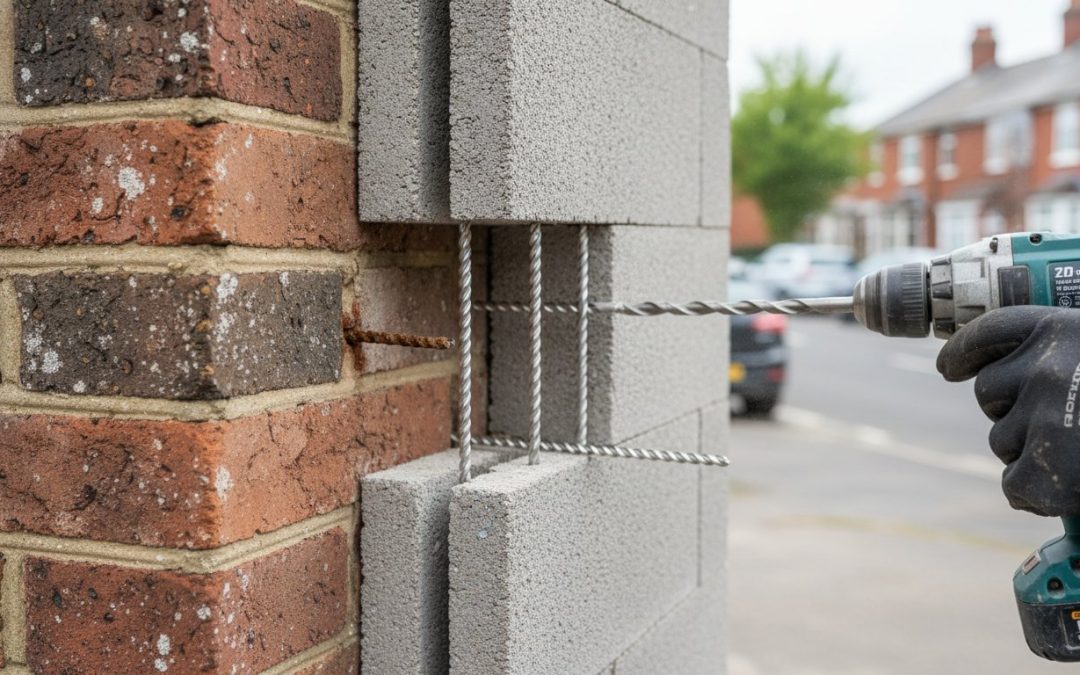
What if those horizontal cracks in your brickwork aren’t just aesthetic flaws, but the first signs of a structural failure hidden deep within your cavity walls? It’s incredibly stressful to notice bowing masonry or receive a surveyor’s report that puts your mortgage application at risk. You want your home to be a safe asset, not a source of constant worry about potential collapse. Mastering the professional wall tie survey and replacement process is the only way to ensure your property remains structurally sound for decades to come.
We understand that structural issues feel overwhelming, but they’re manageable with the right technical approach. This guide provides a clear walkthrough of the diagnostic stages and remedial actions required to restore your home’s stability. You’ll learn how specialists identify corrosion under BRE Digest 401 guidelines and why removing damp-trapping insulation is often a vital part of the fix. We’ll examine the technical installation of new stainless steel ties, the importance of clearing the cavity, and the documentation you need for long-term peace of mind.
Key Takeaways
- Understand the technical stages of a professional wall tie survey and replacement process to identify structural risks before they escalate.
- Learn to identify specific warning signs of failure, such as horizontal masonry cracking and wall bulging, which signal a loss of structural integrity.
- Discover the diagnostic tools specialists use to assess the condition of existing ties and the impact of damp-trapping cavity insulation.
- Gain insight into the remedial installation process, where modern stainless steel ties provide a permanent fix for corroding or missing connectors.
- Understand why professional documentation is essential for satisfying insurers and protecting your property’s long-term market value.
Understanding the Structural Role of Cavity Wall Ties
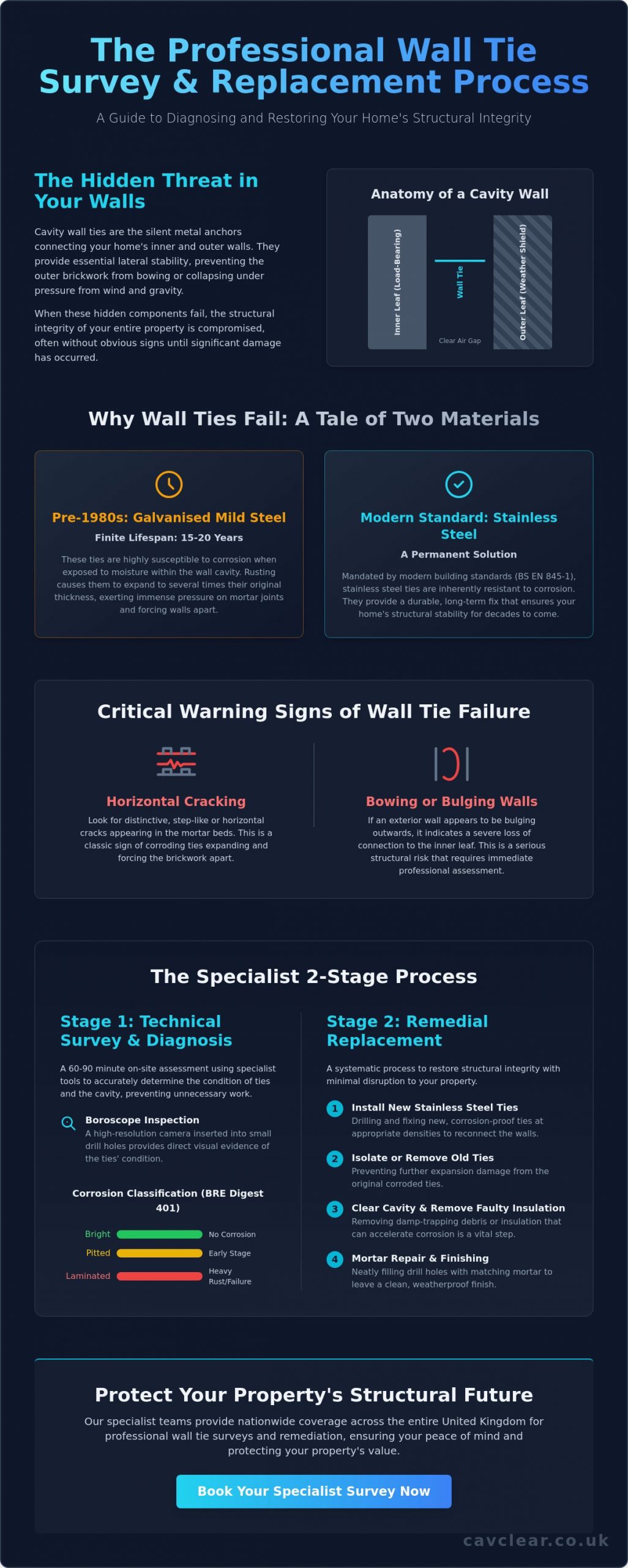
Cavity wall ties are the silent structural anchors that hold your home together. In most UK properties built after 1945, the external walls consist of two separate layers of masonry. Without these metal connectors, the outer leaf of your property is essentially a expert-standing, thin skin of brickwork that’s vulnerable to wind pressure and gravity. By bridging the gap between the internal and external walls, ties provide vital lateral restraint. This mechanical connection transfers horizontal loads from the weaker outer leaf to the load-bearing inner leaf, preventing the external wall from bowing or collapsing outward. Understanding this fundamental physics is the first step in the wall tie survey and replacement process.
Historically, the materials used for these ties have evolved significantly. Properties constructed before the 1980s typically utilised galvanised mild steel ties. While effective initially, these components have a finite lifespan, often surviving only 15 to 20 years in certain conditions. Modern standards, specifically BS EN 845-1:2013+A1:2016, now mandate the use of stainless steel or high-grade materials that resist corrosion. For a deeper look at the technical specifications of these components, Understanding Cavity Wall Ties provides a comprehensive encyclopaedic overview of their development and various types. When these components degrade, the property loses its structural cohesion, making professional intervention a necessity rather than an option.
The Anatomy of a Cavity Wall
A standard cavity wall consists of an internal “skin” that supports the weight of the roof and floors, and an external “skin” designed to protect the building from the elements. If you want to understand what is a wall cavity in detail, it’s essentially a managed air gap that facilitates moisture drainage and thermal regulation. This gap must remain clear to function correctly. When wall ties fail within this space, the structural relationship between these two skins is severed, leading to the progressive instability we often see in older UK housing stock.
Why Traditional Ties Fail
Failure typically stems from the chemical process of oxidation. When mild steel ties are exposed to moisture and oxygen, they begin to rust. This isn’t just a surface issue; as steel oxidises, it can expand to several times its original thickness. This expansion exerts an immense “lifting” force within the mortar joints, often manifesting as visible horizontal cracks. In aggressive coastal environments, the salt-laden air accelerates this degradation significantly. Because this process happens hidden inside the wall, the wall tie survey and replacement process must be thorough to catch failure before it becomes a safety hazard.
The Technical Wall Tie Survey: Methodology and Diagnostic Tools
A specialist survey is the only reliable way to determine the extent of masonry instability before committing to remedial works. This diagnostic phase is the most critical stage of the professional wall tie survey and replacement process. It prevents homeowners from paying for unnecessary repairs while ensuring that genuine structural faults are caught early. During the onsite visit, an accredited technician typically requires 60 to 90 minutes to assess a standard semi-detached property. They use a combination of non-destructive electronic mapping and localised invasive inspections to build a complete picture of the wall’s internal state. Identifying specific Signs of Wall Tie Failure allows the technician to focus on high-risk elevations, particularly those exposed to prevailing winds or coastal air.
If you suspect your property is at risk, booking professional wall tie surveys ensures you receive a factual assessment of your home’s structural health.
High-Resolution Boroscope Inspections
A boroscope is a visual diagnostic tool for hidden structural defects. By drilling small 8mm to 10mm holes in the mortar joints, technicians insert a high-resolution camera to inspect the ties directly. They look for three distinct corrosion states: “bright” (no corrosion), “pitted” (early-stage surface damage), or “laminated” (heavy rust layers that have begun to expand). This visual evidence determines if the ties still provide sufficient lateral restraint or if they have become a liability. Technicians also use this opportunity to check for debris or defective insulation that may be accelerating the corrosion process.
Metal Detection and Mapping
Technicians use electromagnetic detectors to locate every tie within a specific wall area. This mapping process reveals if the original builders followed the correct spacing patterns, which should typically be 2.5 ties per square metre. It also helps identify “missing” ties or irregular spacing that violates building codes. Mapping is essential for verifying if previous remedial attempts were successful or if old, corroding ties were left in situ to cause further masonry damage. This level of technical detail ensures the wall tie survey and replacement process is tailored specifically to the structural requirements of your property.
Warning Signs of Wall Tie Failure and the Impact of Defective Insulation
Early detection of structural failure can save homeowners thousands in emergency repairs. When mild steel ties begin to corrode, they expand to several times their original size. This physical growth forces the mortar joints apart, creating distinct horizontal cracks that typically appear every 4 to 6 brick courses. If left unaddressed, this loss of lateral restraint leads to the “bulging wall” phenomenon, where the external leaf begins to lean away from the property core. This isn’t just an aesthetic issue; it’s a precursor to potential masonry collapse. For a more technical breakdown of these stages, the Designing Buildings Wiki guide to wall tie failure provides excellent context on how these structural defects manifest over time.
Beyond external masonry, failure often presents internal symptoms. Corroded ties can act as a bridge, allowing moisture to travel from the outer leaf to the inner leaf. This often results in damp patches or mould growth that follows the specific pattern of the tie grid. Recognising these signs is a vital trigger for starting the wall tie survey and replacement process before the damage compromises the building’s interior finishes.
Visual Symptoms for Homeowners
It’s important to distinguish between minor settlement and structural wall tie failure. While settlement cracks often run diagonally, wall tie failure cracks are almost always horizontal and follow the mortar lines. You should also look for rust staining on external brickwork or render, which indicates advanced metal degradation. In severe cases, the expansion of ties can cause the lifting of roof edges or visible window frame distortion as the outer leaf shifts independently of the internal structure.
The Risk of Defective Cavity Wall Insulation
There is a direct and dangerous link between wet cavity insulation and accelerated wall tie corrosion. Saturated insulation material holds moisture directly against the metal ties, creating a constant “wet-wrap” effect that causes rapid rust. This is why we strongly advocate for cavity wall insulation removal before or during the tie replacement. Retrospective insulation in older properties with original mild steel ties is particularly risky, as it removes the air gap that would otherwise allow the ties to stay dry. A professional wall tie survey and replacement process must account for the condition of this insulation to ensure the new stainless steel ties aren’t immediately subjected to a damp environment.
The Remedial Wall Tie Replacement Process: A Step-by-Step Guide
Transitioning from the diagnostic phase, the active wall tie survey and replacement process begins with establishing safe and stable access. Most structural repairs require scaffolding or specialist mobile platforms to allow technicians to work precisely across the entire elevation. This preparation isn’t just about safety; it’s about ensuring the technician has the visibility needed to drill accurately into the mortar joints. Once access is secured, the installation of modern stainless steel remedial ties commences. We follow the specific grid pattern identified during the mapping stage, ensuring that the new ties provide the necessary lateral restraint to stabilise the external leaf.
If you suspect your property requires structural intervention, our team provides professional wall tie replacement services to restore your home’s integrity and value.
Types of Remedial Ties: Mechanical vs. Resin
Technicians select the specific tie type based on the masonry substrate discovered during the survey. Mechanical expansion ties are the preferred choice for solid brick and consistent masonry. These ties use a torque-activated sleeve that grips the internal and external leaves securely. Resin-fix ties are the essential solution for perforated bricks or fragile, aged substrates where mechanical expansion might cause further fracturing. It’s important to understand that stainless steel grade 304 or 316 is the 2026 industry standard for longevity, providing a permanent fix that resists the chemical degradation seen in older mild steel components.
Isolation and Final Testing
A critical step that general builders often overlook is the isolation of the original, failing ties. Simply adding new ties isn’t enough; the old mild steel will continue to oxidise and expand, exerting pressure that leads to ongoing masonry cracking. To prevent this, we neutralise the old ties by either physically extracting them or using foam sleeves to decouple the expanding metal from the surrounding mortar. This ensures the “lifting” force is permanently removed from your brickwork.
Before completing the wall tie survey and replacement process, we conduct random pull-testing using calibrated equipment. This verifies that each tie has achieved the required load-bearing capacity within your specific wall type. We conclude the work by “making good” the drill holes. By using colour-matched mortar, we ensure the repair is non-disruptive to the building’s aesthetic. This methodical approach transforms a failing structure into a sound asset, backed by the professional documentation required for future property transactions or insurance purposes.
Long-Term Structural Stability: Choosing a Specialist Contractor
Selecting a specialist contractor is the final, most critical step in safeguarding your property’s future. While general builders are skilled in surface repairs, they often lack the sophisticated diagnostic equipment, such as high-resolution boroscopes and electromagnetic mapping tools, required for an accurate wall tie survey and replacement process. Relying on a non-specialist often leads to incomplete repairs, such as failing to isolate old, expanding ties or using incorrect tie densities for the specific wall height. We provide a nationwide service across the entire United Kingdom, ensuring that every homeowner has access to technical rigor and professional structural solutions. This expert approach transforms a stressful structural defect into a managed investment in your home’s long-term health.
Professionalism in this field is defined by transparency and the correct methodology. A specialist won’t just tell you there’s a problem; they’ll show you the evidence through boroscopic imagery and mapping data. This level of detail is essential because structural integrity isn’t always visible from the street. By choosing a specialist, you ensure the wall tie survey and replacement process is handled by technicians who understand the nuances of different masonry types and the specific risks posed by coastal or industrial environments. Our focus is on restoring comfort and providing a permanent fix that prevents the need for future remedial work.
Evaluating the Wall Tie Report
A professional report is more than a simple cost estimate; it’s a structural health certificate for your property. It must include comprehensive data on current tie density, precise corrosion grading based on established technical standards, and a detailed remedial strategy. You’ll often need this documentation to support wall tie replacement for insurance purposes or to satisfy mortgage lenders during a property sale. A clear, technical report protects your property’s resale value by proving the building is structurally sound and that the work was performed to the highest standards. It provides a paper trail that is invaluable during future property transactions.
The CavClear Advantage: Clean and Non-Disruptive
Our commitment to excellence extends beyond structural stability. We pride ourselves on a clean and non-disruptive methodology that respects your living environment. Our accredited technicians understand that your home is your most valuable asset, so we ensure the site is left tidy and the masonry is restored to its original aesthetic with colour-matched mortar. Our nationwide coverage means expert help is available wherever you are in the UK, providing a consistent standard of professional rigor. Don’t leave your home’s stability to chance. Secure your home’s future and book a professional wall tie survey today.
Secure Your Property’s Structural Integrity
Structural stability is the foundation of a safe home and a secure investment. By understanding the technical stages of the wall tie survey and replacement process, you can move from structural uncertainty to a clear, professional resolution. You now know how to identify the specific warning signs of failure and why a detailed diagnostic report is essential for maintaining your property’s market value. Using high-grade stainless steel ties and ensuring they are correctly isolated from corroding precursors is the only way to achieve a permanent fix that lasts for decades.
Our accredited specialist technicians provide nationwide UK coverage, delivering comprehensive structural reports and expert remedial works tailored to your building’s unique needs. We focus on clean, non-disruptive methods that restore your comfort while protecting the masonry’s aesthetic finish. Taking proactive steps today prevents a manageable repair from escalating into a structural emergency tomorrow. You can protect your home’s future and restore your peace of mind with a single expert assessment.
Book Your Professional Wall Tie Survey with CavClear
Your property’s long-term health is in safe hands, and we’re ready to help you secure it.
Frequently Asked Questions
What is involved in a professional wall tie survey?
A professional wall tie survey involves a combination of electronic metal detection to map existing tie patterns and boroscope inspections to visually assess corrosion levels. Technicians drill small pilot holes in the mortar to insert high-resolution cameras, allowing them to see the internal state of the cavity. This dual-method approach ensures the wall tie survey and replacement process is based on physical evidence rather than guesswork.
How long does the wall tie replacement process typically take?
For a standard three-bedroom semi-detached property, the replacement process typically takes between two and three days to complete. This timeline includes establishing safe access, installing the new stainless steel remedial ties, and isolating the original corroded components. Larger detached homes or properties requiring extensive insulation extraction may take longer, but a specialist team will provide a specific schedule following the initial survey.
Can I sell my house if the wall ties are failing?
Selling a house with failing wall ties is difficult because most mortgage lenders will refuse funds until the structural integrity is certified. Buyers’ surveyors often identify horizontal cracking or bowing as red flags, leading to significant price renegotiations or collapsed sales. Providing a professional survey report and proof of remedial work from an accredited specialist is the most effective way to protect your property’s market value.
Do wall ties cause horizontal cracks in my brickwork?
Corroding wall ties are a primary cause of horizontal cracks in masonry because the iron oxide occupies several times the volume of the original steel. This expansion creates a powerful lifting force that pushes mortar joints apart, usually appearing every 4 to 6 brick courses. These cracks are a clear signal that the internal metal connectors have failed and are now actively damaging the external leaf of your property.
Is wall tie replacement a messy or disruptive process?
Wall tie replacement is a clean and non-disruptive process because all structural work is performed from the building’s exterior. Technicians use precision drilling to install new ties and colour-match the mortar for all drill holes to ensure the repair is virtually invisible. Unlike major internal renovations, this work doesn’t require you to vacate the property or deal with significant dust inside your living spaces.
What happens if I ignore signs of wall tie corrosion?
Ignoring wall tie corrosion leads to progressive structural instability, which can eventually result in the total collapse of the external masonry leaf. Over time, the loss of lateral restraint causes walls to bulge or lean, making the property unsafe and potentially uninsurable. Early intervention through a professional wall tie survey and replacement process prevents these catastrophic failures and avoids the much higher costs of rebuilding collapsed walls.
How much does a wall tie survey and report cost in 2026?
The cost of a specialist survey depends on the property’s size and the complexity of the access required for inspection. While industry professionals report that fees vary based on location and detail, a comprehensive report should always include boroscopic evidence and a clear remedial plan. It’s best to check with a specialist provider for a quote that covers your specific structural requirements and ensures you receive the documentation needed for insurers.
Are remedial wall ties as strong as the original ones?
Modern remedial wall ties are significantly more durable than original mild steel ties because they’re manufactured from high-grade stainless steel. These components are designed to resist corrosion permanently, even in aggressive coastal environments where salt-laden air accelerates metal decay. When installed correctly by a specialist, these ties provide superior lateral restraint and ensure the long-term structural cohesion of your cavity walls.
Recent Comments