
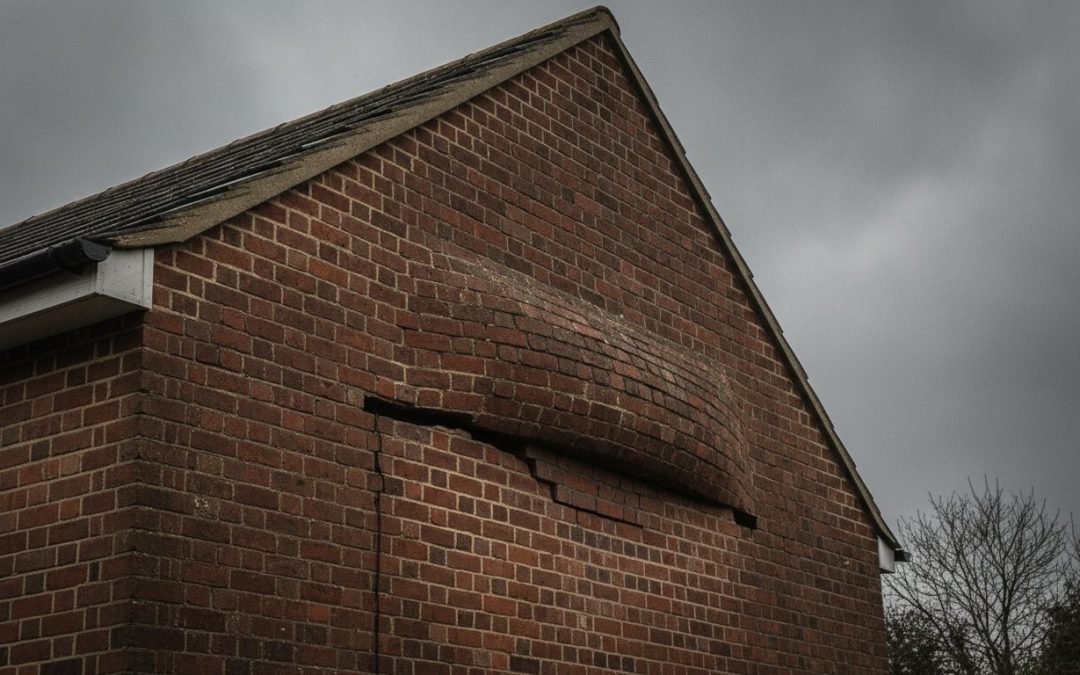
A gable end wall is essentially a structural sail, and without the invisible support of functioning wall ties, it remains at the mercy of the next heavy storm. You’ve likely noticed a horizontal crack or a slight bulge in your brickwork and felt an immediate pang of anxiety about your home’s safety. It’s natural to wonder if these symptoms indicate a minor maintenance issue or a serious structural threat. Specifically, you’re likely asking: can failing wall ties cause a gable end wall to collapse? The short answer is yes, because these components provide the vital lateral restraint required to keep the outer leaf of masonry secure against wind loading.
We understand that the fear of sudden structural failure combined with confusion over repair costs can be overwhelming. This article will help you discover how wall tie failure compromises gable end stability and teach you the critical warning signs to look for. We’ll examine the technical risks associated with corroding mild steel ties and explain the difference between tie failure and subsidence. You’ll also learn why a professional survey is the essential first step in protecting your property’s long-term health. By the end, you’ll have a clear understanding of the actual risk level and the non-disruptive solutions available to restore your peace of mind.
Key Takeaways
- Understand why gable ends are structural “sails” that rely entirely on wall ties for lateral restraint to prevent bowing and instability.
- Learn the technical reasons why can failing wall ties cause a gable end wall to collapse, focusing on how corrosion and the expansion of mild steel compromise masonry.
- Identify the visible warning signs of structural failure, such as horizontal cracking in mortar joints or visible “pillowing” of the brickwork.
- Discover why a professional wall tie survey using borescopes is the only reliable way to assess hidden corrosion and prevent sudden failure.
- Explore the methodology of isolating old ties and installing stainless steel replacements to ensure the long-term structural integrity of your home.
The Critical Role of Wall Ties in Gable End Stability
Understanding the hidden mechanics of your home is the first step in ensuring its long-term safety. Wall ties are the essential, yet invisible, structural connectors that bridge the gap between the inner and outer leaves of a cavity wall. A wall tie is a structural component designed to transfer lateral loads between masonry leaves. Without these anchors, the two walls act independently, which significantly reduces the structural integrity of the entire building. The Critical Role of Wall Ties ensures that the outer brick skin remains pinned to the more stable inner structure, providing what engineers call lateral restraint. This restraint is what prevents the outer leaf from bowing or buckling under environmental pressure. When property owners ask, can failing wall ties cause a gable end wall to collapse, they must recognize that the gable is the most vulnerable point for such a failure due to its height and lack of floor-joist anchoring found on lower levels.
How Cavity Walls Function in UK Properties
Nationwide, UK properties built from the early 20th century onwards moved away from solid wall construction in favour of the cavity system. This design incorporates a deliberate air gap between two layers of masonry to improve moisture control and thermal performance. To understand the specifics of this layout, you can read our guide on what is a wall cavity. While this gap protects the interior from damp, it creates a structural challenge; the outer leaf is thin and tall. Wall ties solve this by locking the two leaves together, allowing them to share the load and resist external forces as a single, unified unit. If these ties corrode, the outer leaf effectively becomes a expertstanding wall with very little stability.
The Structural Purpose of the Gable End
The gable end is the triangular portion of a wall situated between the edges of intersecting roof pitches. It represents one of the least supported areas of any domestic building because it lacks the horizontal bracing provided by floor joists at lower levels. In a standard cavity wall, the inner leaf bears the heavy “dead load” of the roof and internal floors. The outer leaf is largely decorative and weather-shielding. Without robust wall ties, this tall panel of masonry stands alone. High winds create suction on the leeward side of a house, which can literally pull an untied gable wall outward. Because there is no weight from the roof pressing down on the outer leaf to keep it in place, it relies entirely on those hidden ties to stay upright and secure.
The Mechanism of Failure: From Corrosion to Structural Collapse
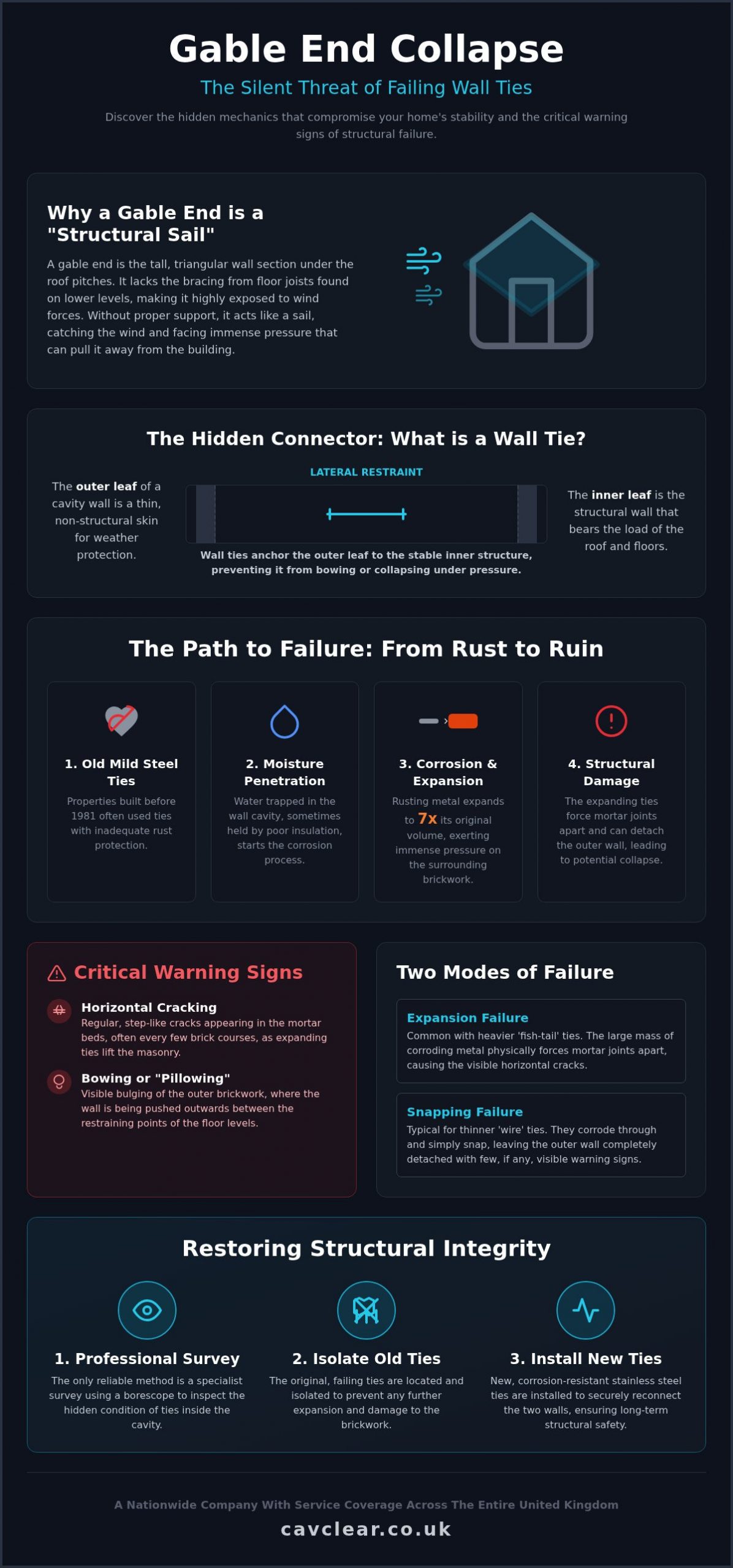
Understanding the chemistry of masonry is vital for every homeowner. Properties built before 1981 frequently utilized mild steel or galvanized wall ties. Over time, exposure to oxygen and moisture triggers a process called oxidation. This isn’t merely a surface change; rust occupies significantly more space than the original metal. In fact, rust can take up to seven times the volume of the original steel. This massive increase in mass acts as a powerful hydraulic lever within your walls. It physically lifts the brickwork, resulting in the characteristic Warning Signs of Failing Wall Ties such as horizontal cracking along mortar beds.
We categorize these structural issues into two distinct failure types. Expansion failure occurs with heavier “fish-tail” ties, which possess enough mass to force mortar joints apart as they corrode. Conversely, “snapping” failure usually affects thinner wire ties. These ties simply corrode through until they break, leaving the outer leaf completely detached from the inner structure without any visible cracking. Both scenarios answer the critical question: can failing wall ties cause a gable end wall to collapse? Without the anchor, the wall’s structural capacity is effectively zero, leaving it detached and unstable.
The Role of Moisture and Defective Insulation
Moisture trapped within the cavity is the primary catalyst for metal degradation. While a healthy cavity is designed to breathe, the introduction of retrospective cavity wall insulation often disrupts this vital airflow. These materials can act like a sponge, holding dampness directly against the metal ties for decades. This persistent wet environment accelerates the oxidation process significantly, turning a slow decay into a rapid structural threat. If you are concerned about the hidden condition of your masonry, a professional wall tie inspection is the only way to verify the health of your property’s steel anchors.
Wind Suction and the “Sail Effect”
Gable walls face unique aerodynamic challenges during UK storms. Wind blowing over a roof creates a zone of negative pressure on the leeward side of the building. This “wind suction” exerts a powerful outward force on the gable end masonry. Because the triangular section of the gable doesn’t carry the heavy weight of the roof structure, it lacks the downward pressure needed to resist being pulled away. Without functional ties, the masonry panel behaves like a sail. It moves incrementally during each gust until it reaches a tipping point, leading to a catastrophic and sudden collapse.
Warning Signs: How to Spot Failing Wall Ties Before a Collapse
Early detection is the most effective way to prevent catastrophic damage. While the structural decay happens out of sight, the masonry eventually provides clear evidence of the distress. The most common indicator is horizontal cracking in the mortar joints. Because ties were historically installed at specific intervals, these cracks typically appear every four to six courses of brickwork. As the metal expands, it forces the mortar apart, creating a visible line that follows the bed joint across the width of the gable.
You might also notice several other physical changes to the property’s exterior:
- Visible Bulging: Often called “pillowing”, this occurs when the outer leaf bows outward, especially at the higher, less restrained points of the gable.
- Frame Separation: Window frames may pull away from the masonry, or you might see distorted lintels that no longer sit flush.
- Brick Alignment: The presence of “steps” in the brickwork where individual bricks are pushed out of line by corroding tie ends.
- Damp Entry: Internal dampness often appears in upper rooms as the structural gap allows water to bypass the cavity.
These signs collectively answer the question: can failing wall ties cause a gable end wall to collapse? They represent the final warnings before the masonry panel loses its equilibrium entirely. Ignoring these symptoms can lead to sudden failure during high winds.
Expansion Cracks vs. Subsidence
It’s common for property owners to misdiagnose these structural issues as subsidence. However, the visual patterns are quite distinct. Subsidence typically results in vertical or diagonal “stepped” cracks that often run through the bricks themselves and are wider at the top or bottom. In contrast, wall tie failure is almost exclusively characterized by horizontal cracking within the mortar beds. Misidentifying the cause can lead to expensive and unnecessary foundation work that doesn’t address the actual risk. To ensure the safety of your home, you should consult a wall tie replacement specialist who can perform a borescope inspection to confirm the condition of the metal within the cavity.
Internal Symptoms of External Failure
Structural instability often manifests as environmental issues inside the home. When ties corrode and the outer leaf pulls away, it creates gaps that allow rainwater to reach the inner leaf. This leads to penetrating damp, which is frequently found in upper-floor gable rooms. You might see damp patches or black mould growth near the ceiling where the gable wall meets the roofline. This isn’t just a ventilation issue; it’s a sign that the structural envelope has been compromised. Addressing the mould without fixing the ties is a temporary solution that ignores the underlying threat to the building’s asset health.
Why Gable Walls are Uniquely Vulnerable to Structural Failure
Gable end walls represent one of the most significant structural risks in residential architecture due to their specific geometry. Unlike standard front or rear elevations, gables are tall, slender panels of masonry with a high height-to-width ratio. This slender nature makes them less inherently stable than other parts of the building. While lower walls are braced by internal floor joists and the weight of the floors above, the triangular section of a gable often stands without this internal reinforcement. This lack of support answers the critical question: can failing wall ties cause a gable end wall to collapse? Without the ties, the outer leaf lacks the necessary lateral restraint to remain vertical under environmental pressure.
Properties built between 1920 and 1980 face the highest statistical risk in the UK. During this era, galvanized mild steel ties were the industry standard. These components were designed with a finite lifespan, and many are now reaching the point of total failure. Additionally, the outer leaf of a gable wall carries almost no “dead load” from the roof. In a standard wall, the weight of the roof structure helps pin the masonry in place. On a gable, the roof sits primarily on the inner leaf, leaving the outer skin as a expertstanding panel that is much easier for wind suction to displace. When these invisible steel anchors fail, there is nothing left to hold the masonry against the building.
The Geometry of the Gable Triangle
The triangular peak is particularly vulnerable because it has the least amount of internal support from cross-walls. It’s also highly susceptible to thermal expansion and contraction. Because it’s exposed on both sides of the roofline, it experiences greater temperature fluctuations than shielded walls. This movement puts constant stress on the mortar and the ties within. In many older UK homes, builders also omitted lateral restraint straps, which are now a requirement in modern building regulations. This omission leaves the masonry entirely dependent on wall ties that may be rapidly corroding due to age or poor cavity conditions.
The Impact of Regional Weather Patterns
Prevailing winds in the UK typically strike from the southwest, placing immense stress on west-facing gable ends. As wind hits the corner of a building, it creates a “vortex effect,” which significantly increases the air pressure and suction forces on the gable masonry. Regions categorized as “driving rain” zones correlate with much higher rates of wall tie corrosion, as moisture is forced deeper into the cavity. CavClear provides nationwide wall tie surveys to assess these regional environmental risks and provide a clear path to structural security. Identifying these risks early is the only way to protect the long-term asset health of your property.
Specialist Remedial Solutions: Restoring Structural Integrity Nationwide
Addressing structural instability requires a methodical approach that moves beyond temporary cosmetic fixes. While the question “can failing wall ties cause a gable end wall to collapse” highlights a genuine safety concern, modern remedial technology allows us to restore a property’s health without invasive or disruptive building work. The first step is always a technical damp survey or a specialist wall tie inspection. This diagnostic phase confirms the extent of the corrosion and identifies the exact type of tie currently in situ. By using non-destructive testing methods, we can provide property owners with a clear, evidence-based plan to secure their home’s future.
Our remedial methodology focuses on the permanent isolation of defective components. It isn’t enough to simply install new ties; the old, corroding mild steel anchors must be neutralized. If left active, the existing ties will continue to oxidize and expand, eventually causing further cracking even after new supports are in place. We use specialist isolation sleeves or physical removal techniques to stop the “expansion effect” in its tracks. Following this, we install high-grade, austenitic stainless steel remedial ties. These modern anchors exceed current UK building standards, offering a permanent fix that is immune to the corrosion cycles that plague older properties.
The Wall Tie Survey Process
We utilize precision equipment to inspect the “invisible” cavity without removing bricks. Our technicians use high-sensitivity metal detectors to map the density and layout of existing ties, ensuring they meet the required spacing for gable zones. Once located, we use borescopes—small cameras inserted through tiny drill holes in the mortar—to visually grade the condition of the metal. This allows us to see the level of rust and whether the ties have already “snapped” or started to expand. CavClear operates nationwide, providing these detailed technical reports for homeowners, insurers, and mortgage lenders across the UK.
Comprehensive Remedial Action Plans
In many cases, structural repairs must be paired with environmental corrections to be truly effective. If a cavity is filled with unsuitable or wet material, cavity wall insulation removal is often the vital first step. Removing this saturated material stops the accelerated corrosion of your wall ties and prevents further dampness from reaching the inner leaf. Investing in these specialist structural repairs is a proactive move for long-term asset health, far outweighing the risks of ignoring the symptoms of failure. Our clean and non-disruptive methodology ensures that your property remains a safe, stable investment for decades to come. Book a specialist wall tie survey with CavClear today to secure your gable end wall.
Protecting Your Home’s Structural Integrity
Gable walls are uniquely vulnerable because they function as tall, slender panels without the internal bracing found on lower floors. As we have explored, can failing wall ties cause a gable end wall to collapse? The answer is a definitive yes, particularly when aged mild steel anchors corrode and lose their ability to provide lateral restraint against wind suction. Identifying horizontal cracking or bulging early is the most effective way to prevent catastrophic failure and ensure the long-term health of your property.
Restoring stability doesn’t have to be disruptive to your daily life. CavClear provides nationwide coverage across the UK, employing accredited technicians who specialize in non-disruptive structural repairs and insulation extraction. We provide comprehensive technical reporting for homeowners and insurers, giving you the facts needed to make informed decisions about your asset. Secure your property’s future with a professional wall tie survey from CavClear. Taking action today is a vital investment in the safety and comfort of your home for years to come.
Frequently Asked Questions
Can a gable end wall really collapse without warning?
A gable end wall can collapse suddenly, especially during high winds, if the structural anchors have failed. Many homeowners ask: can failing wall ties cause a gable end wall to collapse without warning? While the collapse feels instantaneous, the underlying decay takes decades. Subtle signs like horizontal cracking or slight bowing often go unnoticed until the gable lacks the restraint to withstand a storm.
How much does it cost to replace wall ties in a gable end?
The total investment for wall tie replacement depends on several technical factors, including the height of the gable, the type of masonry, and the condition of the cavity. Access requirements, such as scaffolding or specialist towers, also influence the final figure. We recommend a professional survey to determine the exact density of ties required for your specific property, as this ensures a permanent and safe structural solution.
Will my building insurance cover the cost of wall tie replacement?
Standard building insurance policies typically don’t cover the cost of replacing wall ties. Insurers generally categorize wall tie corrosion as gradual deterioration or a lack of maintenance rather than a sudden, accidental event. However, if a wall collapses and causes damage to other parts of the property, you may find that the resulting damage is covered, though the initial cause remains the owner’s responsibility to rectify.
How long does the wall tie replacement process take for a standard house?
A specialist team can typically complete a wall tie replacement on a standard gable end within one to two days. Our methodology is designed to be clean and non-disruptive, allowing you to go about your daily routine without interruption. The process involves drilling small entry points in the mortar, installing the new stainless steel anchors, and isolating the old ties to ensure long-term structural integrity.
What is the difference between a wall tie survey and a general homebuyer report?
A general homebuyer report is a visual inspection of visible elements, whereas a specialist wall tie survey uses borescopes and metal detectors to see inside the cavity. General surveyors often flag potential issues based on the age of the property, but they don’t have the equipment to grade the actual condition of the ties. Our nationwide team provides technical reports that offer concrete evidence of corrosion levels.
Can I still live in the property while the gable wall ties are being replaced?
You can absolutely remain in your home while the work is being carried out. The replacement process is entirely external and doesn’t require access to the interior of your property. Our technicians use clean, non-disruptive techniques that minimize noise and dust. Because we focus on structural integrity through external masonry points, your internal decorations and daily comfort are fully protected throughout the duration of the repair.
Why is stainless steel used for remedial wall ties instead of galvanised steel?
Stainless steel is the industry standard for remedial work because it’s virtually immune to the oxidation that destroys galvanized or mild steel. Galvanized coatings eventually break down, especially in the damp environments found in UK cavity walls. By using austenitic stainless steel, we ensure that the new ties provide a permanent structural solution. This material doesn’t expand or rust, protecting your mortar joints from future cracking.
What happens if I ignore the horizontal cracks in my gable end?
Ignoring these cracks significantly increases the risk to your property. Over time, the question of can failing wall ties cause a gable end wall to collapse becomes a matter of when, not if. Beyond the threat of sudden collapse, failing ties allow the masonry leaves to move independently, creating gaps for penetrating damp. Addressing the issue early prevents expensive emergency repairs and protects the structural envelope of your home.
Recent Comments