
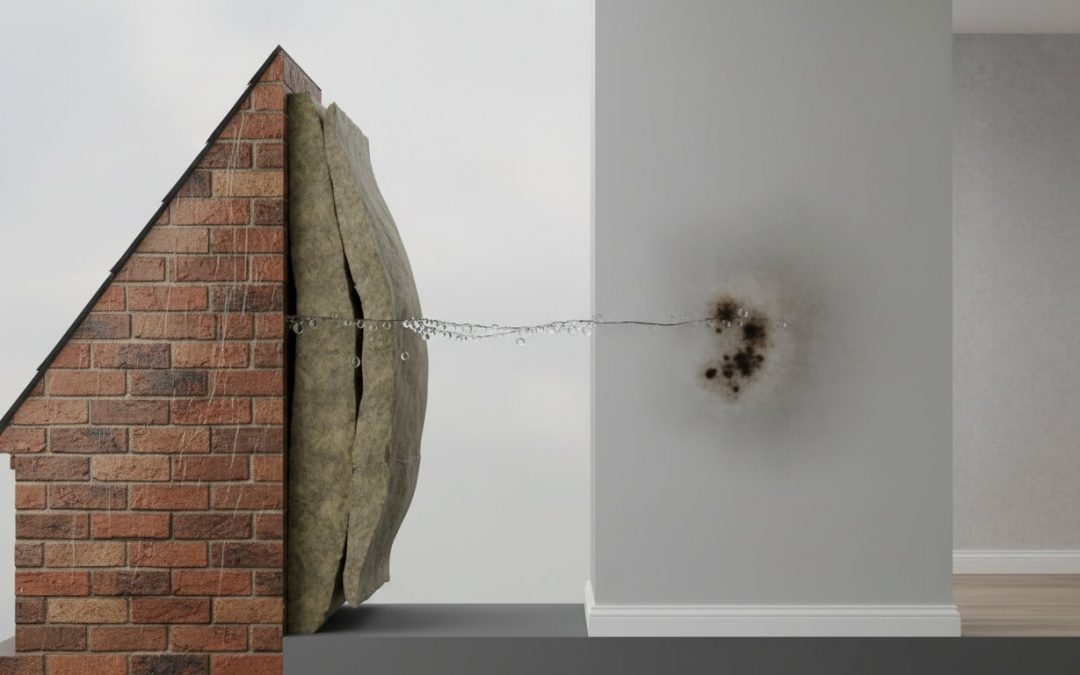
Industry estimates suggest that up to 2 million homes across the UK with retrofitted cavity wall insulation may now be facing serious moisture-related issues. You invested in insulation for a warmer, more energy-efficient home, not for the persistent musty smells or the creeping dread of discovering black mould. It’s a frustrating position, especially when your heating bills continue to rise, signalling that something is fundamentally wrong within your property’s walls.
This comprehensive guide delivers the clarity you need. We’ll explain exactly how problems with damp caused by cavity wall insulation develop, show you how to identify the unmistakable signs, and detail the professional steps required for its complete extraction. From initial survey to the final guarantee of a dry, healthy living environment, you’ll gain a clear plan to restore your home’s structural integrity and your peace of mind.
Key Takeaways
-
Learn why a cavity wall, designed to protect UK homes from rain, can fail when retrofitted with the wrong type of insulation.
-
Identify the key warning signs of defective insulation, including specific visual marks on internal walls and the musty odour of trapped moisture.
-
Understand the technical reasons for damp caused by cavity wall insulation, and how saturated material creates a ‘moisture bridge’ into your property.
-
Discover why professional extraction is the only safe solution and what a specialist borescope inspection reveals about your home’s structural health.
Table of Contents
-
Understanding the Link Between Cavity Wall Insulation and Damp
-
The Technical Mechanism: How Insulation Facilitates Moisture Transfer
-
Identifying the Signs and Causes of Defective Cavity Insulation
-
The Extraction Process: Professional Removal and Remediation
Understanding the Link Between Cavity Wall Insulation and Damp
For decades, cavity wall insulation was promoted as a straightforward way to improve a home’s thermal efficiency. While effective in the right properties, many homeowners are now facing the serious consequences of inappropriate or failed installations. The persistent issue of damp caused by cavity wall insulation stems from a fundamental misunderstanding of why your home was built with a cavity in the first place.
The original design was a brilliant solution to the UK’s notoriously wet and windy climate. It was engineered to protect your home’s internal structure from moisture. By filling this essential gap, the system’s ability to manage water ingress is often compromised, leading to damp, mould, and potential structural damage. Understanding this link is the first step toward a permanent solution.
Why Cavity Walls Were Designed to Be Empty
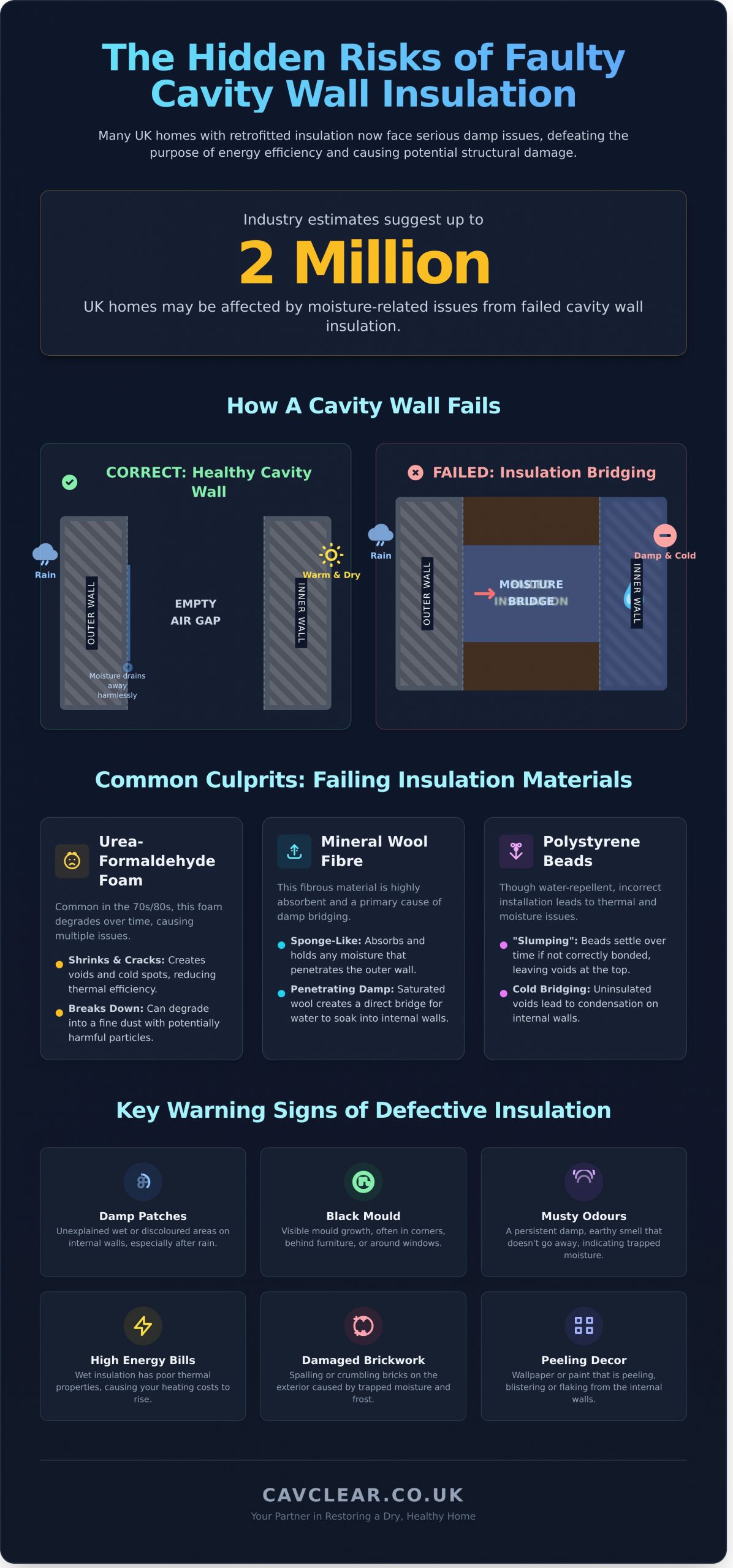
A traditional Cavity wall consists of two separate masonry walls, or ‘leaves’, separated by a clear air gap, typically 50mm wide. This gap serves a critical purpose: it acts as a barrier. When wind-driven rain penetrates the porous outer brickwork, the moisture runs down the inside face of the outer leaf and drains harmlessly away at the bottom. The air gap prevents this water from bridging across to the inner leaf through capillary action, keeping your internal walls dry. Filling this protective void with insulation material can create a physical bridge, allowing moisture to track directly from the wet outer wall to the dry inner wall, completely defeating the purpose of the cavity.
Common Materials That Cause Issues
The type of insulation installed plays a significant role in the development of damp problems. Not all materials react to moisture in the same way, and some degrade more severely over time. As specialists, we frequently encounter issues with three main types of retrofitted insulation:
-
Urea-Formaldehyde Foam: A common choice in the 1970s and 80s, this foam can shrink, crack, and break down over its lifespan. This creates voids, reducing thermal performance and forming cold spots. More alarmingly, it can degrade into a fine dust that may contain harmful particles.
-
Mineral Wool Fibre: This fibrous material acts like a sponge when it gets wet. If any moisture penetrates the outer brickwork, the mineral wool absorbs and holds it directly against your inner walls. Saturated insulation offers poor thermal protection and is a primary cause of penetrating damp.
-
Polystyrene Beads: While water-repellent, these beads can ‘slump’ or settle over time if not correctly bonded with adhesive during installation. This leaves the top of the cavity uninsulated, creating a cold bridge where condensation can form on the internal walls. Debris within the cavity can also cause beads to clump together and trap moisture.
The distinction between ‘failed’ insulation and an ‘inappropriate’ installation is vital. A property in a high-exposure area, such as coastal regions or hilltop locations, should never have had its cavities filled. Modern building standards, guided by documents like BRE Report 262, now recognise these risks, making it much harder for unsuitable properties to be approved for CWI. Unfortunately, for thousands of homeowners, this recognition comes too late, leaving them to deal with the damp caused by cavity wall insulation installed years prior.
The Technical Mechanism: How Insulation Facilitates Moisture Transfer
A cavity wall is engineered with a fundamental principle: the empty space between the two layers of brickwork (leaves) acts as a protective barrier. This cavity stops rainwater that penetrates the porous outer leaf from reaching the internal wall of your home. When this void is filled with an inappropriate or failing insulation material, this critical function is compromised, creating a direct pathway for moisture to travel where it shouldn’t.
The primary failure is known as ‘moisture bridging’. Many insulation materials, particularly mineral wool and certain foams, can become saturated over time. Instead of repelling water, they act like a sponge, holding moisture against the inner leaf. This saturated material forms a continuous bridge across the cavity, allowing rainwater to soak through from the outside brickwork directly to your internal plaster. This is the core reason for most cases of damp caused by cavity wall insulation.
This problem is often made worse by pre-existing issues within the cavity. Construction debris, such as fallen bricks and mortar droppings (often called ‘snots’), is common in properties built before the 1990s. When insulation is injected, it can’t bypass these obstructions. Instead, it compacts around them, creating dense, wet clumps. These areas not only trap moisture but also cause a ‘thermal bypass’, where the wall feels colder than uninsulated sections, defeating the purpose of the insulation entirely.
Interstitial Condensation Explained
Interstitial condensation is moisture that forms within the layers of a wall rather than on its surface. By adding insulation, the wall’s thermal gradient is changed, shifting the ‘dew point’-the temperature at which water vapour becomes liquid-further into the wall structure. Warm, moist air from inside your home permeates the inner wall and condenses within the now-cooler cavity, saturating the insulation from the inside out and contributing to structural damp.
Wind-Driven Rain and Exposure Zones
The UK’s weather patterns play a significant role. Properties in coastal areas, the South West, and the North West are classified under BS 8104 as being in severe weather exposure zones. In these locations, prolonged wind-driven rain can saturate the outer brick leaf for days. Many early insulation products claimed to be waterproof, but these treatments have been proven to degrade after 10-15 years, leaving the absorbent fill vulnerable.
Understanding these technical points is the first step toward a correct diagnosis. If your walls feel cold and damp despite being insulated, it’s a clear sign that the system is failing. A specialist cavity inspection can accurately identify moisture bridging and material failure, providing a clear path to restoring your property’s health and comfort.
Identifying the Signs and Causes of Defective Cavity Insulation
Detecting the root cause of damp in your home can be difficult, but when it’s linked to failed cavity wall insulation, the signs are often consistent and progressive. What was installed to improve your home’s warmth can, under the wrong conditions, become the very source of cold and moisture. Understanding these indicators is the first step toward a permanent solution.
The most common signs of damp caused by cavity wall insulation are visible on your internal walls. You may notice spreading, dark patches of damp, particularly on the ground floor. These patches often have a distinct ‘tide mark’ as moisture evaporates, leaving mineral deposits behind. They feel cold and damp to the touch, even when the heating is on. This is often accompanied by a persistent musty or earthy smell, the unmistakable odour of trapped moisture and the early stages of mould growth. Black mould frequently appears in corners or behind furniture, where poor air circulation allows condensation to form on cold spots created by the saturated insulation.
Your property’s exterior provides further critical clues. Inspect your brickwork for signs of damage. Crumbling mortar joints are a red flag, indicating that moisture trapped within the cavity is expertzing, expanding, and breaking down the mortar. You may also see ‘spalling’, where the face of the bricks begins to flake and crumble away. This happens when water penetrates the brick, expertzes, and forces the surface layer off. This is often because the property was unsuitable for insulation in the first place, a risk factor highlighted by industry resources like Designing Buildings, which note that exposure and poor external wall condition can lead to water penetration.
Physical Symptoms in the Home
Beyond the visible evidence, you’ll likely feel the effects of failing insulation. These symptoms confirm that the material is no longer performing its thermal function and is actively drawing heat from your home:
-
Persistent cold spots: Areas on external walls that never seem to warm up, creating a noticeable chill in the room.
-
Decor degradation: Wallpaper may start to peel, or paint may bubble and blister, specifically on walls that face the outside. This is a direct result of moisture migrating from the cavity into the internal plasterwork.
-
New or increased condensation: You may find more condensation on windows than you used to. This is because the cold, damp walls lower the internal surface temperature, causing moisture in the air to condense more readily.
The Hidden Danger: Wall Tie Corrosion
The most serious consequence of damp caused by cavity wall insulation is structural. Wet insulation creates a continuously moist, corrosive environment around the steel wall ties that hold your home’s inner and outer walls together. This trapped moisture accelerates the process of rust and corrosion, weakening these essential structural components. The signs of wall tie failure include distinctive horizontal cracks appearing in the mortar lines and, in advanced cases, a visible bulging of the brickwork. A specialist survey for insulation extraction must always include a thorough wall tie inspection to assess the structural integrity of your property. [Learn more about our specialist wall tie surveys here.]
The Extraction Process: Professional Removal and Remediation
Once a technical survey confirms that failed insulation is the source of your damp issues, the only correct course of action is a full, professional extraction. This is not a DIY task. Attempting to remove sodden, compacted material without specialist equipment is not only ineffective but poses a significant risk to your property’s structural integrity. The process requires industrial-grade machinery and a precise methodology to ensure every fragment of debris is removed without damaging the brickwork or crucial wall ties that hold the structure together.
Before any work begins, our accredited technicians conduct a comprehensive pre-extraction survey. Using a borescope, we map the entire cavity system, identifying the type of insulation, its condition, and any pre-existing rubble or mortar droppings at the cavity base. This diagnostic step is vital. It allows us to plan a strategic extraction pattern tailored to your home’s construction, ensuring a methodical and complete removal process from day one.
Step-by-Step Extraction Guide
Our extraction technique is a clean and controlled industrial process designed for maximum efficiency and minimal disruption. We follow a proven, three-stage system:
-
Strategic Drilling: We carefully drill a pattern of small holes, typically 22-25mm in diameter, into the external mortar joints. We never drill into the brick face itself, preserving the aesthetic and structural integrity of your property. These access points allow our equipment to reach every part of the cavity.
-
Material Agitation: High-pressure, compressed air is injected into the cavity via the upper holes. This powerful airflow agitates and breaks up the compacted, damp insulation, dislodging it from the wall ties and forcing it down towards the cavity base.
-
Industrial Vacuum Removal: A powerful, commercial-grade vacuum system is connected to the lower extraction points. This machine suctions all the loosened insulation, dust, and debris directly from the cavity into a sealed collection unit on our vehicle, ensuring a clean and contained operation.
Cleaning and Clearing the Cavity
Removing the insulation is only part of the solution. A significant percentage of properties, upwards of 60% according to industry surveys, contain rubble and mortar droppings left behind during construction. This debris can create its own damp bridge. Our process includes the removal of all this hidden rubble, ensuring the cavity is completely clear from top to bottom. We also ensure all air bricks are unblocked, restoring the essential cross-flow of air that your property was designed to have. A final, post-extraction borescope inspection is carried out to provide you, the homeowner, with visual confirmation that the cavity is 100% empty and clean.
After the extraction is complete, the property needs a crucial ‘drying out’ period. The brickwork itself will have absorbed significant moisture while the insulation was failing. Attempting to redecorate internally before the structure has had several weeks to breathe and dry naturally will only lead to peeling paint and blistering plaster. Patience at this stage is essential for a permanent fix to the problem of damp caused by cavity wall insulation. Once the structure is verifiably dry, internal repairs can proceed with confidence; for those considering modern solutions, Frankly Flooring provides expert advice on combining quality materials with underfloor heating. To book a definitive borescope inspection and get a fixed-price quote for extraction, contact our specialist team today.
Restoring Your Home’s Structural Integrity with CavClear
Identifying failed cavity wall insulation as the source of your damp problem is a critical first step. The next, and most important, is choosing the right professional to rectify the issue permanently. While a general builder can repair visible damage, they often lack the specialised equipment and deep knowledge required for a full cavity extraction. This is not a standard building job; it’s a technical procedure that, if done incorrectly, can lead to further structural problems and unnecessary cost.
At Cav Clear Ltd, we focus exclusively on correcting issues of damp caused by cavity wall insulation. Our process is designed to restore your property’s health with precision and care, ensuring the problem is solved at its source. We understand the stress this situation causes and provide a clear, professional pathway back to a safe and comfortable home.
The Specialist Advantage
Our technicians are accredited specialists who understand the unique architecture of UK homes. We use industrial-grade vacuums and extraction systems to remove all saturated insulation and debris from outside your property. This external-only process means we rarely need to enter your home, preserving your privacy and eliminating internal disruption. Following the extraction, we provide comprehensive reports, including borescope imagery, which serve as crucial evidence for insurance or CIGA claims.
A surprising benefit of this process is the potential improvement to your home’s energy efficiency. It’s a common misconception that an empty cavity is worse than one filled with wet insulation. In reality, saturated material actively draws heat from your home, drastically reducing thermal performance. By removing it and allowing the walls to dry out completely, we restore their intended insulating properties. Homeowners often see their Energy Performance Certificate (EPC) rating improve by 5 to 10 points within 12 months of a successful extraction, leading to lower energy bills.
The Cav Clear Ltd guarantee offers you complete peace of mind. Our commitment is to return your wall cavity to its original, clean state, expert from any material that could cause damp. This guarantee provides documented assurance that the work has been completed to the highest industry standards, safeguarding the long-term health of your home.
Protecting Your Investment
A property flagged for damp in a homebuyer’s report can lose significant value, with some mortgage lenders refusing to offer finance until the issue is resolved. A certificate of extraction from an accredited specialist like Cav Clear Ltd satisfies surveyors and lenders, restoring your property’s market value. By clearing the cavity, we also allow for essential checks on wall tie condition, preventing future structural issues. Take the decisive step to protect your biggest asset. Contact us today to book a professional property inspection and secure the future of your home.
Secure Your Home’s Structural Integrity Today
Failing to address damp caused by cavity wall insulation allows moisture to bridge the cavity, leading to cold spots, mould, and long-term structural decay. This isn’t a problem for DIY repairs; it demands a professional, methodical approach to permanently resolve the issue. At CavClear, our accredited specialist technicians provide this definitive solution.
Operating nationwide from our central Manchester hub, we use non-invasive techniques to fully extract the defective material. Every extraction is followed by a comprehensive structural report, giving you a clear record of the work completed and the restored health of your cavity walls. Don’t let a hidden problem devalue your property. Book your professional damp and insulation survey today and take the decisive step towards a dry, warm, and structurally sound home.
Frequently Asked Questions
Can cavity wall insulation cause rising damp?
No, cavity wall insulation does not directly cause rising damp. Rising damp is a specific issue where groundwater travels up through a building’s masonry. However, saturated insulation can trap moisture at the base of the wall, creating damp patches that look very similar to rising damp. A professional survey is essential to correctly diagnose the source, as the treatments for each problem are completely different and misdiagnosis is common.
How do I know if my damp is caused by insulation or a roof leak?
Damp from insulation typically appears as random, scattered patches on external walls, often worsening after periods of wind-driven rain. In contrast, a roof leak usually creates a more defined damp patch on a ceiling or high up on an internal wall. If the damp is concentrated on the ground floor walls and has no clear path from the roofline, it’s a strong indicator that you have damp caused by cavity wall insulation.
Is it worth removing cavity wall insulation if it’s only a small patch of damp?
Yes, it is crucial to address even a small patch of damp without delay. A single visible patch often points to a much larger area of saturated insulation within the wall cavity. If left, this moisture will spread, potentially causing corrosion to wall ties and reducing your home’s thermal efficiency by over 50%. Early extraction is a vital investment that prevents more severe structural damage and costly future repairs.
How long does it take for walls to dry out after the insulation is removed?
Walls typically begin drying within 4 to 6 weeks after a complete insulation extraction, but achieving a fully dry state can take several months. The exact timescale depends on the level of saturation and the type of brickwork. For a standard UK property, we advise waiting up to 6 months for the masonry to dry completely before attempting any redecoration. This ensures all residual moisture has evaporated.
Will my house be colder once the cavity wall insulation is taken out?
No, your house will almost certainly feel warmer once wet insulation is removed. Saturated insulation has poor thermal properties and actively conducts heat away from your home, making rooms feel cold and damp. By extracting the defective material, you allow the wall’s cavity to function as intended, stopping this heat loss and restoring your property’s natural ability to retain warmth. It’s an essential step to improve energy efficiency.
What is the average cost of cavity wall insulation extraction in the UK?
The average cost for professional cavity wall insulation extraction in the UK typically falls between £20 and £30 per square metre. For a standard 3-bedroom semi-detached house, this equates to a total project cost of approximately £1,500 to £2,500. The final price will depend on the insulation material, ease of access to the property, and the volume of debris that requires removal and certified disposal.
Does the removal process create a lot of mess around my property?
No, a specialist extraction is a clean and contained process. Our accredited technicians use powerful, industrial-grade vacuum systems that transfer the old insulation directly from the wall cavity into sealed bags for safe disposal. We take extensive measures to protect your property, including using dust sheets and ensuring all work areas are left clean and tidy. The process is designed for minimal disruption to you and your home.
Recent Comments