
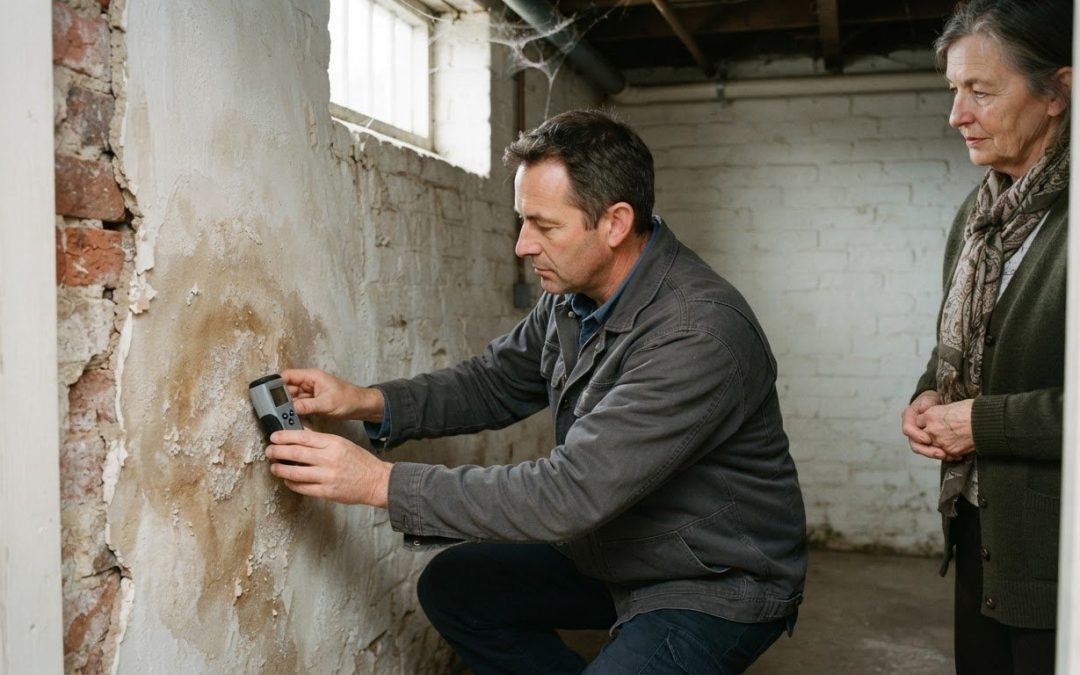
Whether a mortgage lender will accept an indemnity policy for damp depends on the policy and the lender’s requirements. A lender may accept it, but the policy will not resolve the damp itself. If the property’s condition raises concerns, the lender may ask for a specialist report before making a decision.
An indemnity policy may seem like a straightforward way to keep a sale moving, but it does not explain what is causing moisture or how serious the problem is. A lender may consider the policy and still need information about the property’s condition before deciding whether to proceed.
This guide explains when damp indemnity insurance may be acceptable, who usually pays for the policy, and how damp can affect a sale or mortgage offer. It also explains what the policy does and does not cover, so you can judge whether insurance addresses the concern or whether the damp needs a clearer assessment.
Key Takeaways
- A lender may accept damp indemnity insurance if the policy meets its requirements, but insurance does not repair or explain the damp.
- Find out whether the lender needs more information about the property’s condition before relying on a policy alone.
- The seller usually pays for an indemnity policy during a UK property sale, although payment can be agreed differently.
- A specialist damp report can help clarify the cause, extent and recommended treatment when damp affects a mortgage decision.
- Where damp may relate to cavity wall insulation or failing wall ties, specialist cavity wall surveys and remedial work can help identify the underlying issue.
Mortgage retentions and lending conditions
A lender can set conditions if damp is noted in a valuation or property report. A mortgage retention means part of the loan is withheld until required work is completed and evidence is provided.
Differences in lender requirements
Lender requirements are the conditions banks and building societies apply before releasing or retaining mortgage funds. They vary because each lender assesses the property, the reported damp and the proposed insurance against its own criteria. One may consider a policy, while another may request a specialist report or evidence of treatment. An indemnity policy alone does not guarantee that funds will be released without conditions.
Evidence lenders request
Evidence about damp helps a lender understand the defect and its likely effect on the property. A report should identify the type and cause of damp, its extent and any recommended treatment. The lender may also ask for evidence that work has been completed, such as an invoice or guarantee. Clear details can distinguish an active moisture problem from missing paperwork about earlier damp-proofing.
Whether a mortgage lender will accept an indemnity policy for damp depends on its terms and the lender’s requirements. The lender decides whether the policy is adequate. A policy may address a specific risk associated with missing documentation, but it does not treat rising damp or establish why moisture is present. If the lender needs evidence about the property’s condition, insurance may not answer that separate concern.
For damp treatment, lenders may look for a guarantee lasting at least ten years. They may expect it to be insurance-backed and transferable to the new owner. These conditions can matter when the seller arranged earlier proofing work but the supporting documents are missing or incomplete. A guarantee and an indemnity policy serve different purposes, so one should not be assumed to replace the other.
The lender may also consider the scope of the reported work. For example, replacing affected plaster or repairing a damp-proof course may be relevant if a specialist report recommends those measures. Alterations, including replacement windows, can raise separate questions if they appear connected to the moisture. A report should explain the relationship rather than treating every visible mark as the same defect.
Lenders often rely on the solicitor to identify whether a policy is needed and assess whether its terms meet the lending condition. The review can take hours or weeks, depending on the lender and its workload. If the lender requests a damp report, the seller’s conveyancing timeline may depend on arranging suitable evidence and sending it for review. A prompt, complete response can help avoid repeated requests.
For example, a valuation notes damp but does not identify its source. The lender may request a specialist report before deciding whether to retain funds, accept a policy or proceed without that condition. If the report identifies the cause and treatment, the lender can assess the issue itself rather than relying on an insurance document alone.
Who pays for the policy
In UK property transactions, the seller usually pays for an indemnity policy. This is common when the policy addresses missing documents or guarantees connected with the property. However, the buyer may pay for some types of policy, or both parties may agree to share the premium. Who pays is therefore something to settle during the sale, not an automatic rule for every transaction.
A damp-related policy may be discussed when paperwork for earlier damp-proofing is missing. For example, a seller may offer to arrange cover because the missing guarantee relates to work carried out before the sale. The buyer may instead agree to pay if the policy supports the purchase and the lender accepts its terms. The conveyancing parties can record who arranges the insurance and pays its one-off cost.
The premium depends on the type of cover and the property details supplied for the policy. This is a policy cost, not the cost of inspecting or treating damp. A policy is also not a substitute for identifying the source of moisture or establishing whether remedial work is needed.
Before paying, clarify what the policy covers and which issue it addresses. An indemnity policy provides financial protection for a defined risk; it does not remove damp or prevent further moisture. If the concern is active rising damp, for example, the policy wording may not cover treatment of the underlying condition. The seller and buyer should distinguish missing paperwork from a physical defect.
Can a damp indemnity policy be claimed against if damp causes damage? It may provide payment only if the circumstances and work fall within its terms. Damp-proofing cover described in the policy relates to recurrence of rising damp after specified damp-proofing work, and may apply only if the original contractor has ceased trading. Damage is not automatically covered simply because damp is present.
Scope matters. Cover may apply only to work included in the contractor’s long-term guarantee, so related work such as replastering may fall outside it unless specifically included. The policy also relates to work carried out by that contractor. A buyer should understand which treatment and associated work the documents describe, rather than assume one policy covers every damp-related repair.
For a seller, arranging the policy can help address a documentation gap, but it doesn’t establish the cause of damp. For a buyer, the key distinction is whether the concern is missing paperwork, active moisture, or both. A specialist assessment can help identify whether cavity wall insulation or another cavity-wall issue may be contributing to damp; a cavity wall survey can clarify that part of the picture.
Selling a property with damp
Damp does not automatically prevent a sale, but it can influence a buyer’s view of the property and the lender’s assessment. The concern may be a physical moisture problem, missing records about earlier work, or both. Each situation calls for different information, so treating them as one issue can leave questions unanswered.
What are the risks of using indemnity insurance instead of treating damp? The policy does not remove moisture, repair affected materials or stop the source. If a buyer relies on insurance while an active problem remains, its cause and likely effect on the property may still be unclear.
A policy may be relevant when documents for earlier work are missing. But it does not show that the work dealt with the damp or that the affected area is now dry. For example, cover relating to a past treatment does not explain fresh staining in another room. A buyer needs to understand what the paperwork relates to and whether current symptoms have a separate cause.
A property report may identify damp without establishing why it is present. A specialist assessment can help distinguish possible causes, such as moisture entering from outside, a plumbing leak or a cavity-wall issue. The findings can clarify whether the buyer is dealing with an old mark, an active defect or several issues requiring separate attention.
What steps should a buyer take if a survey identifies damp before completion? Arrange a specialist damp report describing the affected areas, likely cause and recommended response. Share the findings with the mortgage lender, then establish whether it needs further information or evidence of work before deciding.
The detail matters. A report identifying moisture near an external wall should explain what was examined and whether the cavity or masonry needs further investigation. If cracking appears nearby, the assessment should distinguish visible surface damage from signs that may need structural attention. Clear findings help the buyer understand the property rather than rely on a general damp label.
During a sale, the seller can provide records of earlier treatment, while the buyer can consider them alongside current observations. A past invoice or guarantee may help explain previous work, but cannot establish the present condition by itself. Recent staining, musty odours or peeling finishes can indicate areas that need closer assessment.
Indemnity insurance may form part of the transaction when the issue concerns specific missing paperwork. It is not a substitute for investigating active moisture. Keeping policy documents, treatment records and specialist findings separate helps everyone understand which concern each document addresses.
If damp may involve cavity-wall insulation or wall ties, identifying that connection can clarify what further assessment is relevant. The next decision can then focus on the property’s actual condition, rather than treating insurance as a repair or diagnosis.
When damp may lead to mortgage refusal
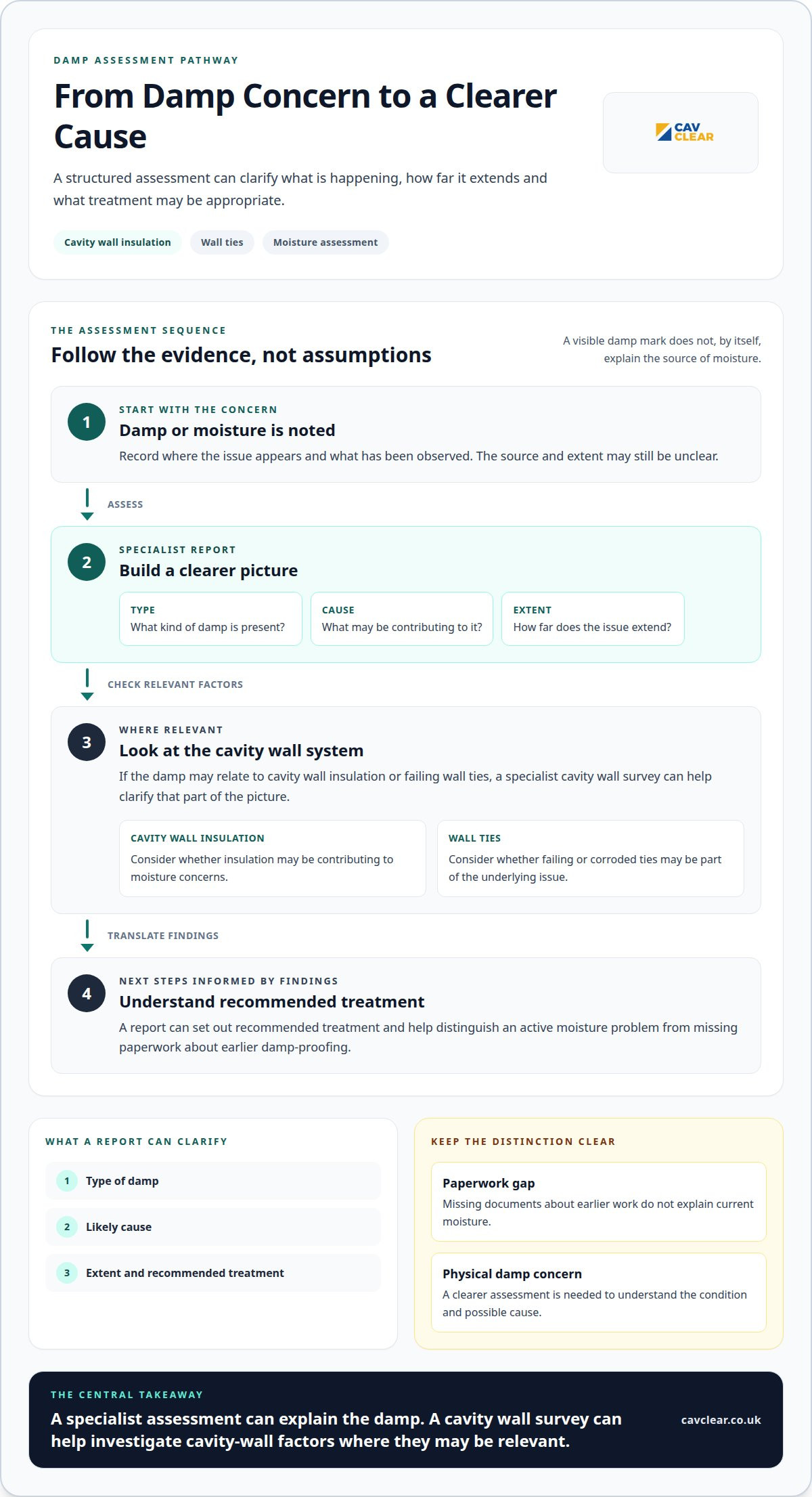
Damp can affect a mortgage decision when the lender cannot assess its cause, extent or effect on the property. A surveyor may recommend a specialist damp report before the lender makes a final decision. The request could lead to a delay, a lending condition or, if concerns remain unresolved, refusal.
The key issue is what the damp indicates about the building. A small area of moisture with a clear cause differs from widespread damp linked to ongoing water entry or deterioration. If a report identifies possible damage to masonry or other structural elements, the lender may need evidence about repairs before deciding whether the property provides suitable security.
A mortgage valuation survey is a visual inspection. The surveyor does not lift carpets, move furniture or carry out an intrusive investigation. Damp hidden behind finishes or furniture may therefore need further assessment. Visible staining can also have several possible causes, so the valuation alone may not give the lender enough detail to decide what action is appropriate.
A useful specialist damp report should identify:
- The type of damp recorded in the affected areas.
- The likely source or cause, such as rising moisture or water penetration.
- The extent of the problem and any related damage.
- The recommended treatment or repair, where required.
These findings give the lender a clearer picture than a general note saying “damp present”. They can also help distinguish an active defect from marks left after an earlier problem. If the report recommends treatment, the lender may require evidence that the relevant work has been completed before releasing all funds.
An indemnity policy addresses a defined financial risk. It does not resolve damp, establish its cause or show that the building is sound. If the lender’s concern is the property’s physical condition, an insurance document may not provide the technical evidence needed. The lender may instead consider the specialist report, recommended repairs and evidence of completed work.
For example, a surveyor notes damp near an external wall but cannot determine its source during a visual inspection. A specialist investigation can identify whether the moisture relates to the wall, an internal leak or another cause. That diagnosis gives the lender relevant information about the condition and any remedial action, rather than an assumption based on a visible symptom.
Where a report identifies damp associated with a cavity-wall defect, the assessment should explain the connection and its effect on the masonry. Cracking alongside damp may also need attention, particularly if the report raises concerns about movement or failing wall ties. Clear findings help the lender understand the issue and what evidence would show it has been resolved.
A lender’s final decision depends on the information available about the property and the proposed response. A specialist report can clarify the condition, while evidence of completed treatment can address a repair requirement. An indemnity policy may be relevant to missing paperwork, but cannot replace a condition assessment when the concern is active damp.
What does a damp indemnity policy cover and exclude?
A damp indemnity policy provides financial protection for a specific risk. It does not diagnose moisture, repair a wall or stop damp recurring. Its scope depends on the policy schedule and the remedial work it names. A buyer should distinguish cover for a defined future loss from treatment addressing the property’s physical condition.
Some policies cover recurrence of rising damp in walls treated with a chemical or physical damp-proof course, or an approved electro-osmotic system. The work must fall within the policy’s stated terms. For example, cover for a treated wall does not automatically extend to damp in another room or moisture caused by a separate defect. The schedule identifies the work and circumstances covered.
The indemnity for damp-proofing and other listed remedial work lasts thirty years from the Commencement Date, or for a shorter period stated in the contractor’s long-term guarantee. It applies only to work included in that guarantee and carried out by the named contractor. Replastering or associated repairs are not covered unless included in the guarantee.
There is also a key condition concerning the original contractor. The damp-proofing indemnity can be used only after that contractor has ceased trading. If the contractor remains in business, the policy does not provide the route described for recurrence. The contractor’s status and the guarantee’s exact scope are therefore important when assessing the cover.
The policy’s maximum payable amount is the original contract price shown in its schedule. It may not meet the full cost of later repairs, especially if the affected work has expanded or other parts of the building need attention. A buyer should read the schedule alongside the long-term guarantee to see which work, areas of the property and financial limit apply.
Specified exclusions also matter. Cover does not extend to defects resulting from structural alterations or remedial work carried out without the insurer’s agreement. Additional work can therefore affect the protection, even if the original treatment appears to be within scope. Read the policy schedule alongside records of later alterations or repairs.
For example, a policy covering recurrence of rising damp after a specified damp-proof course does not automatically cover moisture caused by a leaking pipe or a cavity-wall defect. These are different building problems. The policy is not a substitute for finding the source, and its terms do not establish whether the property needs further investigation or repair.
Before relying on a policy during a sale, compare its schedule with the guarantee and damp report. Check the named contractor, treated areas, included work, time limit and financial cap. This helps show whether the policy addresses the specific concern raised about the property, rather than damp in general.
CavClear
CavClear can help when damp concerns may involve a cavity-wall defect rather than missing paperwork alone. Its cavity wall surveys and Wall Tie Surveys assess relevant cavity-wall conditions and identify issues that may contribute to moisture or masonry concerns. This can give buyers and property owners clearer information about the building before they decide what further action is appropriate.
Where defective cavity wall insulation is identified, Cavity Wall Insulation Removal may address that specific problem. If a survey identifies failing wall ties, Wall Tie Replacement may be recommended. These services address the building issue itself; an indemnity policy serves a different purpose and does not diagnose or remedy a defect. Contact CavClear to discuss your cavity-wall concerns and the relevant survey options.
Take the next step with confidence
Whether a mortgage lender will accept an indemnity policy for damp depends on the issue the policy addresses and the evidence the lender needs. If damp may be linked to a cavity-wall problem, understanding the building’s condition can help you decide what to discuss next with your lender and conveyancing team.
CavClear offers Cavity Wall Insulation Removal, Wall Tie Replacement and Wall Tie Surveys. These services may be relevant when defective insulation or failing wall ties are suspected of contributing to moisture or masonry concerns. They address cavity-wall issues, rather than replacing the lender’s decision about insurance or lending conditions.
If you’re weighing up a policy alongside concerns about the property itself, a conversation can help clarify whether cavity-wall expertise is relevant to your situation. Contact CavClear for damp advice and discuss the concerns affecting your property. A clear understanding of the underlying issue can help you move forward with greater confidence.
Frequently Asked Questions
Indemnity Insurance in Conveyancing: When Needed and Who Pays?
An indemnity policy is generally considered when paperwork for a property issue is missing, such as a guarantee for earlier damp treatment. The seller usually pays, though the buyer may pay or both parties may share the premium. Before proceeding, make sure the policy schedule describes the specific missing document or risk. It does not repair damp or replace evidence about the property’s physical condition.
Can You Get a Mortgage on a House with Damp?
Yes, a mortgage can still proceed when a property has damp, but the lender may require more information or remedial work first. For example, a survey noting a small damp patch without identifying its cause could prompt a specialist report. If findings point to extensive moisture or damage, the lender may set conditions before releasing funds. The report’s diagnosis and recommended action help clarify the next steps.
Will the buyer’s mortgage lender accept indemnity insurance?
The buyer’s lender may accept indemnity insurance if the policy terms meet its requirements. Acceptance is not automatic: the lender considers the issue covered, the wording and any conditions attached to the mortgage offer. For instance, a policy addressing missing paperwork may not answer a separate concern about active moisture. The buyer’s conveyancer can present the policy details, while a damp report can address questions about the building’s condition.
Will a UK mortgage lender accept an indemnity policy for damp?
Whether a mortgage lender will accept an indemnity policy for damp depends on the policy terms and the lender’s requirements. The lender may accept cover for a specific documentation issue, yet still need evidence about active damp. Missing paperwork for previous work and moisture noted during a survey are different concerns. The policy schedule and any specialist report help the lender assess each issue separately.
Can an indemnity policy cover existing damp or only specific risks?
An indemnity policy does not treat existing damp or fund every repair associated with it. Damp-related cover may apply to recurrence of rising damp after specified damp-proofing work, subject to the policy terms. For example, it may not extend to moisture from a leaking pipe or a cavity-wall defect. Check the schedule for the treated areas, included work, exclusions and conditions before relying on the policy.
Do UK mortgage lenders require a damp survey or remedial work before lending?
There is no single requirement for every property; a lender may request a specialist damp report if its valuation raises concerns. The report should explain the type, cause and extent of the damp, along with recommended treatment. If it identifies work that needs doing, the lender may make lending conditional on completion or supporting evidence. A report identifying an ongoing source of moisture gives clearer direction than a valuation that simply notes damp.
Does an indemnity policy for damp affect a property sale or future mortgage?
A policy can help address a defined paperwork issue during a sale, but it does not guarantee a sale or future mortgage approval. A later buyer or lender may review the policy schedule and ask about the property’s condition. Keep the policy documents with relevant treatment records and reports so a future transaction has a clear account of what the cover concerns. The policy terms determine whether future owners or lenders are protected.
Recent Comments