
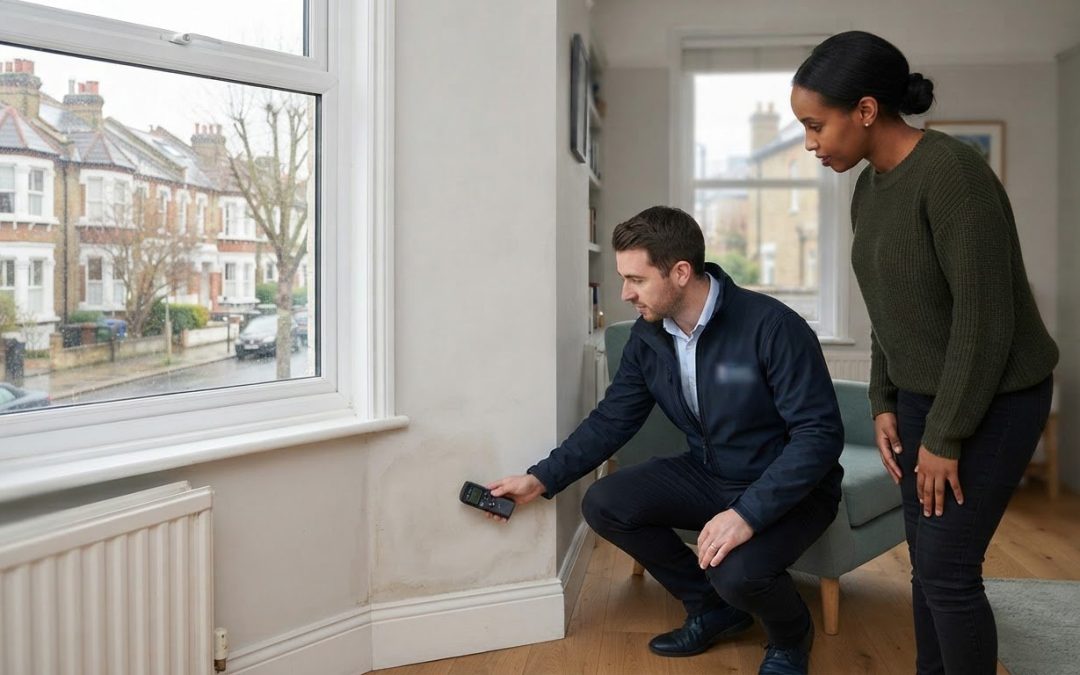
Damp in a leasehold flat isn’t automatically the landlord’s responsibility. Who is responsible for damp in a leasehold flat depends on its cause and which person or organisation maintains the affected part of the building. A leak from a shared roof or external wall may need attention from the expertholder or managing agent, while condensation linked to everyday moisture inside the flat may be the leaseholder’s responsibility to manage.
It’s understandable to expect the landlord or expertholder to resolve mould, especially when it keeps returning. But identifying the source matters: treating visible mould without fixing a leak, ventilation problem or cavity-wall defect can leave the underlying damp unresolved. Understanding who is responsible for damp in a leasehold flat starts with finding where the moisture is coming from.
Responsibility can differ depending on whether damp comes from a structural defect, a leak or condensation. This article explains practical steps leaseholders can take to reduce moisture, record recurring problems and report them clearly. It also covers who to contact and when a specialist inspection may help identify an issue with an external wall or cavity.
Key Takeaways
- Responsibility for damp depends on its cause and which parts of the building the lease assigns to the expertholder, managing agent or leaseholder.
- Record where and when damp or mould appears, and report recurring problems in writing to the managing agent or expertholder.
- Reduce indoor moisture by ventilating rooms, using kitchen and bathroom extraction, and dealing with leaks promptly.
- Check the lease to understand who maintains the roof, external walls, pipes and the flat’s internal surfaces.
- If damp may relate to cavity wall defects or insulation, a specialist cavity wall survey can help identify the issue and suitable next steps.
Contacting managing agents, expertholders and insurers
If the expertholder or managing agent hasn’t arranged repairs, send a dated written follow-up describing the damp and asking what action will be taken. If there’s still no response, contact your council’s environmental health department. It may send an inspector to assess the property.
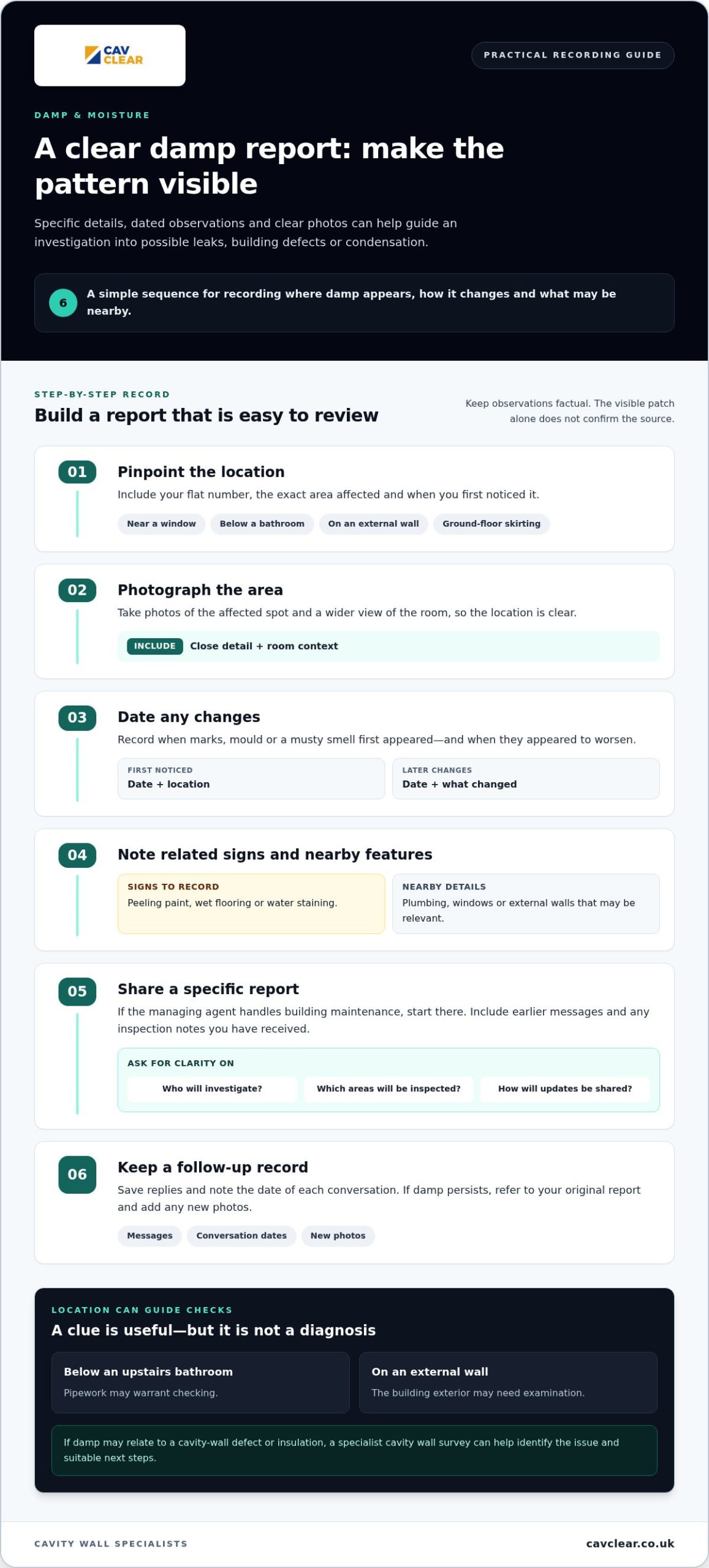
Start with the managing agent if they handle maintenance for the building. Give your flat number, the location of the damp and when you first noticed it. Say whether it appears near a window, below a bathroom, on an external wall or around the ground-floor skirting. These details can help guide an investigation into possible leaks, building defects or condensation.
Make your report specific and easy to review. Include:
- Photographs showing the affected area, including a wider view of the room.
- Dates when the marks, mould or musty smell appeared or worsened.
- Any related signs, such as peeling paint, wet flooring or water staining.
- Details of nearby plumbing, windows or external walls that may be relevant.
- Previous messages and any inspection notes you’ve received.
Ask the managing agent to confirm who will investigate, which areas they’ll inspect and how they’ll update you. Mould beneath an upstairs bathroom, for example, may warrant checking pipework, while damp on an external wall may require an examination of the building exterior. Don’t assume the visible patch reveals the source. Keep replies and note the date of each conversation.
Contact the expertholder directly if the managing agent says the repair needs their approval or falls outside the agent’s remit. A residents’ association may help leaseholders share information about similar damp in other flats. If neighbouring homes show staining along the same wall, report that pattern because it could indicate a shared building issue.
Tell your insurer and the building’s insurer about the damage, then ask what the relevant policy covers and what evidence they need. The lease and insurance arrangements can affect who handles repairs to shared parts, so keep policy details and written responses together. Don’t arrange work to a shared roof, wall or pipe before responsibilities and access arrangements are clear.
If damp persists, send a concise follow-up referring to your original report and including any new photographs. If the expertholder or managing agent still hasn’t addressed it, contact your council’s environmental health department. Describe the effect on the flat, including whether mould has spread from a bathroom or affected a bedroom. A clear record helps an inspector understand the history and locations involved.
Landlord duties for damp repairs
In a rented leasehold flat, addressing damp starts with locating the source and identifying who maintains the affected part. The landlord, expertholder and managing agent may each handle different repairs, so clear reporting helps the right person investigate.
A ceiling stain, for example, could relate to a roof fault, a pipe leak or condensation. Its appearance alone doesn’t establish the cause. The landlord can assess problems inside the rented home, while the managing agent or expertholder may need to inspect shared structure or external areas. Knowing this practical division helps residents direct reports to the right people.
Landlord Repair Duties
A landlord’s practical role is to respond to reported faults within the rented home and arrange relevant maintenance. This matters when damp may be linked to a broken heating system, faulty ventilation or another repair issue.
If a bathroom extractor stops working and condensation repeatedly forms nearby, for example, include the fan fault in your report. The landlord can arrange an inspection and consider whether it contributes to the damp. If the inspection instead points to water entering through an external wall, the landlord may need to involve the managing agent or expertholder.
Construction-related damp also needs an assessment that looks for its cause. A design feature may not require a repair to the structure or exterior, while a defect causing building damage may need attention from whoever maintains that part. The location of damp on walls or ceilings can help guide an inspection, but it doesn’t confirm the source.
Responsibility for Building Repairs
The expertholder typically oversees maintenance of a leasehold block’s exterior and structural parts. This matters when water appears to enter through the roof or an external wall, because the landlord or managing agent may need to coordinate access and inspection.
A ceiling stain beneath the roof may prompt an inspection of the roof coverings, while damp beside an external wall may call for checks outside the flat. A leak from a pipe serving the flat is a different maintenance issue. The reported location is useful, but an inspection is needed to distinguish between possible sources.
In a rented leasehold flat, tell the landlord about the damp and share relevant details with the managing agent if a shared or external area may be involved. Ask who will inspect the suspected source and how repair updates will be communicated. Clear coordination can help focus the investigation on the building element linked to the moisture.
Leaseholder responsibilities for preventing and managing damp
Leaseholders can reduce moisture from cooking, bathing and drying clothes, while reporting faults they can’t safely address. In a leasehold flat, managing condensation from everyday activities is often the leaseholder’s responsibility. That doesn’t mean every mould patch is caused by occupant behaviour. A faulty extractor, leak or building defect can also contribute, so both prevention and reporting matter.
Improve ventilation during everyday activities. Open windows where practical, particularly after a shower or while cooking, and use bathroom or kitchen extraction if available. Leave space for air to circulate around furniture instead of pushing wardrobes tightly into cold external corners. If mould appears behind a bookcase, note its position and the nearby window or external wall. That can help distinguish a local condensation pattern from a wider moisture problem.
Heating and insulation can also affect condensation. Inadequate heating, ventilation, kitchen or bathroom extraction, insulation, or suitable clothes-drying facilities can contribute to condensation damp. If condensation repeatedly forms on the same window or wall, record when it occurs and whether the room has been heated or ventilated. This record can reveal patterns that a single damp patch cannot.
Deal with leaks promptly. Drips from a tap, radiator or pipe can wet floors and walls, allowing moisture to spread and mould to develop. If a leak appears, limit further water escape where safe, protect nearby belongings and arrange the appropriate repair. Report leaks involving shared pipes or the building fabric to the managing agent, as the lease may assign those repairs elsewhere.
Check accessible windows, seals and room surfaces for signs of water entry. A persistent stain around a window after rain, for example, should be reported rather than repeatedly wiped. Don’t attempt repairs to external walls, roofs or shared rainwater goods unless you’re responsible and authorised to do so. Check gutters only where you can do so safely, and report overflowing or damaged gutters to the party responsible for maintaining them.
Rising damp is described as the rarest form of damp in homes. In England, it generally affects the lower part of a ground floor, reaching about one metre high. Damp in a flat above the ground floor isn’t rising damp. A mark at floor level alone doesn’t prove rising damp, so report its location and any changes rather than assuming a new damp-proof course is needed.
In council housing, some leaseholders have specific responsibilities for maintaining their home’s interior and taking preventative steps against damp, mould and condensation. Check the lease and any housing guidance for the flat. If mould spreads across several rooms, returns after cleaning or appears alongside a leak, report the pattern promptly as a maintenance concern.
Reporting damp and mould
Keep dated photographs and notes showing where damp appears and how it changes. Record whether it follows rainfall, a leak, showering or cooking, and whether heating or ventilation was in use. This evidence can help distinguish possible penetrating damp from moisture forming inside the flat.
Report recurring damp and mould to the landlord in writing, even if you’ve already mentioned it by phone. Describe the affected rooms and surfaces, when the problem happens and whether it returns after cleaning. Ask the landlord to investigate possible causes, including leaks, heating, ventilation and bathroom or kitchen extraction. Describe symptoms without presenting a suspected cause as a confirmed diagnosis.
For a leasehold flat, also send the report to the managing agent or expertholder if the suspected source involves a shared part of the building. Damp appearing on an external wall after rain, for example, may need an inspection outside the flat. Ask who will arrange the inspection and whether access to another area or home is needed.
Keep a simple record that connects observations with events. Include:
- The date and room where each new patch, stain or mould growth appears.
- Photographs from the same position, so changes to a ceiling or wall are clear.
- Whether the affected surface feels wet, and whether a musty smell is present.
- Relevant events, such as heavy rain, a plumbing leak or bathroom use.
- Copies of messages, inspection notes and any repair updates.
Ask the landlord to check all potential causes of condensation damp, rather than focusing only on cleaning the visible mould. A cold patch near a window, for instance, may have a different explanation from a stain below a bathroom. Request a written response within 14 days, and keep the reply with your dated records. If the damp worsens while you wait, send an updated report with fresh photographs.
If the expertholder or managing agent doesn’t address the problem, contact your local council’s environmental health department. The council may send an inspector to assess the property. Explain what has happened, where the damp is located and who you’ve already contacted. Include relevant written replies and note any effects on rooms used for sleeping or daily activities.
When an inspection takes place, show the inspector the affected areas and explain the timeline. Point out whether damp is confined to one room or appears in several places, and mention nearby leaks or external defects. A clear record helps the investigation focus on the cause and any action that may be needed.
What does a lease say about responsibility for damp, leaks, and repairs?
To move the issue forward, identify the affected building element, the contact responsible for maintaining it and the work needed to resolve the moisture. In a block of flats, different people may coordinate repairs inside a home, in shared spaces or on the building exterior. A clear description can help prevent a report being passed between contacts without an inspection being arranged.
Separate the visible damage from the suspected source. A damp patch may be on an internal wall, for example, while moisture could be entering through a nearby joint or concealed service. Note both locations when describing the problem. This gives the maintenance team a clearer starting point than a request to repaint or clean the affected surface.
Ask what the proposed repair will address. If the work covers only stained plaster, ask whether the source of moisture has been investigated separately. If a contractor identifies a fault outside the flat, ask who will coordinate access and any follow-up work inside. This keeps the plan focused on the cause as well as the visible damage.
Think through how the work may affect other residents. A repair to a shared area can require access arrangements, while work inside a flat may need coordination with the building manager. Tell the relevant contact about access restrictions, affected rooms and any belongings that need moving. Clear arrangements reduce avoidable delays and help the inspection cover the area linked to the damp.
After work is completed, check whether the affected area continues to change. A mark may take time to dry, so record whether it grows, returns or remains stable rather than judging the repair by appearance alone. If moisture reappears, report the change and refer to the earlier work. This gives the maintenance team useful context for deciding whether another inspection is needed.
Keep a simple maintenance record for the flat. Note the date of each visit, the area inspected, the work completed and any next steps given by the person arranging it. For example, record whether a visit examined the source of water or only repaired internal finishes. These details help everyone understand what has been checked and what remains unresolved.
If responsibility remains unclear, ask the building contact to explain who is coordinating each part of the maintenance. A concise request can distinguish an inspection of the suspected source from repairs to internal damage and follow-up checks. This practical breakdown helps residents track progress without assuming one visit has addressed every part of the damp problem.
CavClear: Cavity Wall Insulation Removal
CavClear can investigate damp where a cavity-wall defect or problematic insulation may be involved. Persistent moisture on an external wall, particularly alongside signs of cracking, may warrant a closer look at the cavity and wall ties. A Cavity Wall Survey can assess the cavity, while a Wall Tie Survey can investigate concerns about the ties connecting the masonry walls.
If defective or incorrectly installed insulation is identified as the issue, Cavity Wall Insulation Removal addresses that specific problem. Where failing ties are identified, Wall Tie Replacement may be appropriate. These specialist services focus on the cavity-wall system, rather than routine internal repairs such as redecorating.
If damp may involve cavity insulation or wall ties, contact CavClear to discuss a survey or the appropriate remedial service.
Focus on finding the source before repairing the damage
Understanding who is responsible for damp in a leasehold flat starts with identifying what is allowing moisture into the building or keeping it inside. Before arranging cosmetic work, ensure the source has been assessed. Repainting a stained wall may improve its appearance, but it won’t resolve a cavity defect, failing wall ties or defective insulation.
If damp on an external wall or cracking suggests a cavity-wall issue, a specialist inspection can help clarify the next step. CavClear provides Wall Tie Surveys, Wall Tie Replacement and Cavity Wall Insulation Removal for relevant cavity-wall problems. These services address specific defects, rather than general internal decoration.
Keep your notes, photographs and inspection findings together. A clear record can help you explain the problem to the people responsible for the affected building element and plan appropriate remedial work. If cavity-wall concerns may be contributing to damp, contact CavClear about damp to discuss the issue. A clearer understanding of the cause can help you move towards a sound, lasting repair.
Frequently Asked Questions
Are landlords responsible for damp and mould?
Landlords may need to address damp when a repair fault contributes to it. A leaking roof or broken extractor, for example, can create moisture that shouldn’t be treated as a tenant-only issue. Condensation linked to unrepaired heating or ventilation faults also points to maintenance that needs attention. Focus your report on symptoms and the suspected fault, rather than assuming mould proves who caused it.
Who is responsible for damp and mould in a leasehold flat in England?
Responsibility depends on the source of the damp and the leasehold arrangements. A expertholder or managing agent may handle a defect in shared structure, while a leaseholder may need to manage moisture from cooking or bathing. In a rented flat, the tenant should also tell their landlord. If the source is uncertain, report the affected area to the relevant parties so it can be investigated.
Who must fix damp caused by a leak from another flat or communal pipework?
The party responsible for the leaking pipe or building service should arrange investigation and repair, but the exact responsibility depends on the pipe and lease. Report the leak to your managing agent and landlord, stating whether water is coming from another flat or a shared area. Include photographs and note any continuing water entry. Don’t enter another resident’s home or attempt work on shared pipework yourself.
Who is responsible for condensation and mould inside a leasehold flat?
A leaseholder is often responsible for managing condensation linked to everyday activities, such as cooking, bathing or drying clothes. Use available extraction, ventilate rooms and keep furniture clear of cold external corners. If condensation persists alongside a broken fan, heating fault or leak, report the defect to the appropriate person. Mould alone doesn’t establish whether a repair fault or indoor moisture caused it.
What should landlords and managing agents do when damp is reported in a rented leasehold flat?
The landlord should take a report seriously, investigate the possible source and arrange relevant repairs within their area of responsibility. They may need to coordinate with a managing agent if the suspected fault affects shared structure or services. A ceiling stain below a communal pipe, for instance, needs more than surface cleaning. Tenants can help by describing when it began and how it changes.
How can a leaseholder report damp to the expertholder or managing agent and request repairs?
Send a dated message identifying the room, affected surface and when the damp appears. Attach clear photographs, describe any changes after rainfall or plumbing use, and say whether the problem is spreading. Ask who will inspect the suspected source and how you’ll receive an update. Keep replies and inspection notes together. If the issue continues without attention, contact your local council’s environmental health department.
Who pays for damp repairs, and can costs be charged through the service charge?
Payment depends on what needs repair and what the lease says about maintaining that building element. A structural repair arranged by the expertholder may be recovered through the service charge if the lease allows it. Internal plastering or redecoration may be allocated differently. Ask the managing agent to explain which repair the charge covers and how the lease relates to that work.
Which housing requirements and repair arrangements should residents check?
Start with the lease, tenancy arrangements and the building’s damp-reporting process. These help identify who handles shared structure, internal surfaces and repairs in a rented home. The reporting route may differ between private and social housing, so contact the landlord or housing provider and managing agent as appropriate. Keep written responses with your observations, especially if damp persists after a repair.
Recent Comments