

Damp and mould aren’t automatically a tenant’s fault. In England, landlords are responsible for fixing structural problems and faulty installations that cause damp, while condensation shouldn’t be assumed to be the cause without investigation. Presenting an independent damp report to a difficult landlord can help shift the discussion from blame to evidence about the property.
It’s understandable to feel stuck when damp keeps returning and the cause is disputed. A clear report records what was inspected, identifies possible sources of moisture and sets out practical recommendations, giving both parties a better basis for deciding what needs attention.
This article explains how responsibility can depend on the cause, what an independent survey may reveal and how to share its findings constructively. It also covers repair duties in England and why tracing the underlying defect matters: treating visible mould alone may not resolve the problem if moisture continues to enter or build up in the property.
Key Takeaways
- Responsibility for damp depends on its cause: structural defects and faulty installations point to different repair needs than everyday condensation.
- Record where damp or mould appears, when it started, how it changes and any related leaks or repair visits.
- A useful independent report should explain the inspection findings, likely moisture source and recommended remedial steps in clear terms.
- Share the report with the landlord and ask for a written response outlining the investigation and proposed repairs.
- Where findings point to cavity wall defects, problematic insulation or failing wall ties, specialist surveys or cavity wall insulation removal may help identify the next step.
1. Who is responsible for damp and mould: landlord or tenant?
In practical terms, the person who can address the source should take the next step. A tenant can report what they see and provide access for an inspection; a landlord or property manager can investigate building defects and coordinate repairs. The cause matters more than assigning blame. A wet patch beneath a ceiling fitting, for example, needs a different response from moisture on a cold bedroom surface.
Separate observations from assumptions when describing the issue. Record the affected room, wall or ceiling, the appearance of the damp, and whether it changes after rain, bathing or cooking. Note whether mould returns in the same place after cleaning. These details help whoever arranges maintenance decide what to inspect. They also prevent a general description such as “the flat feels damp” from obscuring a specific, recurring symptom.
Tenants can help establish when the problem occurs without accepting responsibility for a cause they haven’t established. Note whether condensation appears after a shower, a stain changes during wet weather, or a musty smell persists in a closed room. Share these observations and relevant photographs with the landlord. Timing and location can guide an inspection, but don’t prove the source on their own.
A landlord or managing agent should acknowledge the report, arrange a suitable inspection and explain the next step. If a contractor attends, ask which areas they checked and what they observed. Keep the visit date and summary with the property records. If the inspection identifies a repair, request an update on who will arrange the work and how the affected area will be monitored afterwards.
If symptoms are serious or spreading, make that clear in your first message. Describe the affected room, whether it can still be used normally, and any immediate concern, such as mould spreading around a child’s bed. Contact a health professional about health symptoms, and keep that advice separate from the building assessment. Clear information helps the property manager understand the urgency without overstating the cause.
Keep communication focused if the cause is disputed. Ask the landlord what their inspection found and whether another check is needed. If your observations differ from the inspection findings, identify the specific room or feature that remains unresolved. Aim to agree on a clear next action, such as another inspection or a repair update, rather than argue about lifestyle or fault.
2. Identifying the underlying cause of damp
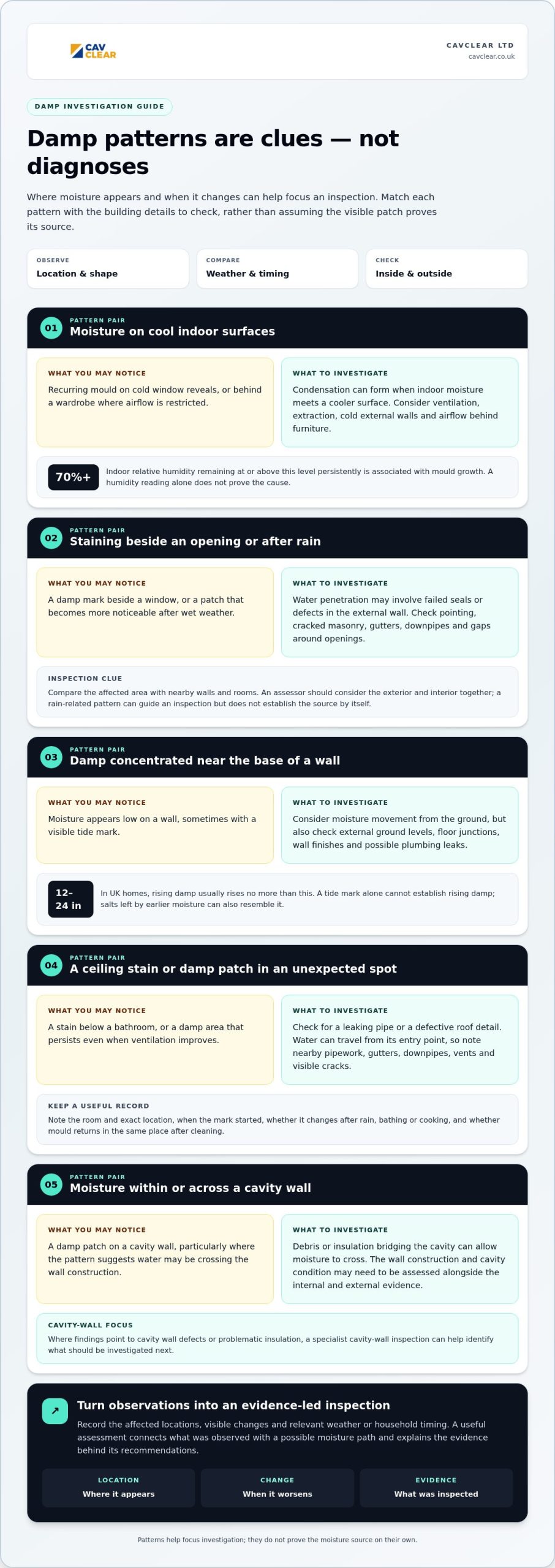
A damp patch shows where moisture appears, not necessarily where it enters. Record its position, shape, surface condition and any changes after dry or wet weather. A ceiling stain beneath a bathroom may point to a plumbing leak, while staining beside a window may direct attention to failed seals or water penetration. Compare the affected area with nearby walls and rooms before drawing conclusions. A focused investigation links these observations to the building’s construction and condition.
Condensation forms when moisture in indoor air meets a cooler surface. Poor ventilation, ineffective extraction, cold external walls and restricted airflow behind furniture can contribute. Mould growth is associated with indoor relative humidity remaining at or above 70% persistently, but a humidity reading alone does not prove the cause. Note where mould forms: recurring growth on cold window reveals or behind a wardrobe suggests a different pattern from a spreading wet patch after rainfall.
Penetrating damp occurs when water moves through the building envelope. Inspect external walls for damaged pointing, cracked masonry, defective gutters, blocked downpipes and gaps around openings. A stain that worsens after rain can help focus an inspection, but the assessor should examine the exterior and interior together. In cavity walls, moisture may also cross where debris or insulation bridges the cavity, making the wall construction and cavity condition relevant.
Rising damp is associated with moisture moving upwards from the ground through masonry. In UK homes, it usually rises no more than 12 to 24 inches above ground level. Check whether the damp pattern is concentrated near the base of a wall and whether external ground levels, floor junctions or wall finishes could affect moisture movement. A tide mark alone cannot establish rising damp; other sources, including plumbing leaks or salts left by earlier moisture, can resemble it.
Consider structural and service-related causes before treating surface symptoms. A leaking pipe may dampen a wall well away from the visible stain, while a defective roof detail can let water travel down through the building. Record the location of pipework, gutters, downpipes, air vents and visible cracks. If a wall remains damp despite improved ventilation, investigate water entry, cavity bridging or a concealed leak rather than assuming occupant behaviour is responsible.
Useful guidance from an independent inspection links each finding to a likely moisture path and explains the evidence behind that assessment. Ask for the affected locations, observations, possible contributing factors and recommended next investigation or repair to be set out clearly. This helps distinguish condensation from penetrating or rising damp and determine whether the landlord should investigate a building defect, ventilation issue or leak.
3. Independent damp survey findings and recommendations
An independent damp survey should explain what the surveyor inspected, what they found and how moisture may be moving through the building. Ask for a written report that separates direct observations from possible causes. For example, it should distinguish a damp reading at one location from a suspected leak, then explain the evidence for each conclusion. It should also identify areas the surveyor could not inspect, so readers understand the scope and limits of the findings.
Before booking, provide a concise description of the affected rooms, the building type and the symptoms you have noticed. Include examples such as staining near a window, moisture around a chimney breast or repeated mould on one external wall. Share relevant photographs and details of previous inspections. This helps the surveyor plan a visit around the reported problem instead of relying on a single surface reading or rating.
Ask how the inspection will assess ventilation, heating, external walls, plumbing and accessible cavity areas. The report should explain whether cooking, heating patterns or restricted airflow may contribute to moisture. These factors should not replace investigation of building defects. Condensation may occur alongside water entering through damaged pointing, for instance, so recommendations should distinguish both issues and identify what needs further investigation.
Booking and reporting timescales depend on the property, access and inspection scope. Agree an appointment and expected report date with the surveyor, then make relevant rooms and accessible service areas available. Ask what equipment or checks the visit will involve, and whether the surveyor needs plans, photographs or previous reports beforehand. A suitably qualified independent surveyor should explain the inspection method and findings in clear language, including any limits that affect their conclusions.
How should a tenant handle the survey fee? Ask for a written quotation before booking, with the inspection scope and included reporting clearly described. If the landlord arranged the survey, ask who will provide the report and how its findings will be shared. Keep the quotation and booking details with your property records so the agreed service and expected deliverables are clear.
How much does an independent damp survey cost in the UK? The fee depends on the property, access, inspection scope and reporting required. Ask the surveyor for a property-specific quotation and check whether follow-up testing is included. A limited visual inspection and a more detailed investigation may produce different findings, so compare the work described, not just the headline figure.
When presenting the report, highlight its main findings and recommendations, then ask the landlord to respond to each proposed action. If they choose a different approach, ask why and how they will monitor the affected area. A written response keeps the discussion focused on evidence, practical next steps and whether the source of moisture has been addressed.
4. Landlord repair and fitness obligations in England
In England, a practical repair plan should match the defect identified in the property. A damaged external wall, leaking pipe or faulty roof detail needs attention at its source, not just fresh paint over the affected area. The independent report can help the landlord identify which building component needs inspection and what work may prevent moisture from returning.
A home’s condition also depends on whether essential areas remain usable and maintained. If damp has damaged plaster, flooring or window finishes, include those effects in the inspection record. A report can distinguish the initial moisture source from secondary damage, helping the landlord plan both the underlying repair and any necessary reinstatement.
Repairs may include stopping water entry, fixing a leaking service, addressing defects in an external wall or restoring a faulty extractor fan. Where condensation is present, the repair plan can consider whether ventilation or heating equipment needs attention. The report should link each recommended action to the observed condition, rather than suggest one treatment for every damp patch.
What repair arrangements apply in England, Wales, Scotland and Northern Ireland? Maintenance processes and property standards can differ across the four nations, so this section focuses on practical steps for homes in England. Tenants should describe the defect clearly, while landlords or property managers can arrange an inspection and coordinate appropriate work.
Make a formal repair request easy to act on. Identify the affected room and building feature, attach the relevant report pages, and separate urgent concerns from other recommendations. Ask the landlord to confirm which areas they will inspect, what work they propose and how they will keep you updated. Keep the request and replies together with the survey documents.
How can a tenant present an independent damp report to an uncooperative landlord? Send the report with a short covering note identifying the specific finding and requested action. If the landlord disagrees with a recommendation, ask what evidence they rely on and what alternative inspection or repair they propose. Keep the discussion in writing and record any agreed access or follow-up arrangements.
For recurring damp, organise work around the moisture source and the condition of affected materials. A contractor’s visit should have a clear purpose, such as checking a suspected leak or inspecting external masonry. After the work, note what was completed and whether the affected area changes. This record helps establish whether further investigation is needed, without treating the visible stain as the only measure of success.
5. Independent professional advice
An independent report is most useful when it explains the evidence, not just the visible symptoms. Check that it identifies the inspected areas, describes the methods used and separates observations from conclusions. A moisture reading, for example, is evidence from one location; identifying its cause requires further interpretation. A clear report explains the reasoning behind its recommendations in language both tenant and landlord can understand.
Match the professional advice to the suspected building issue. If damp affects external walls, the inspection should consider the wall construction, external condition and possible routes for water entry. If the report notes cracking or movement, that may warrant investigation of the masonry rather than treating damp as an isolated surface problem. A report that names the relevant area and explains why it needs attention gives the landlord a practical basis for deciding what to inspect next.
Ask the surveyor to state the scope and limitations of the inspection. Note whether they could access the affected room, inspect the external wall or examine relevant parts of the building. If access was restricted, the report should record what remained unseen and how that affects the findings. This prevents a limited visual inspection from being mistaken for a full assessment of concealed areas.
Independent advice can also help when the evidence points to a cavity-wall concern. Ask the surveyor whether the observed damp pattern is consistent with moisture crossing the cavity, defective insulation or another source. If there are cracks in the brickwork, record their position and whether they correspond with damp areas. The report should distinguish observed conditions from possible explanations and identify any further investigation needed to clarify the cause.
Keep a dated record of professional advice and the landlord’s response. Attach the report to a concise message identifying its main finding, recommended action and any urgent inspection need. If the landlord disagrees, ask which finding they dispute and what evidence supports their alternative view. A focused exchange keeps attention on the building condition rather than personal disagreement.
For serious or recurring damp, use independent advice to identify the next technical step rather than assume a cause in advance. Rising moisture near ground level, staining on external walls or mould returning in the same location can each point to different lines of investigation. Ask the surveyor what additional evidence would distinguish those possibilities and what should be monitored after repairs.
If the findings suggest a cavity-wall defect, explore cavity wall inspection options to understand what further investigation may clarify the moisture path. A report that links the symptoms, building condition and recommended next steps gives the landlord a clearer basis for arranging appropriate action.
CavClear: Cavity Wall Insulation Removal
CavClear carries out cavity wall insulation removal when inspection findings indicate that defective insulation may be contributing to damp or moisture in a property. If a report identifies cracking or possible wall tie failure, a Wall Tie Survey or Cavity Wall Insulation Survey can help investigate the cavity-wall condition and establish whether remedial work is needed. CavClear also carries out Wall Tie Replacement where failing ties require attention.
These specialist services are most relevant when evidence points to a cavity-wall issue, rather than condensation alone. Sharing the survey findings and photographs can help focus the next inspection on the suspected defect and its effect on the property.
For a cavity-wall concern, contact CavClear to discuss the relevant inspection or remedial service, or visit CavClear online.
Move from report to practical next steps
A report can focus attention on the building, but lasting progress depends on addressing the cause rather than repeatedly treating visible symptoms. Keep the findings accessible and use them to guide the next discussion with the landlord. If the evidence points to a cavity-wall defect, a focused inspection can clarify whether insulation or wall ties need attention.
Presenting an independent damp report to a difficult landlord is easier when the technical evidence is clear and the requested next step is specific. CavClear provides Cavity Wall Insulation Removal, Wall Tie Surveys and Wall Tie Replacement for relevant cavity-wall concerns. These services suit properties where inspection findings point to defective insulation or failing wall ties, rather than a damp issue with another cause.
If cavity-wall concerns remain, contact CavClear for professional advice about the appropriate next step. A clear understanding of the property’s condition can help you move forward with greater confidence.
Frequently Asked Questions
Who is responsible for damp and mould: landlord or tenant?
Responsibility depends on the source of moisture and the part of the home affected. A landlord would generally need to address a building defect, such as water entering through a damaged external wall. A tenant’s use of heating, cooking or ventilation may contribute to condensation, but that doesn’t establish the cause by itself. Focus your report on observable conditions and ask for suspected building defects to be investigated.
How can you mention health concerns linked to damp or mould without overstating them?
Describe symptoms and circumstances accurately, without saying mould caused an illness unless a medical professional has established that connection. Record when coughing or irritation occurs and whether it coincides with time spent in a particular room. Photograph the mould and describe its location, spread and persistence. If anyone has health concerns, seek appropriate medical advice and keep it separate from the survey’s technical findings.
How should you respond if your landlord says it is just condensation or your lifestyle?
Presenting an independent damp report to a difficult landlord is more productive when you ask what inspection supports their conclusion. Explain where and when moisture appears, including whether it returns after ventilation or cleaning, and share relevant evidence. Ask the landlord to consider other possible sources, such as a leak or water entering through an external wall. A factual response keeps attention on investigation rather than blame.
Can a UK tenant commission an independent damp and mould survey without the landlord’s permission?
A tenant can seek independent advice, but should arrange access carefully. When presenting an independent damp report to a difficult landlord, explaining the proposed inspection scope and sharing the report can keep discussions focused. If the surveyor needs access to communal spaces or exterior areas, coordinate with the landlord or managing agent. This supports a practical inspection and gives the findings a clear route into repair planning.
What qualifications and accreditations should an independent damp surveyor have in the UK?
Look for relevant training in building pathology and moisture diagnosis, practical experience with the property type, and a clear explanation of the inspection method. Ask how the surveyor distinguishes condensation from penetrating or rising damp, and whether they provide written findings. Recommendations should relate to observed evidence, rather than rely on a single damp-meter reading or suggest one treatment for every property.
What should a professional damp report include to identify the cause and recommend repairs?
A useful report identifies the inspected rooms and building elements, describes visible defects and moisture readings, and explains how the evidence supports its conclusions. It should distinguish observations from possible causes, note inaccessible areas, and recommend specific further checks or repairs. If staining appears below a gutter, for example, the report should link the internal pattern to an inspection of the relevant external detail.
What evidence should tenants collect alongside a damp report, such as photos and repair requests?
Keep original photographs with dates, and take repeat images from consistent positions so changes are easy to compare. Save emails or letters reporting the problem, appointment records, repair notes and landlord replies. A short timeline can connect events such as a leak, worsening staining and a contractor visit. Keep copies with the report, and note which rooms or belongings are affected without altering the original evidence.
What are landlords’ legal duties for damp and mould in England, Wales, Scotland and Northern Ireland?
In England, landlords must repair structural problems and faulty installations that cause damp, and address damp or mould if the home is unfit to live in. They should respond urgently if health is at risk. The available facts establish no nation-specific duties for Wales, Scotland or Northern Ireland.
Recent Comments