
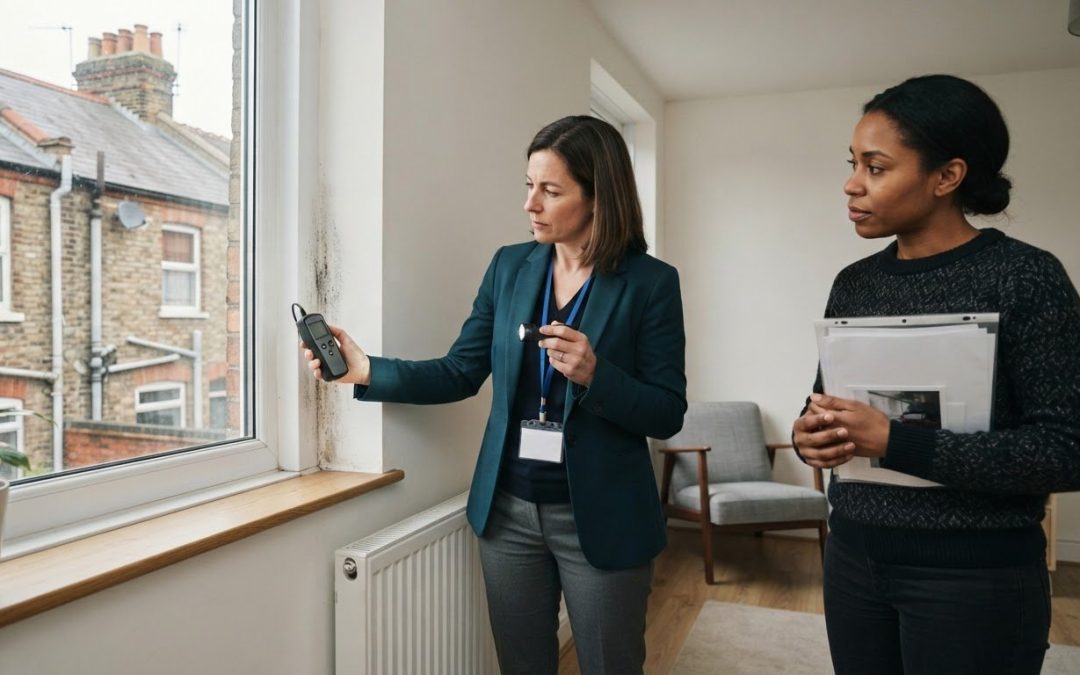
What if the most useful damp survey is not the one that names a single culprit, but the one that explains what the evidence does and does not establish? If you are concerned that a landlord or contractor may favour one explanation, an independent damp survey for tenants can help clarify possible next steps without jumping to a diagnosis.
Damp and mould can have several possible causes, including condensation, leaks and defects in the building. It is understandable to want clear answers, particularly if you are unsure what evidence matters or what a surveyor needs to inspect. A useful report should distinguish observed conditions from possible causes, explain any limits to the inspection and set out practical recommendations.
This guide explains what to ask before booking, how to prepare photographs and relevant records, and what access the surveyor may need. It also covers how to assess a specialist and share written findings with your landlord or property manager. If a cavity wall issue may be relevant, the survey scope should say so rather than assume it is the cause.
Key Takeaways
- An independent damp survey for tenants should explain its scope and separate recorded evidence from possible causes and suggested remedies.
- Ask which internal and external areas the surveyor will inspect, and whether access limits could affect the findings.
- Before the visit, note where and when damp appears, how it changes over time, and any previous inspection information you can access.
- Compare diagnostic reports with work quotations. Check the surveyor’s relevant experience, reporting detail and any connection to remedial work.
- If the evidence points towards a cavity-wall issue, ask whether a specialist assessment is appropriate before considering next steps.
Independent damp surveys for tenants: what they can and cannot establish
An independent damp survey for tenants should begin with the conditions found at the property, not a repair chosen in advance. The surveyor can inspect accessible areas, record signs of moisture or mould, and assess possible causes in context. These may include condensation, leaks, penetrating damp, rising damp or defects within a cavity wall. Damp has several possible forms and causes. The overview of structural dampness is a useful starting point, but it cannot identify what is happening in a particular home.
A survey records evidence and assesses possible causes; a repair quotation prices proposed work. A useful report explains what the surveyor observed, what those observations may indicate and what further checks or actions could be appropriate. It cannot diagnose concealed defects remotely, and its conclusions depend on the agreed scope, access and available evidence. If a defect is hidden behind finishes or within the cavity, the report should state any limits rather than present an unverified cause as fact.
Visible mould alone does not explain why it has formed. Moisture patterns, ventilation, leaks, building defects and how rooms are used may all be relevant. Some cases may involve cavity wall insulation or another cavity-wall concern; others may have no connection to the cavity. An inspection is needed to assess the property. Damp and mould should not automatically be attributed to one cause or one remedy.
What does independent mean when choosing a damp surveyor?
Ask who employs the surveyor and whether they or their organisation also carry out remedial work. That relationship does not, by itself, determine whether a report is sound, but clear disclosure helps you assess the recommendations. Check that the report separates recorded observations, possible causes and proposed actions. If it moves directly from signs of damp to a specific paid remedy without explaining the evidence, ask what supports that recommendation and whether other explanations were considered.
When might a tenant need a specialist damp survey?
Consider an inspection if damp keeps returning, its source is unclear, or an explanation you have received does not fit the visible pattern. If there are signs that a cavity-wall issue could be relevant, ask whether the surveyor has suitable experience assessing that part of the building. Specialist knowledge can help investigate a possibility, but it should not become an automatic diagnosis. The findings should show what was inspected and what remains uncertain.
CavClear provides damp and mould surveys where cavity-wall problems may be relevant, alongside cavity-wall inspections. Ask about the survey scope and whether the organisation also undertakes remedial work, so you understand how the findings relate to any proposed work.
What an independent damp survey may inspect in a rented property
The surveyor should explain the agreed scope before the visit. A visual inspection may cover affected rooms and accessible external areas, such as the corresponding outside wall, window surrounds, brickwork and rainwater goods. What can be checked depends on access, the property’s layout and the reason for the inspection. Ask whether the survey includes both internal and external observations, and which areas will not be accessible.
The inspection should consider patterns rather than treat one mark or reading as a complete diagnosis. The surveyor may note where moisture or mould appears, whether it follows an external wall or a particular height, and how ventilation and room use relate to the conditions. They may also look for visible defects, such as damaged pointing or signs of a leak. The report should distinguish direct observations from possible explanations that need further checking.
How surveyors assess damp evidence without assuming the cause
A surveyor may use a moisture meter to compare readings across surfaces. A reading is evidence to interpret, not proof of a specific cause on its own. The material, surface condition and inspection context all matter. Ask the surveyor to record affected locations and visible conditions, then explain how these observations support or limit each possible explanation. That record can help you discuss the findings with your landlord. The House of Commons Library’s overview of tenants’ rights for damp and mould provides further context for tenants.
When cavity walls, insulation, or wall ties may be relevant
Cavity-wall defects may be relevant when investigating moisture or cracking, but damp alone does not establish that a cavity problem exists. Cavity wall insulation is one possible factor to assess in the context of the property, not a reason to assume every insulated home has a defect. If observations point towards the cavity, ask whether a separate specialist inspection is appropriate. Wall-tie concerns, particularly where cracking or movement is also observed, may require a dedicated wall-tie survey rather than a general damp assessment.
Some checks may go beyond a visual inspection. Before any invasive investigation, ask what it involves, why it is needed, what it may establish and whether it could disturb finishes. As a tenant, discuss access or opening up the building with your landlord or property manager first. Make sure permission and responsibilities are clear before work begins.
If the concern appears connected to a cavity wall, you could review CavClear’s cavity-wall surveys and ask whether the proposed scope fits the issue. CavClear also assesses damp and mould where cavity-wall problems may be relevant.
How tenants can judge a damp surveyor’s independence and report quality
When arranging an independent damp survey for tenants, look beyond the word “independent” in a service description. Compare the inspection scope, the surveyor’s relevant experience, the detail promised in the report and whether the organisation also offers remedial work. A specialist contractor may bring useful knowledge, particularly if cavity-wall defects are a possibility. The important points are transparency and a clear explanation of who is carrying out the inspection and what other services they provide.
Questions to ask before arranging the inspection
Ask what the survey will cover, which areas may be excluded and what access is needed. Confirm what you will receive in writing, including whether the report will set out findings and recommendations. Also ask whether the same company may offer further investigation or remedial work. These answers help you compare services on a like-for-like basis and understand any commercial interests before deciding.
A diagnostic survey and a work quotation serve different purposes:
- Diagnostic survey: records inspected areas and evidence, considers possible causes, explains limitations and recommends next steps.
- Work quotation: describes proposed work and its price. It may rely on an existing diagnosis, but a quotation alone does not establish the cause of damp.
If a recommendation names a particular remedy, ask which observations support it and whether other possible causes were considered. A clear answer should connect the evidence to the proposed action, rather than treating a repair as proof of the diagnosis.
What a clear, useful damp survey report should include
Check that the report identifies the areas inspected, records visible conditions and explains any limits to the assessment. Findings should be separated from possible explanations, and recommendations should be linked to the evidence. If the surveyor could not access an area or a concealed defect remains uncertain, that should be stated plainly. A report can support a discussion with your landlord, but it should not be treated as proof of a cause it did not establish.
For broader context on survey scope and reporting, consult the article Professional Damp Survey Guide: Costs, Process, and Expert Reports for 2026. If a report recommends specialist cavity-wall investigation, ask what that additional inspection would examine and whether it is separate from any remedial work. Clear answers make it easier to assess the advice and decide what to raise with your landlord or property manager.
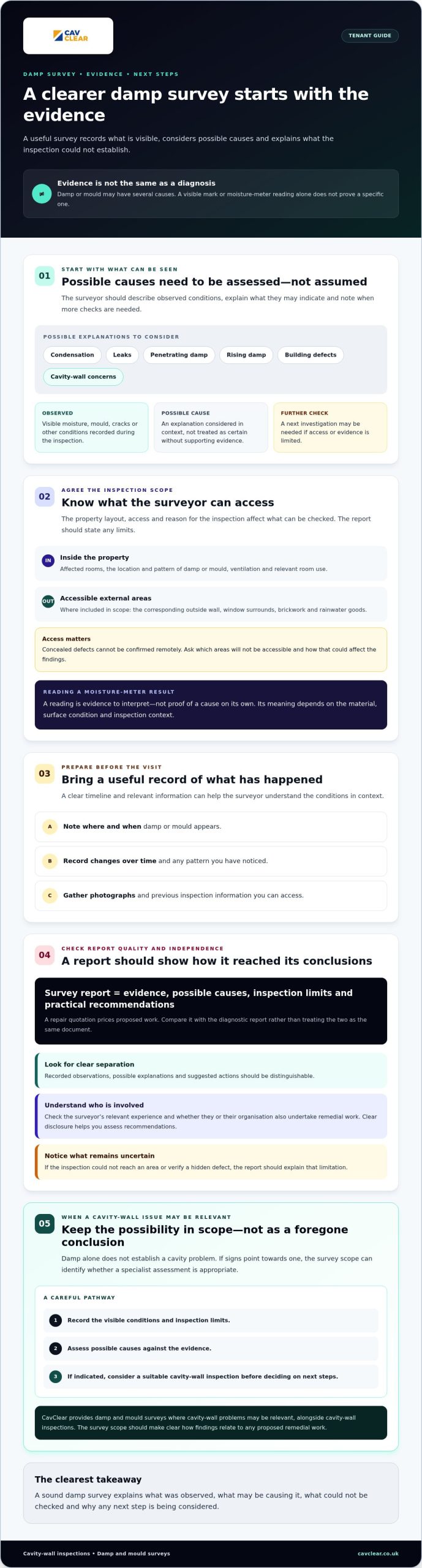
How tenants can prepare for a damp survey and use its findings
A little preparation can help the surveyor understand how the problem has developed and focus the inspection. Before the visit, make a simple record of affected rooms and surfaces, when you first noticed damp or mould, and whether it has changed over time. Note relevant observations, such as whether the area appears after rainfall or whether a repair has recently taken place. These details provide context, but they do not prove a cause.
What evidence should tenants record before the visit?
Keep dated notes and take photographs where practical. Capture the affected area and, if useful, a wider view showing its position in the room. Do not remove finishes, move building materials or disturb a suspected defect to investigate it yourself. Gather documents you already have, such as previous inspection reports, repair records or messages about the issue. If you are arranging an independent damp survey for tenants, this background can help the surveyor compare your observations with the conditions found during the visit.
Before the appointment, confirm the agreed scope and access arrangements with the surveyor and the appropriate property contact, such as your landlord or property manager. Ask which rooms and external areas need to be accessible, whether furniture should be moved, and whether any proposed checks could disturb surfaces. Share relevant information in advance where possible, and keep a copy for your records.
How to discuss the report with a landlord or property manager
Once you receive the report, send it in writing and refer to its specific findings rather than presenting a possible cause as certain. Identify the areas inspected, the observations recorded and the recommended next steps. You could ask:
- “Could you respond to the recommendation about the affected wall?”
- “The report says further inspection may be needed. Can we discuss how that should be arranged?”
- “Could you clarify what action is proposed and how it relates to the survey findings?”
If the report records uncertainty or an area the surveyor could not inspect, ask what further evidence or access may be needed. Keep your message factual, retain copies of correspondence and note any response or work carried out. This creates a clear record for follow-up and keeps the discussion focused on the property’s condition and practical next steps.
If the report raises a possible cavity-wall issue, you can explore CavClear’s cavity-wall surveys and ask whether a specialist inspection is relevant to the findings. Any assessment should be based on the property and agreed survey scope.
Choosing a specialist next step for a tenant damp survey
The right next step depends on what the evidence points towards. A general damp assessment may be suitable when the concern is limited to visible moisture or mould and there are no specific signs of a cavity-wall defect. If the survey notes damp on an external wall, associated cracking or another reason to investigate the cavity, ask whether a suitably scoped specialist inspection is needed. These signs can guide further investigation, but do not confirm a cause by themselves.
When cavity-wall expertise could help clarify the investigation
A cavity-wall specialist can assess relevant parts of the wall system when the inspection scope and property evidence justify it. Cavity wall insulation is one possible factor, not an automatic explanation for damp. Cavity wall insulation removal should only be considered if inspection findings support exploring that option. For background on the service, see Cavity Wall Insulation Removal: The Complete UK Homeowner’s Guide (2026).
CavClear conducts damp and mould surveys where cavity-wall problems may be relevant, alongside specialist cavity-wall inspections and remedial services. Its survey should not be described as independent. If a provider also undertakes remedial work, ask how the inspection findings are separated from any recommendations for that work. Transparency helps you understand the scope and assess the advice.
A low-pressure way to discuss a relevant survey
Describe what you have observed, where it appears and any changes over time. Then ask whether the proposed inspection covers the relevant areas, what access may be needed, and how the report will set out findings, limitations and suggested next steps. You can also ask whether the same provider may offer further investigation or remedial work. Clear answers let you decide whether the survey fits your concern without assuming a diagnosis in advance.
CavClear provides services nationwide across the UK. If your concern relates to a cavity wall, you can discuss whether a relevant inspection is suitable and what its scope would cover. Any findings would depend on the property and the inspection carried out.
Use clear findings to decide your next step
A well-scoped survey can help separate what the surveyor observed from possible causes and recommended action. Keep dated notes and relevant documents, check which areas the inspection covers, and share the written findings with your landlord or property manager. The report can guide a practical discussion, but it should not be treated as proof of defects it did not establish.
An independent damp survey for tenants may be useful when the cause remains unclear. If the evidence suggests a cavity-wall issue, specialist knowledge may help determine whether further inspection is appropriate. CavClear provides damp and mould surveys where cavity-wall problems may be relevant, as well as specialist remedial services. CavClear serves customers nationwide across the UK, is a member of the Wall Tie Installers Federation and is TrustMark registered for cavity wall insulation removal. Ask about the survey scope and any relationship between the findings and remedial work.
If your concern may involve a cavity wall, contact CavClear to discuss whether a relevant survey is suitable. Ask what the inspection would cover and what access it may need.
Frequently Asked Questions
Can a tenant arrange an independent damp survey?
Yes, a tenant can contact a surveyor to discuss arranging an inspection. Before booking, check the scope, cost and access requirements, then tell your landlord or property manager in writing about the issue and proposed visit. Agree access arrangements in advance, especially if the inspection may involve opening up or disturbing any part of the property. A visual survey can record evidence, but it may not identify concealed defects.
What does an independent damp survey for tenants include?
An independent damp survey for tenants usually involves inspecting accessible areas affected by damp or mould and recording relevant observations. Depending on the agreed scope, the surveyor may assess moisture patterns, ventilation and visible defects, and consider possible causes together. The report should explain what was inspected, what was found, any limits to the assessment and recommended next steps. Moisture readings or visible mould alone do not establish the underlying cause.
Should a tenant tell their landlord before arranging a damp survey?
It is sensible to notify your landlord or property manager in writing before arranging a survey. Describe where damp or mould appears, when you noticed it and whether it has changed. Explain that you are considering an inspection and discuss access to the property. Get agreement before any invasive checks that could disturb finishes or building materials. Keeping the conversation factual and saving copies of messages creates a useful record of the issue and arrangements.
How can I tell whether a damp surveyor is independent?
Ask who employs the surveyor and whether they or their company also undertake remedial work. A specialist contractor may still provide useful technical expertise, but should be open about its services and commercial interests. Check that the report separates recorded observations from possible causes and proposed actions. Ask how recommendations follow from the evidence, whether other explanations were considered, and what the inspection could not establish. These details help you assess the report fairly.
Can cavity wall insulation cause damp in a rented property?
It can be a possible factor in some properties, but insulation alone does not prove why damp has appeared. The condition of the cavity, the building’s exposure and other defects may need consideration during an inspection. Not every insulated property has a problem or needs cavity wall insulation removal. Ask for a property-specific assessment that explains the evidence and any uncertainty before considering remedial work.
What should I do if a damp survey report recommends further investigation?
Check which area needs further investigation and why the surveyor recommends it. Ask what the additional inspection would examine, what access it requires and whether it could disturb the property. Share the report with your landlord or property manager and request a response to the recommendation. Keep the discussion in writing. Further investigation may help clarify an uncertain finding, but the original report should not be treated as proof of a cause it could not establish.
Can a damp survey identify whether wall ties are causing cracking?
A general damp survey may record cracking, but it may not establish whether wall ties are responsible. Wall ties connect the inner and outer leaves of a cavity wall. Assessing their condition may require a separate, suitably scoped wall-tie survey or inspection. Cracking can have different causes, so do not assume a diagnosis from its appearance alone. Ask the surveyor whether the observed cracking warrants specialist investigation and what that inspection would cover.
Recent Comments