
Could an adverse damp report affect your purchase, or is it a finding that needs clearer evidence? If you’re getting a mortgage on a house with an adverse damp report, uncertainty about the lender’s response can add pressure while the sale is moving forward. A report doesn’t automatically mean your mortgage will be refused. The lender’s decision depends on its assessment of the property, the issue identified and the information available.
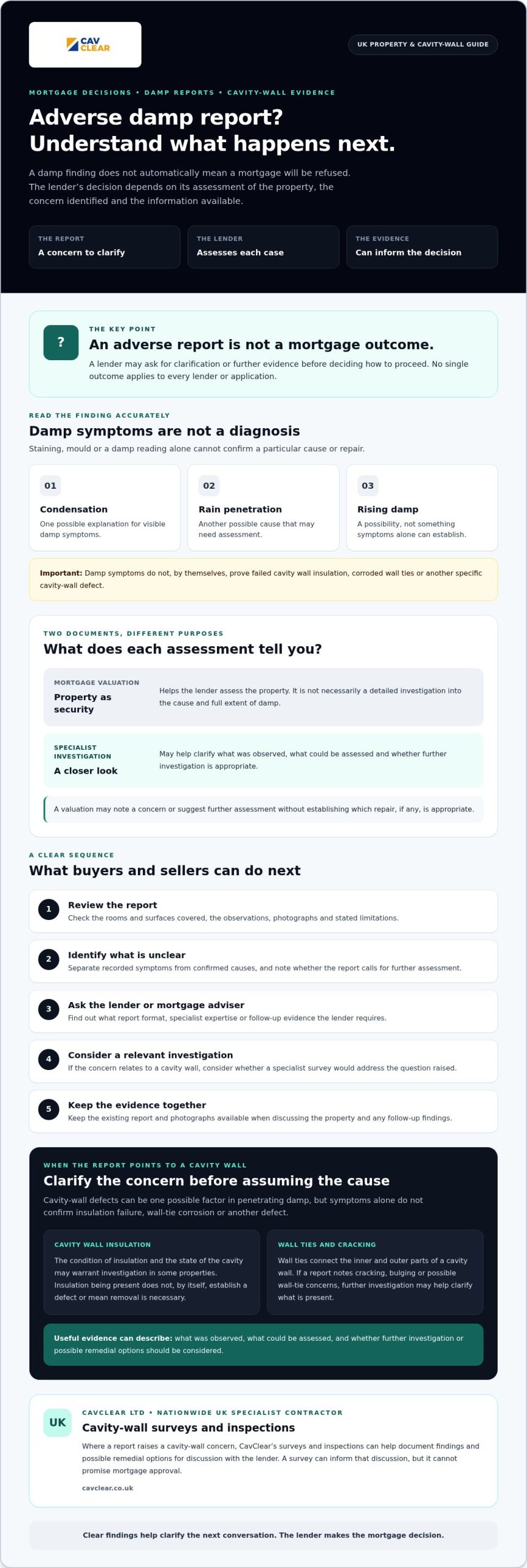
Conflicting opinions about the cause or recommended work can make it hard to decide what to do next. A mortgage valuation is not the same as a detailed investigation, and signs of damp do not confirm a particular defect or remedy. Start by checking exactly what the report says and what remains unclear.
This UK guide explains how an adverse finding may affect a mortgage decision, which documents to gather and how to clarify concerns involving cavity-wall insulation or wall ties. It also explains when a specialist cavity-wall survey may help document a concern for discussion with the lender. A survey cannot promise approval, and an adverse report is not a reason to assume the worst.
Key Takeaways
- Getting a mortgage on a house with an adverse damp report depends on the lender’s assessment and any evidence it requests. The report alone doesn’t determine the outcome.
- Damp symptoms can have different causes. Cavity-wall concerns need investigation before assuming insulation failure or wall-tie corrosion.
- A mortgage valuation and a specialist damp report have different purposes. Check what each document does and does not establish.
- Follow a clear sequence: review the report, clarify its scope, ask the lender what evidence it needs, then consider a relevant specialist investigation.
- If a report raises a cavity-wall concern, CavClear’s surveys and inspections can help document findings and possible remedial options.
Can you get a mortgage on a house with an adverse damp report?
Yes, getting a mortgage on a house with an adverse damp report may be possible, but there is no single lending outcome. Each lender considers the property and the individual application. It may ask for more information before deciding how to proceed, so check with your mortgage adviser or lender about the evidence it needs.
The word “adverse” signals a reported concern. It is not, by itself, a complete diagnosis of the damp’s cause, extent or effect on the property, and it does not prescribe a remedy. The lender may need clarification about the property’s condition, any structural concerns or work that may be required.
What does an adverse damp report actually mean?
Visible damp, staining or mould can have different explanations. Possibilities include condensation, rain penetration or rising damp, as outlined in this overview of structural dampness. These signs alone do not confirm a particular cause, such as failed cavity wall insulation or corroded wall ties.
Read the report carefully, including its limitations. Check which rooms and surfaces were inspected, whether the findings are based on visual observations or further investigation, and what the photographs show. Note whether the recommendations identify specific work or advise a more detailed assessment. A recommendation to investigate is not confirmation that a particular defect exists.
Can a lender refuse or pause a mortgage because of damp?
A lender may decide it needs further evidence to assess the property and application. Depending on the report and its own requirements, it could ask for a specialist investigation, clarification of the findings or information about proposed work. An adverse report does not automatically mean approval or refusal, and no general rule predicts the outcome for every lender.
A mortgage valuation helps the lender assess the property as security for the loan. It is not necessarily a detailed investigation into the cause and full extent of damp. If the valuer notes a concern, the report may recommend further assessment without establishing which repair, if any, is appropriate.
Before arranging work or relying on an informal opinion, ask your adviser or lender what report format, specialist expertise or follow-up evidence it requires. This can help you avoid commissioning an investigation that does not answer the lender’s questions. Keep the existing report and photographs available, and check that any proposed survey covers the concern raised. Clear evidence can inform the next discussion, but it cannot guarantee a lending decision.
How can cavity-wall defects contribute to an adverse damp report?
Cavity-wall defects can be one possible factor in penetrating damp, but they are only part of the picture. Moisture may enter or persist for different reasons, and a patch of staining, mould or a damp reading cannot identify the cause on its own. Symptoms do not confirm insulation failure, wall-tie corrosion or another specific defect.
Where a report points to an external wall or cavity, a cavity-wall survey or inspection may help gather relevant evidence. The surveyor can explain what was observed, what could be assessed and whether further investigation is appropriate. This gives buyers, sellers and their advisers clearer information to discuss with the lender, without assuming that a particular repair is needed.
Could cavity wall insulation be relevant to damp findings?
In some properties, the condition of cavity wall insulation and the state of the cavity may warrant investigation. The UK government’s guidance on faulty cavity wall insulation explains issues that can arise from installation problems. Having insulation does not mean a property has a defect, and it does not automatically mean cavity wall insulation removal is necessary.
Check whether the report identifies a cavity-related concern or simply records damp symptoms. A specialist survey can help establish whether further assessment is relevant. For background on the process and considerations, see this UK guide to cavity wall insulation removal.
When might wall ties or cracking need investigation?
Wall ties connect the inner and outer parts of a cavity wall. If a report notes cracking, bulging or possible movement, wall ties may be one area to assess, but those signs can have other causes. Their appearance alone does not confirm wall-tie failure or corrosion. An appropriate inspection is needed to assess the concern.
Where the report raises this possibility, a wall tie survey or cavity wall tie inspection may provide relevant evidence. The findings can help clarify whether further action should be considered, rather than treating every crack as proof of a structural defect. Read the guide to wall tie replacement for more context.
If an adverse report specifically raises cavity-wall insulation or wall ties, a specialist assessment may help clarify the finding. CavClear provides cavity-wall surveys, inspections, cavity wall insulation removal and wall tie replacement nationwide across the UK. You can explore CavClear’s cavity-wall services as an evidence-gathering option, not a guarantee of any mortgage outcome.
What is the difference between a mortgage valuation and a specialist damp report?
A mortgage valuation and a specialist damp report answer different questions. The valuation helps the lender assess the property as security for the loan. A specialist report investigates a concern in more detail, within the agreed scope of that inspection. If you’re getting a mortgage on a house with an adverse damp report, knowing what each document covers can help you identify what remains uncertain.
| Mortgage valuation | Specialist damp or cavity-wall report |
|---|---|
| Assesses the property for the lender’s purposes. | Examines specified damp or cavity-wall concerns. |
| May note visible issues or recommend further investigation. | Records observations and explains the inspection’s scope and limitations. |
| Isn’t necessarily a full diagnosis of building defects. | May discuss relevant possible causes and recommend next steps, depending on the investigation carried out. |
What can a mortgage valuation tell you about damp?
A valuation is not a detailed building survey or a full diagnosis of every defect. If the valuer records damp, the wording may indicate what was observed and whether the lender needs more information. Don’t infer a confirmed cause or prescribed repair if the valuation does not state one. Read the report, including any qualifications, and ask your mortgage adviser or lender what follow-up evidence it requires.
What should a specialist damp or cavity-wall report clarify?
A useful specialist report should make its scope clear. It should describe observed symptoms, explain which areas or elements were inspected, note any limits to the investigation and set out recommendations. Where evidence is incomplete, it should distinguish observations from possible explanations rather than state an unconfirmed cause as fact.
If the concern relates to an external wall, cavity wall insulation or possible wall-tie issues, a general damp assessment may not answer every cavity-wall question. A relevant cavity-wall survey or inspection can focus on the concern and document its findings. Confirm the proposed survey’s scope and suitability for the property, then check with the lender whether the evidence meets its needs. No report format automatically guarantees acceptance.
Before commissioning further work, compare the report’s recommendations with the lender’s specific request. This helps you avoid paying for an assessment that does not address the question under review. For more on what an assessment may cover, read this professional damp survey guide.
What should buyers and sellers do after receiving an adverse damp report?
Use the report to identify what needs clarifying before deciding on remedial work. Whether you are a buyer, seller or existing owner, follow the same basic order: understand the finding, ask the lender what evidence it needs, then arrange an investigation that addresses the specific concern. This keeps decisions grounded in evidence rather than assumptions about the cause or who should pay.
- Read the full report. Note the areas inspected, observations, photographs, limitations and recommendations. Separate confirmed findings from suggested explanations or further checks.
- Clarify the scope. If the wording is unclear, ask the surveyor what was assessed and what remains unknown. A note about damp or cracking may describe a symptom, not establish its cause.
- Ask the lender or mortgage adviser what is required. Do this before commissioning further work or agreeing a remedy. Ask which concern is affecting the application and whether the lender needs another report, clarification or evidence of completed work.
- Arrange a relevant investigation. Once you understand the question that needs answering, confirm the proposed survey’s scope and suitability for the property.
What should a buyer ask the lender and mortgage adviser?
Ask which part of the valuation or damp report needs addressing, what document or evidence would help, and whether the request applies to your application and this property. Requirements can vary, so don’t rely on another buyer’s experience or general advice as confirmation of what your lender will accept. Keep a written note of the response and any follow-up questions.
How should a buyer or seller prepare for further inspection?
Give the inspecting specialist the complete report, relevant photographs and available property history, including records of previous investigations or completed work. Ask which areas will be assessed and whether the inspection can address the cavity-wall concern raised. Until the inspection is complete, keep recommendations separate from confirmed findings.
Buyers can use the findings to discuss next steps with their adviser and the seller, without assuming who must arrange or fund work. Sellers can gather existing reports and records, and clarify access for any agreed inspection. Existing owners can ask their lender or adviser what information is relevant to their circumstances before proceeding.
Keep the paperwork together: reports, photographs, lender correspondence, specialist findings and documents relating to any completed work. An organised record helps everyone refer to the same information, but it cannot guarantee a particular mortgage decision. If the report raises a cavity-wall issue, ask CavClear about a relevant cavity-wall survey or inspection to help document the concern.
When can CavClear help with an adverse damp report?
CavClear may be relevant if an adverse damp report raises a concern about a cavity wall, cavity wall insulation or wall ties that needs specialist assessment. The report might note damp near an external wall, possible insulation issues or cracking that warrants a wall-tie inspection. Those observations do not confirm a defect by themselves. A suitable survey can help document what was found and what further steps may be appropriate.
This evidence can help you understand the cavity-wall concern and support discussions with your surveyor, the seller, the buyer or your mortgage adviser. It cannot guarantee that a lender will accept the report or approve an application. If you’re getting a mortgage on a house with an adverse damp report, ask the lender what information it requires before arranging an additional inspection.
Which CavClear services may fit a cavity-wall concern?
The appropriate service depends on what the report identifies and what needs investigating. CavClear provides specialist cavity-wall services nationwide across the UK, including:
- Cavity Wall Insulation Surveys, where the condition of insulation is relevant to the reported concern.
- Wall Tie Surveys and Cavity Wall Tie Inspections, where wall-tie condition may need assessment.
- Cavity Wall Surveys, where a broader cavity-wall concern needs investigation.
If an inspection identifies a relevant issue, recommendations may include cavity wall insulation removal or wall tie replacement where appropriate. Neither is an automatic remedy for damp. Any decision should follow suitable investigation, with findings and recommendations guiding the next discussion rather than a visible symptom alone.
What should you prepare before contacting a specialist?
Gather the complete damp report, its photographs and any available property records. Include earlier survey findings or documents about work already carried out, if you have them. Sharing the full context can help the specialist understand why the concern was raised and whether the proposed inspection is suitable.
Before proceeding, ask what the inspection will cover, whether it can assess the cavity-wall issue identified in the report, and what the written findings will include. Check whether the survey’s scope matches any specific request from your lender or mortgage adviser. A cavity-wall survey is an evidence-gathering step, not a promise of a particular lending outcome.
If the report points to a cavity-wall concern, you can discuss a relevant CavClear survey and clarify what inspection may suit the property. This gives you a practical way to investigate the reported issue while keeping any decision about remedial work grounded in findings.
Take the next step with clear evidence
An adverse damp report does not, by itself, decide whether a mortgage will proceed. The lender’s requirements depend on the property and application, so confirm what evidence it needs before arranging work. A valuation and a specialist damp or cavity-wall report also have different purposes and limitations.
Where the report raises concerns about cavity wall insulation or wall ties, a relevant survey or inspection can help clarify what has been observed and what may need further attention. Symptoms are not a diagnosis, and any remedial decision should follow suitable investigation. This measured approach can help you make informed decisions while getting a mortgage on a house with an adverse damp report.
CavClear provides specialist cavity-wall services nationwide across the UK. The company is a member of the Wall Tie Installers Federation and TrustMark registered for cavity wall insulation removal. These credentials do not determine a lender’s decision, but they can help you understand who you’re speaking with about a relevant cavity-wall concern.
If your report identifies a cavity-wall issue, discuss a relevant cavity-wall survey with CavClear. Clear findings can help you decide what to ask next.
Frequently Asked Questions
Will a mortgage lender reject a property because of damp?
There isn’t one outcome that applies to every lender or property. A lender may request clarification or further evidence, depending on the report and its own assessment process. Ask which specific finding needs addressing and what documentation would help it assess the application. General statements about what lenders “always” do can be misleading, so get guidance that relates to your property and application.
What happens if a mortgage survey finds damp?
The report may record visible signs, such as staining or mould, and recommend further investigation without identifying the cause. Read its exact wording, photographs and limitations, then ask your lender or mortgage adviser what information is needed. If further assessment is requested, arrange an inspection suited to the concern. Keep the original report and later findings together, and don’t start remedial work based only on an assumed diagnosis.
Do I need a damp survey for a mortgage application?
Not necessarily. The evidence required depends on the lender, property and findings already available. A mortgage valuation may note a concern, while a specialist damp survey can examine a specified issue in more detail. Before commissioning one, ask the lender what report or information it requires. Then confirm with the specialist that the proposed survey covers the relevant areas and will document the findings and investigation limits.
Can cavity wall insulation cause damp in a house?
Cavity wall insulation may be relevant to damp in some properties, but its presence does not mean a defect exists. Damp can have several possible causes, and staining or mould alone cannot confirm insulation failure. If a report specifically raises a cavity-wall concern, a suitable cavity wall survey or inspection can assess the issue and indicate whether further investigation is appropriate. Don’t assume removal is needed without relevant findings.
Can wall tie problems cause cracking or damp?
Wall ties connect the inner and outer sections of a cavity wall. Deterioration may be associated with masonry concerns in some cases, but cracking can have other causes, and damp does not prove wall-tie failure. If a report raises this possibility, an appropriate wall tie survey or cavity wall tie inspection can assess the concern. Keep observed evidence separate from suspected causes until an inspection provides further information.
What should I ask a specialist after an adverse damp report?
Ask what the inspection covers, which findings it can confirm, whether access to particular areas is needed, and what the written report will document. Share the complete damp report, photographs and relevant property records. If the concern involves the cavity, ask whether a cavity wall survey or wall tie inspection is suitable. Check lender evidence requirements separately, because a specialist’s findings can inform next steps but cannot determine the lender’s response.
Recent Comments