
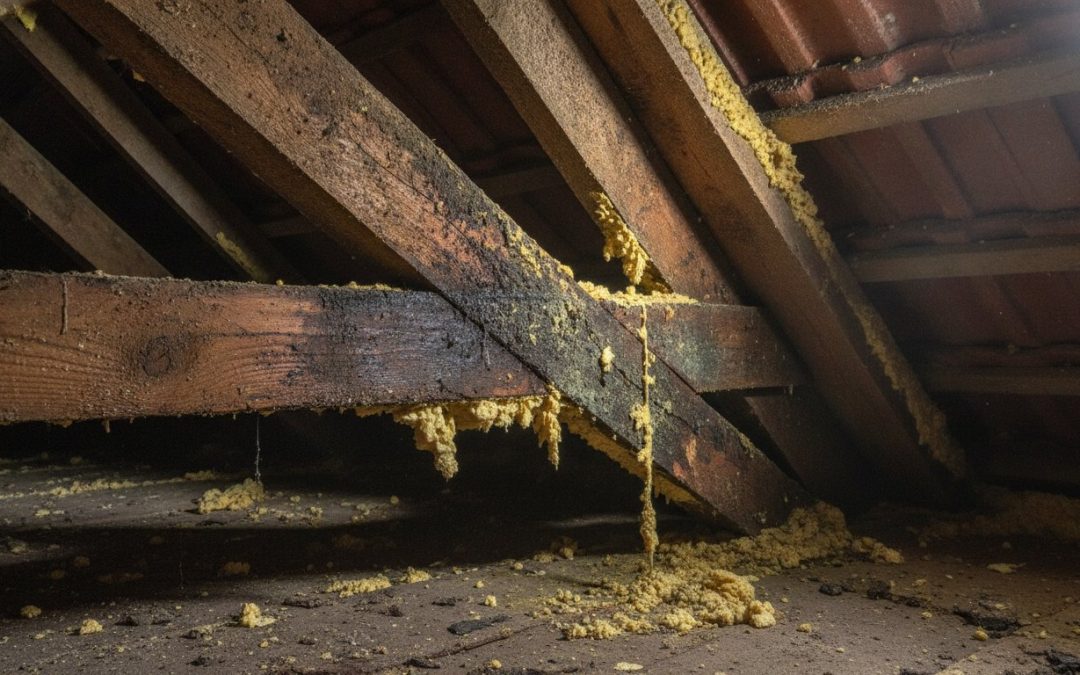
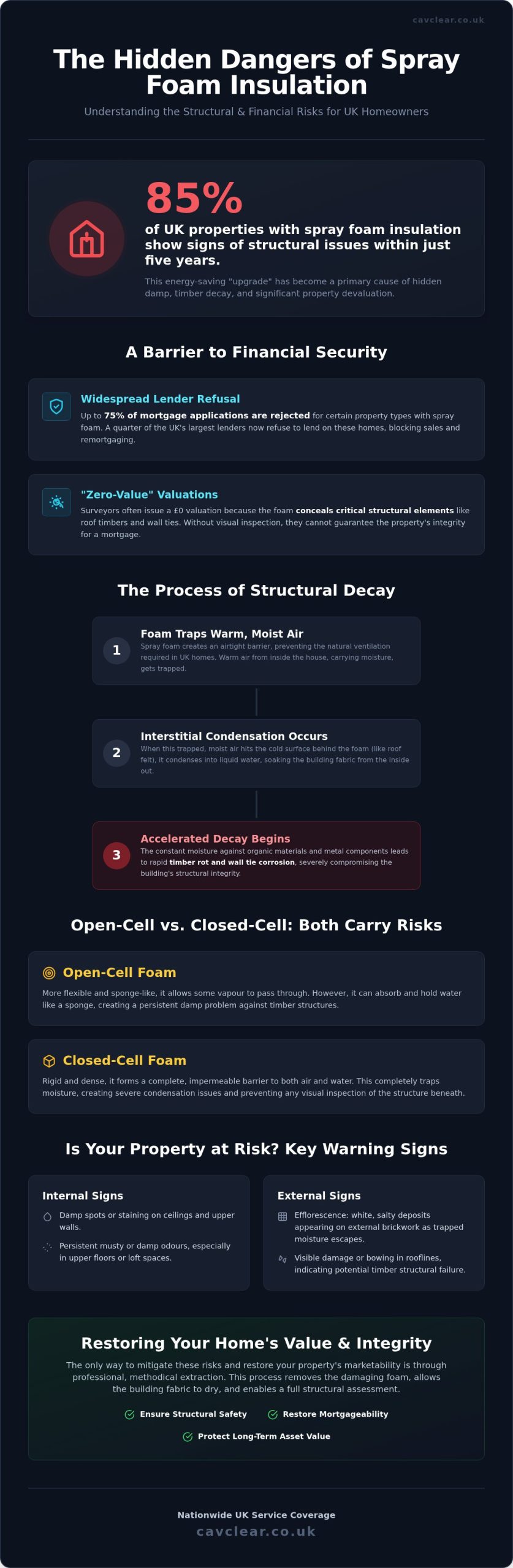
Did you know that 85% of UK properties with spray foam insulation show signs of structural issues within just five years? While many homeowners installed this material to improve thermal efficiency, the reality in 2026 is that the dangers of spray foam insulation uk have become a significant barrier to property health and financial security. You likely feel the mounting pressure of mortgage lender rejections or the unsettling sight of dampness in your roof timbers. It’s a stressful position to be in, but understanding the technical faults is the first step toward a professional remedy.
We’ll provide the clarity you need to protect your home’s long-term asset health and restore your peace of mind. This guide details the critical structural and financial risks associated with both open and closed-cell foams. You’ll learn about the current 2026 mortgage landscape, the specific ways moisture traps lead to timber decay, and the methodical extraction process required to restore your property’s integrity and marketability. By identifying these faults early, you can take the necessary steps to safeguard your investment and ensure your home remains a safe, mortgageable asset.
Key Takeaways
- Understand why a significant number of UK mortgage lenders refuse to lend on properties with spray foam, affecting both sales and remortgaging.
- Learn about the technical dangers of spray foam insulation uk, including how trapped moisture causes interstitial condensation and rapid timber decay.
- Identify the specific risks associated with both open-cell and closed-cell foams, particularly regarding their impact on ventilation and wall tie integrity.
- Recognise the physical warning signs of failing insulation, such as external efflorescence or internal damp spots and musty odours.
- Discover the professional methodology for safe, non-disruptive insulation extraction to protect your property’s long-term asset value.
Understanding the Spray Foam Crisis in the UK Property Market
Spray foam insulation (SPF) is a chemical product created by combining two materials that expand upon contact to create a thermal barrier. In the UK, it’s typically applied in two forms: open-cell and closed-cell. While open-cell foam is more flexible and allows some vapour movement, closed-cell foam is rigid and creates an impermeable barrier. This technology was marketed as a miracle for thermal efficiency, yet it often creates a fundamental conflict with the structural requirements of traditional UK homes. The dangers of spray foam insulation uk arise when these materials trap moisture against organic structures, such as roof timbers or wall ties, leading to accelerated decay that remains hidden from view.
By September 2026, the property market has reached a tipping point. Research indicates that a quarter of the UK’s largest mortgage providers now refuse to lend on homes where spray foam is present in the roof. Some reports even suggest a rejection rate as high as 75% for certain property types. Lenders view these installations as a high-risk liability because they mask the underlying condition of the roof or cavity, making it impossible for a standard surveyor to confirm the building’s structural integrity.
The Problem with Retrospective Installation
Most issues occur when foam is applied retrospectively to existing properties rather than being integrated into a new-build design. Traditional UK brickwork relies on a specific level of “breathability” to manage moisture. When you inject foam into an existing cavity or spray it directly onto roof felt, you disrupt the natural airflow that keeps the structure dry. This leads to interstitial condensation, where water vapour becomes trapped within the building fabric. The retrospective application of spray foam creates a high-risk environment for wall tie corrosion by trapping moisture against the metal components, leading to potential structural instability.
Lender Caution and Property Value
Surveyors often issue “zero-value” valuations on properties with spray foam because the material conceals the very elements they are paid to inspect. If a surveyor cannot see the rafters or the wall ties, they cannot guarantee the property is safe for a bank to secure a loan against. This uncertainty has turned what was once an energy-saving upgrade into a financial burden. For property owners looking to sell or remortgage in 2026, professional surveys and extraction reports are no longer optional; they are the only way to prove the property is expert from the dangers of spray foam insulation uk and restore its market value.
Structural Risks: How Spray Foam Causes Damp and Timber Decay
Traditional UK property design relies on consistent airflow to maintain structural health. When you introduce spray foam, you fundamentally change the building’s ecosystem. The dangers of spray foam insulation uk often manifest as hidden structural damage caused by interstitial condensation. This technical fault occurs when warm, moist air from inside the home migrates through the ceiling and hits a cold, impermeable surface behind the foam. Because the moisture cannot escape, it remains trapped against the building fabric. A report on the Moisture risk of spray foam insulation confirms that this process significantly accelerates the degradation of organic materials like timber.
Moisture Bridging in Cavity Walls
When foam is injected into a wall cavity, it frequently creates a physical “bridge” for water to travel. The what is a cavity wall design originally used an empty air gap to prevent external moisture from crossing to the inner leaf of the building. Spray foam fills this vital defensive space. Wind-driven rain saturates the external brickwork, and the foam then pulls that liquid directly into your living areas. This results in damp internal walls, spoiled plaster, and musty odours. Crucially, the constant presence of trapped water against steel components accelerates wall tie corrosion, which can eventually lead to the separation of the brick leaves and structural instability. If you suspect your cavity is compromised, a professional cavity wall survey can identify these hidden risks before they become visible.
Timber Decay and Structural Integrity
Roof timbers are particularly vulnerable to the effects of closed-cell foam. This rigid material creates a non-porous shell that prevents the wood from drying out. Even products marketed as breathable often fail under the high humidity levels found in typical UK lofts. Once moisture levels in the wood exceed 20%, fungi begin to consume the timber fibres. This leads to wet rot, which softens the rafters and reduces their load-bearing capacity. Because the foam conceals the wood, this decay often remains undetected until the roof begins to sag or rafters fail entirely. Dry rot is an even greater concern, as it can travel through masonry to infect other parts of the property. Understanding the dangers of spray foam insulation uk is essential for any property owner who wants to preserve the long-term asset health of their home.
Open-Cell vs. Closed-Cell: Why Both Carry Risks
While both materials are marketed as modern thermal solutions, they possess distinct physical properties that threaten property health in different ways. Closed-cell foam is a dense, rigid material that acts as a structural adhesive, whereas open-cell foam is softer and more flexible. Despite these differences, the dangers of spray foam insulation uk apply to both categories. Neither material was designed for the specific ventilation and moisture management requirements of traditional British masonry. Lenders typically fail to distinguish between these types during surveys because both materials hide the building’s substrate, making it impossible to perform a reliable structural assessment.
Closed-Cell Foam and Structural Rigidity
Closed-cell foam is particularly hazardous when applied to cavity walls or roof timbers. Its rigid nature prevents the natural thermal expansion and contraction that UK brickwork undergoes throughout the seasons. This lack of movement often leads to “blowing” bricks, where the outer leaf of the wall is pushed outward or fractured by the internal pressure of the material. Because this foam is impermeable and incredibly strong, it is the most difficult and costly to remove. Extraction requires specialist technical tools to separate the material from the substrate without causing further structural damage. Its use in cavities is a primary driver of wall tie failure; it traps moisture against metal components, leading to rapid oxidation and a loss of structural stability.
Open-Cell Foam and Vapour Permeability
Open-cell foam is often sold as a “breathable” alternative, yet this creates a sense of false security in the high-humidity UK climate. While vapour can technically pass through the material, it often reaches its dew point within the foam itself. This results in liquid water settling against timber rafters or internal walls. Research regarding Spray foam insulation and mortgages indicates that lenders remain cautious of open-cell installations because the risk of interstitial condensation remains high. This trapped moisture frequently leads to black mould growth on internal surfaces, which poses health risks and damages interior decor. Even if the foam is flexible, the moisture it holds against the structure is enough to trigger long-term timber decay and compromise the property’s asset value. Understanding the dangers of spray foam insulation uk is vital for homeowners who need to differentiate between marketing claims and structural reality.
Identifying Failing Insulation: Signs Your Property Is at Risk
Recognising the early warning signs of insulation failure is essential for mitigating the dangers of spray foam insulation uk. While the material is often hidden behind plasterboard or within roof voids, its negative impact on the building fabric eventually surfaces through visible defects. Property owners must remain vigilant for subtle changes in their home’s environment, as these often indicate that the insulation is no longer performing its intended function and is instead causing structural harm.
Common indicators of failing insulation include:
- Persistent musty odours that do not resolve with ventilation.
- Cold spots on internal walls that feel significantly cooler than the surrounding surface.
- White, powdery salt deposits (efflorescence) appearing on external brickwork.
- Peeling wallpaper or bubbling paint, particularly near the ceiling or floor level.
If you observe these symptoms, a professional damp survey is a vital diagnostic step. An expert assessment can distinguish between simple surface condensation and the more serious structural dampness caused by trapped moisture behind foam layers.
External Indicators of Cavity Issues
Failing insulation in a cavity wall often manifests through the degradation of the external leaf. When foam traps moisture, the constant dampness accelerates mortar erosion, causing the joints to become soft or sandy. In severe cases, you may notice horizontal cracking or a slight bulge in the brickwork. These are critical red flags for wall tie failure. Because the foam creates a bridge for moisture, the metal ties corrode at an accelerated rate, eventually losing their ability to hold the two leaves of the wall together. A wall tie replacement specialist can determine if the internal structure has been compromised by the insulation. To ensure your home remains safe, you should book a professional cavity wall tie inspection today.
Internal Damp and Mould Patterns
Internal symptoms often provide the most direct evidence of the dangers of spray foam insulation uk. Unlike standard condensation, which typically occurs on windows, dampness caused by foam often appears in corners or behind large furniture where airflow is restricted. This “penetrating damp” occurs because the foam has saturated and is now transferring liquid water directly to your internal plaster. This creates a breeding ground for mould spores. Living in a property with hidden dampness poses significant health risks, particularly for those with respiratory conditions. Identifying these patterns early allows for a methodical extraction process before the mould causes permanent damage to your interior decor and long-term asset health.
Professional Extraction: Restoring Your Home’s Structural Integrity
Attempting to remove spray foam yourself is a high-risk endeavour that often leads to irreversible structural damage. Because the material bonds aggressively to roof timbers and brickwork, DIY scraping or chemical dissolving can weaken the building’s fabric or cause toxic dust to permeate the living space. The dangers of spray foam insulation uk are compounded when removal is botched; remaining fragments continue to trap moisture and block essential ventilation paths, leading to localized rot. Professional intervention is the only reliable way to ensure the material is entirely eradicated without compromising the property’s integrity or safety.
The Extraction Process Explained
Professional extraction involves a methodical approach designed to be as clean and non-disruptive as possible. Specialist technical tools are used to break down the foam within the cavity or loft space into manageable debris. This is followed by high-powered industrial vacuums that remove every particle from the void through small, strategically placed access points. This process ensures the cavity is 100% clear, restoring the original air gap that traditional UK masonry requires to stay dry. A comprehensive post-extraction inspection using borescope cameras is essential to verify that no damp bridges remain to threaten the structure or hide ongoing timber decay.
Structural Restoration and Long-Term Health
Once the foam is removed, the focus shifts to rectifying the damage it left behind. If the insulation has caused wall tie corrosion through prolonged moisture contact, these vital components must be replaced to ensure the stability of the brick leaves. Returning your property to its original, breathable state is a vital investment in its future asset health. It eliminates the risk of interstitial condensation and allows the building to manage moisture naturally, as it was designed to do. This restoration not only protects your physical structure but also removes the “zero-value” stigma that lenders associate with these materials. By choosing a professional remedy, you restore both the comfort of your home and its marketability.
Book a specialist survey to assess your insulation today.
Safeguarding Your Property’s Structural Future
Addressing the dangers of spray foam insulation uk is no longer just about thermal performance. In 2026, it’s a vital step in protecting your home’s market value and structural safety. We’ve detailed how these materials trap moisture, which leads to undetected timber rot and significant mortgage lender rejections. Ignoring these warning signs can result in a “zero-value” property status and escalating repair costs. Taking proactive action now ensures your home remains a secure, mortgageable asset for years to come.
As a nationwide specialist, CavClear offers professional surveys to identify technical faults before they become catastrophic. Our accredited remedial technicians use a non-disruptive methodology to restore your building’s natural ventilation and structural integrity. We focus on rectifying poor workmanship with precision, ensuring your property’s long-term health and your own peace of mind. You don’t have to face these structural challenges alone; expert help is available across the United Kingdom.
Contact CavClear for a professional insulation extraction survey today to restore your property’s integrity. It’s the most effective way to secure your investment and ensure a permanent fix for your home.
Frequently Asked Questions
Is spray foam insulation illegal in the UK?
No, spray foam insulation is not illegal in the United Kingdom, but it is subject to strict building regulations and industry standards. While the material itself is a legal product, its retrospective application in existing homes often conflicts with the structural requirements of traditional masonry. Most issues arise from poor installation practices rather than the product’s legality. Property owners should focus on the structural risks rather than legal status when assessing their home’s safety.
Will spray foam insulation stop me from getting a mortgage in 2026?
It’s highly likely that spray foam will complicate a mortgage application in 2026. A significant number of UK lenders now refuse to secure loans against properties where foam is present in the roof or cavities. This caution stems from the material’s ability to hide structural defects from surveyors. You may face a zero-value valuation unless you provide a specialist report or evidence of professional dangers of spray foam insulation uk mitigation.
Can spray foam insulation be removed from cavity walls?
Yes, spray foam can be removed from cavity walls through a technical process known as cavity extraction. This involves using specialist tools to break down the foam within the wall void and industrial vacuums to clear the debris. It’s a complex task that requires accredited technicians to ensure the cavity is 100% clear. Restoring the original air gap is essential for preventing damp bridges and allowing the building to breathe naturally again.
How much does it cost to remove spray foam insulation in the UK?
The cost of removal depends on several factors, including the property’s size, the type of foam installed, and the accessibility of the cavities or roof space. Closed-cell foam is generally more difficult to extract due to its rigid, adhesive nature. Every property requires a bespoke assessment to determine the volume of material and the specific technical tools needed. We recommend booking a professional survey to receive an accurate, project-based remedial fee for your home.
Does spray foam insulation cause damp and mould?
Yes, spray foam frequently causes damp and mould by trapping moisture within the building fabric. This occurs through interstitial condensation or moisture bridging, where the foam pulls external water into the internal walls. When moisture remains trapped against cold surfaces, it creates an ideal environment for black mould growth. These issues often remain hidden behind the foam until significant structural damage or internal staining becomes visible to the property owner.
What is the difference between open-cell and closed-cell spray foam dangers?
Closed-cell foam is rigid and impermeable, which can cause bricks to “blow” and trap moisture against wall ties, leading to corrosion. Open-cell foam is flexible and marketed as breathable, yet it often allows vapour to reach its dew point within the material. Both types present significant dangers of spray foam insulation uk by concealing the substrate. This prevents surveyors from inspecting timbers or masonry, leading to the financial and structural liabilities discussed throughout this guide.
How do I know if my spray foam insulation is failing?
You can identify failing insulation through several physical red flags. Look for white salt deposits on external brickwork, which indicate trapped moisture, or horizontal cracking in mortar joints. Internally, you might notice musty odours, peeling wallpaper, or cold spots on your walls. These symptoms suggest the insulation has compromised the building’s moisture management. A professional cavity wall survey is the most reliable method to confirm if your insulation is causing active structural decay.
Can I sell my house if it has spray foam insulation?
Selling a property with spray foam insulation is increasingly difficult in the current UK market. Most buyers rely on mortgages, and lenders are hesitant to approve funds for homes with these installations. You might find success with cash buyers, but you’ll likely have to accept a lower offer to account for the perceived risk. The most effective way to protect your sale is to have the foam professionally extracted and provide a certificate of structural integrity.
Recent Comments