
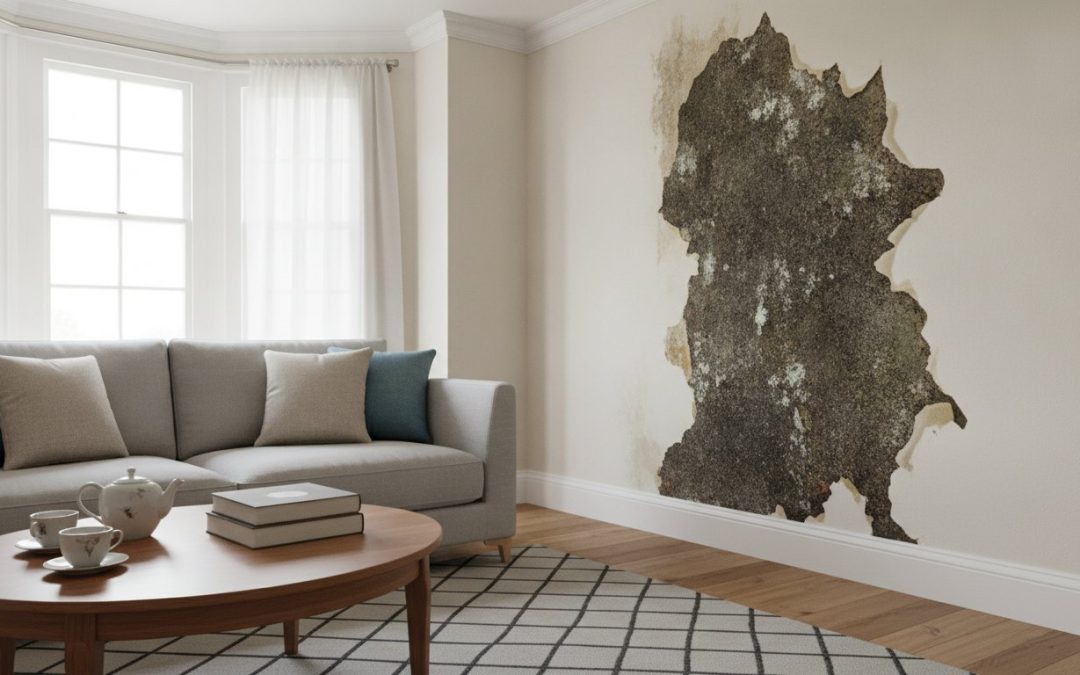
Recent data from the 2024-2025 English Housing Survey reveals that approximately 1.4 million dwellings in England are currently affected by damp. For many homeowners, a recurring dark patch on an external wall feels like a cosmetic annoyance. Ignoring the underlying structural failure can lead to severe biological hazards. Understanding the health risks of living with penetrating damp long term is essential because moisture ingress promotes the growth of harmful microorganisms, fungi, and bacteria. These pathogens directly impact the respiratory health of everyone in the household.
It’s understandable to feel frustrated when “quick fix” paints fail to stop the spread. Cleaning away surface mould doesn’t address the water saturation trapped within your property’s envelope. Discover the critical long-term health implications of unresolved penetrating damp and learn how structural property maintenance can protect your family’s wellbeing. We’ll examine the biological hazards of moisture ingress, distinguish penetrating damp from surface condensation, and outline the methodology for a permanent structural resolution. Professional intervention ensures the restoration of a safe and dry living environment.
Key Takeaways
- Identify penetrating damp as a structural failure where external moisture is “wicked” through the building envelope, rendering cosmetic surface repairs ineffective.
- Recognize the serious health risks of living with penetrating damp long term, including the development of chronic respiratory issues such as adult-onset asthma.
- Understand how microbial volatile organic compounds (mVOCs) create toxic gases that can bypass the respiratory system and enter the bloodstream.
- Discover why saturated cavity wall insulation and failing wall ties act as permanent bridges for moisture ingress, requiring professional extraction and repair.
- Learn why a specialist damp survey using borescope technology is the necessary first step to identify the root cause and implement a permanent structural fix.
Understanding Penetrating Damp: Why Temporary Fixes Fail Over Time
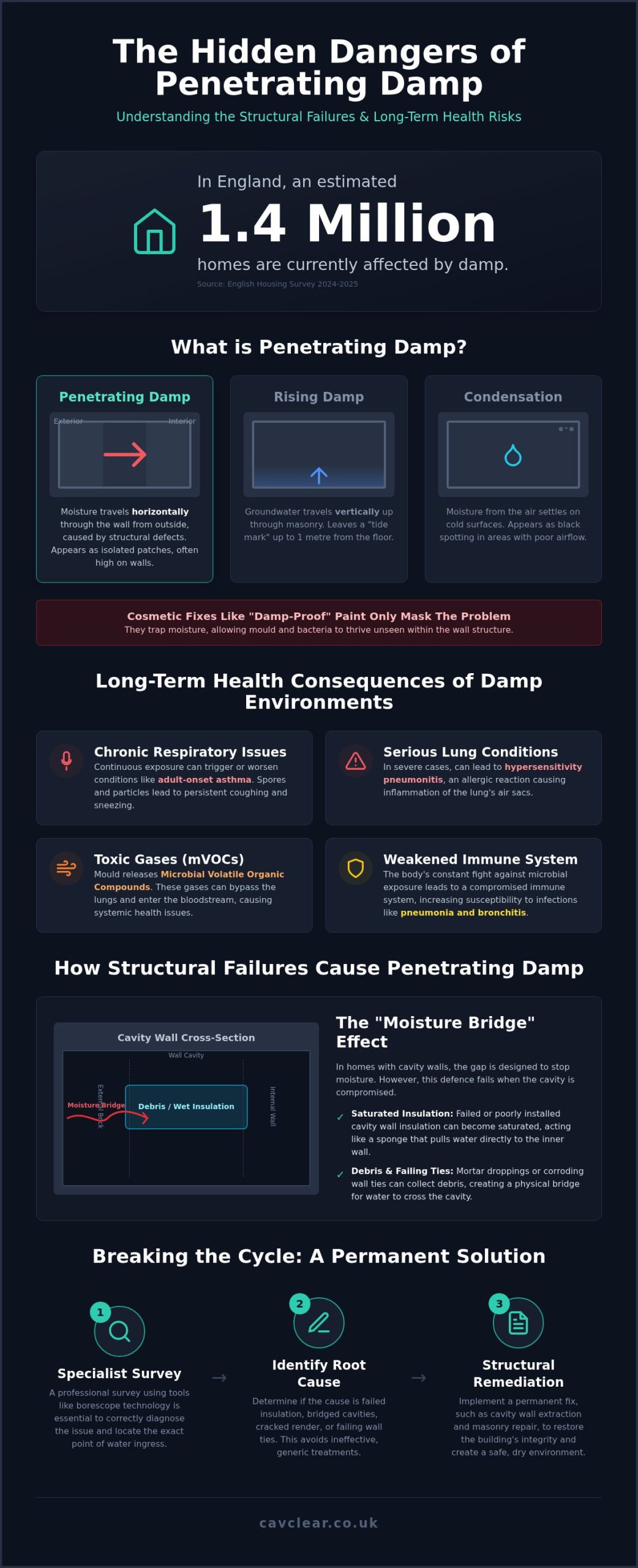
Penetrating damp occurs when water travels from the external face of a building through to the internal masonry. Unlike condensation, which is caused by moisture in the air, or rising damp, which travels vertically through capillary action, penetrating damp is a direct result of Structural dampness. It follows a horizontal path through the wall envelope, often driven by wind-blown rain or specific external defects. When external brickwork, render, or mortar fails, it creates a “wicking” effect where porous materials pull water deep into the structure like a sponge.
Wiping away visible mould or applying “damp-proof” paint is a purely cosmetic response to a serious structural failure. These methods mask the problem without stopping the water ingress. Over time, the internal wall remains saturated, creating an environment that fosters microbial growth behind the surface. Ignoring the root cause significantly increases the health risks of living with penetrating damp long term, as the building’s envelope continues to degrade and release spores into the living space. A property with compromised structural integrity cannot protect its inhabitants from the biological hazards that follow persistent moisture.
The Difference Between Penetrating, Rising, and Condensation Damp
Correct diagnosis is the first step toward a permanent fix. Penetrating damp typically appears as isolated damp patches that darken during periods of heavy rain, often located high on walls or around window frames. In contrast, rising damp usually leaves a distinct “tide mark” no higher than one metre from the floor. Condensation presents as black spotting in areas of poor airflow, such as corners or behind furniture. Many homeowners waste significant sums on damp-proofing creams or chemical injections that fail because they were designed for rising damp, not penetrating moisture ingress. A specialist damp survey is required to accurately identify the entry point and avoid the frustration of ineffective treatments.
Why Ignoring External Structural Faults Leads to Chronic Internal Damp
As brickwork ages, its natural porosity increases, especially if the mortar has begun to crumble or “spall.” This lack of maintenance allows water to bypass the protective external skin of the building. If your home has cavity walls, the problem often escalates when debris or saturated insulation creates a “thermal bridge.” This bridge allows moisture to cross the gap and saturate the internal leaves of the wall directly. Once the cavity is compromised, the property cannot self-dry through natural ventilation. The damp remains trapped, leading to a chronic cycle of moisture that heightens the health risks of living with penetrating damp long term. Structural neglect, such as failing wall ties or cracked masonry, ensures the damp will persist until the physical defect is professionally rectified.
The Cumulative Respiratory and Systemic Health Risks of Damp Environments
Living in a property with unresolved moisture ingress is more than a structural concern; it’s a significant biological hazard. The health risks of living with penetrating damp long term often begin with minor symptoms like persistent coughing or sneezing, but these can quickly escalate into chronic conditions. Continuous exposure to damp environments is a known trigger for the development of adult-onset asthma in individuals who previously had no respiratory issues. In more severe cases, residents may develop hypersensitivity pneumonitis, also known as extrinsic allergic alveolitis. This is a serious lung condition where the air sacs become inflamed due to an allergic reaction to inhaled organic dust, fungi, or mould spores.
Beyond the physical symptoms, the psychological impact of living in a failing environment shouldn’t be underestimated. Constant anxiety about family health and the visible decay of your home leads to chronic stress. This psychological burden, combined with the physiological strain of fighting off constant microbial exposure, weakens the immune system. This makes inhabitants more susceptible to lower respiratory tract infections, such as pneumonia or bronchitis. These infections often become recurrent if the underlying moisture source isn’t professionally addressed.
Beyond Asthma: Chronic Bronchitis and Long-Term Lung Damage
Constant inflammation from spore inhalation causes permanent changes to lung tissue over time. While an initial reaction might feel like a temporary allergy, repeated exposure leads to scarring and reduced lung capacity. Even healthy individuals aren’t immune; they can develop fungal infections in the lungs when high concentrations of spores are present. Chronic damp exposure is not merely an irritant; it is a persistent catalyst for respiratory decline. Identifying the root cause through a specialist wall tie survey is the first step in halting this decline and protecting your property’s inhabitants.
Impact on Vulnerable Groups: Children and the Elderly
Children are particularly at risk because their lungs are still developing and they have a higher breathing rate relative to their body size. Exposure to dampness during these formative years can lead to permanent damage and lifelong respiratory sensitivity. For elderly residents, damp housing often exacerbates pre-existing conditions like COPD or cardiovascular disease. The immune system is forced into a state of constant high alert, which drains energy and reduces the body’s ability to fight off other seasonal illnesses. Protecting these vulnerable groups requires moving away from surface treatments and investing in permanent structural solutions that restore the integrity of the building envelope.
Toxic Mould and Microbial Volatile Organic Compounds (mVOCs)
Many homeowners associate damp with a distinct, earthy odour. This smell isn’t just an unpleasant scent; it’s the physical evidence of Microbial Volatile Organic Compounds (mVOCs). These are chemical byproducts of fungal metabolism that degrade indoor air quality. Unlike spores, which are physical particles, mVOCs are gases. Because they’re in a gaseous state, they can easily bypass the body’s primary respiratory filters. Once inhaled, these compounds can enter the bloodstream directly, leading to systemic issues that go beyond simple lung irritation. This chemical exposure is a core component of the health risks of living with penetrating damp long term.
Penetrating damp creates the perfect conditions for Stachybotrys chartarum, commonly known as black mould. This specific fungus thrives on saturated, high-cellulose materials such as wallpaper, plasterboard, and wood. In properties with failing structural envelopes, this mould often grows invisibly within wall cavities or behind decorative finishes. Because the growth is hidden, residents are often exposed to high concentrations of toxins without realizing the source of their declining health.
Stachybotrys Chartarum: The Reality of ‘Black Mould’ Spores
The danger of Stachybotrys chartarum lies in the production of mycotoxins. These are toxic secondary metabolites that can cause systemic toxicity in humans. When a wall cavity becomes saturated due to failing insulation or masonry defects, it provides a protected, moist environment for these colonies to flourish. Understanding the link between structural failure and Black Mould in UK Homes is vital for any property owner. Removing surface staining is ineffective if the internal cavity remains a breeding ground for these toxic spores.
How Microbial VOCs Affect Cognitive Function and Neurological Health
The impact of mVOCs extends to the central nervous system. Residents frequently report “brain fog,” chronic fatigue, and persistent headaches that seem to lift only when they leave the property. These symptoms are often the result of a chronic inflammatory response triggered by the body’s attempt to process chemical toxins. mVOCs are chemical byproducts of fungal metabolism that degrade indoor air quality. Long-term exposure can lead to neurological sensitivity and a general decline in cognitive function. This highlights why the health risks of living with penetrating damp long term are not limited to the airways but affect the entire body’s regulatory systems.
Structural Triggers: How Cavity Wall Failure Drives Penetrating Damp
While the biological effects of damp are felt within the living space, the root cause is almost always a physical failure of the building’s envelope. A functional cavity wall is designed to act as a barrier, with the air gap preventing moisture from crossing from the external brickwork to the internal leaf. However, when this system is compromised, it becomes a reservoir for water. This structural failure doesn’t just damage the masonry; it creates the persistent environment that drives the health risks of living with penetrating damp long term. Understanding these triggers is the only way to move beyond temporary surface repairs.
Debris within the cavity is another common but overlooked trigger. During construction or subsequent building works, mortar droppings and broken bricks can accumulate at the base of the wall. If this debris builds up above the level of the damp proof course (DPC), it creates a physical bridge. This allows ground moisture and penetrating rainwater to bypass the property’s primary moisture barrier, leading to saturated internal skirting boards and lower wall sections. The health hazard in these scenarios is often trapped inside the wall, where mould colonies flourish in the dark, damp void of the cavity long before they become visible to the homeowner.
Defective Cavity Wall Insulation as a Bridge for Moisture
Properties across the UK, particularly those in areas exposed to heavy wind-driven rain, are often unsuitable for certain types of cavity fill. When insulation is installed in these high-exposure environments, it can fail in its primary purpose. Instead of providing thermal protection, the material acts as a “wet sponge” inside the home’s envelope. Once the insulation becomes saturated, it creates a permanent bridge for moisture ingress. This constant state of saturation is a primary factor in the health risks of living with penetrating damp long term, as it provides a hidden substrate for toxic mould. In such cases, Cavity Wall Insulation Removal is the essential first step to allow the structure to breathe and dry naturally.
Failing Wall Ties and Structural Cracks: The Entry Points
Wall ties are vital for structural stability, but they’re prone to corrosion if the cavity environment remains damp. As metal ties rust, they undergo a process of expansion, often growing to several times their original thickness. This expansion exerts significant pressure on the mortar joints, resulting in horizontal cracks across the external masonry. These cracks serve as direct entry points for wind-blown rain, which then bypasses the cavity gap entirely. Addressing these structural fissures through Wall Tie Replacement is critical for restoring the integrity of the building. If you suspect your property’s protective skin has been breached, you should arrange a Wall Tie Survey to identify the extent of the structural entry points.
Breaking the Cycle: Professional Surveys and Remedial Action
Breaking the cycle of recurring moisture requires a shift from reactive cleaning to proactive structural diagnosis. Many homeowners attempt to manage the symptoms of damp with dehumidifiers or anti-mould washes. While these may offer temporary relief, they do nothing to mitigate the health risks of living with penetrating damp long term. Because the root cause is often a physical defect within the building’s envelope, professional intervention is necessary to identify where the protective barrier has failed. Only by addressing the underlying structural trigger can you restore a safe and healthy internal environment.
Structural repair is a vital investment in both your property’s future value and your family’s personal health. A property that remains saturated will continue to degrade, leading to more expensive masonry repairs and a persistent biological hazard. By choosing a permanent fix over a cosmetic one, you ensure the long-term asset health of your home. This methodical approach stops the progression of respiratory issues and provides the reassurance that the property is once again a safe haven for its inhabitants.
Why a Specialist Damp and Mould Survey is Essential
A general survey or a basic visual inspection often misses the internal cavity issues that drive penetrating damp. Accredited technicians perform a detailed damp survey that goes beyond surface observations. We use borescope inspections to view the condition of the cavity and insulation directly. This technology allows us to see saturated materials, debris bridges, and corroded wall ties without the need for disruptive wall removals. Knowing the ‘why’ behind the moisture ingress is far more important than simply cleaning the ‘what’ on the surface. Our reports provide a clear, technical roadmap for a permanent resolution.
Remediation Strategies: From Insulation Extraction to Structural Repair
Once a survey identifies saturated cavity fill, professional insulation extraction becomes the priority. This process uses modern, non-invasive techniques to remove the ‘wet sponge’ from your walls, allowing the building to breathe and dry naturally. Following extraction, replacing failing wall ties restores the structural integrity of the property and closes the entry points for wind-blown rain. These combined actions eliminate the environment where toxic mould thrives, effectively ending the health risks of living with penetrating damp long term. If you are concerned about persistent damp patches or a musty odour in your home, you should take the first step toward a permanent fix. Book a professional survey with CavClear today to protect your property and your wellbeing.
Protecting Your Family Through Structural Integrity
Addressing moisture ingress is an essential step in safeguarding your household’s future. We’ve explored how saturated insulation and failing wall ties create a bridge for pathogens, leading to chronic respiratory conditions. Understanding the health risks of living with penetrating damp long term allows you to move beyond temporary paints and prioritize a permanent structural solution. A property won’t self-dry once the cavity is compromised; it requires the methodical extraction of saturated materials and the professional repair of external entry points.
As specialist UK-wide remedial contractors, CavClear provides the technical expertise needed to rectify these complex issues. Our accredited structural technicians utilize detailed borescope reporting to identify hidden hazards within your walls without causing unnecessary disruption. This diagnostic approach ensures that every repair is a vital investment in the long-term health of your asset. Secure your property’s health with a professional damp survey to ensure your home remains a dry and safe environment for everyone. Taking action now prevents the progression of environmental hazards and restores the comfort you deserve.
Frequently Asked Questions
Can penetrating damp make you sick?
Yes, penetrating damp creates a biological hazard that can lead to significant illness. When moisture ingress saturates walls, it fosters the growth of mould and fungi that release spores into the air. Inhaling these pathogens causes respiratory distress, allergies, and immune system strain. The health risks of living with penetrating damp long term are cumulative, meaning your symptoms may worsen as the structural failure persists and the internal environment becomes more toxic.
Is it safe to sleep in a room with damp and mould?
It isn’t safe to sleep in a room affected by moisture ingress because you spend several hours inhaling concentrated spores and microbial volatile organic compounds (mVOCs). During sleep, your respiratory system is vulnerable to the inflammatory effects of these pollutants. This exposure often leads to disturbed sleep, morning headaches, and a persistent cough. If a bedroom wall is saturated due to cavity failure, the room should be professionally surveyed and remediated immediately.
How long does it take for damp to affect your health?
Health impacts can occur within days for sensitive individuals, but chronic conditions often develop over months of exposure. Initial reactions typically include sneezing or skin irritation. However, the more serious health risks of living with penetrating damp long term, such as adult-onset asthma, usually manifest after the property has been saturated for an extended period. The longer the structural defect remains unaddressed, the higher the concentration of toxic particles in your living space.
Can damp cause permanent lung damage?
Yes, prolonged exposure to damp environments can lead to permanent lung damage. Chronic inflammation caused by inhaling fungal spores can result in scarring of the lung tissue, a condition known as fibrosis. Conditions like hypersensitivity pneumonitis can cause long-term respiratory impairment if the source of the damp isn’t removed. This is why addressing the structural root cause, such as saturated insulation or failing wall ties, is vital for protecting your permanent respiratory health.
What are the first signs of mould-related illness?
The first signs often mimic a common cold or seasonal allergies. You might notice a persistent dry cough, watery eyes, or frequent sneezing that improves when you leave the house. Systemic symptoms like fatigue, headaches, and “brain fog” are also common indicators of exposure to microbial volatile organic compounds. If these symptoms persist despite standard treatments, it’s a sign that the building’s envelope is compromised and releasing toxins into your home.
Does opening windows help with penetrating damp?
While opening windows improves general ventilation and helps with surface condensation, it doesn’t resolve penetrating damp. Penetrating damp is a structural failure where water enters from the outside in. Increased airflow won’t dry out saturated cavity wall insulation or stop water from wicking through cracked masonry. To fix the problem, you must address the external defect and potentially extract any wet material trapped within the wall cavity to allow the structure to dry.
Can babies live in a house with penetrating damp?
Babies and young children shouldn’t live in environments with active penetrating damp. Their respiratory systems are still developing, making them significantly more susceptible to permanent lung damage and the development of lifelong allergies. Exposure to high concentrations of mould spores in infancy is a major risk factor for childhood asthma. Ensuring the structural integrity of your home is a vital part of providing a safe and healthy environment for a growing family.
Why does my damp smell musty even after cleaning?
A persistent musty smell indicates that the mould is growing in areas you can’t see, such as inside the wall cavity or behind plasterboard. This odour is caused by microbial volatile organic compounds (mVOCs) released during fungal metabolism. Cleaning the surface doesn’t stop the chemical off-gassing from the saturated materials hidden within the structure. A professional borescope inspection is often required to locate the source of the odour and plan a permanent structural fix.
Recent Comments