
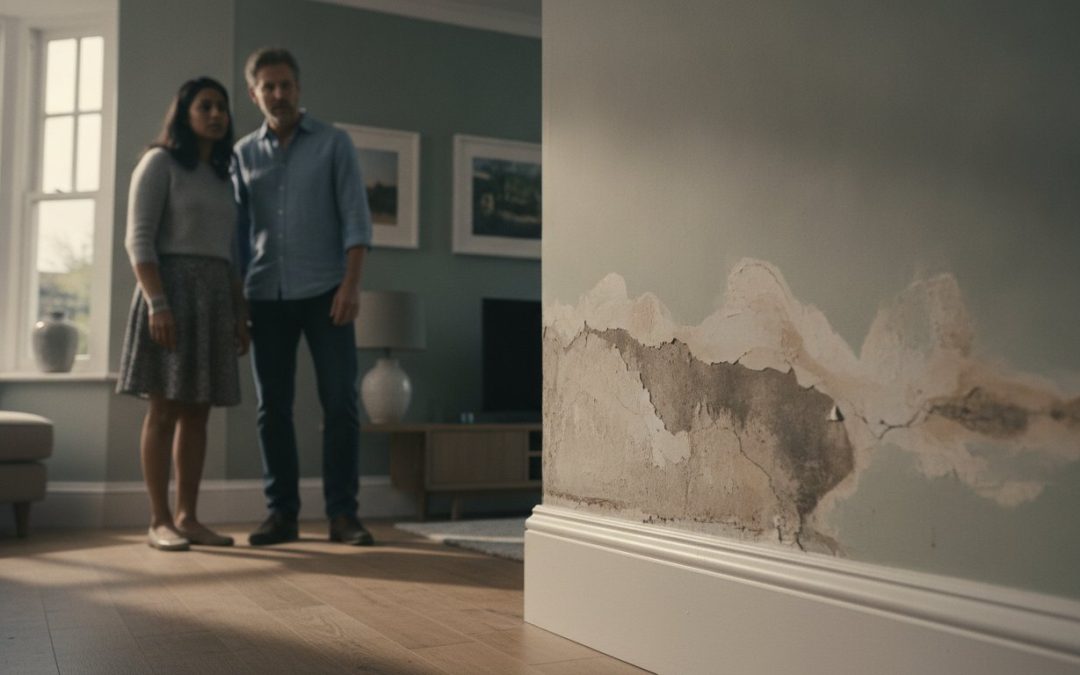
Your home insurance policy isn’t a maintenance contract, and for many homeowners, this realization comes at the worst possible time. Most property owners assume their buildings insurance provides a safety net for any structural moisture issue. However, rising damp is almost universally viewed by insurers as a result of gradual deterioration rather than a sudden, accidental event. Understanding the common home insurance exclusions for rising damp is essential for protecting your property’s long-term health and your financial interests. It’s stressful to discover tide marks on your walls, especially when policy wording feels designed to be confusing.
We understand that the integrity of your home is your priority. This guide provides clarity on why standard policies fail to cover capillary action and how professional technical reports serve as vital evidence of your property’s condition. You’ll learn the difference between covered perils and excluded maintenance issues, alongside a clear methodology for resolving damp permanently. By the end of this 2026 guide, you’ll have a practical plan to secure your home’s structural future through expert surveys and accredited remedial actions. We’ll move from identifying the underlying cause of the moisture to establishing a proactive path toward restoration.
Key Takeaways
- Learn the distinction between gradual deterioration and sudden perils, which forms the basis for common home insurance exclusions for rising damp.
- Identify how “wear and tear” and “design defect” clauses are applied to shift the responsibility of moisture prevention to the homeowner.
- Understand how saturated cavity wall insulation and corroded wall ties bridge the gap between masonry leaves, causing preventable dampness.
- Gain clarity on why an accredited structural survey is the only way to provide professional evidence of your property’s condition.
- Discover how specialist insulation extraction and wall tie replacement offer a clean, non-disruptive path to restoring structural integrity permanently.
Why Rising Damp is Usually Excluded from Home Insurance
Rising damp is a specific technical failure involving the upward movement of ground moisture through porous building materials. This process occurs when moisture travels through the microscopic tubes in bricks and mortar, a phenomenon known as capillary action. To understand What is Structural Damp?, you must examine how water interacts with masonry when a damp-proof course (DPC) is absent, breached, or bypassed. Rising damp is a slow-onset structural issue that falls outside standard accidental damage definitions.
When you review your policy documents, you’ll find that common home insurance exclusions for rising damp are rooted in the fundamental nature of the damage. Insurers categorize risks based on their cause and duration. They prioritize events that are identifiable by a single, sudden occurrence. Because moisture rising through a wall takes months or even years to manifest as visible salt deposits or decaying timber, it fails the criteria required for standard coverage in the eyes of most providers.
The ‘Sudden vs. Gradual’ Peril Distinction
Standard buildings insurance is designed to protect against unforeseen, instantaneous disasters. A burst internal pipe or a storm that removes roof tiles represents a sudden peril. These events are covered because they happen without warning. In contrast, rising damp is classified as gradual deterioration. Insurers argue that because the process is slow, homeowners have the opportunity to identify and rectify the fault as part of routine property upkeep. By labeling it a maintenance issue, providers effectively remove the cost of remediation from their policy obligations.
Maintenance Responsibilities for UK Homeowners
The responsibility for preventing ground moisture ingress rests solely with the property owner. Modern building standards require a functional damp-proof course, which should be situated at least 150mm above the external ground level. If you allow soil, flower beds, or new patios to rise above this line, you create a bridge that allows moisture to bypass the DPC. Insurers view this as a failure of property maintenance. Regular structural inspections are the only reliable way to ensure your DPC remains effective. Neglecting these basic upkeep tasks is one of the common home insurance exclusions for rising damp cited during professional surveys across the UK.
The 3 Most Common Insurance Exclusion Clauses for Damp
Insurance policies are legal contracts with precise language designed to limit the insurer’s liability. Most property owners are surprised to find that common home insurance exclusions for rising damp are standard across the UK insurance industry. These clauses categorize structural moisture as a predictable outcome of time rather than a sudden accident. By understanding the specific wording in your policy, you can better prepare for the financial realities of property maintenance.
The Wear and Tear Clause
Masonry and mortar naturally degrade over decades. Bricks are porous, and mortar joints can crumble, allowing ground moisture to bypass older damp-proofing systems. Insurers argue that older properties require routine structural investment from the owner. They view a failing damp-proof course as an expected lifecycle event rather than a covered peril. Because the degradation is slow, it doesn’t meet the “sudden” criteria required for a payout. Correct diagnosis is critical here; an RICS Expert on Rising Damp has previously highlighted how misdiagnosis can lead to incorrect treatments that don’t address the underlying wear and tear reality.
Design Defects and Faulty Workmanship
This exclusion targets issues caused by poor initial building design or subsequent errors in modification. A common example is a bridged cavity, where debris or mortar droppings inside the wall allow moisture to cross from the outer leaf to the inner leaf. Incorrectly installed wall ties can also create paths for water ingress. It’s vital to recognize that retrospective installations, such as cavity wall insulation, can often create these bridges where none existed before. If an insurer determines that a defect in construction or a poorly executed modification caused the moisture ingress, they’ll likely deny coverage. These issues are seen as inherent faults rather than accidental damage.
Lack of Maintenance
Property owners have a duty to keep their homes in good repair. If you allow external ground levels to rise above the DPC or fail to clear blocked gutters that saturate the masonry, you’re failing this duty. Insurers use the “Lack of Maintenance” clause to shield themselves from costs resulting from homeowner neglect. If you’re concerned about the state of your property’s moisture barriers, a professional cavity wall survey can identify these specific risks before they lead to expensive structural damage. Collectively, these three clauses ensure that the financial burden of damp remediation remains with the homeowner.
How Cavity Wall Issues Lead to Insurance Denials
Many homeowners don’t realize their cavity walls are central to moisture control. A clear understanding of what is a wall cavity helps explain why failures in this space lead to common home insurance exclusions for rising damp. The cavity is designed as a safety feature to prevent water from crossing to the inner skin of your home. When this gap is compromised, the structural integrity of the property is at risk. As noted in the Halifax home insurance guide, insurance typically excludes damage that occurs gradually. Cavity failures are textbook examples of this slow, predictable deterioration that insurers expect homeowners to manage.
The Danger of Saturated Cavity Insulation
Insulation materials can become saturated over time due to external masonry faults or driving rain. Instead of providing a thermal barrier, wet insulation acts as a wick. It draws moisture across the cavity and into the inner leaf of the masonry. This process is often accelerated by retrospective installations that were not suited to the property’s location or exposure level. When you seek assistance for the resulting damp patches, insurers often cite “faulty installation” or “poor design” as reasons to deny coverage. They argue that the insulation itself is a defect that falls outside the scope of accidental damage. To stop the cycle of moisture ingress, professional cavity wall insulation removal is essential. This process clears the saturated material and allows the structure to dry naturally, restoring the wall’s original protective function.
Wall Tie Failure and Moisture Ingress
Wall ties are the metal anchors that hold the two leaves of a wall together. When these ties corrode, they expand significantly. This expansion creates horizontal cracks in the mortar joints, which provide a direct route for driving rain to enter the structure. The resulting internal dampness often mimics the symptoms of rising damp, leading to frequent misdiagnosis. Because wall tie corrosion is a slow process occurring over decades, it falls under the common home insurance exclusions for rising damp. A specialist wall tie replacement is a critical structural repair that restores stability. Without this intervention, the outer leaf remains vulnerable to further movement and water penetration. Removing defective insulation and replacing failed ties are vital investments in your property’s future health, ensuring the building remains dry and structurally sound for years to come.

The Importance of Professional Damp Surveys and Reporting
A hand-held moisture meter from a DIY store cannot provide the data required to challenge common home insurance exclusions for rising damp. While homeowners often attempt a self-diagnosis to save time, these tools only measure surface conductivity. They don’t distinguish between condensation, hygroscopic salt contamination, or genuine capillary action from the ground. Insurers and mortgage lenders require evidence based on technical standards, not anecdotal observations. A professional damp survey provides the objective data necessary to understand your property’s environmental health. Without this accredited oversight, you risk spending thousands on treatments that fail to address the root cause of the moisture ingress.
What a Technical Property Inspection Covers
Accredited technicians follow a methodical diagnostic process that prioritizes structural facts over surface symptoms. This begins with an external assessment to verify the damp-proof course (DPC) integrity and ensure ground levels haven’t breached the 150mm safety threshold. Internally, the specialist performs moisture profiling to map the distribution of water within the masonry. Salt contamination analysis is equally vital. It identifies whether nitrates and chlorides are present, which are clear indicators of ground-sourced moisture. To see what’s happening inside the structure, we use borescope inspections. These allow us to view the state of the wall cavity and any existing insulation without causing significant disruption to the building fabric. We look for debris, bridged ties, and saturated materials that standard visual checks simply cannot detect.
Documentation for Property Sales and Disputes
Formal reporting is a cornerstone of property management, especially during a sale. Mortgage lenders often refuse to release funds until a formal remedial action plan is presented by a specialist. These reports prove that moisture issues are not a result of homeowner neglect, which is one of the most common home insurance exclusions for rising damp used by providers to avoid liability. By providing compliance-ready documentation, you establish a clear record of the property’s condition and the steps taken to rectify any faults. This level of detail protects your asset’s value and provides a baseline for long-term maintenance. If you’re facing persistent moisture issues, you should book a comprehensive cavity wall survey to receive a definitive technical assessment. Expert reports move the conversation from guesswork to professional certainty, ensuring that any remedial work is targeted and effective. This proactive approach safeguards the property’s future and provides peace of mind for both current and future owners.
Protecting Your Property with Expert Remedial Solutions
CavClear operates as a nationwide specialist across the United Kingdom, focusing on the rectification of structural failures that lead to moisture ingress. Because common home insurance exclusions for rising damp place the full financial responsibility on the property owner, selecting a reliable solution-provider is a critical decision. Our approach moves beyond temporary fixes, targeting the underlying technical faults that compromise your home’s integrity. We position ourselves as expert partners in restoring structural health and property comfort through methodical, evidence-based interventions.
Specialist Insulation Extraction and Repair
When moisture bridges the gap between masonry leaves, the cavity no longer functions as a protective barrier. Our technicians specialize in the extraction of saturated or defective insulation material that has become a liability to your property’s health. The process involves several key stages to ensure a permanent resolution:
- Precision extraction of all internal debris and saturated material to clear the cavity space.
- Restoration of the property’s original “buffer zone,” which is essential for natural ventilation and moisture control.
- Structural wall tie replacement to ensure the stability and alignment of the masonry leaves.
Our methodology is designed to be clean and non-disruptive, utilizing specialized equipment to remove materials without damaging the existing building fabric. By clearing the cavity, we allow the masonry skin to dry naturally, effectively stopping the cycle of internal dampness. This restoration of the building’s original design is a vital investment in its long-term asset health and efficiency, ensuring the structure performs as intended.
Next Steps for UK Homeowners
Delaying remedial work often leads to higher costs and further structural degradation over time. As moisture continues to penetrate the inner leaf, it can damage internal plasterwork and timber frames. These secondary issues are also likely to fall under common home insurance exclusions for rising damp, as they result from an unaddressed maintenance fault. Consulting with qualified dampness specialists is the first step toward securing your property’s future. We provide the technical reports and accredited surveys required to understand the full extent of the moisture issue.
Ensuring your property remains a safe, dry, and valuable asset requires a proactive approach. We invite you to book a comprehensive property inspection to establish a clear remedial plan. Our goal is to provide a permanent fix that rectifies the poor workmanship of the past and safeguards your home for years to come. By addressing the root cause of the dampness now, you protect your investment and restore the comfort of your living environment through professional expertise.
Securing Your Property’s Structural Future
Understanding the common home insurance exclusions for rising damp is the first step toward effective property management. Standard buildings insurance policies prioritize sudden, accidental events; they don’t cover the gradual movement of ground moisture through masonry leaves. By identifying the specific technical faults in your cavity walls, such as saturated insulation or corroded wall ties, you can address the root cause of moisture ingress before it leads to irreversible damage. Professional surveys move the conversation from surface-level symptoms to structural facts, providing the accredited evidence required for property sales and long-term maintenance.
CavClear provides the expert oversight necessary to protect your home. As specialists in structural remedial works, our accredited technicians offer nationwide UK coverage to resolve dampness issues permanently. We focus on a clean, non-disruptive methodology to restore your building’s original buffer zone, ensuring its long-term asset health and efficiency. Don’t let unaddressed structural faults compromise your property’s value or your personal comfort.
Book your nationwide technical damp survey with CavClear today to receive a definitive assessment of your home’s condition. Restoring your home’s structural integrity is a vital investment in its future, and we are ready to provide the clear, professional path toward a dry and secure living environment.
Frequently Asked Questions
Is rising damp covered by buildings insurance?
Standard buildings insurance almost never covers rising damp. Providers categorize this issue as a maintenance matter or wear and tear because it develops over a long period. Most policies are designed to protect against sudden, accidental events like fire or floods. Because rising damp involves the slow movement of moisture through masonry, it falls outside the definition of a sudden peril that triggers a payout. Homeowners are expected to maintain their property’s damp-proof course.
Can I appeal an insurance decision regarding damp?
You can appeal a decision if you provide technical evidence that the insurer’s assessment was incorrect. If a provider denies a case based on common home insurance exclusions for rising damp, a specialist report can prove the moisture resulted from a different, covered event. For example, if a sudden pipe leak caused the damage rather than capillary action, an accredited technician’s findings can be used to challenge the initial refusal through formal channels.
Why do insurers call rising damp ‘gradual deterioration’?
Insurers use the term gradual deterioration to describe processes that occur over months or years. Rising damp is the result of capillary action where ground water is slowly drawn up through porous bricks. Since this isn’t an instantaneous accident, it’s viewed as the natural aging of the building fabric. Insurance companies expect property owners to identify and fix these slow-moving issues through regular structural inspections and proactive maintenance of the damp-proof course.
Will insurance pay for a new damp proof course (DPC)?
Insurance companies won’t pay for the installation of a new damp-proof course. They view the DPC as a fundamental part of the building’s structure that the owner must keep in good working order. If a DPC fails due to age or is bypassed by high ground levels, it’s considered a maintenance failure. You’ll need to fund any remedial damp-proofing works yourself to ensure the long-term health and structural integrity of your property.
Does insurance cover mould caused by rising damp?
Mould is typically excluded if the underlying cause is a maintenance issue like rising damp. While some policies cover mould resulting from a sudden burst pipe, they won’t cover it if it grows due to long-term moisture ingress. Because insurers see rising damp as preventable through proper upkeep, any secondary damage like mould or salt contamination is also excluded from coverage. Professional extraction of wet insulation is often required to stop mould growth permanently.
How can a professional survey help with insurance disputes?
A professional survey provides the accredited technical data required to establish the true cause of moisture ingress. Accredited technicians use borescope inspections and moisture profiling to determine if the fault is a sudden accident or a structural defect. These detailed reports serve as vital evidence in disputes, moving the conversation away from insurer assumptions. Having a specialist document the state of your cavity walls and wall ties provides a clear, evidence-based path forward.
What should I do if my insurance denies coverage for damp?
If coverage is denied, your priority should be arranging a comprehensive structural inspection to identify the root cause. Many moisture issues are caused by bridged cavities or saturated insulation, which require specialist remedial work. Once you have a technical report, you can implement a permanent fix, such as cavity wall insulation extraction or wall tie replacement. Addressing the fault quickly prevents further structural decay and protects the future value of your UK property.
Is penetrating damp more likely to be covered than rising damp?
Penetrating damp is only covered if it’s the direct result of a sudden, insured event like storm damage to a roof. If the moisture enters because of blocked gutters, cracked render, or poor masonry maintenance, it’s excluded just like other common home insurance exclusions for rising damp. Insurers distinguish between accidental damage and neglect. In most cases, the homeowner is responsible for fixing the external faults that allow water to enter the structure.
Recent Comments