
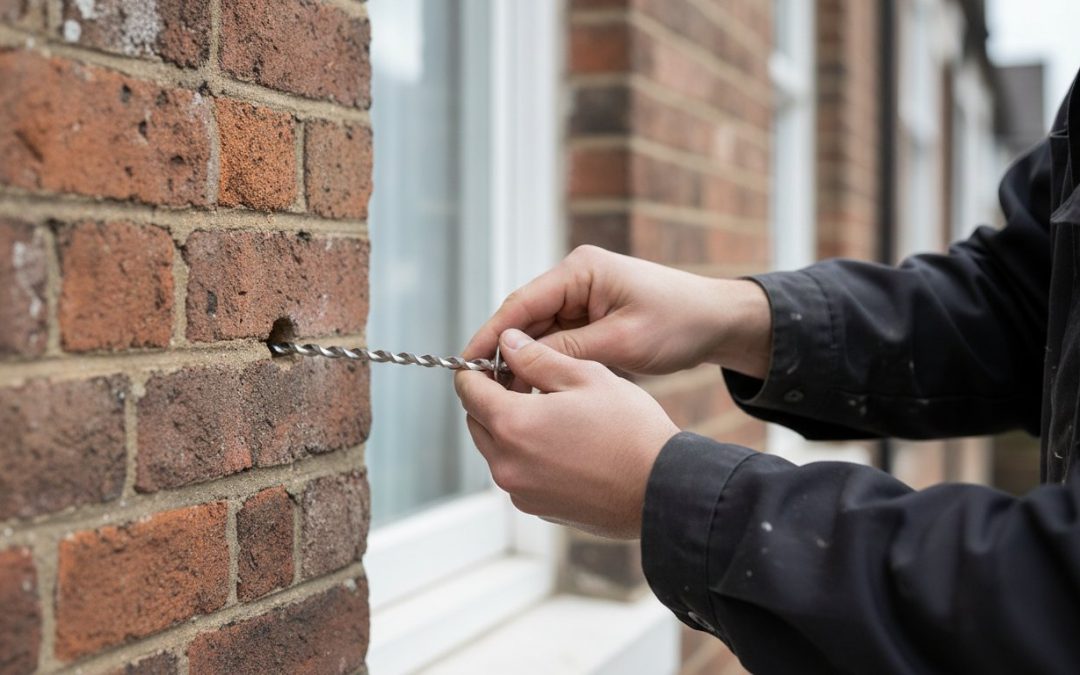
An estimated 2 to 10 million properties across the UK are currently at risk of structural instability due to the silent degradation of wall ties. For homeowners with properties built between the 1920s and 1981, the mild steel components originally installed are often reaching the end of their functional lifespan. If you’ve noticed horizontal cracks or bulging masonry, the search for wall tie replacement manchester is often driven by a genuine fear for your home’s safety and its future mortgageability. You aren’t alone in feeling overwhelmed by conflicting advice from general contractors who may not grasp the technical nuances of cavity wall physics.
We understand that structural issues are deeply stressful, but they’re solvable with the right expertise. In this guide, you’ll discover the specific technical signs of tie failure and the professional methodology required to restore your property’s structural integrity. We’ll walk you through the diagnostic process, from borescope inspections to the installation of stainless steel remedial ties. By the end, you’ll understand how to achieve a stable, safe property backed by a professional report that satisfies lenders and ensures the long-term health of your asset through a clean, non-disruptive process.
Key Takeaways
- Understand the critical structural role wall ties play in anchoring masonry leaves to ensure your property remains stable under external pressure.
- Learn to identify horizontal mortar cracking and masonry expansion as the primary technical indicators of failing mild steel ties.
- Discover why professional wall tie replacement manchester requires a specialist survey to provide the technical reporting necessary for mortgage lenders and insurers.
- Explore the methodology of installing high-grade stainless steel remedial ties to provide a permanent, corrosion-resistant fix for your home.
- Recognize the importance of choosing a specialist contractor who uses non-disruptive, clean techniques to restore structural integrity without compromising your comfort.
Understanding Cavity Wall Ties and Their Role in Structural Integrity
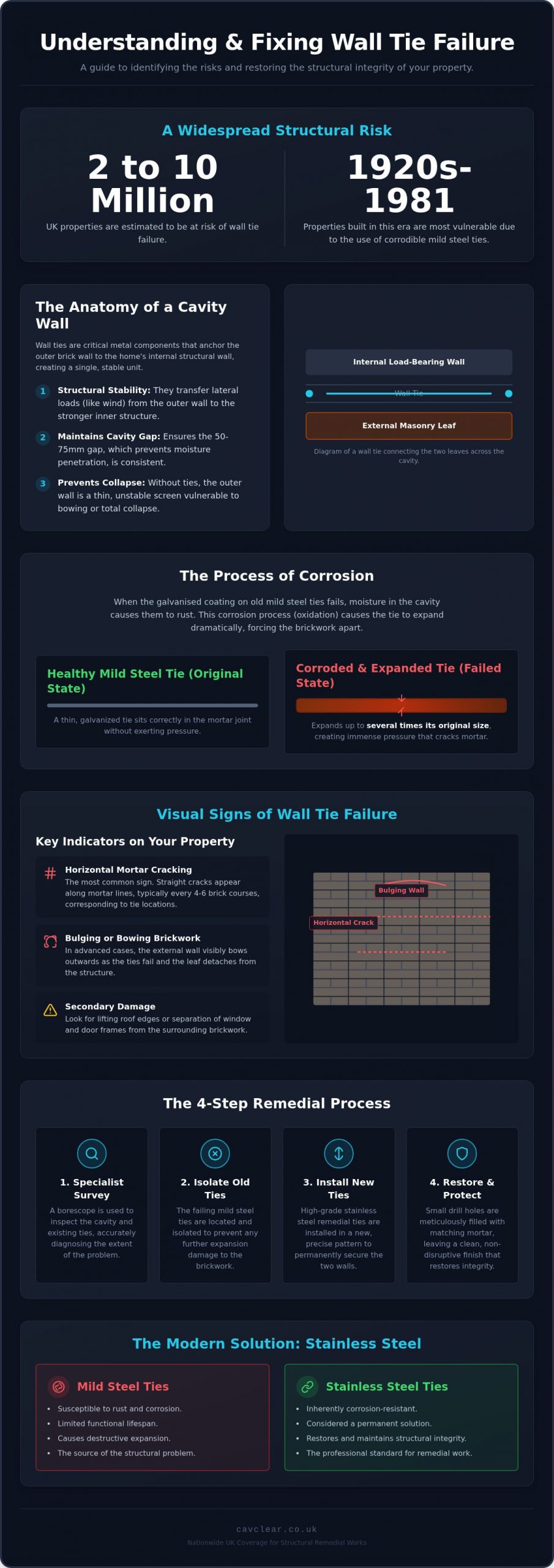
Wall ties are the hidden structural anchors that secure the external masonry leaf of a property to the internal load-bearing wall. While they remain invisible once construction is complete, their role is fundamental to the stability of the building. By linking these two separate walls, ties ensure the structure acts as a single, cohesive unit capable of resisting external forces. Understanding how these components function is the first step for anyone considering Understanding Cavity Wall Ties or researching wall tie replacement manchester for their property.
The Anatomy of a Cavity Wall
Modern UK construction relies on a dual-leaf system where a 50mm to 75mm gap separates the internal and external masonry. This void serves as a critical barrier against moisture penetration and provides a space for thermal management. It’s helpful to review our guide on what is a wall cavity to see how this layout impacts structural health. During the original build, technicians embed wall ties into the mortar joints of both leaves at regular intervals. This placement creates a bridge that maintains the cavity’s width while providing the necessary tension and compression strength to keep the outer leaf from moving independently.
Why Wall Ties are Vital for Building Safety
The primary safety function of a wall tie is to manage lateral loads. Without these links, the external leaf would essentially stand as a tall, thin, and unstable screen of brickwork. Under high wind pressure, the outer wall could bow outwards or collapse entirely because it lacks the mass of the internal load-bearing structure. Ties solve this by transferring these physical stresses to the stronger inner wall. This mechanical connection is what allows a property to maintain its shape and safety over many decades.
Historically, properties built before 1981 often utilized mild steel ties coated in a thin layer of galvanization. We now know that these materials are susceptible to corrosion when exposed to moisture within the cavity. When these ties fail, the entire outer facade becomes compromised, leading to significant structural risks. Since the early 20th century, wall ties have been a mandatory structural necessity for UK homes to ensure they can withstand environmental pressures. As a nationwide specialist, we prioritize the restoration of this stability using high-grade stainless steel alternatives that prevent future degradation and preserve the property’s long-term value.
Identifying the Signs of Wall Tie Failure in UK Properties
Identifying the symptoms of wall tie failure early is essential to prevent long-term structural damage. While settlement cracks are common in many UK properties, the indicators of corroding ties are distinct and predictable. The most frequent sign is horizontal cracking in the mortar joints. This occurs because the original mild steel ties undergo a chemical reaction when exposed to moisture, leading to the formation of iron oxide. Understanding Wall Tie Failure involves recognizing that this rust can cause the tie to expand to several times its original thickness. This upward pressure literally lifts the brickwork, forcing the mortar joints to split.
Visual Indicators in the Masonry
Unlike “stepped” cracking, which often follows the mortar line in a diagonal pattern and suggests foundation movement, wall tie corrosion typically presents as straight horizontal lines. These cracks often appear at regular intervals, specifically every 4 to 6 courses of brickwork, reflecting the original spacing of the ties. In advanced cases, you may notice the external masonry leaf bulging or “bowing” outwards, particularly on upper storeys where the weight of the wall is less constrained. This expansion can also put immense pressure on other structural elements, causing roof edges to lift or window frames to separate from the brickwork. If you notice these symptoms, arranging a professional wall tie survey is the most reliable way to confirm the extent of the damage.
Internal Signs and Secondary Effects
The consequences of structural movement aren’t confined to the exterior. As the outer leaf shifts or bows, it can create internal plaster cracking and compromise the weather-tight seal of the cavity. This often leads to moisture ingress, where driving rain penetrates the cracks and travels across the failing ties to the internal wall. This environmental shift creates the perfect conditions for dampness. If left unaddressed, this moisture can lead to persistent fungal growth; our black mould guide explains the health risks associated with these conditions. When homeowners investigate wall tie replacement manchester, they often find that resolving the structural link is the only permanent way to stop recurring damp issues. Addressing these faults promptly ensures your home remains a safe, dry, and structurally sound asset.
The Professional Wall Tie Survey: Why Visual Checks Are Not Enough
Relying solely on external visual indicators often leads to a false sense of security. While horizontal cracking is a clear warning sign, wall ties can be severely degraded inside the cavity without showing any immediate outward symptoms. This creates a “false negative” scenario where a property appears stable but remains at risk of sudden failure during high winds. A comprehensive survey is the mandatory first step in any wall tie replacement guide because it establishes the exact density and condition of the existing ties.
Professional technical reporting is also vital for property transactions. Mortgage lenders and insurance providers frequently require detailed structural assessments before approving funds or coverage. A specialist survey provides the documented evidence needed to satisfy these financial institutions. Homeowners investigating wall tie replacement manchester should prioritize a survey that offers clear, photographic proof of internal conditions rather than a simple walk-around inspection.
Borescope Inspections and Metal Detection
Specialist technicians use high-resolution borescopes to examine the hidden environment within the wall cavity. By drilling a small, 10mm hole into the mortar joint, we can insert a camera to view the condition of the ties directly. A borescope inspection is a non-destructive method to assess internal corrosion levels without damaging the masonry. We complement this visual data with precision metal detectors. These tools allow us to map the original tie pattern and identify any areas where ties are missing or were incorrectly spaced during the initial build.
The Role of Cavity Insulation in Tie Corrosion
The presence of cavity insulation significantly impacts the rate of tie degradation. When insulation becomes wet or defective, it traps moisture against the mild steel ties, creating a corrosive microclimate that accelerates rusting. In these cases, cavity wall insulation removal is often a prerequisite for a successful remedial treatment. Removing the damp material allows the cavity to breathe and prevents further corrosion of the newly installed stainless steel ties. CavClear maintains a strict stance against the installation of retrospective cavity wall insulation because of the documented risks it poses to structural integrity and damp management. Our nationwide team focuses on restoring the original design of the cavity to ensure long-term asset health.
The Methodology of Professional Wall Tie Replacement
Executing a professional wall tie replacement manchester requires a methodical approach that prioritizes both structural stability and property aesthetics. This is a precision structural intervention rather than a general building task. We utilize high-grade 304 or 316-grade stainless steel remedial ties to provide a permanent solution. These materials offer superior resistance to the corrosive environment within a wall cavity, ensuring that the new anchors will not suffer the same degradation as the original mild steel components. Our technicians focus on delivering a fix that protects your asset for the long term.
Isolation and Treatment of Existing Ties
Simply installing new ties is insufficient if the original, corroding components remain active within the masonry. As these mild steel ties continue to oxidize, they grow in volume and exert significant pressure on the brickwork. Our technicians employ the isolation technique to neutralize this threat. This process involves locating each failing tie and either cropping it or using a specialized sleeve to disconnect it from the external masonry leaf. Leaving corroded ties untreated will lead to continued masonry cracking even after new ties are installed. By isolating the old ties, we ensure that the expansion effect is halted, preventing further damage to your home’s facade.
Installing Remedial Stainless Steel Ties
We select the most appropriate anchor type based on the specific masonry density and cavity width of your property. The three primary options include:
- Mechanical Ties: These expand to grip the internal and external leaves securely.
- Resin Anchors: Ideal for softer masonry or where a chemical bond is required for maximum stability.
- Helical Ties: These are driven into small pilot holes to provide a high-strength mechanical connection with minimal disruption.
Our specialists use dustless drilling equipment to create small, discreet entry points for these anchors. This methodology protects your property’s air quality and ensures the process remains clean and non-disruptive. Once the stainless steel ties are secured, we repoint the entry holes with mortar that matches your existing finish. This attention to detail ensures the structural repair is virtually invisible. To secure your property’s future, you can book a professional wall tie survey with our nationwide specialist team today. We focus on restoring structural integrity while maintaining the original character of your home.
Choosing a Specialist for Structural Remedial Works
Selecting a contractor for structural repairs is a decision that impacts the long-term safety and value of your home. While a general local builder may offer masonry services, they often lack the specialized diagnostic equipment and technical training required for precise structural remediation. Specialist contractors focus exclusively on the mechanics of the wall cavity. We understand that structural integrity isn’t just about adding new support; it’s about neutralizing existing faults. When homeowners search for wall tie replacement manchester, they need a partner who provides more than a quick fix. They need a specialist who prioritizes a clean, non-disruptive methodology and detailed professional reporting.
Our nationwide coverage ensures that every property owner receives a standardized, high-quality service regardless of their location in the UK. This consistency is vital for maintaining asset health. We don’t just perform a repair; we provide a vital investment in the property’s future. By using specialized dustless drilling and borescope inspections, we protect your home’s interior environment while securing its exterior shell. Our approach centers on restoring comfort and safety through technical excellence.
What to Look for in a Specialist Quote
A professional quote should be transparent and technically detailed. It must explicitly mention the isolation of existing ties and the use of 304 or 316-grade stainless steel. If a quote lacks these details, the methodology is likely flawed and may lead to recurring masonry cracks. We recommend using a choosing a dampness specialist checklist to evaluate potential contractors effectively. A fixed-price remedial plan is always superior to an “estimate” based on hourly rates. Fixed pricing provides financial certainty and ensures that the contractor is committed to a defined scope of work without hidden costs.
The CavClear Commitment to Quality
Our accredited technicians provide an exhaustive final survey report that serves as a permanent record of the structural improvements made. This document is essential for future mortgage surveys and property sales. Because we operate as a nationwide specialist, we bring a level of professional rigor and standardized methodology that smaller firms often cannot match. We encourage you to take action as soon as you identify the signs of failure. Proactive maintenance is far more cost-effective than emergency structural repairs. By choosing a specialist who understands the nuances of wall tie replacement manchester, you ensure that your property remains a safe, stable, and valuable asset for decades to come.
Securing Your Property’s Structural Future
Structural stability is the foundation of your home’s value and safety. Recognizing the technical signs of tie failure early allows for a proactive intervention that prevents permanent masonry damage. A professional survey remains the only reliable method to assess the hidden condition of your cavity walls, providing the detailed, mortgage-ready technical reports required by lenders and insurers. While the search for wall tie replacement manchester often begins with a visible crack, the solution lies in a precise methodology that includes tie isolation and high-grade stainless steel remedial solutions.
Our specialists prioritize a clean, non-disruptive process that restores your comfort without compromising the building’s aesthetic. To protect your investment and ensure long-term asset health, Book a Professional Wall Tie Survey with CavClear today. Our nationwide UK service coverage ensures that expert technicians are available to provide the structural assurances you need. Taking this step today transforms a structural risk into a secure, permanent fix for your property’s future. We look forward to helping you restore the integrity of your home with professional rigor and transparent reporting.
Frequently Asked Questions
How long do professional wall tie replacements last?
Professional remedial wall ties are designed to last the lifetime of the building. By using high-grade 304 or 316-grade stainless steel, we ensure the anchors resist corrosion even in harsh or coastal environments. Unlike the original mild steel ties that often fail after 30 to 50 years, these specialist solutions provide a permanent fix. This investment secures the long-term structural health of your property and prevents the need for future interventions.
Can wall tie failure affect my ability to sell my house?
Yes, structural instability is a major red flag for mortgage lenders and can stall a property sale. Surveyors look for specific signs like horizontal cracking or bulging masonry during their inspections. If failure is suspected, lenders may withhold funds or require a specialist report before approving a loan. Providing a professional survey and a certificate of completion ensures your property remains mortgageable and attractive to potential buyers.
Is wall tie replacement a messy or disruptive process?
Modern methodology ensures the replacement process is clean and non-disruptive for the homeowner. We use specialist dustless drilling equipment to create small entry points in the mortar joints, protecting your property’s air quality. Because all work is performed from the exterior, there is no need to vacate the property or move internal furniture. Technicians repoint every entry hole with matching mortar to ensure a seamless and virtually invisible finish.
How much does a professional wall tie survey cost in 2026?
Survey costs vary depending on the size of the building and the complexity of the cavity environment. A professional structural assessment involves borescope inspections and metal detection to map the internal state of the wall ties accurately. While costs are dictated by the specific requirements of the property, investing in a specialist survey prevents the significantly higher expenses associated with emergency repairs. It’s a vital step for any homeowner considering wall tie replacement manchester.
Can I just repoint the cracks instead of replacing the ties?
Repointing is a cosmetic fix that doesn’t address the underlying structural fault. If the original mild steel ties are left to corrode, they’ll continue to expand and exert pressure on the masonry. This expansion inevitably causes new cracks to appear in your fresh mortar over time. To stop the cycle of damage, you must isolate the failing ties and install stainless steel replacements to restore the mechanical link between the wall leaves.
Do wall ties cause dampness inside the property?
Failing ties can indirectly cause dampness by creating structural cracks that allow moisture ingress. When ties corrode and expand, the resulting horizontal splits in the mortar joints act as channels for driving rain. This moisture can travel across the ties or through the compromised cavity into the internal leaf. Resolving the structural issue is often the first step in restoring a dry, healthy environment and preventing issues like fungal growth or internal plaster damage.
How many wall ties are typically required per square metre?
Standard UK building regulations usually require a minimum of 2.5 ties per square metre for properties with a cavity width up to 100mm. This typically equates to a spacing of 900mm horizontally and 450mm vertically in a staggered pattern. However, a specialist survey may recommend a higher density in high-wind areas or near building corners and openings. Our technicians ensure the tie pattern provides maximum lateral stability according to current technical standards.
What is the difference between mild steel and stainless steel wall ties?
The primary difference is the long-term resistance to corrosion and oxidation. Mild steel ties, common in homes built before 1981, rely on a thin zinc coating that eventually degrades in the moist cavity environment. Once the steel is exposed, it rusts and expands. Stainless steel ties are inherently resistant to this process. This makes them the industry standard for wall tie replacement manchester, offering a permanent solution that won’t compromise the masonry leaf in the future.
Recent Comments