

The most successful structural repairs are the ones you cannot actually see. If you have discovered horizontal cracking or bulging masonry, the prospect of remedial work often feels invasive and overwhelming. You probably worry that your property will be left with unsightly drill holes or mismatched mortar that serves as a permanent reminder of a structural fault. It’s completely natural to feel anxious about what to expect after wall tie replacement, especially when the long term stability of your home is at stake.
We understand that you need more than just a fix; you need the restoration of your property’s value and your own comfort. This guide provides a detailed, technical overview of the post-installation phase to ensure you’re fully informed. We’ll explain how professional masonry reinstatement makes repairs nearly invisible and why formal certification, adhering to PD 6697:2019 standards, serves as your primary evidence of structural integrity. You’ll also gain a clear understanding of the necessary maintenance checks to protect your investment for decades to come.
Key Takeaways
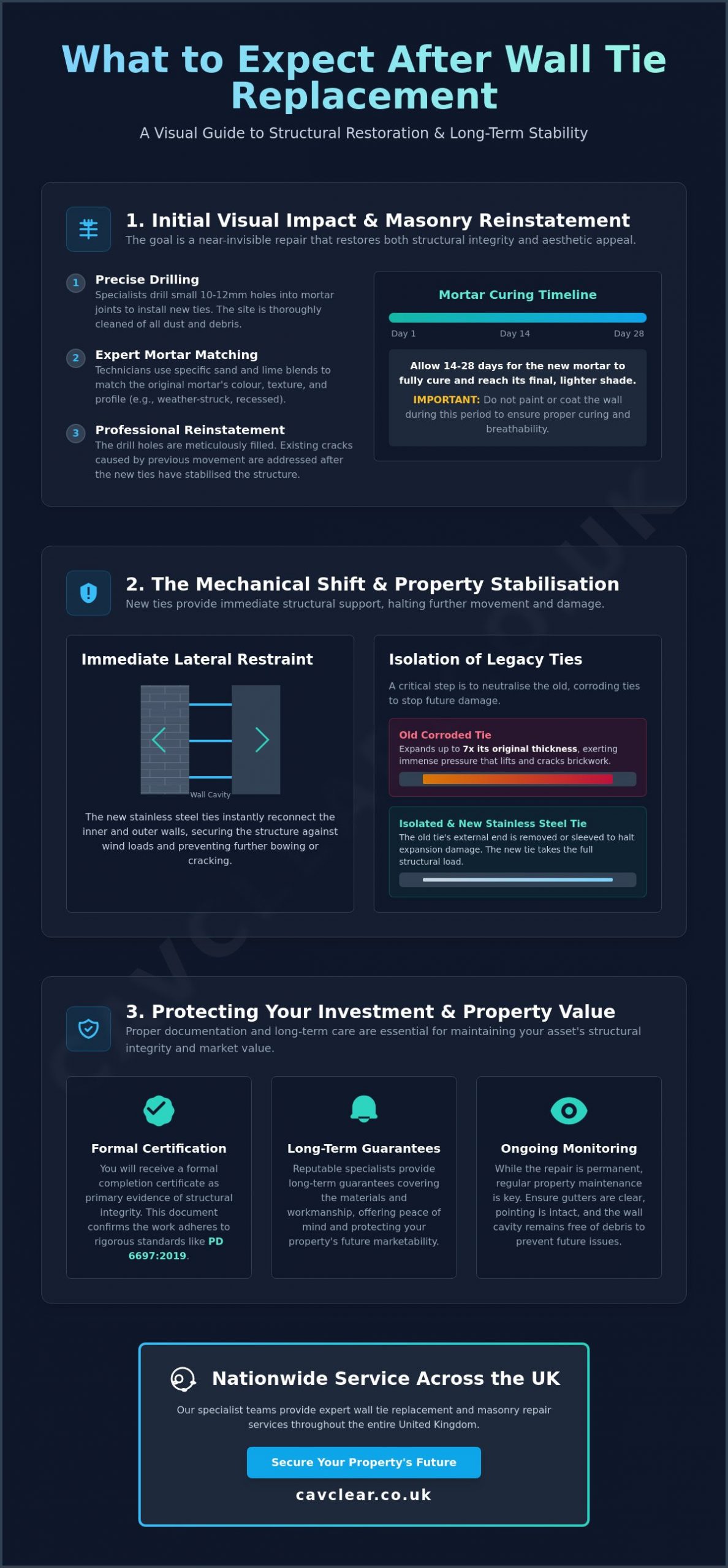
- Understand how professional masonry reinstatement uses colour-matched mortar to ensure the 10-12mm installation holes become virtually invisible once cured.
- Learn why the immediate provision of lateral restraint and the isolation of legacy ties are essential steps for preventing further structural movement.
- Gain clarity on what to expect after wall tie replacement concerning the long-term health of the building envelope and the role of a debris-expert cavity.
- Discover the importance of formal completion certificates and long-term guarantees in maintaining the structural integrity and market value of your asset.
Initial Visual Impact and Masonry Reinstatement
When a specialist team completes the installation, the first change you’ll notice is a specific pattern of small drill holes across your mortar joints. These access points typically measure between 10-12mm in diameter. While this might look disruptive at first glance, it is a necessary part of the remedial process. A professional team ensures that all dust and debris generated during the drilling phase is fully cleared from the site before they finish. Understanding what a cavity wall tie is helps clarify why these precise entry points are required to secure the inner and outer leaves of your property.
Knowing what to expect after wall tie replacement involves understanding that the visual repair is just as technical as the structural one. Our goal is always a near-invisible reinstatement that restores the building’s aesthetic alongside its integrity. A clean methodology prevents the “peppered” look often associated with low-quality repairs, ensuring your property maintains its curb appeal and market value.
The Mortar Matching Process
Specialists use specific sand and lime blends to match the original age and composition of your home’s masonry. This isn’t just about aesthetics; using the wrong mortar density can cause the surrounding brickwork to fail over time. Technicians carefully match the “profile” of your existing joints, whether they are weather-struck, recessed, or flush. Fresh mortar always appears darker when first applied. It typically takes between 14 to 28 days for the patch to reach its final shade as it cures. You must avoid painting or coating the wall during this window, as the new mortar needs to cure naturally to maintain the building’s breathability and long-term asset health.
What Happens to Existing Cracks?
New structural ties stop movement, but they don’t mechanically pull existing cracks back together. You should expect a separate masonry repair phase for any significant horizontal cracking caused by the original tie corrosion. We perform cosmetic pointing only after the new ties have successfully taken the structural load. This methodical approach ensures that the finished repair remains stable and doesn’t suffer from immediate stress fractures. By waiting for the building to stabilise, we provide a permanent fix rather than a temporary cover-up, protecting the structural envelope for the future.
The Mechanical Shift: How Your Property Stabilises
Once the installation is complete, your property undergoes an immediate mechanical shift. The new remedial ties provide instant lateral restraint, effectively reconnecting the inner and outer leaves of the masonry. While the mortar repairs mentioned previously take time to cure, the structural stabilisation happens the moment the ties are anchored. This change secures the wall against wind loads and gravity, halting the progression of signs of wall tie failure. Structural settling is a gradual process; while the reinforcement is immediate, the masonry may take several months to fully adjust to its new, reinforced state.
Understanding what to expect after wall tie replacement requires a shift in perspective from seeing the wall as a static object to viewing it as a dynamic system. The replacement ties are not just “screws” in a wall; they’re high-performance components that manage the complex stresses placed on a building. A specialist team ensures these components are installed with precision, restoring the structural balance that time and corrosion have eroded.
Understanding the Isolation of Corroded Ties
A critical part of the post-installation state is the “isolation” of the legacy ties. When mild steel ties corrode, they undergo a phenomenon known as rust expansion. During this process, the metal can grow to seven times its original thickness. This expansion exerts immense pressure on the mortar beds, causing the characteristic “lifting” or horizontal cracking often seen in older properties. If these old ties aren’t addressed, they’ll continue to expand and cause damage even after new ties are installed. We use physical isolation techniques, such as applying foam sleeves or removing the external ends of the old ties, to ensure the old metal no longer interacts with the outer leaf. This stops the lifting of the brickwork and prevents future cracking.
Load Transfer and Wall Integrity
The new stainless steel ties are designed to distribute structural weight and lateral pressure evenly across the wall cavity. To ensure maximum safety, the spacing of these remedial ties is often denser than the original build. We typically follow a specification of at least 2.5 ties per square metre to meet modern safety standards. This increased density compensates for the age of the masonry and the loss of the original ties’ function. The wall’s integrity is restored through this balanced load transfer, allowing the structure to flex naturally without compromising safety. If you’re concerned about the current stability of your masonry, arranging a professional wall tie survey can provide the technical data needed to plan these essential repairs.
The Role of the Cavity in Preventing Future Corrosion
Replacement ties are almost exclusively manufactured from stainless steel to provide a permanent solution to corrosion. However, the environmental conditions within your walls still dictate the long term health of the structure. A clear and debris-expert cavity remains the most effective way to ensure the remedial work performs as intended. Moisture transfer across the cavity is the primary enemy of structural wall components; if water can bridge the gap between the leaves, even high quality fixes can be compromised over time.
When considering what to expect after wall tie replacement, you must look beyond the metal components themselves. The cavity was originally designed to act as a barrier to moisture. If this space is filled with rubble, mortar droppings, or saturated materials, the risk of penetrating damp increases significantly. Maintaining a hollow, ventilated space is essential for the restoration of your property’s comfort and structural efficiency. It ensures that the air within the cavity can circulate, which is vital for keeping the internal leaf dry and warm.
The Problem with Retrospective Cavity Insulation
Retrofitted insulation often creates a bridge for moisture to travel from the external brickwork to the internal leaf. This material can trap water against the new remedial ties, creating a permanently damp environment that accelerates the degradation of the building envelope. We firmly advise against installing new retrospective cavity wall insulation after your tie replacement is complete. If your existing insulation is found to be wet or defective during the survey, professional cavity wall insulation removal is a necessary step to protect your investment. Removing these saturated materials ensures that the cavity can breathe and the new ties remain in a dry, stable environment.
Ensuring Effective Drainage and Ventilation
A healthy cavity relies on consistent airflow to dissipate moisture. Specialist installers often check or install weep holes in the masonry joints to allow any water that enters the cavity to escape expertly. These small vents are vital for preventing the build up of hydrostatic pressure and dampness within the wall structure. By ensuring the cavity remains clear and ventilated, you prevent penetrating damp from reaching your home’s interior. A well-maintained cavity serves as your property’s best defence against internal mould and long term structural decay. This methodical focus on ventilation frames the repair as a vital investment in the building’s future health, rather than just a quick structural fix.
Monitoring and Long-Term Maintenance Requirements
Remedial ties are designed for decades of service, but the masonry around them remains subject to environmental stress. Professional wall tie replacement provides the necessary lateral restraint to secure your property, yet the building envelope still requires periodic oversight. We recommend scheduling a visual check of the mortar reinstatement every 12 months for the first two years. This proactive approach ensures the new installation performs correctly as the building settles. Understanding what to expect after wall tie replacement involves moving from a reactive repair mindset to a proactive asset management model.
External masonry maintenance serves as your primary defence against future structural issues. You should ensure that your pointing remains intact and your guttering is expert from blockages or leaks. Overflowing water can saturate the outer leaf, which increases moisture levels within the cavity and places unnecessary stress on the building’s fabric. Keeping the cavity dry is the most effective way to preserve the structural integrity of your home. If you are concerned about the current condition of your masonry, you can arrange a comprehensive wall tie inspection to ensure your property remains protected.
Annual Visual Inspection Checklist
A simple yearly walkthrough allows you to spot minor issues before they escalate. You should look for any hairline cracks appearing around the new tie locations; while rare, these can indicate natural settling. Inspect the mortar joints for signs of spalling, where the mortar face begins to crumble or fall out due to frost action. It’s also vital to ensure that ground levels, such as new patios or flower beds, don’t rise above the damp proof course (DPC). Maintaining this gap prevents moisture from bypassing your property’s natural defences and entering the cavity.
Future Professional Surveys
While the ties themselves are permanent, we suggest considering a follow-up borescope inspection every 10 to 15 years. These surveys help maintain the property’s asset health, providing documented proof of stability for future resale purposes. You should keep your original survey report and completion certificate in a safe place alongside your property deeds. These documents are essential during the conveyancing process, as they demonstrate that the structural faults were professionally rectified. This level of transparency builds trust with future buyers and protects the long-term market value of your investment.
Protecting Your Investment: Guarantees and Property Value
Professional wall tie replacement is a vital investment in the structural integrity and future saleability of your home. Once the remedial work is complete, you should receive a formal completion certificate and a long-term guarantee, which often extends to 25 years. This documentation serves as a permanent record that the building envelope has been professionally stabilised. Mortgage lenders and building surveyors view a property with unaddressed wall tie failure as a significant risk; they often require proof of specialist repair before approving a loan or valuation. A professional fix restores the structural comfort of the home, removing the stress of potential masonry failure and ensuring your asset remains secure.
Understanding what to expect after wall tie replacement involves recognising the importance of these legal and technical assurances. These documents move your property from a “defective” category back into a “standard” risk category for insurers and lenders. By choosing a specialist who follows a rigorous methodology, you ensure that the repair is not just a temporary patch but a permanent structural upgrade. This transparency is essential for maintaining the long-term health and efficiency of your property.
What Does a Structural Guarantee Cover?
A comprehensive structural guarantee typically covers both the materials used and the workmanship of the installation. We use high-grade stainless steel ties that are resistant to the corrosion issues that plagued original mild steel components. A specialist contractor’s guarantee carries significant weight because it is backed by professional indemnity and specific industry expertise. This is far more valuable than a general builder’s verbal promise, which rarely satisfies the technical requirements of a building surveyor. During the conveyancing process, your solicitor will include these documents in the property pack to prove to potential buyers that the structural faults have been rectified to modern standards.
The Impact on Property Value
Proactively fixing wall tie issues prevents the dreaded “down-valuation” during a building survey. When a surveyor identifies horizontal cracking or bulging, they may reduce the property’s value by the estimated cost of repairs plus a “risk margin.” By having the work completed and documented beforehand, you remove this leverage from a buyer’s negotiations. Buyers feel reassured when they see evidence of specialist remedial work, including the isolation of old ties and the cleaning of the cavity. It demonstrates that the property has been maintained with professional rigour. To protect your property’s future value, you must ensure you have all your paperwork in order and stored safely. Knowing what to expect after wall tie replacement means being prepared to prove the quality of the work to anyone who may invest in your home in the future.
Securing Your Property’s Future Integrity
Wall tie replacement is more than a simple repair; it’s a vital investment in your home’s longevity. By understanding what to expect after wall tie replacement, you can move forward with the confidence that your property is both structurally sound and visually restored. Professional masonry reinstatement ensures the work remains near-invisible, while the technical isolation of legacy ties prevents further expansion damage to your brickwork. These methodical steps, combined with a clear and ventilated cavity, provide the necessary foundation for a dry and stable building envelope.
Our accredited specialist technicians offer nationwide UK coverage, providing the technical expertise required to rectify structural faults with precision. We deliver comprehensive structural reports and long-term guarantees that protect your asset’s value for decades to come. Book a Professional Wall Tie Survey with CavClear today to restore your home’s structural comfort and security. You’ve taken the right step by prioritizing your property’s health, and we’re here to provide the permanent fix your home deserves.
Frequently Asked Questions
Will the drill holes be visible on my brickwork after the work is finished?
Professional reinstatement makes drill holes almost invisible once the curing process is complete. We use a precise blend of sand and lime to match the colour and texture of your existing mortar joints. While the 10-12mm holes are filled immediately, the fresh mortar takes between 14 and 28 days to reach its final shade. This ensures your home’s aesthetic remains intact while its structural integrity is fully reinforced.
How long does the wall tie replacement process usually take for a standard house?
Most standard UK properties require between one and three days for a complete installation. The exact duration depends on the size of the building and the ease of access to all elevations. Our teams work methodically to ensure the project is completed efficiently without compromising on the technical standards required for lateral restraint. A specialist survey provides a more specific timeframe tailored to your property’s unique requirements.
Do I need to leave the house while the wall ties are being replaced?
You don’t need to vacate your home during the installation process. The work is performed entirely from the exterior of the property using ladders or scaffolding. While you’ll hear some noise from the drilling, the internal living spaces remain unaffected and clean. This non-disruptive methodology allows you to maintain your daily routine while we secure your building’s structural envelope from the outside.
What happens to the old rusty wall ties that were already in the wall?
Legacy ties are left in the wall but are isolated to prevent further damage. We use physical isolation techniques, such as foam sleeves or removing the external ends of the corroded ties, to stop them from expanding and lifting your brickwork. This is a critical step in what to expect after wall tie replacement, as it ensures the old metal no longer exerts pressure on your mortar joints or causes further cracking.
Can I install new cavity wall insulation after the ties have been replaced?
We strongly advise against installing retrospective cavity wall insulation after your ties are replaced. These materials often trap moisture against the new ties and the inner leaf, leading to significant damp issues and potential structural decay. Maintaining a clear, hollow cavity is the best way to ensure the long-term health of your property and the efficiency of the remedial work we’ve performed.
Will replacing the wall ties fix the damp problems in my house?
Replacing wall ties stops moisture from bridging across individual corroded components, but it won’t resolve damp caused by other faults. If your property has saturated insulation or blocked weep holes, those issues must be addressed separately. A comprehensive survey will identify if what to expect after wall tie replacement includes further remedial actions, such as cavity extraction, to fully restore a dry and healthy internal environment.
How much does wall tie replacement typically cost for a UK home?
The cost of remedial work depends on the property’s size, the type of ties required, and the current condition of the masonry. Every project is unique, so we don’t provide generic estimates that might mislead homeowners. Instead, a professional survey is necessary to assess the density of ties needed and the complexity of the isolation process. This ensures you receive a technically accurate quote based on the specific needs of your home.
How long do remedial wall ties actually last?
Modern remedial ties are manufactured from high-grade stainless steel and are designed to last for the remaining lifetime of the building. Unlike original mild steel ties, these components are highly resistant to corrosion even in damp environments. Professional installations typically come with a 25-year guarantee, providing you with long-term peace of mind regarding the structural stability and asset health of your home.
Recent Comments