
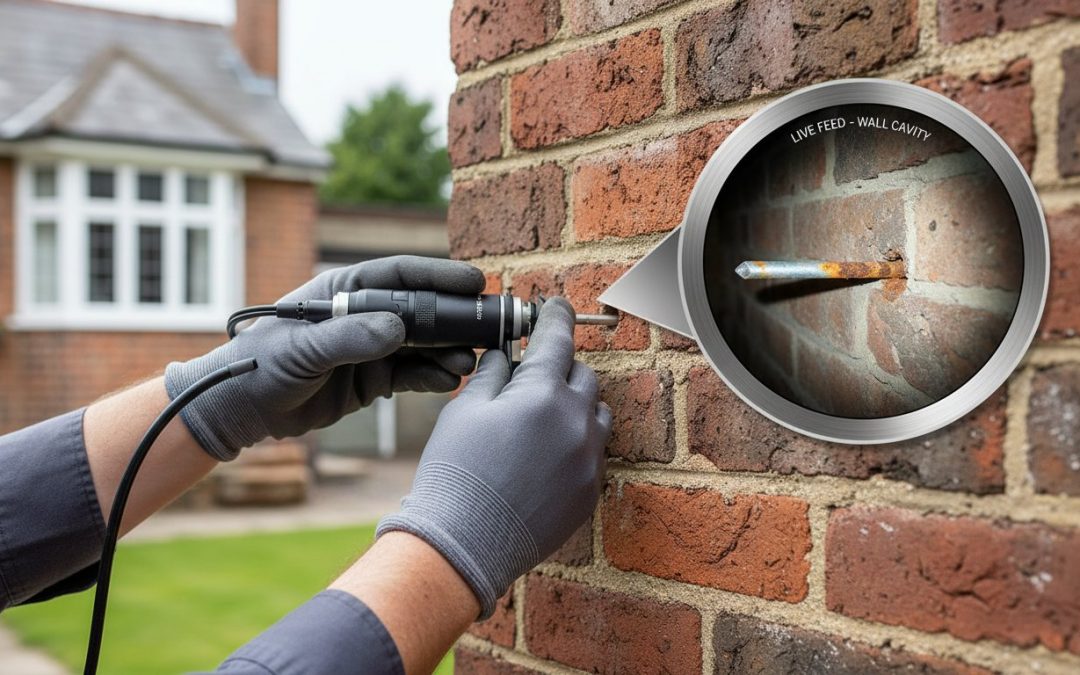
Nearly two million homes in the United Kingdom will experience cavity wall tie corrosion or failure this year, according to recent government statistics. If your property was built between the 1920s and 1981, the risk is particularly high because the original zinc coatings were significantly thinner than modern standards require. It’s understandable to feel a sense of urgency or even anxiety when faced with potential structural faults or a pending mortgage rejection. You need a reliable way to see inside your walls without causing damage. A professional endoscopic wall tie survey removes the guesswork by using high-resolution camera technology to inspect the cavity directly.
This guide will show you how a specialist inspection identifies hidden corrosion and protects your property investment through clear, visual evidence. We’ll explain the difference between non-destructive testing and invasive methods, ensuring you understand exactly what happens during the process. You’ll also learn about the current BRE Digest standards used to grade tie condition and how a professional report develops a clear, long-term remedial plan to maintain your home’s structural integrity for the future.
Key Takeaways
- Learn how high-resolution borescope technology provides a clear view of your property’s internal structure without the need for destructive testing.
- Understand why a professional endoscopic wall tie survey is the only definitive way to assess the condition of ties and identify hidden corrosion before it causes visible cracking.
- Discover the critical link between moisture retention in the cavity and the accelerated oxidation of galvanised steel wall ties.
- Gain the knowledge to interpret structural reports using standard BRE 401 grading, allowing you to prioritize necessary repairs effectively.
- Find out how specialist cavity inspections protect your property’s long-term asset health and satisfy the rigorous requirements of lenders and insurers.
Understanding the Endoscopic Wall Tie Survey and Its Importance
An endoscopic wall tie survey is a specialist diagnostic procedure that provides a definitive visual assessment of a property’s internal structural health. While a standard building survey identifies surface-level issues, it cannot see inside the cavity where the actual cavity wall tie resides. This internal component is vital for the stability of your home. It connects the inner and outer leaves of the masonry, ensuring they act as a single structural unit. Without functional ties, the two leaves can move independently, leading to catastrophic failure.
Relying solely on external visual checks is often insufficient for modern property maintenance. Corrosion usually begins deep within the cavity, hidden from view by layers of brick and mortar. By the time signs appear on the outer brickwork, the structural integrity may already be severely compromised. Mortgage lenders across the United Kingdom frequently mandate these surveys for properties built before 1981 to mitigate their lending risk. Instead of performing major structural openings that require expensive masonry repairs, we use a method of targeted disruption. This involves drilling small, discreet holes into the mortar joints. We then insert a high-resolution borescope to inspect the ties directly, providing a clear picture of their condition without creating an unnecessary mess.
When is a Wall Tie Inspection Necessary?
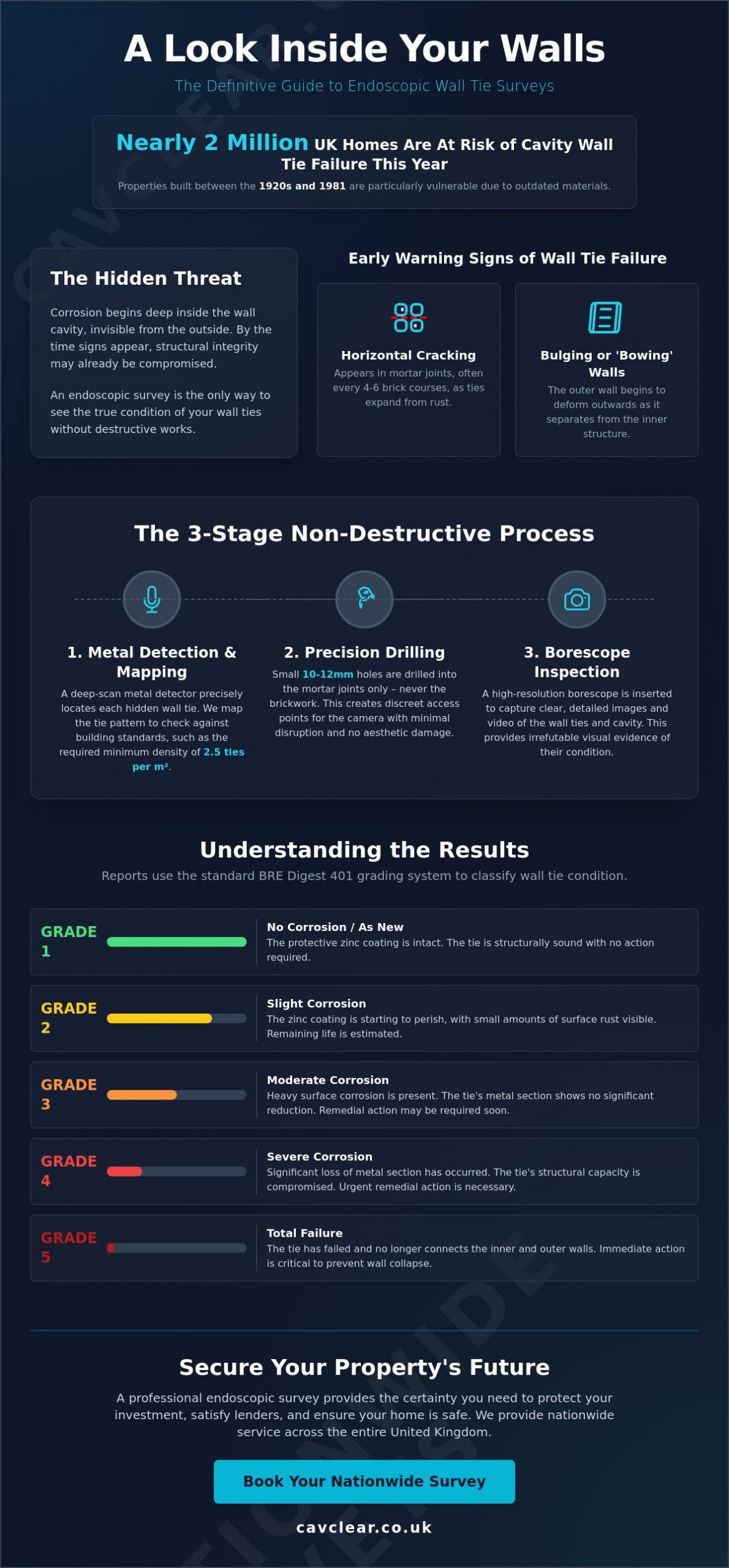
You should look for horizontal cracking in your mortar joints, which typically appears every four to six courses of brickwork. This specific pattern often indicates that the metal ties are expanding as they rust, exerting pressure on the surrounding masonry. You might also notice bulging or “bowing” in the external leaf of the wall. If you are in the process of buying a property built between the 1920s and 1981, a professional inspection is a critical step. During this era, the zinc coatings on ties were thinner and more prone to premature decay.
The Risks of Ignoring Hidden Wall Tie Failure
Ignoring these early warning signs leads to progressive structural instability. Compromised ties cannot effectively resist wind loading, which is the pressure exerted by wind against the building’s surface. During severe weather, a wall with failed ties is at high risk of collapsing outward. This isn’t just a safety concern; it is a significant financial risk. Undiagnosed failure can lead to a sharp reduction in property resale value and may complicate future insurance renewals. Investing in a professional survey ensures the long-term health of your asset and provides the peace of mind that your home remains secure.
The Technical Process: How an Endoscopic Inspection is Conducted
A professional endoscopic wall tie survey follows a rigorous, three-stage methodology designed to provide maximum clarity with minimal impact. This isn’t a random sampling of the wall. It is a systematic diagnostic review that uses advanced technology to see what the naked eye cannot. By following a structured technical process, we replace speculation with visual evidence, allowing property owners to make informed decisions about their building’s future.
Step 1: Metal Detection and Mapping
The process begins with the precise location of the hidden metal components. Technicians use high-sensitivity deep-scan metal detectors to identify the exact position of every cavity wall tie behind the brickwork. This allows us to map the “tie pattern” and compare it against original building standards and modern requirements. For instance, standards such as PD 6697:2019 specify that walls should have a minimum density of 2.5 ties per square metre. Mapping ensures we identify areas where ties are missing, incorrectly spaced, or poorly embedded, which are common causes of structural instability.
Step 2: Precision Drilling and Borescope Insertion
Once the ties are mapped, we create non-disruptive access points. We drill small holes, typically 10mm to 12mm in diameter, specifically into the mortar joints. We never drill into the bricks themselves, as this could compromise the masonry’s integrity and aesthetic. A high-resolution borescope is then inserted through these points. This high-definition technology allows us to capture clear imagery of the internal cavity. We don’t just look for rust; we inspect the “end-condition” where the tie meets the inner and outer leaves, as these are the points most vulnerable to moisture-induced decay.
Step 3: Making Good and Site Restoration
Restoring the appearance of your home is just as important as the inspection itself. After the data is collected, we seal every inspection hole using colour-matched mortar. This ensures the building envelope remains completely weather-tight and the facade looks exactly as it did before we arrived. We take pride in our clean methodology, ensuring that the only evidence of our visit is a comprehensive professional report. The entire process typically takes two to four hours for a standard property, providing a fast and effective solution for homeowners and lenders alike.
Identifying Structural Risks: Wall Tie Corrosion and Defective Insulation
Corrosion occurs when the protective zinc layer on a steel tie fails, which exposes the raw metal to oxygen and moisture. This chemical process, known as oxidation, leads to the formation of iron oxide or rust. As the tie rusts, it can expand to several times its original thickness. This expansion exerts significant internal pressure on the surrounding mortar joints, often resulting in visible structural distress. While the process is slow, it is relentless. An endoscopic wall tie survey is the only reliable method to determine the current stage of this oxidation before the damage becomes irreversible.
Moisture is the primary catalyst for this decay. In a healthy cavity, air circulates expertly and moisture evaporates through weep holes. However, when the environment inside the wall remains damp for extended periods, the rate of corrosion accelerates. This is particularly common in properties located in high-exposure zones across the United Kingdom, where wind-driven rain frequently saturates the external masonry leaf. If the internal environment is compromised, the structural lifespan of the ties is significantly reduced.
The Link Between Wet Insulation and Tie Failure
Retrospective cavity wall insulation can inadvertently create a bridge for moisture to travel from the outer leaf to the inner leaf. When insulation material becomes saturated, it acts as a “poultice,” holding water directly against the metal wall ties. This constant contact with liquid moisture bypasses the tie’s natural ability to shed water, leading to rapid deterioration. Because of these risks, we never recommend the installation of retrospective insulation in properties where tie integrity is already a concern. If your insulation is compromised, professional cavity wall insulation removal is often a necessary step to stop the cycle of dampness and protect your wall ties from further oxidation.
Recognising Common Cavity Wall Defects
During an endoscopic wall tie survey, our technicians look for more than just rust. We often identify “snotted” mortar, which refers to excess mortar droppings that have fallen onto the ties during the original construction. These deposits provide a direct path for water to cross the cavity. We also check for the following defects:
- Vertical cracks in the brickwork, which indicate that the expanding rust has finally forced the masonry apart.
- Missing or damaged cavity trays, which fail to redirect water away from the inner leaf.
- Blocked weep holes that trap standing water at the base of the cavity, creating a humid environment that facilitates metal decay.
Identifying these issues early allows for targeted repairs, preventing the need for more extensive structural interventions later. By addressing the root cause of moisture ingress, you ensure the long-term stability of your property.
Interpreting Your Wall Tie Inspection Report and Grading
A professional report is more than just a summary of findings; it’s a technical document that must adhere to industry-recognised standards. All reputable endoscopic wall tie survey results follow the BRE 401 (Building Research Establishment) guidelines. These standards ensure that every property, whether in London or Edinburgh, is assessed using the same rigorous criteria. This consistency is vital for mortgage lenders and insurance providers who require objective evidence of a building’s structural health before approving a transaction or policy.
The accuracy of your report depends heavily on the sample size. A technician doesn’t just look at one tie; they inspect a representative number of ties across all elevations of the property. This methodical approach ensures that the report reflects the condition of the entire building rather than a single isolated area. By examining ties at different heights and exposures, we can identify patterns of decay that might otherwise be missed. This data allows us to categorise the findings into standard industry grades.
The Four Grades of Wall Tie Condition
- Grade 1: The ties are in excellent condition. The original protective coating, such as galvanisation, remains fully intact with no visible signs of oxidation.
- Grade 2: Technicians identify light surface rust. While the protective layer has started to break down, there is no loss of the metal’s structural section yet.
- Grade 3: Heavy corrosion and crusting are present. The metal has begun to expand, and the structural integrity of the tie is officially compromised.
- Grade 4: This grade indicates complete failure or significant metal loss. The tie no longer provides a reliable connection between the inner and outer leaves of the masonry.
What Should a Professional Report Include?
Transparency is a hallmark of a specialist service. Your report should include high-definition photographic evidence captured during the borescope inspection. This allows you to see the internal condition of the cavity for yourself. Additionally, the document must feature a clear map of the property showing every inspection point and a detailed summary of the findings for each area. If the survey identifies Grade 3 or 4 ties, it should conclude with a fixed-price remedial plan for wall tie replacement.
It’s important to understand the difference between a “precautionary” and a “remedial” recommendation. A precautionary note is often issued for Grade 2 ties, suggesting a re-inspection in several years to monitor the rate of decay. A remedial recommendation, however, means that the ties require immediate attention to ensure the building remains safe and insurable. If you need a definitive assessment of your property’s structural ties, you can contact our nationwide team to arrange a comprehensive inspection and receive a clear, professional report.
Securing Your Property with Accredited Structural Surveys
Securing the future of your property requires more than just a quick fix; it demands a diagnostic approach backed by professional accreditation. At CavClear, we provide a specialist endoscopic wall tie survey that meets the highest technical standards across the entire United Kingdom. Lenders and insurers require these accredited reports because they provide a verifiable audit trail of a building’s structural integrity. By choosing a nationwide expert, you ensure that your property documentation is robust enough to withstand the scrutiny of any financial institution or potential buyer. Professional surveys aren’t just a cost; they’re a vital investment in the property’s long-term asset health.
Our commitment to a clean and non-disruptive service means that your daily routine remains unaffected. We use precise, high-resolution technology to diagnose internal faults without the need for major structural openings. This methodology prioritises the restoration of comfort and safety while maintaining the aesthetic value of your facade. Every report we produce serves as a definitive record of your home’s condition, providing the transparency needed to manage your property effectively for years to come.
Why Choose a Nationwide Specialist?
Regional construction styles vary significantly across the UK, from the exposed coastal properties of the South West to the industrial masonry of the North. A nationwide specialist brings a broad perspective on these variations, ensuring that local exposure zones are factored into every assessment. We maintain strict consistency in our reporting standards, so you receive the same high-level expertise regardless of your location. This expertise extends to identifying complex structural faults that general builders often overlook, such as the subtle indicators of early-stage oxidation in non-standard cavities. We also have the capacity to handle large-scale commercial projects with the same professional rigour as residential inspections.
Next Steps: Booking Your Inspection
Preparing for a surveyor visit is straightforward and requires minimal effort from the homeowner. We recommend ensuring clear access to the external perimeter of your building, as our technicians will need to map the entire facade. You don’t need to worry about internal disruption; our methodology is strictly external and non-invasive. From your initial enquiry, we typically deliver a final, comprehensive report within five working days of the site visit. This quick turnaround allows you to proceed with mortgage applications or necessary remedial work without unnecessary delay.
A specialist endoscopic wall tie survey transforms speculative concerns into a clear, actionable roadmap for maintenance. It replaces anxiety with facts, allowing you to address issues like wall tie corrosion or the need for cavity wall insulation extraction with total confidence. If repairs are necessary, we provide a transparent path toward a resolution, focusing on long-term structural health rather than temporary patches. You can contact our team for a no-nonsense consultation to secure the permanent fix your property deserves.
Protecting Your Property’s Structural Future
Structural integrity is the foundation of your home’s value and safety. By opting for an endoscopic wall tie survey, you move beyond the limitations of external visual checks and gain direct insight into the condition of your property’s internal framework. This specialist approach identifies the early stages of oxidation and moisture ingress, allowing for targeted maintenance before minor faults escalate into major structural issues. Our reports align with industry standards, providing the clarity required by lenders and the assurance needed by homeowners.
As a nationwide specialist, we combine technical precision with a clean, non-disruptive methodology to protect your property investment across the United Kingdom. We focus on restoring comfort and ensuring the long-term health of your asset through transparent, evidence-based recommendations. Choosing an accredited inspection means you are taking a proactive step toward maintaining a secure and resilient building envelope for the future.
Book a Professional Wall Tie Survey with CavClear Today
Taking proactive steps today ensures your home remains safe, stable, and structurally sound for many years to come.
Frequently Asked Questions
Is an endoscopic wall tie survey really necessary for a house sale?
Lenders across the United Kingdom frequently require a specialist inspection for properties built between the 1920s and 1981 before they will approve a mortgage. This requirement exists because standard building surveys cannot verify the condition of internal metal components. Providing a professional report demonstrates that you’ve addressed potential structural risks, which prevents delays and protects the property’s market value during the transaction process.
Can I see the footage from the borescope during the survey?
High-resolution imagery and video are captured during the diagnostic process to provide total transparency for the property owner. These visual records are essential for identifying specific stages of oxidation or debris build-up within the cavity. Every professional endoscopic wall tie survey includes these images in the final report, allowing you to see the internal condition of your walls without relying on guesswork.
How much does a professional wall tie survey cost in the UK?
The investment for a specialist survey depends on the size of the property and the number of elevations that require inspection. While we don’t provide fixed price lists here, the cost is a fraction of the expense associated with major structural repairs. Investing in an accurate diagnosis ensures you only pay for necessary remedial work rather than speculative repairs that may not address the underlying fault.
Will the drilling leave permanent marks on my brickwork?
Technicians use a clean methodology that involves drilling small 10mm to 12mm holes exclusively into the mortar joints rather than the bricks. Once the borescope inspection is complete, we seal these access points with colour-matched mortar to ensure the facade remains aesthetically pleasing. This process maintains the weather-tight integrity of the building envelope while leaving almost no visible trace of the survey.
How long does it take to receive the final wall tie report?
You can typically expect to receive your comprehensive technical report within five working days of the site visit. This document includes a detailed map of the property, photographic evidence from the borescope, and a clear remedial plan if faults are identified. Rapid delivery is a priority to ensure that property sales or urgent structural repairs can proceed without unnecessary administrative delays.
What happens if the survey finds that my wall ties have failed?
If the inspection identifies Grade 3 or Grade 4 corrosion, we will provide a clear, fixed-price recommendation for wall tie replacement. This remedial plan outlines the specific number of ties required to restore the connection between the inner and outer masonry leaves. Addressing failure promptly prevents the progression of horizontal cracking and ensures the long-term stability of the building against wind loading and environmental stress.
Can an endoscopic survey detect cavity wall insulation issues as well?
A specialist endoscopic wall tie survey is an excellent tool for identifying saturated or defective insulation that may be accelerating metal decay. The borescope allows technicians to spot “bridging,” where insulation holds moisture against the inner leaf, or “snotted” mortar that has fallen onto ties. Identifying these issues is the first step toward determining if cavity wall insulation extraction is necessary to protect your home from dampness.
Is this survey classed as a “destructive” test by my insurer?
Insurers and lenders generally classify this procedure as a non-destructive or minimally invasive diagnostic test because it doesn’t compromise the building’s structural integrity. Unlike traditional methods that require removing entire bricks to view the cavity, our targeted disruption approach is designed to be clean and restorative. This methodology provides the visual evidence required for insurance purposes without causing the damage associated with major exploratory works.
Recent Comments