
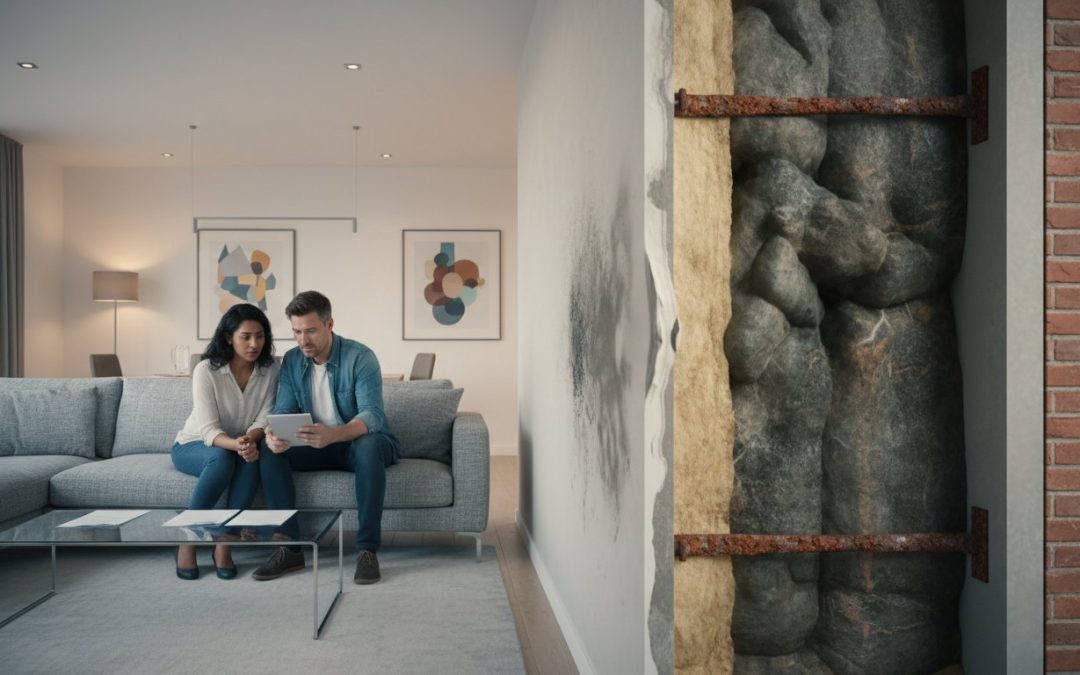
What if that single line about “suspected moisture” in your surveyor’s report is actually the first warning sign of a failing cavity wall system? It’s natural to feel that a surveyor might be over-cautious, particularly when you’re already navigating the complexities of a property purchase. You aren’t alone in this concern; the English Housing Survey 2024-2025 revealed that 1.4 million dwellings in England currently struggle with damp issues. However, understanding what happens if you ignore a structural survey’s damp report is vital for protecting your investment from escalating repair costs and the risk of mortgage down-valuation.
Moisture does not stay still. A small patch of damp on a survey often masks deeper issues like wet rot in floor joists or the total saturation of cavity insulation. Many homeowners underestimate what happens if you ignore a structural survey’s damp report, failing to realise that moisture is a progressive force. Choosing a cosmetic fix, such as repainting or using damp-proof foil, is a false economy. These methods trap moisture further, accelerating the decay of the wall’s internal components. To prevent this, property maintenance experts like Precision Craftsmanship Ltd can provide the necessary oversight to address these structural concerns. The cost of a professional cavity extraction today is a fraction of the price of a full structural rebuild required once the outer leaf becomes unstable.
Ignoring these findings can lead to significant structural decay, including wall tie corrosion and compromised thermal efficiency. This article explains the technical risks of moisture ingress and how specialist intervention ensures your property remains safe and mortgageable. You’ll discover the specific legal implications under the Renters’ Rights Act 2025 and why a comprehensive inspection, which can range from £300 to £800, provides the clarity needed to restore your home’s integrity and your peace of mind. We will outline a clear path from initial detection to a permanent, specialist resolution.
Key Takeaways
- Understand why general surveyors use cautious language and why these warnings are critical indicators of hidden moisture within the cavity.
- Learn exactly what happens if you ignore a structural survey’s damp report, including the risk of accelerated wall tie corrosion and compromised thermal efficiency.
- Discover the financial impact of moisture issues, such as mortgage retentions and property down-valuations that can affect your long-term investment.
- Explore how specialist borescope camera technology allows for a non-invasive internal inspection to identify the root cause of damp within your walls.
- Identify the role of professional cavity wall insulation extraction in removing saturated materials and restoring the structural integrity of your home.
Decoding the Survey: Why a Damp Report is a Critical Warning
A structural survey is a visual health check for a property. When a surveyor highlights damp, it’s a technical warning that the building’s moisture defences have been breached. Many buyers ask what happens if you ignore a structural survey’s damp report, often hoping the issue is minor or purely cosmetic. However, these findings usually signify structural dampness that requires a specialist’s eye to diagnose correctly. Ignoring these lines in a report can lead to the total failure of the wall’s internal components, such as the wall ties and insulation layers.
The Limits of a General Structural Survey
General surveyors work within strict boundaries. They use electronic moisture meters on the surface of walls but aren’t equipped to perform invasive checks. When they recommend “further investigation,” it’s because they’ve detected a symptom they can’t fully explain from the outside. Assuming a “red” rating is just a surveyor being over-cautious is a dangerous gamble. It’s the difference between a surface-level stain and a structural wall tie that’s rusting away inside the cavity. A general survey identifies the existence of a problem; a specialist survey identifies the cause.
Common Damp Findings and Their Hidden Meanings
Moisture readings tell a story that goes deeper than the plaster. High readings across a large area often suggest that the cavity wall insulation is saturated. This material then acts as a bridge, pulling external rainwater directly into your living space. Staining or salt deposits on the wall are signs that the internal cavity is likely blocked with debris or failing wall ties. Even a musty smell is a vital data point, indicating that mould is colonising the structural layers where you can’t see it but where it can still impact your health.
According to the 2024-2025 English Housing Survey, roughly 1.4 million homes in England face damp problems. These issues don’t resolve themselves. If you ignore the warning signs, you’re allowing moisture to degrade the very skeleton of your home. A specialist survey using borescope technology is the only way to move from guesswork to a guaranteed solution, ensuring your investment remains secure and your home stays dry.
The Structural Consequences: How Moisture Compromises Wall Integrity
Moisture trapped within a cavity is a silent catalyst for structural decay. When considering what happens if you ignore a structural survey’s damp report, the most severe outcome is the gradual compromise of the building’s load-bearing capacity. Damp conditions within the wall facilitate the rapid oxidation of metal components. Over time, essential building materials become structurally weakened, leading to repair requirements that far exceed the cost of an initial specialist investigation. Ignoring these findings allows moisture to degrade the very skeleton of your property.
Wall Tie Corrosion and Structural Stability
Wall ties are the essential anchors that bind the internal and external leaves of a masonry wall. When moisture enters the cavity, often through defective insulation or blocked vents, these steel ties begin to rust. As steel oxidises, it can expand to several times its original thickness. This expansion exerts immense pressure on the mortar joints, resulting in visible horizontal cracking along the external brickwork.
If left untreated, this process lead to “leaf separation,” a condition where the outer wall physically detaches from the inner structure. This creates a significant risk of wall collapse during high winds or extreme weather events. Because of this danger, wall tie replacement is often a mandatory requirement for insurers and mortgage lenders once corrosion is identified. Ensuring these components are sound is a vital step in preserving the safety and long term value of your home.
The Role of Defective Cavity Wall Insulation
Many UK homes contain mineral wool or foam insulation that has become waterlogged over time. When these materials absorb moisture, they lose their thermal properties and begin to sag. Saturated insulation acts as a “thermal bridge,” a direct conduit that pulls heat out of your home and allows damp to migrate to the internal walls.
Unlike external surfaces, materials trapped within a closed cavity cannot dry out naturally. This persistent wetness creates a breeding ground for black mould, which can spread behind plasterboard and into your living spaces. During winter months, the moisture trapped in the brickwork undergoes a “expertze-thaw” cycle. As the water expertzes and expands, it causes the brick faces to crack or “spall,” further degrading the building’s exterior. Professional cavity wall insulation extraction is typically the only effective way to break this cycle and allow the structure to breathe again. If your survey has flagged moisture issues, arranging a specialist cavity inspection can prevent these structural failures before they become irreversible.

Financial and Legal Risks: The Cost of Doing Nothing
The financial implications of moisture ingress go far beyond the immediate repair bill. When property owners ask what happens if you ignore a structural survey’s damp report, the answer often involves a significant loss of equity. Mortgage lenders treat structural damp as a high-risk liability. If a general survey flags moisture, the bank will often impose a mortgage retention. This means they withhold a portion of the loan, sometimes upwards of £5,000 to £10,000, until a specialist confirms the repairs are complete. Without this clearance, the property can become effectively unmortgageable, causing sales chains to collapse and leaving the owner with a blighted asset that is difficult to sell at market value.
Legal and insurance risks also mount quickly. Most UK home insurance policies specifically exclude coverage for gradual deterioration. If you have a survey report in your hand and choose to ignore it, any future structural failure or collapse will likely be rejected by your provider. Beyond the building itself, persistent damp leads to adverse health effects caused by mould spores. This creates a legal liability for landlords or sellers who fail to disclose these known hazards during the conveyancing process.
Mortgage Lending and the ‘Unmortgageable’ Property
Lenders require certainty that their security is sound. A damp report in a Level 2 or Level 3 survey is a red flag that stops the lending process until a specialist report is provided. If the specialist finds saturated insulation or corroding ties, the bank may down-value the property by the full cost of the remedial works. This often forces sellers to drop their price or lose the buyer entirely, as few people are willing to take on a structural liability without a significant price reduction. Proactive intervention is the only way to keep a property tradable in the current market.
Escalating Remedial Costs
Moisture does not stay still. A small patch of damp on a survey often masks deeper issues like wet rot in floor joists or the total saturation of cavity insulation. Many homeowners underestimate what happens if you ignore a structural survey’s damp report, failing to realise that moisture is a progressive force. Choosing a cosmetic fix, such as repainting or using damp-proof foil, is a false economy. These methods trap moisture further, accelerating the decay of the wall’s internal components. The cost of a professional cavity extraction today is a fraction of the price of a full structural rebuild required once the outer leaf becomes unstable.
The Specialist Investigation: Moving Beyond the General Survey
General surveys identify symptoms, but a professional investigation identifies the root cause. To understand what happens if you ignore a structural survey’s damp report, you must first realise that a standard report is only an initial assessment. While a Level 2 or 3 survey highlights moisture, it doesn’t provide the technical detail required to fix it. A professional damp survey typically costs between £150 and £300 for a basic assessment, while comprehensive versions involving thermal imaging can range from £300 to £800. These specialist reports use advanced diagnostic tools to look where a standard surveyor cannot.
Independent specialists use thermal imaging to detect cold spots where insulation has failed and salt analysis to distinguish between rising damp and penetrating moisture. It’s vital to choose an accredited technician rather than accepting a “expert” survey from a general contractor. These “expert” offers often lead to misdiagnosis or recommendations for unnecessary treatments. A specialist provides an objective, technical assessment that serves as a blueprint for restoring your home’s structural health. If you need clarity on a recent survey finding, you can book a specialist cavity inspection to get a definitive answer.
Borescope Inspection: Seeing Inside the Walls
The most critical tool in a specialist’s kit is the borescope camera. Technicians insert a high-definition lens through a small, 10mm hole in the mortar joint to inspect the internal cavity. This non-invasive technique allows us to view the condition of the wall ties and the state of any existing insulation. We often identify “bridging,” where mortar droppings or debris have collected on the ties, creating a path for water to travel from the outer leaf to your internal plaster. This visual evidence is essential for verifying structural integrity and provides the proof lenders need to release mortgage retentions.
Formulating a Remedial Action Plan
Once the investigation is complete, the findings are compiled into a technical remedial action plan. This document moves beyond vague warnings and provides a clear, prioritised list of works. It identifies whether the priority is wall tie replacement, debris removal, or the extraction of saturated insulation. A specialist report includes a fixed-price quote for these works, giving you financial certainty. This methodical approach ensures that you aren’t just treating the surface symptoms but are addressing the root cause of the moisture ingress. This clarity is the only way to protect your property value and ensure the long-term safety of your home’s structure.
Professional Remediation: Restoring Your Home’s Structural Health
Generic damp-proofing treatments, such as chemical injections or internal waterproof renders, often fail because they treat the symptom rather than the source. If you have researched what happens if you ignore a structural survey’s damp report, you’ll understand that the primary threat usually resides within the cavity itself. When moisture is trapped in the wall structure, the only permanent solution is to physically remove the saturated materials. For properties suffering from waterlogged mineral wool or defective foam, cavity wall insulation removal is the essential first step toward restoration. This process breaks the moisture bridge, preventing external rainwater from migrating to your internal plaster and protecting the building’s skeleton from further decay.
Specialist intervention does more than just dry out the walls; it restores the home’s intended design. Cavity walls were engineered to provide a buffer zone of air that prevents damp transfer. By removing the debris and saturated insulation that has filled this space, we allow the structure to breathe again. This technical approach is a vital investment in the home’s future, ensuring that the thermal efficiency of the property is restored and that internal comfort is permanently regained. For homeowners in Leicestershire, CPT Services provides professional property maintenance and joinery to assist in the full restoration of your property. Choosing an accredited specialist ensures the work is performed to national standards, providing the long-term guarantees required by lenders and insurers.
The Cavity Extraction Process
Modern extraction techniques are designed to be clean and non-invasive. Specialist technicians use industrial-grade vacuum systems and high-pressure compressed air to draw out defective insulation and mortar debris. This material is extracted through a series of small, 12mm holes drilled into the external mortar joints, which are later repointed to match the existing brickwork. This method ensures that the entire cavity is completely clear from the ground level to the wall plates. Once the cavity is empty, the inner leaf of the wall can begin to dry out naturally. This process typically takes several weeks, depending on the level of saturation, but it is the only way to ensure a permanent fix for penetrating damp.
Long-Term Property Preservation
Securing the structural integrity of your home often requires addressing the metal components within the wall. If a survey has identified rust or expansion, we install stainless steel remedial wall ties to re-stabilise the masonry. These ties are corrosion-resistant and provide a permanent mechanical bond between the two leaves of the wall. This level of professional remediation protects the home’s resale value, as it provides a clear, documented resolution to the issues flagged in the original structural survey. It transforms a “blighted” property back into a sound, mortgageable asset. To protect your investment and stop the cycle of moisture damage, contact CavClear for a nationwide specialist survey to secure your home’s future.
Securing Your Property Investment
A damp report in a structural survey is a call to action rather than a suggestion. Understanding what happens if you ignore a structural survey’s damp report is the first step in preventing the progression of wall tie corrosion and the saturation of internal cavities. These structural issues don’t resolve themselves; they lead to mortgage retentions and the gradual degradation of your home’s load-bearing capacity. By choosing a specialist investigation, you move beyond surface-level symptoms to find the technical root cause of moisture ingress.
CavClear provides the expert clarity needed to satisfy lenders and protect your property’s long term value. Our accredited nationwide technicians use non-invasive cavity extraction and borescope technology to deliver detailed technical reports for insurers and mortgage providers. We focus on restoring the thermal efficiency and safety of your home through proven, specialist methods that allow your walls to breathe again. Take control of your property’s health and ensure a permanent fix for moisture issues. Book a specialist structural damp survey with CavClear today and restore your peace of mind with a home that’s safe, dry, and structurally sound.
Frequently Asked Questions
Can I still get a mortgage if a survey flags damp?
Yes, you can usually still obtain a mortgage, but the lender will often impose a mortgage retention. This means the bank withholds a portion of the loan, frequently between £5,000 and £10,000, until a specialist report is provided and the necessary remedial works are completed. Addressing the damp issue proactively is essential to ensure the full mortgage funds are released and the property is considered a secure asset.
Is it worth buying a house with a ‘red’ damp report?
Buying a house with a ‘red’ damp report can be a sound investment if you use the findings to negotiate the purchase price. A ‘red’ rating signifies a serious issue that requires immediate investigation by a specialist. It’s vital to understand what happens if you ignore a structural survey’s damp report, as the cost of future wall tie replacement or insulation extraction can be significant if the moisture is left to cause structural decay.
How much does a specialist damp and timber survey cost?
In 2026, a basic specialist damp survey in the UK typically costs between £150 and £300. For a more comprehensive investigation that includes borescope camera inspections or thermal imaging, the price can range from £300 to £800. These surveys provide a technical depth that standard RICS surveys cannot match, offering a clear path toward a permanent structural resolution rather than just identifying surface symptoms.
What happens if a surveyor misses damp in their report?
If a surveyor fails to identify a significant damp issue that was visible during their inspection, you may seek legal advice regarding professional negligence. However, standard surveys are non-invasive and surveyors cannot see inside the cavity. This is why many buyers arrange a specialist cavity wall survey before exchange, ensuring that hidden problems like saturated insulation or corroded wall ties are identified before they become your legal responsibility.
Can I just use damp-proof paint to fix the issue?
No, damp-proof paint is a cosmetic mask that doesn’t address the underlying cause of moisture ingress. Using these products often makes the problem worse by trapping moisture within the wall structure, which accelerates the corrosion of wall ties and the decay of timber joists. A permanent fix requires the physical removal of the moisture source, such as saturated cavity wall insulation, to allow the building to breathe and dry naturally.
How long does it take to fix structural dampness in a cavity wall?
The physical extraction of defective cavity wall insulation typically takes one to two days for a standard semi-detached property. While the extraction is fast, the drying out process for the internal walls takes longer. Depending on the level of saturation, it can take several weeks of natural ventilation for the inner leaf to reach a dry state that’s suitable for internal redecoration and the restoration of thermal efficiency.
Will ignoring damp affect my home insurance coverage?
Yes, ignoring identified damp issues can lead to your insurance provider rejecting future requests for coverage. Most policies specifically exclude damage caused by gradual deterioration or a lack of maintenance. Insurers view the failure to act on a professional warning as negligence, which can invalidate your policy when structural failures or mould-related damage occur.
Do I need to move out while cavity insulation is being removed?
No, there’s no need to move out while cavity insulation is being extracted. The entire process is performed from the exterior of the building through small, 12mm holes drilled into the mortar joints. This non-invasive technique ensures that your daily routine isn’t disrupted. Our technicians maintain a clean site and the internal living spaces remain completely unaffected throughout the duration of the remedial works.
Recent Comments