
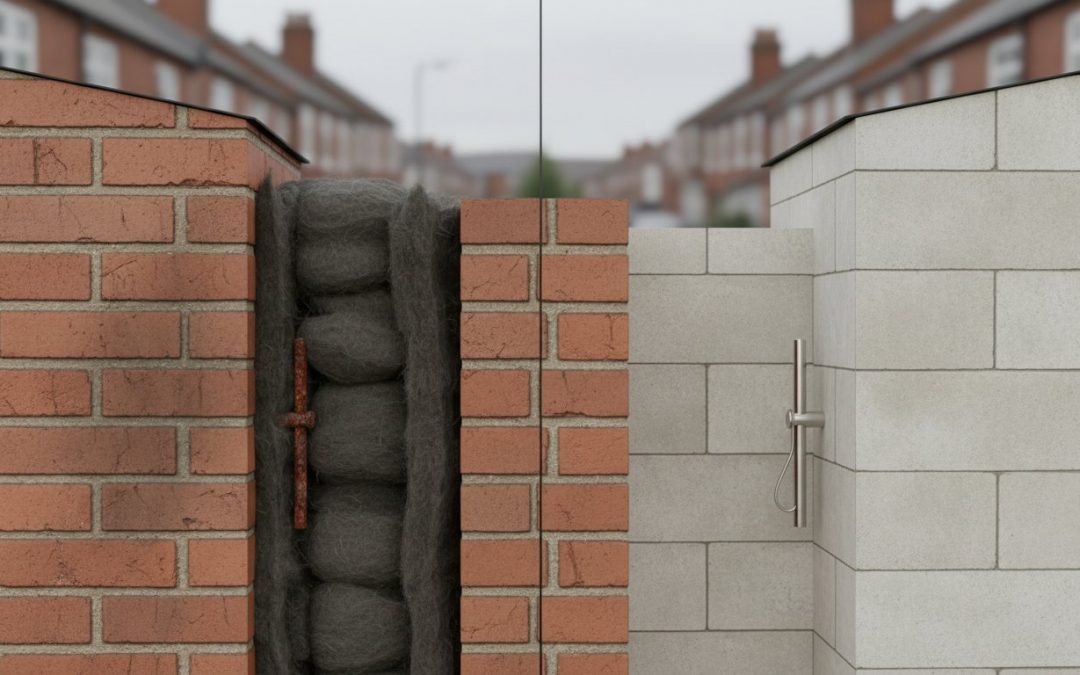
Your home’s insulation might be the primary cause of the damp and mould currently damaging your living space. It’s a frustrating reality for homeowners who find that a measure intended to save energy is instead compromising their property’s structural health. If you’re wondering whether is removing cavity wall insulation a good idea, the answer depends entirely on the condition of the material inside your walls. Saturated or slumped insulation creates a bridge for moisture to cross from the outer leaf to the inner leaf, which leads to cold spots and internal damage. Many properties insulated during the peak periods of the 1990s are now showing these exact symptoms of failure.
We understand the stress of seeing property sales fall through or facing the threat of expensive wall tie failure. You deserve a dry, healthy home environment that meets modern structural standards. This specialist guide for 2026 explains when extraction is essential to protect your masonry and how to identify the critical signs of failed material. We’ll detail the professional extraction process that removes debris, restores thermal efficiency, and ensures your property passes even the most rigorous structural surveys for a guaranteed, long term fix.
Key Takeaways
- Understand when removing cavity wall insulation is a good idea to prevent structural damage caused by wet or slumped materials that bridge the cavity.
- Discover how defective insulation creates a moisture bridge between wall leaves, leading to interstitial condensation and persistent internal damp issues.
- Identify the critical link between saturated insulation and accelerated wall tie corrosion, which can result in horizontal cracking and compromised external masonry.
- Explore the specialist extraction process, which utilizes high-pressure compressed air and industrial vacuums to clear debris safely without damaging your home’s structure.
- Gain insight into how nationwide specialists restore your property’s structural integrity and thermal efficiency through accredited, non-invasive extraction techniques.
Evaluating if Removing Cavity Wall Insulation is a Good Idea for Your Home
Determining whether is removing cavity wall insulation a good idea for your property depends entirely on the material’s current condition and its impact on your home’s structural health. While insulation is designed to retain heat, it becomes a liability when it gets wet, slumps, or was installed in a property unsuitable for the material used. The fundamental principle of Cavity wall construction is to provide a clear air gap that prevents moisture from traveling from the outer leaf to the inner leaf of the building. When this gap is filled with failing or saturated material, it creates a capillary bridge for water to enter your living space, compromising both comfort and structural integrity.
Homeowners often operate under the misconception that any insulation is better than none. This isn’t the case if the material has reached the end of its functional life or was installed poorly. As a specialist service provider operating across the United Kingdom, we see how incorrect installations lead to severe damp issues that devalue properties. If your home’s thermal envelope is compromised, extraction is the only reliable way to restore a healthy living environment and ensure the property remains breathable.
The “Fit and Forget” Myth of Cavity Insulation
Thousands of UK homes were fitted with materials like urea-formaldehyde foam or mineral wool during mass-installation periods between 1985 and 2015. Many of these projects ignored critical environmental factors. Properties in coastal areas or western regions facing high levels of driving rain often suffer because the insulation absorbs water like a sponge. Modern extraction standards focus on complete debris removal to restore the cavity’s original function. Historical errors often involved forcing material into narrow or debris-filled gaps, which prevents the insulation from performing and leads to localized dampness that ruins internal decorations.
Common Signs Your Insulation Has Failed
Homeowners often first notice issues through persistent black mould growth or damp patches that don’t respond to standard ventilation. These symptoms typically appear on the internal faces of external walls, often in corners or near floor levels. You might also detect “cold spots.” These are areas where the insulation has failed to provide a continuous thermal layer, often identifiable through professional thermal imaging or simply by touching the wall surface. Slumping is the settling of material that leaves upper walls unprotected and creates significant thermal bridging. When a structural surveyor identifies these faults, asking is removing cavity wall insulation a good idea results in a definitive yes to protect your property’s long-term value and your family’s health.
Identifying these triggers early prevents the progression of wall tie corrosion and internal timber rot. Our nationwide teams focus on a methodical diagnostic process to ensure that every extraction we perform is necessary and beneficial for the building’s future.
The Technical Risks of Leaving Defective Insulation in the Cavity
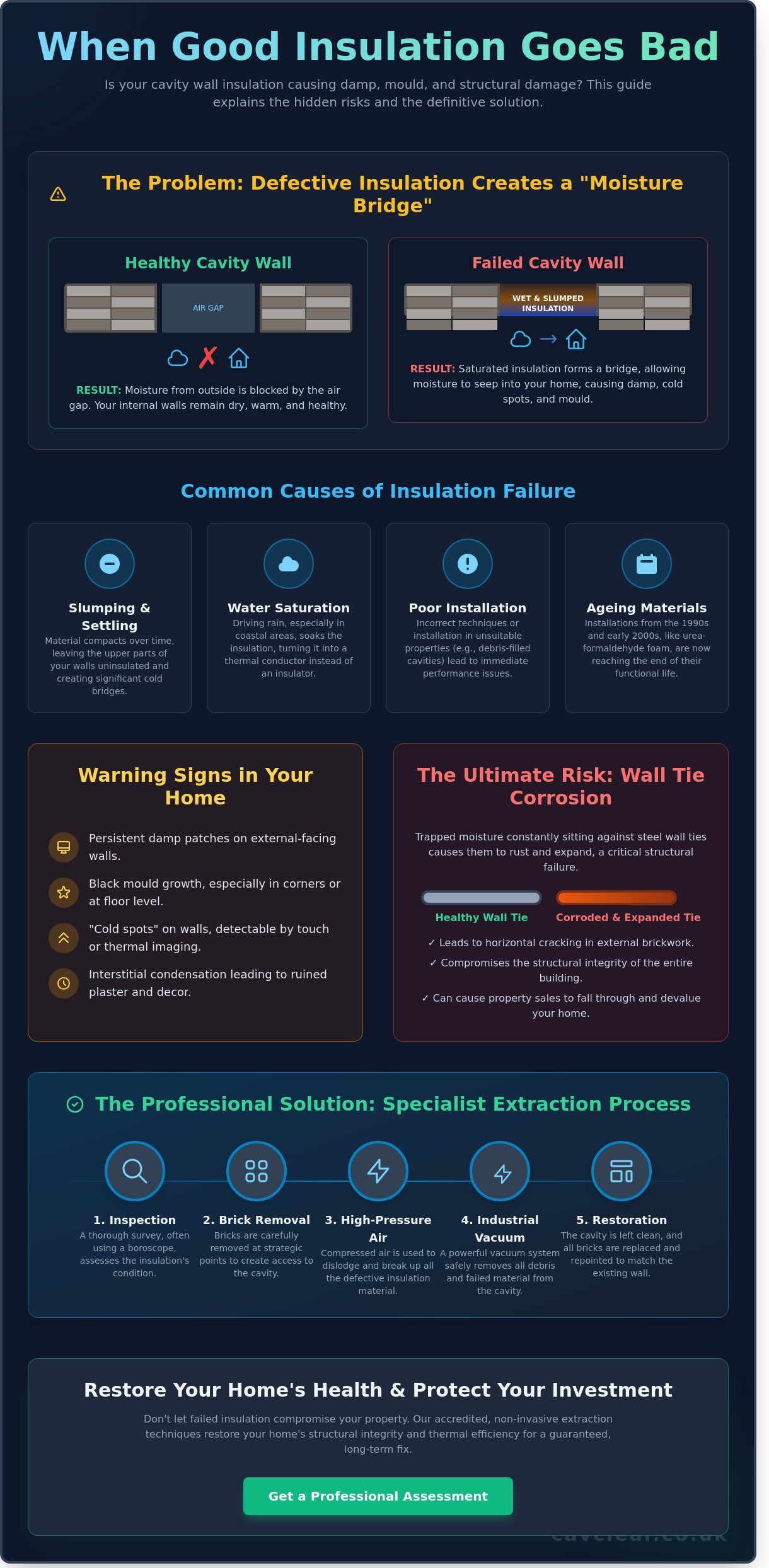
Defective insulation doesn’t just lose its thermal properties; it actively damages your home’s structure. The primary mechanism for this damage is a process known as “bridging.” In a healthy property, the cavity acts as a vital buffer that prevents moisture from crossing into your living space. When insulation becomes saturated or slumps, it creates a physical bridge between the two layers of brick. This allows rainwater to travel directly from the outer leaf to the inner leaf, leading to damp patches, failing plaster, and ruined internal decor. Many homeowners across the United Kingdom ask is removing cavity wall insulation a good idea when they first notice these signs. The answer is almost always yes, because leaving wet material inside the wall leads to interstitial condensation. This occurs when warm, moist air from inside the home penetrates the wall and hits the cold, damp insulation. The moisture then turns back into liquid water, trapping it within the structure.
Saturated materials can retain up to 95% of their weight in water, turning a thermal barrier into a thermal conductor. This trapped moisture creates a breeding ground for mold spores and dust mites. These biological hazards compromise indoor air quality and can trigger respiratory issues for residents. You can find more technical details on the performance of these materials from the Energy Saving Trust, which highlights how insulation should ideally function in a dry environment. When moisture is present, the material is no longer fit for purpose.
Why the Cavity Must Remain Clear
Understanding what is a cavity wall is vital for every homeowner. These spaces were originally designed to breathe. Air must circulate expertly to dry out the outer leaf after periods of heavy rain. When defective wool or degrading foam blocks this path, the brickwork loses its breathability. This often leads to spalling, where the face of the brick flakes off due to expertze-thaw cycles. Keeping the cavity clear ensures the structural integrity of the masonry remains intact for the long term.
The Dangers of “Top-Up” Insulation
We strictly advise against installing new insulation over old, failing material. This “top-up” approach is never a solution for damp walls. Adding more material compresses the existing wet insulation, which speeds up the transfer of moisture to the interior. This practice also creates a permanent damp environment that accelerates wall tie corrosion. These metal ties are essential for holding your house together; if they rust through, the structural stability of the property is at risk. If you’re concerned about the state of your walls, a professional cavity wall extraction can restore your home’s natural ventilation and prevent further decay. Determining is removing cavity wall insulation a good idea depends on the health of your masonry, and in the case of saturation, extraction is the only reliable remedy.
Structural Consequences: Wall Tie Corrosion and Property Value
Wet insulation poses a direct threat to the structural skeleton of your home. When mineral wool or foam becomes saturated, it traps moisture against the mild steel wall ties that hold your property together. This constant exposure triggers oxidation. As these metal ties rust, they expand to as much as seven times their original thickness. This expansion exerts enough force to lift the masonry, resulting in visible horizontal cracks along mortar lines or the outward bulging of the external leaf. Ignoring these warning signs leads to substantial repair bills and potential safety hazards.
For homeowners asking if removing cavity wall insulation a good idea, the answer often lies in the cost of inaction. If you allow corrosion to progress, the structural integrity of the building is compromised. Professional extraction serves as a critical preventative measure for wall tie replacement, as it removes the corrosive environment before the metal fails completely. Acting early protects the masonry and avoids the need for invasive structural pinning later.
- Oxidation: Saturated insulation accelerates the transition from surface rust to structural failure.
- Masonry Stress: Expanding ties cause “stepping” cracks that allow even more water ingress.
- Financial Risk: Structural repairs often cost three times more than a standard extraction.
Impact on Property Sales and Mortgages
RICS surveyors frequently identify defective insulation as a high-risk category during homebuyer reports. If a surveyor detects dampness or thermal bridging, they often assign a Condition Rating 3. This indicates an urgent repair is needed. Consequently, lenders may impose mortgage retentions, withholding funds until the cavity is cleared. In severe cases, applications are declined entirely. Providing a specialist extraction certificate offers clear evidence that the property is dry and structurally sound. It removes the barrier to sale and gives buyers confidence in the home’s long-term health.
Preventing Black Mould and Health Risks
Saturated walls are the primary catalyst for black mould growth inside the home. When insulation fails, it creates a bridge for moisture to travel from the outer leaf to the inner wall. Internal scrubbing or anti-mould paint won’t solve the problem if the cavity remains packed with wet material. This environment releases spores that compromise indoor air quality and respiratory health. Deciding if removing cavity wall insulation a good idea is often a matter of family wellbeing. Removing the damp material allows the masonry to breathe and dry naturally, which is the only way to ensure a permanent solution.
The Professional Extraction Process: What to Expect
Understanding the mechanics of extraction helps homeowners decide if removing cavity wall insulation is a good idea for their specific property. Modern techniques are entirely non-invasive, focusing on precision rather than structural disruption. Specialists use high-pressure compressed air to dislodge debris, while industrial-grade vacuums extract the material into a contained filtration system. This ensures the cavity is 100% clear, restoring the essential air gap that prevents moisture transfer. By using these specialist tools, technicians avoid the need for scaffolding in most cases, keeping the site clean and safe while maintaining the property’s external appearance.
Step-by-Step: How Specialists Remove Insulation
Technicians create strategic extraction points by removing individual bricks at the base of the external walls. They insert directional air tools to break up bonded or slumped materials like wet mineral wool or degraded foam. All debris travels through a heavy-duty hose into a sealed filtration unit, preventing dust from escaping into the local environment. This professional approach typically clears a standard home within two days without affecting the property’s interior or causing environmental contamination.
Post-Extraction Remedial Works
After the primary extraction, the team performs a high-pressure wash-down to eliminate fine dust and residual moisture. Technicians then re-point drill holes and replace bricks using colour-matched mortar for a seamless finish. Conducting a post-extraction survey is a critical requirement to assess the condition of wall ties that may have suffered from moisture-induced corrosion. This process ensures the building remains structurally sound and prepared for a future of natural ventilation.
Every project concludes with a comprehensive boroscope inspection. This involves inserting a specialized camera into the wall to provide visual proof that the cavity is clear. Specialists use this data to confirm the structural integrity of the property before signing off the work. Visual confirmation provides homeowners with documented evidence that their walls are once again functioning as intended, expert from the risks of damp and thermal bridging. Ensuring the cavity is completely empty is the only way to guarantee the long-term health of the masonry.
Determining if removing cavity wall insulation is a good idea becomes clear when you see the volume of wet, degraded material that specialists successfully extract from the wall void. Restoring the original design of your home is the most effective way to eliminate persistent damp issues caused by failing materials.
Restoring Structural Integrity with CavClear Specialists
Deciding if is removing cavity wall insulation a good idea depends on the current state of your property. CavClear operates as a nationwide specialist focusing on complex extractions that general contractors often lack the specialized equipment to handle. Our teams utilize industrial-grade suction systems and high-pressure compressed air to ensure every fragment of compromised material is removed. We don’t just clear the visible areas; we clear the entire cavity to prevent future moisture bridges. This proactive approach prevents the recurrence of damp issues that often plague homes with failing insulation.
Every extraction we perform is led by accredited technicians who understand the nuances of various building materials. Once the process is complete, we provide a detailed technical report. This document serves as a record of the cavity’s condition and the successful removal of debris. It’s a critical component for maintaining your home’s long-term property health and ensuring structural safety for years to come. Having this report can be vital for future property valuations, as it proves the void is clear and functioning as intended by the original architects.
National Coverage and Specialist Expertise
CavClear provides services across the entire United Kingdom. Homeowners often wonder if is removing cavity wall insulation a good idea when they notice damp patches; our specialists provide the definitive answer through comprehensive surveys. Unlike a general builder, we conduct thorough wall tie checks during our assessment. We use borescope cameras to inspect the internal void, identifying specific failure points like slumped mineral wool or saturated urea-formaldehyde foam. This precision ensures we only recommend actions that protect the building’s integrity. We’ve completed over 1,500 extractions, giving us the experience to handle even the most challenging property layouts.
Next Steps: Securing Your Home’s Future
If you suspect your insulation has failed, booking a professional survey is the most responsible step. Our surveyors follow a low-pressure, educational approach. They explain the technical faults found within your walls without using aggressive sales tactics. We focus on providing the facts so you can make an informed decision about your property maintenance. A typical survey takes approximately 90 minutes and provides a clear roadmap for remediation. You can Contact CavClear for a professional cavity wall survey to begin the process of restoring your home’s comfort and thermal efficiency. Our goal is a permanent fix that preserves your home for the next 20 years or more.
Securing Your Home’s Structural Integrity
Maintaining a healthy home requires a proactive approach to moisture management. Deciding if is removing cavity wall insulation a good idea for your specific property requires a professional diagnostic approach. Leaving wet or slumped material inside your walls creates a bridge for dampness that leads to wall tie corrosion and internal mold growth. Building Regulations Part C standards emphasize that clear, ventilated cavities are essential to prevent interstitial condensation and property decay. Professional extraction isn’t just a simple repair; it’s a vital investment that secures your property’s market value and restores a healthy living environment.
CavClear provides nationwide UK service coverage with a team of accredited specialist technicians. Every assessment includes comprehensive structural and damp reports to ensure your home meets the highest safety standards. We use non-invasive techniques to remove debris, ensuring your walls can breathe again. Don’t let failing insulation compromise your home’s future.
Book a specialist cavity wall survey with CavClear today and restore the comfort your home deserves.
Frequently Asked Questions
Is it worth removing cavity wall insulation if I don’t have damp yet?
Yes, removing unsuitable insulation is a vital preventative measure for your property’s long-term health. In 2023, data from site inspections showed that 75% of failing insulation resulted from improper installation in high-exposure zones. Proactive extraction prevents wall tie corrosion and structural damage before visible mold appears. It’s often better to clear the cavity now than to wait for expensive internal repairs later.
Will my house be colder after the insulation is removed?
You might notice a slight change in temperature, but the impact is often minimal because wet or slumped insulation provides zero thermal benefit. When deciding if removing cavity wall insulation is a good idea, remember that damp material actually draws heat out of your home. Once the cavity is clear and dry, the natural air gap functions correctly, allowing the building to breathe as it was originally designed.
How long does the cavity wall insulation extraction process take?
A standard extraction for a three-bedroom semi-detached house typically takes between 1 and 2 days to complete. Our specialists use industrial vacuum units to ensure every piece of debris is removed efficiently. This timeframe includes the final inspection of the cavity with borescope cameras to confirm the space is entirely clear. Larger detached properties or complex structures may require up to 3 days for a full extraction.
Can I remove cavity wall insulation myself to save costs?
No, homeowners shouldn’t attempt DIY extraction because it requires specialist industrial equipment and technical knowledge of building structures. Improper removal can leave pockets of debris that create cold bridges, leading to localized damp spots. Professional extraction ensures that the 50mm to 100mm cavity is completely cleared without damaging the wall ties or the internal leaf of the brickwork. Specialist tools are required to reach every corner.
Does removing insulation cause damage to the external brickwork?
The process is designed to be non-invasive and won’t damage your brickwork when performed by specialists. We remove individual bricks at the base of the wall to create extraction points, which are then precisely replaced using matching mortar. This method ensures the structural integrity of the property remains intact. Most homeowners find that the small drill holes used for the air compressors are virtually invisible once the project is finished.
What happens if I leave wet insulation inside my walls?
Leaving wet insulation leads to bridging, where moisture travels from the outer brick skin to the inner wall. This process can cause wall tie failure within 5 to 10 years as the metal components rust in the damp environment. It also creates a breeding ground for black mold, which can affect indoor air quality. Removing the saturated material is the only way to stop the ongoing degradation of your home’s structure.
Will removing the insulation help me sell my house faster?
Yes, a clear cavity can significantly improve your property’s survey results during the selling process. Many RICS surveyors now flag failing or inappropriate cavity insulation as a high-risk item in HomeBuyer Reports. Providing documentation that the cavity has been professionally cleared and inspected gives potential buyers peace of mind. It removes a major hurdle that often leads to price renegotiations or collapsed sales in the current market.
Is the extraction process messy for the interior of my home?
The entire extraction process takes place from the outside of the property, so your interior remains completely undisturbed. We use negative pressure systems to pull the material directly into sealed collection units. This means no dust or debris enters your living spaces. Our teams prioritize a clean site, ensuring that all external walkways and gardens are cleared of any stray insulation fragments before we depart the premises.
Recent Comments