
Did you know that of the nine million properties with cavity walls in the UK, approximately two million are estimated to have issues with wall tie corrosion? If you’ve noticed horizontal cracking or bulging brickwork, it’s natural to feel a sense of dread about the structural safety of your home. You likely want answers, but you’re probably concerned that a professional inspection will be a messy, destructive ordeal that leaves your property in disarray.
We understand these anxieties and believe that property maintenance should provide clarity, not more stress. This guide explains exactly what does a wall tie survey involve, showing you how we use precision technology to diagnose hidden faults without damaging your walls. You’ll discover how we move from an initial external appraisal to using forensic borescopes that look inside your cavity. By the end, you’ll have a clear roadmap for your property’s structural health and the confidence that a permanent, non-disruptive solution is within reach.
Key Takeaways
- Learn the precise steps of the inspection process, from the initial visual appraisal of structural red flags to the mapping of ties with high-precision metal detectors.
- Understand exactly what does a wall tie survey involve to see how modern, non-disruptive techniques like borescope inspections protect your property’s integrity without causing damage.
- Discover what to expect in a professional survey report, including photographic evidence and a detailed map of your property’s structural condition based on established technical standards.
- Realise how a specialist survey acts as a vital investment, ensuring you only pay for necessary repairs while securing the long-term safety of your home.
Understanding the Purpose of a Professional Wall Tie Survey
A professional wall tie survey is a precision diagnostic inspection designed to assess the structural stability of your property’s envelope. It focuses specifically on the metal fixings that bridge the gap between the inner and outer masonry leaves. When property owners ask what does a wall tie survey involve, they are essentially seeking a technical appraisal of three critical factors: the material type of the ties, their current level of corrosion, and their installation density. These metal components are vital for the safety of a building; they prevent the outer leaf from bowing or collapsing away from the main structure.
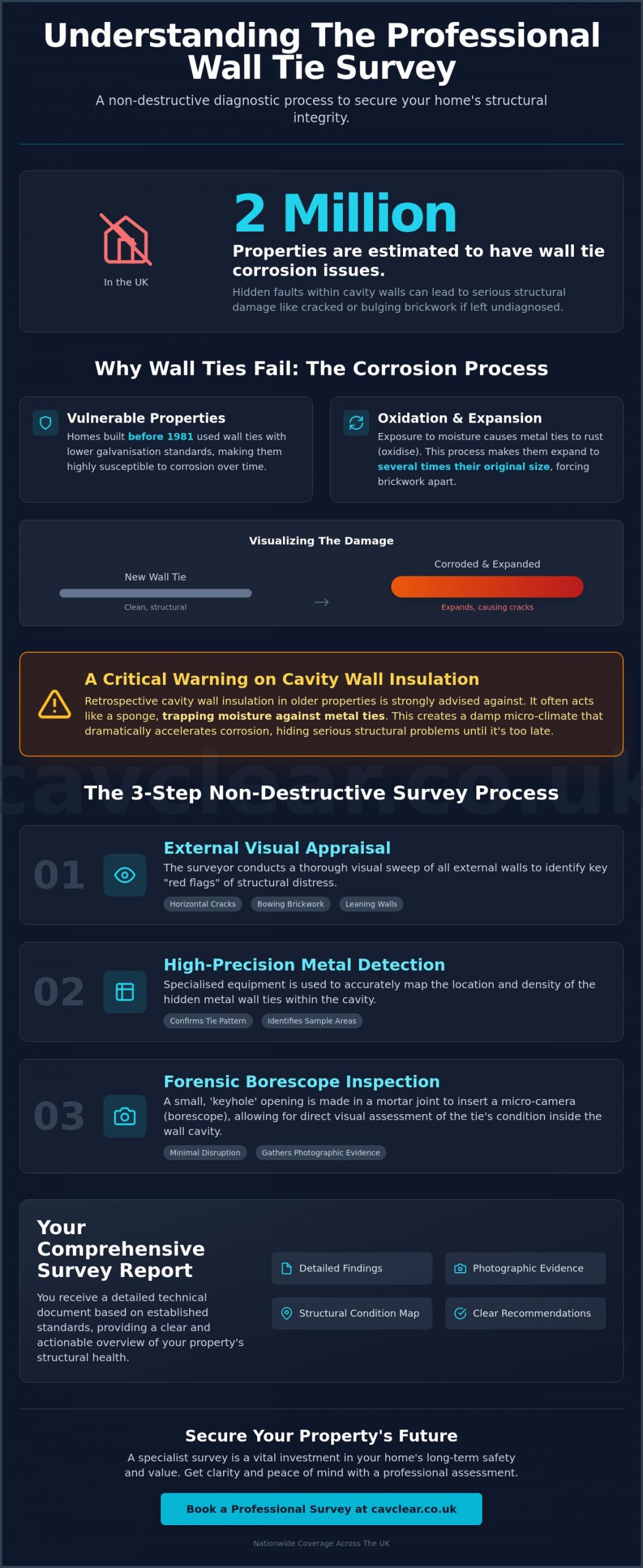
Properties built before 1981 are particularly vulnerable to structural issues because galvanisation standards for mild steel ties were significantly lower during that era. Over time, these ties lose their protective coating, leaving the bare steel exposed to the elements. Because these components are hidden within the wall, their deterioration often goes unnoticed until significant damage occurs. For many UK mortgage lenders and insurance providers, a specialist survey is now a mandatory requirement before a property sale can proceed or a policy can be issued. This technical verification ensures that the building’s structural integrity is documented by an expert, protecting the long-term value of the asset.
Why Cavity Wall Ties Fail
The primary cause of failure is a chemical process known as oxidation. When a cavity wall tie is exposed to oxygen and moisture, it begins to rust. As the metal oxidises, it expands to several times its original thickness. This expansion creates immense pressure within the mortar joints, which frequently leads to visible horizontal cracking in the external brickwork. Environmental factors play a massive role in this timeline. Salt air in coastal regions or the historical use of aggressive black ash mortar can accelerate this deterioration significantly, causing ties to fail much sooner than expected.
The Role of Cavity Wall Insulation in Tie Health
The condition of the cavity environment plays a decisive role in the lifespan of your wall ties. If you are unsure about your property’s construction, understanding what is a cavity wall is the first step toward protecting its structural health. Defective or saturated cavity insulation acts like a sponge, holding moisture directly against the metal ties for prolonged periods. This constant dampness creates a micro-climate that fast-tracks corrosion. We maintain a firm stance against installing retrospective cavity wall insulation in older properties. This practice frequently traps moisture and conceals existing tie issues until they manifest as major structural faults. A professional survey identifies these hidden risks before they become expensive failures, ensuring your property remains dry and secure.
The Step-by-Step Process: What Happens During the Inspection?
A professional inspection is a systematic diagnostic workflow that moves from broad observations to microscopic detail. Many homeowners worry about disruption; however, the modern methodology is designed to be clean and efficient. To understand what does a wall tie survey involve, it’s helpful to view the surveyor as a forensic investigator. They don’t just look at the surface; they use technical tools to see what is happening inside the masonry. This process ensures that any remedial recommendations are based on hard data rather than guesswork.
The sequence begins with an external appraisal before moving into technical tie mapping. Once the surveyor identifies the tie locations, they select specific sample areas for a deeper look. This methodical approach ensures that the resulting report provides a comprehensive overview of the property’s structural health. If you are concerned about visible signs of movement, booking a professional wall tie survey is the most reliable way to secure your property’s future and restore your peace of mind.
The External Appraisal and Visual Sweep
The surveyor starts by scanning the building’s elevations for “red flags” that indicate structural distress. Horizontal cracks in the mortar joints are the most common sign of trouble. These cracks occur because rusting mild steel ties expand to several times their original size, physically lifting the brickwork. The surveyor also checks for “bowing” or “leaning” in the outer masonry leaf, which suggests the ties are no longer providing adequate lateral support. Beyond the walls themselves, they inspect lintels and roof edges. If the wall leaf is moving, these areas often show signs of lifting or separation that might otherwise go unnoticed by an untrained eye.
Locating Ties with Metal Detection
After the visual sweep, the surveyor uses high-precision metal detectors to map the exact position of the ties hidden within the cavity. This isn’t just about finding them; it’s about checking their density and pattern. To meet safety standards, a property must have a specific number of ties per square metre. The surveyor follows the technical guidelines set out in BRE Digest 401 to determine if the existing installation is sufficient. They often find “random” or poorly spaced patterns from original construction that compromise the building’s stability. By mapping these locations, they can pinpoint exactly where internal diagnostic tools need to be used for a closer look.
Diagnostic Techniques: Non-Intrusive vs. Intrusive Inspections
Homeowners often associate structural inspections with dust, debris, and significant disruption. Modern forensic techniques have changed this reality. We prioritise a “clean” methodology that preserves your property’s aesthetics while providing total clarity on its internal condition. This non-disruptive approach is a cornerstone of our professional standards, ensuring that the diagnostic process doesn’t add more stress to your situation. When clients ask what does a wall tie survey involve, they’re often relieved to learn that the process is focused on technical precision rather than destruction.
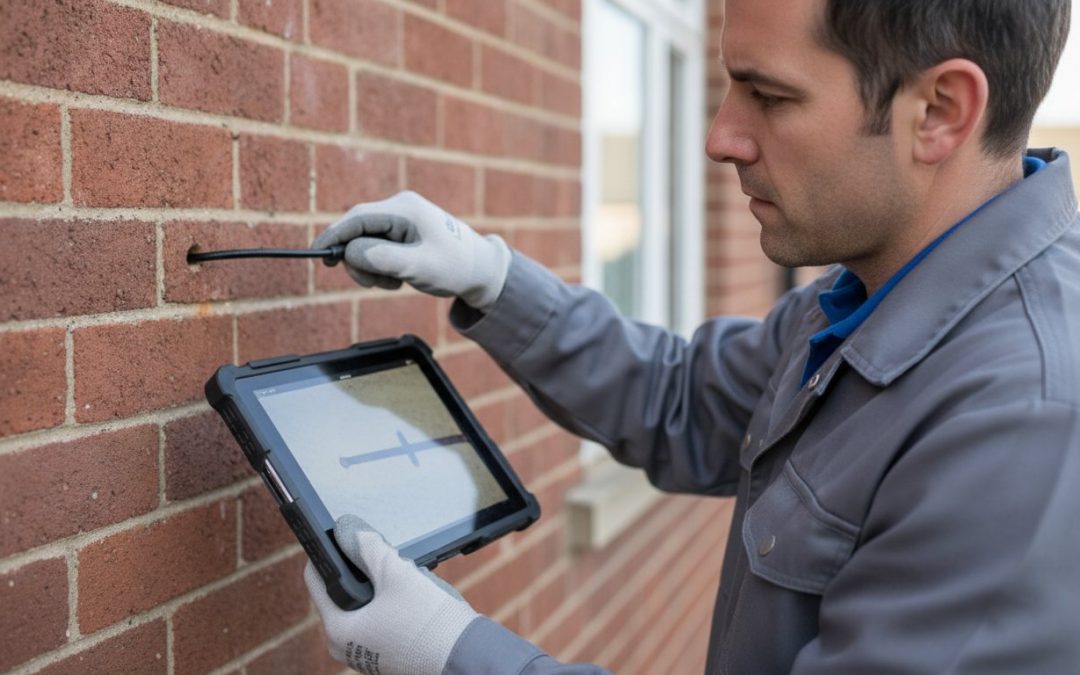
The core of a modern inspection typically requires only a few small 10-12mm holes drilled into the mortar joints at strategic locations. These tiny access points allow our surveyors to insert high-resolution cameras into the cavity without damaging the brickwork. Once the inspection is complete, we seal these holes with matching mortar. This leaves your property looking exactly as it did before we arrived, maintaining its kerb appeal while we compile the data necessary to protect its structural future.
The Boroscope Inspection Explained
The borescope is our primary diagnostic tool. It’s a specialist endoscope camera that transmits live, high-definition images from inside the wall cavity. We don’t just look at the visible part of the metal; we examine the tie’s “shank” for surface rust and check the “ends” where they are embedded in the masonry. We also look for the “drip” feature, which is a small indentation designed to shed water. If this drip is missing or blocked by mortar debris or wet insulation, moisture will travel across the tie and cause dampness on your internal walls. This forensic view provides the evidence needed to understand what does a wall tie survey involve at a microscopic level.
Grading the Condition of Wall Ties
We use a standardised grading system to categorise the severity of any corrosion found during the camera inspection. Grade 1 represents an “as new” condition where the protective galvanised coating is still fully intact. Conversely, Grade 4 signals an imminent structural risk where the tie has lost significant metal mass and can no longer support the wall leaf. These technical grades are essential for determining the urgency of wall tie replacement. By identifying the specific grade of each elevation, we ensure that you only invest in repairs where they are truly necessary for the long-term health of your asset.
While borescope cameras are highly effective, there are rare occasions where a more intrusive inspection is required. This usually involves the temporary removal of a single brick to perform physical pull-tests on the ties. We only recommend this step if the camera reveals unusual construction details or if we need to verify the load-bearing capacity of existing fixings. This methodical approach ensures that every recommendation in your final report is backed by forensic evidence, giving you total confidence in the suggested resolution.
Signs of Failure and What Your Survey Report Will Reveal
A professional survey report is a technical blueprint for your property’s stability. It moves beyond simple observations to provide a forensic map of every elevation inspected. When considering what does a wall tie survey involve, the final documentation is perhaps the most critical component. It includes high-definition photographic evidence from the borescope, showing you the exact state of the metal fixings. This transparency ensures you aren’t just taking a surveyor’s word for the damage; you are seeing the corrosion for yourself.
The report also identifies the specific type of tie used in your building’s original construction. Whether your home features fishtail ties, wire ties, or vertical twist designs, each has a different failure profile. For example, fishtail ties are notorious for rust expansion which can physically lift the masonry, while thinner wire ties may simply snap without showing many external signs. Our nationwide team provides these detailed reports across the United Kingdom to give homeowners a clear path toward structural peace of mind. If you suspect your property is at risk, you can book a wall tie survey today to receive a comprehensive technical assessment.
Common Red Flags Identified in Reports
Expert reports highlight several red flags that signal advanced structural distress. Vertical cracks or separation at the corners of a building often indicate that the outer leaf is no longer securely tied to the main structure. We also look for evidence of volume increase in the mortar joints. When mild steel ties rust, they grow to several times their original size, a phenomenon that forces the brickwork apart. Additionally, the report will flag any lack of adequate tie density. Safety standards require extra ties around window and door openings, and their absence is a major risk factor for wall failure during high winds.
Understanding Remedial Recommendations
The conclusion of your report provides a clear roadmap for rectification. We don’t just recommend new ties; we specify high-grade stainless steel remedial ties that offer a permanent fix. A vital part of this process is the isolation of old, corroding ties. Simply installing new ones isn’t enough; the old ties must be technically isolated to stop them from continuing to expand and crack your walls. If the survey reveals that the cavity is filled with saturated material, the report may also recommend cavity wall insulation removal. Removing wet insulation is often the only way to stop the ongoing chemical reaction that causes metal ties to fail in the first place.
Securing Your Property: Moving from Survey to Structural Resolution
Viewing a professional inspection as an expense is a common misconception. In reality, it is a vital investment in your property’s future value and safety. By identifying the specific elevations that require attention, a specialist survey prevents the unnecessary cost of over-engineering or replacing ties that are still in good condition. Understanding exactly what does a wall tie survey involve ensures you aren’t just paying for a repair, but for a precision diagnostic service that targets the root cause of structural distress. Our nationwide team uses accredited technicians who follow strict technical methodologies to restore your home’s stability and your personal comfort.
The resolution of a structural issue starts with accurate data. Without a professional survey, you risk commissioning work that doesn’t address the underlying problem or, worse, paying for repairs that weren’t required. We position ourselves as a calm, expert solution-provider. We guide you from the initial discovery of a fault to the final implementation of a permanent fix. This logical progression ensures that every step taken is necessary for the long-term health of your asset.
The Value of Specialist Accredited Surveyors
General builders often lack the specialist tools and technical training required to identify early-stage tie corrosion. They might spot a crack, but they won’t have the borescope technology or the mapping expertise to determine if the issue is isolated or systemic. Using a specialist contractor with nationwide experience provides a level of professional rigor that general construction firms simply cannot match. A specialist report carries weight with structural engineers and mortgage lenders because it follows established industry standards. It provides a definitive answer to what does a wall tie survey involve by delivering a clear, low-pressure path toward a permanent resolution.
Next Steps for Homeowners
Taking action early is the most effective way to protect your property from escalating damage. Before your surveyor arrives, ensure they have clear access to all external elevations of the building. You should also clear any internal areas where dampness has been noted, as this helps the surveyor correlate internal moisture with the condition of the cavity. During the visit, don’t hesitate to ask your surveyor about the specific grading of your ties or the presence of any debris within the cavity. This transparency is part of our commitment to being a trusted specialist for property owners across the UK. Once the inspection is complete, you’ll receive a detailed remedial action plan that outlines exactly how to secure your property for the long term.
Book your professional wall tie survey with CavClear today to gain structural peace of mind and protect your property’s future.
Protecting Your Property’s Structural Future
Identifying structural faults before they compromise your home’s safety is a vital part of responsible property maintenance. You now understand that a specialist inspection is a methodical process that uses non-destructive technology to reveal the hidden condition of your masonry. By using borescope cameras and technical mapping, we provide the clarity needed to make informed decisions about your building’s health. It’s a proactive step that transforms uncertainty into a documented roadmap for structural safety.
Understanding exactly what does a wall tie survey involve helps you move from structural anxiety to a clear plan of action. Our accredited technicians provide detailed technical reports that serve as a blueprint for permanent resolution. We offer specialist nationwide service across the United Kingdom, focusing on clean and non-disruptive methodologies that protect your property’s value. Ensure your property’s structural integrity with a professional Wall Tie Survey from CavClear. Don’t let hidden corrosion compromise your home; expert guidance ensures your investment remains safe and stable for years to come.
Frequently Asked Questions
How long does a wall tie survey usually take?
A professional wall tie survey typically takes between one and two hours to complete for a standard semi-detached property. The exact duration depends on the size of the building and the number of elevations that require a technical appraisal. Larger detached homes or commercial properties with complex masonry patterns may require more time to ensure every tie elevation is accurately mapped and inspected.
Is a wall tie survey destructive to my brickwork?
No, modern surveys are designed to be non-disruptive and prioritise “clean” diagnostic methodologies. We use high-precision metal detectors to locate hidden ties and borescope cameras that require only tiny 10-12mm holes in the mortar joints. Once the internal inspection is finished, we seal these access points with matching mortar, ensuring your property’s aesthetic and structural integrity remain completely intact.
Why has my mortgage lender requested a wall tie report?
Mortgage lenders request these reports to verify the structural stability of a property before they approve a loan. Since wall tie failure can lead to significant masonry movement or even leaf collapse, lenders view a specialist report as essential risk management. A technical survey ensures the building is a secure asset, protecting both the lender and the buyer from unforeseen structural liabilities and expensive future repairs.
How much does a professional wall tie survey cost in the UK?
The cost of a professional inspection varies based on the property’s size, its location, and the depth of the diagnostic report required. While some providers offer basic visual sweeps, a comprehensive technical survey involving borescope technology and detailed mapping is a vital investment in your property’s future health. You should always ensure your surveyor provides a full written report that meets structural engineering standards.
Can I check my own wall ties without a surveyor?
You cannot accurately assess the internal condition of your wall ties without specialist diagnostic equipment like borescope cameras and precision metal detectors. While you might notice external red flags like horizontal cracking, these signs often appear only after significant damage has occurred. A professional surveyor can identify early-stage corrosion hidden within the cavity long before it manifests as visible structural failure.
What happens if the survey finds that my wall ties are corroding?
If corrosion is identified, your survey report will provide a clear remedial action plan, which usually involves wall tie replacement. This process involves installing new, corrosion-resistant stainless steel ties and technically isolating the old ones to prevent further masonry expansion. Identifying the issue early through a clear understanding of what does a wall tie survey involve allows for a permanent fix that restores the building’s stability.
How often should cavity wall ties be inspected?
Properties built between 1920 and 1981 should ideally be inspected every 10 to 15 years because galvanisation standards were lower during that era. If your home is in a coastal region or an area with aggressive mortar, more frequent checks are advisable. Regular inspections ensure that any deterioration is caught before it leads to visible structural distress or the need for extensive masonry reconstruction.
Will a wall tie survey also check my cavity wall insulation?
Yes, a comprehensive survey involves checking the condition and type of any insulation present within the wall cavity. Our surveyors use borescope cameras to identify if insulation is wet, slumped, or defective, as these issues frequently accelerate tie corrosion by holding moisture against the metal. This integrated approach is a key part of what does a wall tie survey involve, ensuring the entire cavity environment is healthy and dry.
Recent Comments