
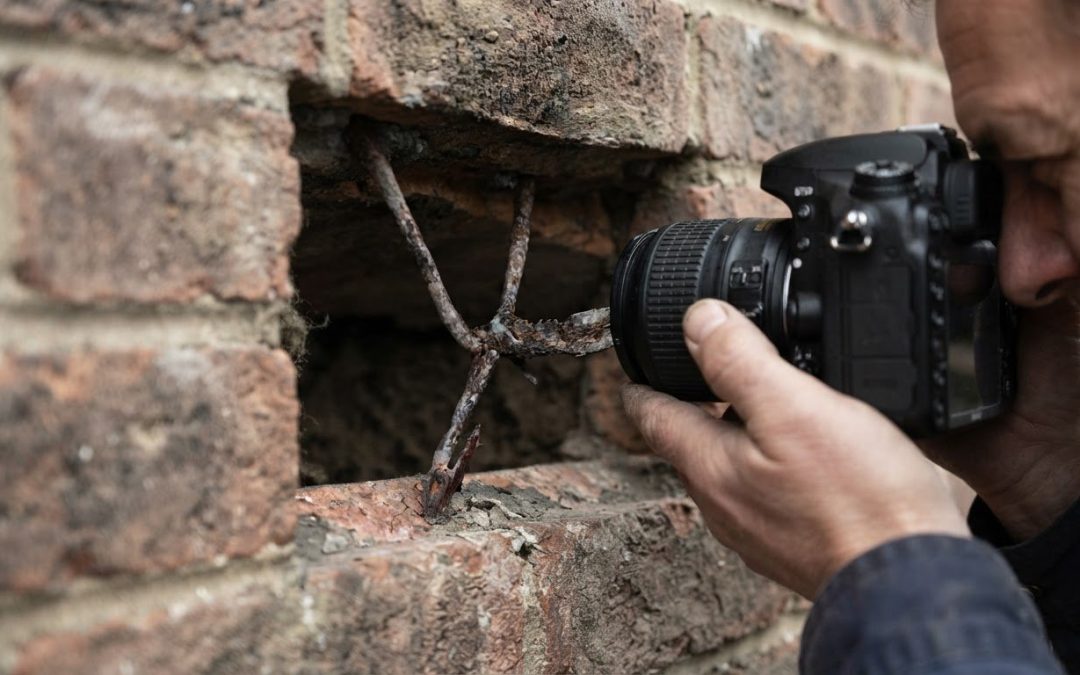
A wall tie report should do more than label ties as sound or failed. Knowing what a wall tie survey report includes helps you understand how the surveyor reached their conclusion. It can describe the wall construction, tie type and condition, and visible masonry defects, supported by photographs. It should also explain whether remedial work or monitoring is recommended.
If you’re concerned about cracking or possible wall tie corrosion, a clear report can help you understand what to do next. This article explains what a survey examines, how findings and photographs are presented, who may request a report, and which signs can indicate wall tie failure. You’ll also learn what recommendations may follow, so you can understand the wall’s condition and the reasons behind proposed work.
Key Takeaways
- A survey combines visual checks with inspection inside the cavity to build a clearer picture of wall tie condition.
- The report considers whether tie distribution is adequate, not just whether individual ties show deterioration.
- Recommendations explain the structural significance of findings and whether monitoring or remedial work is appropriate.
- Photographs and digital images help connect the surveyor’s observations to the report’s conclusions.
- Cracking or other signs of movement can prompt further investigation into possible wall tie failure.
What is a Wall Tie Survey and What Does a Wall Tie Report Contain?
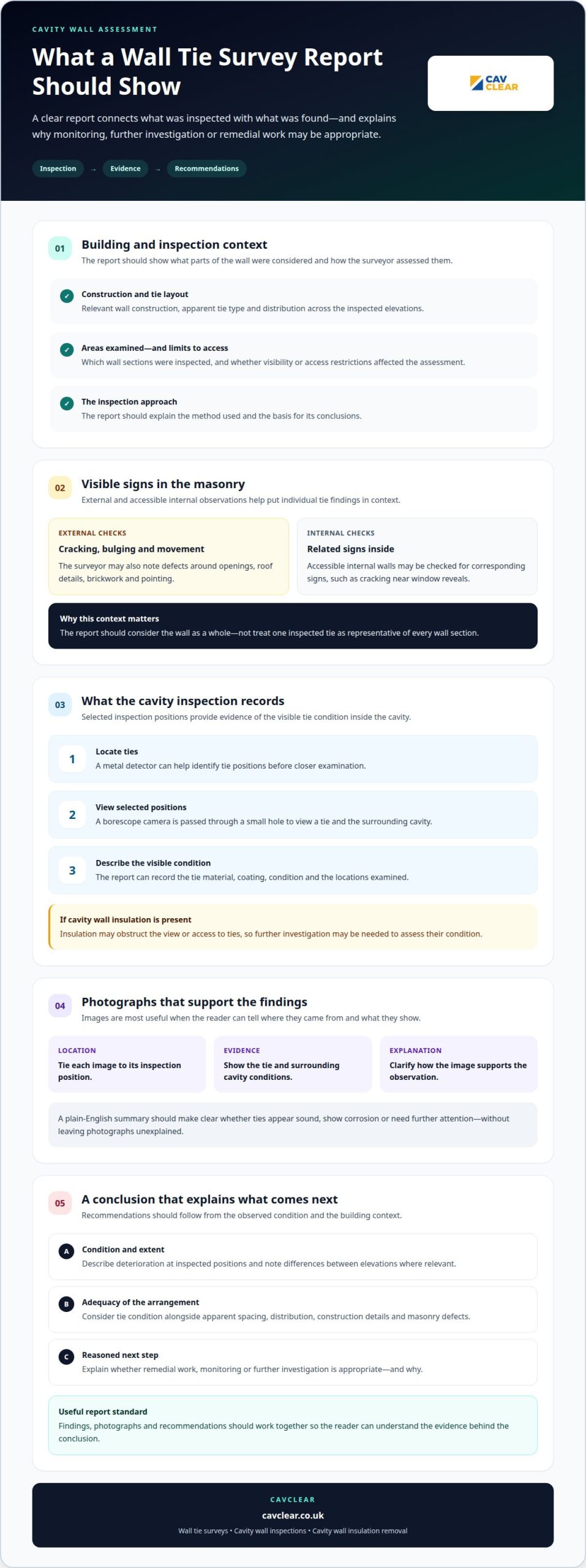
A wall tie survey combines visual checks with inspection inside the cavity to assess tie condition, layout and related masonry defects. The report records the findings, supporting images and recommended next steps.
External and Internal Wall Inspection
The surveyor examines external brickwork for cracking, bulging, movement and defects around openings. They may also inspect accessible internal walls for signs that correspond with external damage, such as cracking near window reveals. These observations place the condition of individual wall ties in the wider context of the cavity wall.
The visual inspection can include the roof, brickwork and pointing. The surveyor records relevant construction details and the apparent tie layout, then notes defects that may need further investigation. This gives the report evidence beyond the condition of a tie viewed through an inspection hole.
Cavity Wall Tie Examination
A metal detector can help locate ties before the surveyor examines selected positions. A borescope camera, a narrow inspection camera, is passed through a small hole to view a tie inside the cavity. The report can describe the visible material, coating and condition of the tie, along with the locations examined.
Where cavity wall insulation is present, it may obstruct the view or access to ties, so further investigation may be needed to assess their condition. The Scottish Government says wall ties can be properly assessed or specifically surveyed when the cavity is open.
Endoscopic Inspection and Photographic Evidence
An endoscopic inspection records what the camera reveals at each examined location. Photographs can show the tie and surrounding cavity conditions, providing direct evidence for the surveyor’s observations. A useful report links each image to its inspection location and explains what it shows, rather than presenting photographs without context.
The findings should be easy to understand without specialist knowledge. A plain-English summary can explain whether the ties appear sound, show corrosion or need further attention. The report may also include construction details, existing insulation and masonry defects relevant to its conclusions.
Surveyor Qualifications and Report Timing
A UK wall tie surveyor should have relevant training and practical experience inspecting cavity walls, identifying tie types and interpreting corrosion. The report should explain the inspection method and the basis for its conclusions, including assessment against BRE Digest 329 and BRE Digest 401 where applicable.
The time required for an on-site survey depends on property size and the elevations inspected. The report records the property’s condition at the time of inspection. Later building movement or other changes may affect whether those findings still reflect current conditions. There is no fixed report-validity period for every property.
Who requests a cavity wall tie survey?
Homeowners, prospective buyers, property surveyors and mortgage lenders may request a cavity wall tie survey. Owners may also arrange one before structural changes, so existing ties can be assessed before work is planned. The report records the construction inspected and helps explain whether the tie arrangement appears adequate for the building.
To assess adequacy, the surveyor considers the building’s construction and the apparent distribution of ties across the inspected elevations. They compare the observed layout with the property’s wall type and note where access or visibility limits the assessment. The report should explain how these factors informed its conclusion, rather than treating one tie as representative of the whole building.
Construction details put individual findings in context. The surveyor considers the cavity wall design, masonry and existing tie type, then relates these features to the tie locations assessed. For example, where a property has different wall sections, the report should clarify which areas were examined and whether the findings apply to each section. This helps owners and buyers understand the scope of the conclusion.
BRE Digest 401 provides a method for visually grading existing wall ties. The surveyor records the condition observed at inspected positions and uses the grading to describe deterioration consistently. The assessment can distinguish a tie showing corrosion from one with more advanced visible damage. The report should connect that condition to its location and explain its significance for the wall, rather than presenting a grade without context.
BRE technical guidance can support an assessment, but recommendations still need to reflect the property’s findings. The surveyor considers inspected tie condition, apparent spacing, construction details and relevant masonry defects together. This helps determine whether replacement, monitoring or further investigation is appropriate. If the ties are considered adequate, the report can record that conclusion and explain its basis.
- Homeowners may arrange an assessment after noticing cracking or movement.
- Buyers and mortgage lenders may use a specialist report to understand a specific concern about a property’s cavity walls.
- Property surveyors and owners planning structural changes may request findings about tie condition and distribution before decisions are made.
Where the survey identifies deterioration, the report should describe its extent and explain the recommended response. If findings vary between elevations, the recommendations should identify those differences rather than treating the whole property uniformly. This gives owners and property professionals a clearer basis for planning appropriate follow-up work.
What are Wall Ties?
A wall tie report connects the observed condition of ties with their structural role. Corroding ties can expand, contributing to masonry cracking and movement between the wall leaves. If deterioration affects the stability of the outer leaf, the report should explain the significance of the findings and the remedial work considered necessary.
Does a wall tie survey report recommend remedial wall tie installation? Yes, if inspection findings indicate that existing ties have deteriorated or are inadequate, the report can recommend replacement and describe the work’s scope. If replacement is not considered necessary, it can record that conclusion instead.
Recommendations should reflect the inspected construction, tie condition, apparent layout and visible masonry defects. The report may describe the scale of work, where new ties are needed, and whether existing ties require isolation or removal. The pattern and extent of cracking also matter, as they can help show whether a defect is local or affects a wider wall area.
Replacement ties can be installed through small holes in the inner or outer face, without removing brickwork. A remedial specification may explain the proposed tie type, installation locations, and any final testing. Stainless steel replacement ties are used in remedial work, but the report’s findings and specification should guide the choice and scope for the property.
Moisture exposure and the condition of the outer leaf can inform the assessment, as corrosion may develop where moisture is present. If cavity wall insulation obstructs access or visibility, this can affect how ties are examined and whether further inspection is needed. These details help explain why a recommendation applies to particular areas, rather than assuming every wall needs identical work.
What should homeowners do if a wall tie report finds corrosion or failure? Read the findings and recommended scope carefully, noting which elevations or wall areas are affected. The report should explain whether it recommends replacement, monitoring or further inspection, so the next step is based on the recorded evidence.
Where replacement is advised, the report may state the intended installation approach and applicable guidance for installation and final testing. BRE Digest 329 is cited for guidance on installing a row of new wall ties. The specification should make clear how the proposed work relates to the identified defect, rather than treating all corrosion as requiring the same response.
A clear remedial recommendation also explains the reasoning behind the decision. It distinguishes observed damage from proposed action, identifies the work’s scope and explains any monitoring advice. This gives homeowners a practical basis for planning repairs while keeping the property’s structural condition central to the decision.
Photographs and digital images of wall ties
Photographs and diagrams help readers connect written observations with the areas examined. Their value comes from context, not image quantity. Captions should identify the relevant elevation or inspection point and explain what the image shows. Without that information, it can be difficult to understand how a photograph supports the report’s conclusion.
Read each caption alongside the finding it relates to. For example, a note describing visible corrosion should identify the inspected area shown in the photograph. If conditions differ across elevations, the images should be distinguishable rather than presented as an unlabelled group. This makes it easier to follow the reasoning from observation to recommendation.
Images document what was visible at the recorded location; they do not establish the condition of every tie in the wall. A survey examines selected positions to assess overall condition. Consider the report’s description of the locations examined and any limits to access, especially where cavity wall insulation or construction details restrict visibility.
A photograph can show a tie or nearby masonry, while the written assessment explains its significance. The image alone may not establish the tie’s full condition, material or adequacy. Look for the surveyor’s interpretation and any reference to further investigation where the visible evidence leaves questions unresolved. This keeps the report’s observations separate from its professional conclusions.
Diagrams can add useful spatial context by showing where findings sit within an elevation or property. If a report records cracking in one area and tie deterioration elsewhere, marked locations help readers understand whether the observations may be related or separate. The surveyor’s explanation should clarify this rather than asking readers to infer a cause from the images.
Photographic evidence can also make a report more useful for later review. A homeowner, buyer or property professional can refer to a captioned image when discussing a finding or recommendation. This is especially useful when the report distinguishes between areas needing attention and areas where no remedial work is recommended. Clear labels reduce confusion.
When reviewing the evidence, check that captions match the written observations and that each conclusion has an understandable basis. An image of a defect supports the assessment but is not a complete diagnosis of the cavity wall. The report should state what the surveyor observed, explain how the evidence informs the assessment, and identify where recommendations apply. This makes photographs useful records rather than isolated illustrations.
Signs and consequences of wall tie failure
Wall tie failure can affect how securely the outer leaf is held in place. Cracking, bulging or visible separation may prompt closer assessment, although these signs alone do not confirm the cause.
Common Signs of Wall Tie Failure
Look for horizontal or stepped cracks in external brickwork, especially when they follow mortar joints across an elevation. A characteristic cracking pattern may appear at approximately 450mm intervals. Bulging or distortion in the outer leaf can also indicate movement. These signs are reasons for investigation, not a diagnosis: other building defects can produce similar visible changes.
Note the position and extent of visible cracking, including whether it appears around an opening or across a larger wall area. A surveyor considers the pattern alongside the building’s construction and inspection findings before deciding whether it is consistent with tie failure.
Consequences of Wall Tie Failure
As wall ties lose their ability to connect the leaves, the outer masonry may become less securely restrained. Visible movement can worsen, and the outer leaf may become unstable or detach. In advanced cases, wall breakdown and potential collapse are serious possible outcomes. The level of concern depends on the observed condition and extent of movement, which require specialist assessment.
A report should distinguish between signs that need monitoring and findings that support remedial work. It should describe the affected areas and explain the recommended response, rather than treating every crack as evidence of widespread failure.
Properties at Risk
Properties built between 1900 and 1980 using mild steel ties are identified as being at greater risk. Buildings constructed before the 1980s are also more prone to wall tie corrosion. These age ranges can help identify properties for assessment, but a building’s age alone doesn’t establish whether its ties have failed.
Some UK properties built from the 1920s to the 1950s used black ash mortar, which is highly corrosive to mild steel ties. Moisture can contribute to corrosion, often beginning in the more exposed outer leaf. Construction type, tie material and observed condition all matter when assessing an individual property.
Cracking or bulging deserves attention when it is new, changing or appears across a wider area. Record where the signs occur and describe any visible change to the surveyor; don’t assume the cause from appearance alone. A professional inspection can assess the cavity wall ties and relate findings to the masonry. If you’re concerned about movement or cracking, arrange a wall tie survey to establish the next appropriate step.
CavClear
CavClear helps property owners understand cavity wall concerns through Wall Tie Surveys and Cavity Wall Surveys, with findings and remedial recommendations explained clearly. If a report identifies failed or corroded ties, Wall Tie Replacement may be the appropriate next step. Where existing cavity wall insulation affects an inspection or contributes to a cavity wall problem, Cavity Wall Insulation Removal may also be relevant, following a professional survey.
Turn to CavClear for a professional assessment of wall tie condition, clear explanations of survey findings, or remedial work recommended for your property. The appropriate next step depends on the inspection and the cavity wall’s condition.
Contact CavClear to discuss a wall tie survey or the findings in your report.
Take the next step with confidence
Knowing what a wall tie survey report includes helps you judge whether its recommendations provide a clear route forward. The findings should make the evidence and reasoning behind proposed action understandable. If cracking or movement is present, a professional assessment can clarify whether wall tie concerns need attention or monitoring. This supports informed decisions without assuming every visible defect has the same cause.
CavClear provides Wall Tie Surveys to assess cavity wall condition and Wall Tie Replacement where remedial work is recommended. If defective cavity wall insulation is also an issue, Cavity Wall Insulation Removal may be relevant following a professional survey. The appropriate service depends on the survey findings and the property’s needs.
For a considered next step, contact CavClear about a wall tie survey. Clear information can help you move forward with greater confidence.
Frequently Asked Questions
Why Are They Important?
A wall tie survey report gives property owners a documented basis for deciding what attention a cavity wall may need. For example, a buyer reviewing a property with visible cracking can distinguish recorded inspection findings from assumptions about the cause. The report can also help owners plan follow-up work by stating whether further investigation, monitoring or remedial action is recommended.
What is a wall tie survey in the UK?
A wall tie survey is a professional inspection of the ties connecting the masonry leaves of a cavity wall. The surveyor assesses the ties’ condition and distribution, taking account of the building’s construction and visible defects. It can be useful before a property purchase, after cracking appears, or before planned structural changes. The written findings explain the condition observed during the inspection.
What does a wall tie survey report include?
A report sets out the surveyor’s findings and explains how they relate to the property’s cavity wall. It can record construction details, tie condition, inspection locations, photographs and observed defects. Look for a clear distinction between what the surveyor saw and what they recommend. The report should also state if replacement is not considered necessary, rather than leaving the outcome unclear.
What defects and warning signs are recorded in a wall tie report?
A wall tie report may record cracking, bulging or movement in brickwork, alongside signs of corrosion on inspected ties. It can also note defects in pointing or other masonry conditions relevant to the survey. These observations inform the assessment but do not prove that wall ties caused every crack. For example, the report should describe where a defect appears and how it relates to the areas inspected.
Does a wall tie report include borescope photos and test results?
A report can include borescope photographs showing ties at examined positions, with images supporting the surveyor’s written observations. The report should connect each image to its inspection location. If pull-testing is carried out, the test applies a controlled tensile load to selected ties; results are recorded and assessed against acceptance criteria. Not every report necessarily includes pull-test results, as testing depends on the inspection undertaken.
Are wall tie survey reports required for a UK house sale or mortgage?
A wall tie report may be requested during a property sale or mortgage assessment, particularly if a survey has raised concerns about cracking or cavity wall condition. It is not automatically included in every transaction. A buyer may arrange a specialist inspection to understand a specific concern, while a lender may seek further information as part of its assessment. The report records findings for the property and inspection.
Recent Comments