
Did you know that wall ties in properties built before the 1980s often have an expected lifespan of only 15 to 20 years? It’s a sobering thought for any property owner, especially since significant internal degradation often occurs long before you see a single crack in your mortar. We understand the anxiety that comes with structural uncertainty and the fear of disruptive building works. You want a solution that’s permanent, clean, and doesn’t involve unnecessary damage to your masonry. This guide details the professional wall tie replacement process used by accredited specialists to restore the structural integrity of your home.
We’ll walk you through the exact technical steps required to secure your property’s future. You’ll discover how modern stainless steel helical ties, which meet 2026 UKCA standards, provide a fix that lasts over 50 years. We’ll also explain the methodology behind isolating corroded fixings and the precision drilling techniques that ensure a non-disruptive installation. By the end of this guide, you’ll understand how a methodical, expert approach turns a major structural concern into a documented investment in your property’s long-term health and resale value.
Key Takeaways
- Learn how specialists use high-resolution borescope cameras to accurately diagnose structural instability without causing unnecessary disruption to your masonry.
- Understand the technical stages of the wall tie replacement process, including the precision drilling and installation of modern stainless steel helical ties.
- Discover why isolating original corroded ties is a critical step to prevent the ongoing expansion damage that leads to horizontal masonry cracking.
- See how professional remedial work restores the as-built structural strength of your property, protecting its long-term asset health and market value.
- Gain insights into the 2026 technical standards for remedial tie spacing and the importance of using accredited technicians for a permanent, safety-conscious fix.
Wall Tie Replacement: Process and Importance
Remedial wall tie replacement is a specialized structural intervention that restores the essential connection between a building’s internal and external walls. In a standard cavity wall construction, the cavity wall tie plays a vital role by transferring lateral loads between the external facade and the internal load-bearing structure. This ensures the two leaves of masonry act as a single, stable unit. When these ties fail, the structural integrity of the property is compromised. We view this not just as a repair, but as a precision surgical procedure for your home.
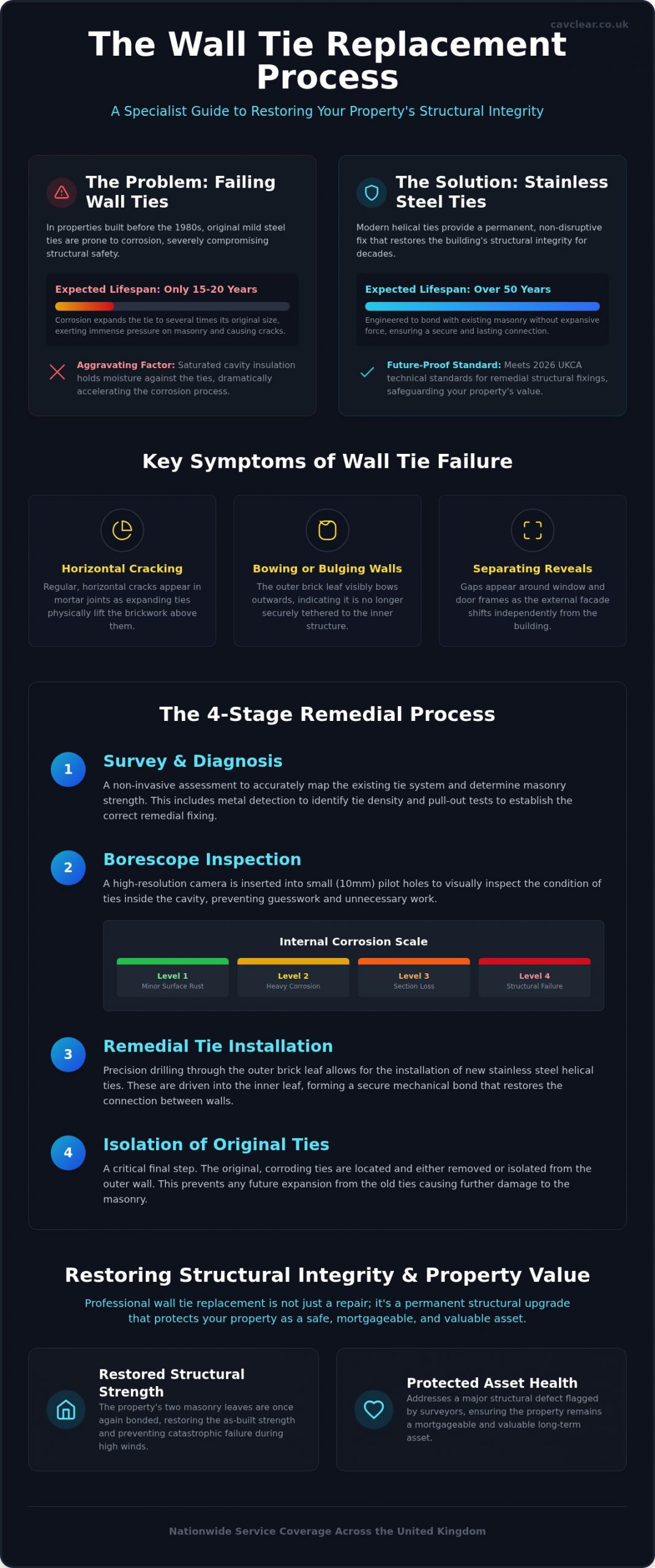
The primary cause of failure in older properties is the corrosion of traditional mild steel ties. Properties constructed between 1964 and 1981 are particularly vulnerable due to historical changes in the zinc content of the ties used at the time. As the steel reacts with moisture and oxygen, it undergoes a chemical transformation known as the expansion of iron oxide, or rust. This process causes the tie to expand to several times its original thickness. This physical growth exerts immense pressure on the surrounding mortar, leading to the characteristic “lifting” of brickwork. This issue is often exacerbated by failed cavity wall insulation. When insulation becomes saturated, it holds moisture against the metal ties, accelerating the corrosion process and shortening the lifespan of the structural fixings. Understanding the wall tie replacement process is the first step toward securing your property’s future.
Common Signs Your Property Needs Remedial Ties
Identifying the early symptoms of wall tie failure can prevent more costly repairs later. One of the most frequent indicators is horizontal cracking in the mortar joints, usually occurring every few courses of bricks. This is the direct result of the corroding ties expanding and physically lifting the masonry above them. You might also notice a visible “bowing” or bulging in the external brickwork leaf, suggesting that the outer wall is no longer securely tethered to the inner structure. Other signs include the separation of window reveals or sagging lintels, which indicate that the external facade is shifting independently of the rest of the building.
The Risks of Delaying Structural Repairs
Postponing a professional wall tie replacement process introduces significant safety and financial risks. The most severe danger is the total collapse of the outer leaf, particularly during high wind events when the suction pressure on the facade is greatest. Beyond physical safety, failed wall ties have a direct impact on property valuation. Surveyors often flag these issues during the sale process, which can make it difficult for potential buyers to secure a mortgage on an “unstable” home. Prompt action ensures your property remains a safe, mortgageable asset while preventing progressive damage to the masonry that becomes increasingly expensive to rectify.
The Wall Tie Survey: Diagnosing Structural Instability
A professional survey is the cornerstone of any successful wall tie replacement process. It prevents guesswork and ensures that the remedial solution is tailored to the specific needs of your property. We often combine this structural assessment with a comprehensive damp survey, as moisture ingress is frequently the primary catalyst for metal corrosion. Our technicians use specialized metal detectors to map the existing tie layout, identifying areas where the density is insufficient to meet modern safety standards. We also conduct pull-out tests on the masonry. This involves applying a measured load to a sample tie to determine the strength of the mortar and the surrounding brickwork. This step is vital because it dictates which type of remedial tie will provide the most secure and permanent bond for your specific wall type.
Borescope Inspection: Seeing Inside the Cavity
To accurately assess the condition of the hidden fixings, we perform a borescope inspection. Technicians drill small, discreet 10mm holes into the mortar joints at strategic points across the facade. We then insert high-resolution camera equipment to view the internal condition of the ties and the cavity itself. This allows us to categorize corrosion on a scale from Level 1, minor surface rust, to Level 4, which represents a total loss of structural section. We also check for debris or blockages to understand what is a wall cavity obstruction doing to your home’s thermal and structural performance. These inspections are non-disruptive and leave your property looking exactly as it did before we arrived.
Detailed Technical Reporting and Action Plans
Once the inspection is complete, we provide a detailed technical report. This document is essential for satisfying building regulations and providing proof of structural integrity to insurance providers or future buyers. The report doesn’t just list faults; it proposes a precise remedial pattern based on your building’s height, exposure to wind, and the current condition of the masonry. Every successful wall tie replacement process relies on this initial data to guarantee a permanent fix. We ensure transparency by providing a clear breakdown of remedial contracting fees, so you know exactly what is required to restore your home’s stability. Our nationwide team handles every aspect of this diagnostic phase with the rigor required for long-term asset health. If you’re concerned about the stability of your facade, you can arrange a specialist inspection today to receive a clear, expert assessment.
The Step-by-Step Remedial Installation Process
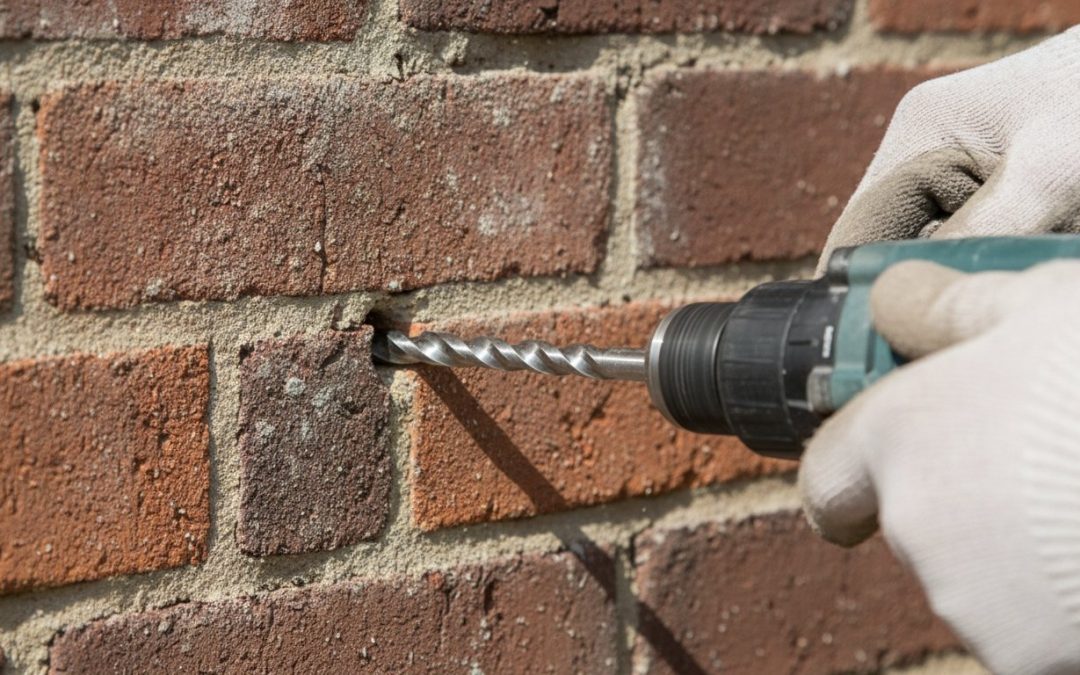
The physical execution of the wall tie replacement process requires a methodical approach to ensure both structural performance and aesthetic preservation. We begin by preparing the work area, using dust extraction systems and protective sheeting to maintain a clean, non-disruptive environment. This is followed by the precision drilling of pilot holes. Technicians use specialized rotary percussion drills to create a path through the outer leaf and into the inner load-bearing leaf of the masonry. The depth and diameter of these holes are critical. They must match the specific requirements of the chosen remedial tie to guarantee a secure anchorage.
Once the holes are prepared, we install high-grade stainless steel remedial ties. These are typically manufactured from Grade 304 or 316 stainless steel to provide lifelong resistance to corrosion. After installation, we don’t just assume the work is done. Our technicians perform rigorous tension testing on a representative sample of the new ties. This involves using a calibrated load cell to verify that each tie has achieved the necessary pull-out resistance. Finally, we make good the drill holes using a specialist mortar that is colour-matched to your existing brickwork, ensuring the structural repair is virtually invisible.
Choosing the Right Remedial Tie: Resin vs. Mechanical
The choice of tie depends entirely on the substrate identified during the initial survey. Mechanical expansion ties are often the preferred choice for solid brickwork or concrete. They offer a fast, reliable fixing that provides immediate structural support. Resin-fix ties are better suited for aged, fragile, or hollow masonry where a mechanical expansion might cause further cracking. We also frequently use helical ties. Their unique corkscrew design allows them to be driven into the masonry, providing a secure grip while accommodating the natural thermal movement of the building without introducing additional stress.
Ensuring Correct Spacing and Density
Structural safety relies on a specific density of ties across the facade. To meet current 2026 standards, we typically follow a staggered pattern with horizontal spacing of 900mm and vertical spacing of 450mm. This equates to approximately 2.5 ties per square metre. However, we increase this density to 300mm vertical intervals around window and door openings or at unbonded corners. This additional support is vital in areas where the masonry is most vulnerable to lateral movement or wind suction. Our technicians verify the pull-out strength of these installed ties to ensure they meet the specific load requirements of your property’s location and height.
Isolation and Protection: Addressing the Original Ties
A professional wall tie replacement process is not complete until the existing, failing ties are neutralized. Simply adding new stainless steel fixings is a partial solution that ignores the ongoing threat within your walls. While the new ties provide the necessary structural support, the original mild steel ties continue to corrode and expand. This expansion is a relentless physical force that can undermine even the highest quality remedial work if not addressed correctly. Our wall tie replacement specialists treat the isolation of these old ties as a non-negotiable step in every structural project we undertake across the United Kingdom.
The Dangers of Rust Expansion (The ‘Jack’ Effect)
The chemical process of oxidation causes mild steel to expand significantly. A corroding wall tie can grow to seven times its original thickness as iron oxide layers build up. This phenomenon, often referred to as the ‘jack’ effect, exerts immense upward pressure on the masonry above it. It’s powerful enough to physically lift the upper layers of a building, causing the characteristic horizontal cracks in mortar joints. If you leave these ties active, they’ll continue to damage the brickwork regardless of how many new ties you install. Isolation is a standard requirement in professional remedial specifications because it prevents this expansion from causing further masonry degradation.
Methods of Tie Neutralization
We employ two primary methods to neutralize the threat of rust expansion. The first is the ‘sleeving’ technique. This involves exposing the outer end of the corroded tie and encasing it in a specialized foam sleeve. This sleeve creates a void around the metal, allowing it to continue expanding harmlessly without making contact with the surrounding mortar. It effectively decouples the tie from the masonry leaf, ensuring the ‘jack’ effect is neutralized.
The second method is physical removal, often called ‘cropping.’ In cases of severe corrosion, we cut out the outer end of the tie entirely. We then treat the remaining metal section within the cavity to inhibit further oxidation. This is often the preferred route for properties with very narrow mortar joints where sleeving isn’t practical. Both methods ensure that the old ties no longer pose a risk to the building’s facade or long-term asset health. If you suspect your home is suffering from the ‘jack’ effect, you can contact our technical team for a nationwide survey to determine the best course of action for your property.
Restoring Structural Integrity and Property Value
The completion of the wall tie replacement process marks the point where your property’s safety is no longer in question. Once the new fixings are tension-tested and the original ties are neutralized, our accredited technicians perform a final quality assurance inspection. This methodical verification ensures that the external facade is once again acting as a unified structural element with the internal leaf. By restoring the as-built strength of the masonry, we eliminate the immediate risks of leaf separation or collapse. This isn’t just a temporary repair; it’s a permanent structural reinforcement that safeguards the building for decades to come.
We provide homeowners with comprehensive structural certificates and professional documentation upon completion. These records are essential for maintaining your property’s market value. When it comes time to sell, surveyors and mortgage lenders will require proof that any historical structural issues were rectified by specialists using the correct methodology. Professional intervention is a vital investment in your property’s future, transforming a significant structural liability into a certified asset. Our nationwide team ensures that this transition is handled with the technical rigor and transparency that property owners across the United Kingdom expect.
Clean and Non-Disruptive Methodology
We understand that structural work can feel daunting, which is why we prioritize a clean and non-disruptive methodology. Our technicians use vacuum-assisted drilling systems to capture dust at the source, preventing debris from accumulating around your home. We pay particular attention to the finishing touches. By using expert mortar matching techniques, we ensure that the small drill holes are virtually invisible against your existing brickwork. We maintain a safe and tidy site throughout the duration of the works, ensuring that the only evidence of our visit is a stable and secure home.
Next Steps for UK Homeowners
If you’ve noticed the signs of failure discussed in earlier sections, such as horizontal cracking or bulging masonry, the next step is a formal diagnostic assessment. As a nationwide specialist, we provide technical property inspections that cover every corner of the United Kingdom. Before our surveyor arrives, it’s helpful to ensure clear access to the external walls and move any garden furniture or obstructions. This allows our team to perform a thorough borescope inspection and map your tie pattern efficiently. Taking action now prevents progressive damage and ensures your home remains a safe, mortgageable asset. You can secure your property’s future with an expert wall tie survey to receive a definitive report on your building’s health.
Securing Your Home’s Structural Future
Protecting your property’s structural integrity requires more than just adding new supports. It demands a methodical approach that identifies current failures through high-resolution borescope inspections and neutralizes the ongoing threat of rust expansion. By following the precise steps of the professional wall tie replacement process, you can stop horizontal cracking and eliminate the risk of facade collapse. Our accredited technicians provide the expertise needed to restore your home to its as-built strength while maintaining the external aesthetics with precision mortar matching. This intervention isn’t just a repair; it’s a vital investment in your property’s future health and marketability.
We provide nationwide UK coverage and deliver comprehensive technical reports that satisfy insurers and protect your home’s resale value. You shouldn’t have to live with the anxiety of structural instability or disruptive building works. You can Book Your Professional Wall Tie Survey with CavClear Today to receive a clear, expert action plan for your property. Taking this proactive step ensures your home remains a safe, comfortable, and mortgageable asset for decades to come. We’re here to help you restore your peace of mind and your property’s stability.
Frequently Asked Questions
How long does the wall tie replacement process take for a standard house?
The wall tie replacement process typically takes between two and three days for a standard semi-detached property. Larger detached homes or buildings with complex access requirements may require up to five days to complete. Our technicians follow a methodical installation pattern to ensure efficiency while maintaining the high technical standards required for structural safety.
Is wall tie replacement a messy or disruptive job for the occupants?
No, the modern remedial process is designed to be clean and non-disruptive. We use vacuum-assisted drilling equipment to capture masonry dust at the source, preventing it from settling around your property. Since all structural work is performed on the exterior facade, there’s no need for technicians to enter your living spaces or disturb your internal decorations.
Can I just ignore failed wall ties if the cracks are small?
No, small cracks are often the first visible sign of advanced internal corrosion. By the time horizontal cracking appears in your mortar joints, the original ties have already expanded and begun physically lifting the masonry. Ignoring these symptoms allows the structural instability to progress, which can lead to bulging walls or the total collapse of the outer leaf during high wind events.
Do I need to move out of my home during the structural repairs?
You don’t need to vacate your home while we carry out the repairs. All drilling, tie installation, and mortar matching take place from the outside of the building. Our specialists maintain a safe and tidy site throughout the duration of the works, ensuring your daily routine remains entirely unaffected while we restore your property’s stability.
How do I know if my wall ties are made of mild steel or stainless steel?
A professional technical inspection is the only definitive way to identify the material and condition of your ties. Properties built before 1981 almost exclusively used mild steel ties, which are prone to oxidation. We use specialized metal detectors to map the ties and high-resolution borescope cameras to visually confirm the material and its current level of corrosion within the cavity.
Will the remedial ties be visible on the outside of my house once finished?
No, the new fixings are installed discreetly and will not be visible. After the wall tie replacement process is complete, we fill the small 10mm drill holes with a specialist mortar that is colour-matched to your existing brickwork. This ensures the structural intervention is virtually invisible and preserves the original aesthetics of your home’s facade.
What is the difference between a wall tie survey and a general building survey?
A wall tie survey is a specialist diagnostic procedure that uses invasive technology to look inside the wall cavity. While a general building survey provides a broad overview of a property’s condition, it cannot accurately assess hidden structural fixings. Our technical reports provide a detailed map of tie density and corrosion levels that a standard visual inspection simply cannot offer.
Does the wall tie replacement process include fixing the cracks in the bricks?
Yes, the process includes the aesthetic restoration of the affected masonry. Once we have stabilized the wall with new stainless steel ties and neutralized the old ones, we repoint the cracks caused by the original expansion. This prevents future moisture ingress and restores the structural and visual integrity of the brickwork leaves.
Recent Comments