

A damp mark on a wall can look alarming, but it doesn’t always reveal what caused it or whether the problem is still active. If you’re preparing to sell your UK home, separate what you’ve observed from what a professional inspection has confirmed.
It’s understandable to worry that a musty smell, a patch of staining or an incomplete repair history could lead to difficult questions from buyers. Clear, factual records can help you explain what you’ve noticed, what work has been carried out and what remains uncertain, without treating a symptom as a diagnosis.
This guide explains which observations and property records to organise before sale discussions, including details of previous damp-related work. It also covers when a cavity-wall inspection may help distinguish general moisture symptoms from concerns involving cavity wall insulation or wall ties. Where further investigation is useful, a specialist survey can provide written findings and photographs to support a calm, evidence-based conversation about the property.
Key Takeaways
- Record where damp signs appear and when you noticed them. A stain or musty smell is useful context, but it doesn’t identify the cause.
- Gather dated photographs, invoices, previous reports and any remedial recommendations so you can give a clear account of the property’s history.
- Separate what you’ve observed from what remains unknown. Avoid describing a cavity-wall issue as confirmed unless an inspection supports that conclusion.
- A specialist cavity-wall inspection can help investigate concerns involving insulation or wall ties and provide written findings with photographs.
- CavClear’s nationwide specialists use calibrated equipment to inspect cavity-wall concerns and help you prepare a more informed record before sale discussions.
How damp concerns can affect a UK house sale
Staining behind a cupboard, mould near a window or a persistent musty smell can leave sellers unsure what to say when preparing for viewings. These signs may prompt questions from buyers, but their appearance alone doesn’t show whether moisture is active or identify its source. A careful record is more useful than a confident guess.
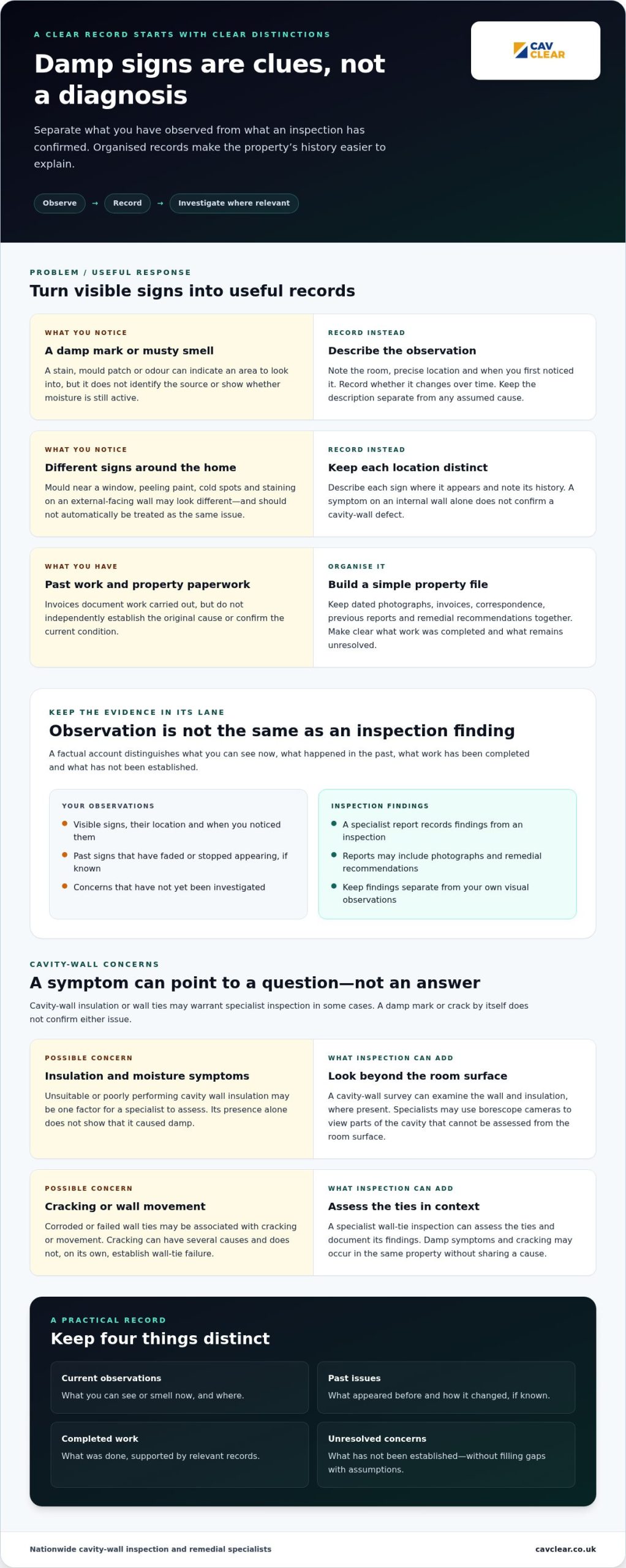
Damp symptoms need investigation before anyone can identify their cause. Moisture may have different origins within a property, and cavity-wall concerns cannot be confirmed from an indoor mark alone. Keep four things distinct: what you can see or smell now, what happened in the past, what work has been completed, and what remains unresolved.
Which visible damp signs may prompt questions?
Buyers may ask about damp patches, mould, peeling paint, cold spots or persistent musty odours. Similar signs can have different causes: for example, mould around a window and staining on an external-facing wall shouldn’t automatically be treated as evidence of the same fault. Note the room and precise location, when you first noticed the sign, and whether it changes over time. Describe the observation, not a diagnosis.
Why clear property information helps discussions
A straightforward account gives buyers useful context about what you’ve observed and what has already been done. It also helps keep discussions grounded if a surveyor raises a related question. Be specific about the status of each issue: a damp mark that appeared last winter, a repair completed afterwards, and a concern that has not been investigated are different pieces of information.
Organise records so their purpose is clear. Dated photographs can show where a mark appeared and how it looked at that time. Invoices can document work carried out, but they don’t independently establish the original cause or confirm the current condition. A specialist report is different: it records inspection findings and may include recommendations. Keep those findings separate from your own observations.
- Current observations: describe visible signs, their location and when you noticed them.
- Past issues: note signs that have faded or stopped appearing, if known.
- Completed work: organise relevant invoices, correspondence and photographs.
- Unresolved concerns: identify what you haven’t established, rather than filling gaps with assumptions.
This distinction matters where damp symptoms coincide with possible cavity-wall concerns. Cavity wall insulation or wall ties may warrant specialist inspection, but neither can be identified as the cause from staining or smell alone. A factual account leaves room for inspection findings to clarify the picture. It also gives you a practical way to answer questions consistently, without overstating what the available records show.
What damp signs can, and cannot, tell you about a cavity wall
A damp symptom is an observable sign, such as a patch of discolouration or a musty odour. It shows that an area may need attention, but it doesn’t identify a defect or reveal where moisture came from. A visible damp mark identifies an area to investigate, not its cause.
Moisture-related signs can have different explanations, and not every damp concern involves a cavity wall or insulation. A mark on an internal wall, for example, doesn’t confirm a cavity defect. Keep observations separate from inspection findings, particularly when noting the property’s condition for future discussions.
How cavity-wall issues may be relevant to damp
Cavity-wall defects can contribute to moisture problems in some properties, but an inspection is needed to establish whether they are relevant in a particular case. Unsuitable or poorly performing cavity wall insulation may be one factor for a specialist to assess. Its presence alone doesn’t show that it has caused damp, and it doesn’t mean removal is automatically appropriate.
A cavity-wall survey can examine the wall and insulation, where present, to help clarify the findings. Specialists may use borescope cameras to view parts of the cavity that can’t be assessed from the room surface. Those observations can be considered alongside the location and pattern of the symptoms. This is more informative than assuming a visible mark proves insulation failure.
When wall ties and cracking need separate assessment
Wall ties connect the inner and outer masonry leaves of a cavity wall. If they corrode or fail, the wall may show signs such as cracking or movement. However, cracking can have several causes and doesn’t, by itself, establish wall-tie failure. It should be assessed in the context of the property.
A specialist wall-tie inspection can assess the ties and document the findings, helping distinguish a confirmed concern from a visual clue that needs further investigation. Damp symptoms and cracking may occur in the same property without sharing a cause. One shouldn’t be treated as proof of the other.
If cavity wall insulation or wall ties are a specific concern, a property-specific inspection can help clarify what is present. The findings provide a more reliable basis for deciding whether any further assessment is relevant, while avoiding assumptions based on a single symptom.
Which damp records and survey findings are useful to organise?
A well-organised property file helps distinguish your own observations from completed work and specialist findings. Keep documents together by room or issue, and add dates where possible. This makes it easier to explain what each item records without treating an old photograph or invoice as proof of the property’s current condition.
Use the records to build a timeline: what was observed, what work followed, and whether an inspection later recorded relevant findings. Keep unresolved questions visible rather than filling gaps with assumptions.
| Record type | What to organise | What it can show |
|---|---|---|
| Seller observations | Dated photographs, notes of the location, and any visible changes | What you saw and when, not the technical cause |
| Previous work | Relevant invoices, correspondence, and records of completed repairs | Work recorded as completed, not necessarily the original diagnosis or present condition |
| Specialist findings | Survey reports, photographs, condition grading, and available recommendations | What the inspection recorded at that time and any suggested next steps |
How to organise observations and previous work
For each observation, note the room, exact area, approximate date and any change you noticed. Keep this description separate from technical conclusions. For example, a note can say that a mark appeared after a period of wet weather without asserting why it formed.
Arrange paperwork in date order. Keep completed work separate from proposed work or recommendations. If you don’t know why an earlier repair was carried out, leave that uncertainty clear rather than treating a brief invoice description as a confirmed explanation. Photographs taken from a similar position over time can help show whether an area changed.
What a cavity-wall inspection report can show
A cavity-wall inspection report can record findings about the wall system. CavClear surveys can include written findings, photographs and wall-tie condition grading where relevant. Trained specialists use calibrated equipment, including metal detectors, borescope cameras and wall-tie locators. The report reflects what the inspection found at that time; it doesn’t promise that conditions will remain unchanged.
Any remedial recommendation depends on the findings for the individual property. An inspection may identify an issue for further consideration, or it may not find evidence linking the concern to the cavity wall. Keep the report and any recommendations together, and distinguish suggested work from work that has actually been completed.
For wider context on survey approaches and reporting, the professional damp survey guide offers further information. A clearly labelled file helps anyone reviewing the property understand which details come from your notes, which relate to completed work, and which were recorded by a specialist.
How to prepare for damp questions before property viewings
A short, organised record can help you explain what you’ve noticed without turning uncertainty into a technical conclusion. If you’re considering what damp issues must be legally declared when selling a house UK, start by separating observations from inspection findings. The aim here is a clear account of the property’s condition and history, not a diagnosis based on a generic checklist.
- Record the signs. Note each affected room and the precise location of any staining, mould, peeling finish or musty odour. Add the date you noticed it, whether it’s current, recurring or historical, and any visible changes. Dated photographs can provide useful context, especially if taken from a similar position over time.
- Collect relevant records. Bring together photographs, survey reports, maintenance records, invoices and documents relating to completed work. Keep recommendations for proposed work separate from records showing that work has been carried out. Note each document’s date and purpose so its relevance is clear.
- Identify what remains unknown. Make a note of unanswered questions, such as the cause of an old mark or whether a previous repair addressed it. Don’t fill gaps by guessing. If a report describes a possible cause rather than a confirmed finding, preserve that distinction in your notes.
- Consider whether inspection would help. If the concern specifically involves cavity wall insulation, wall ties or masonry cracking, a specialist inspection may add useful information. Let the property’s symptoms and available records guide whether further investigation is relevant.
A practical sequence for getting the property information ready
Keep your notes concise and factual. “Patch below the upstairs window, first noticed in November, appears darker after heavy rain” describes an observation without assigning a cause. Attach the relevant photograph or report, and record whether any work was completed or only recommended. Questions about what damp issues must be legally declared when selling a house UK are best approached with a clear distinction between known facts and matters that remain uncertain.
When a specialist cavity-wall survey may add clarity
A cavity-wall survey may be appropriate when records or symptoms point to a question about insulation, wall ties or cracking in the masonry. The inspection scope and findings depend on the individual property; a general checklist can’t establish whether a cavity-wall defect is present. Any further work should follow the evidence gathered for that building, rather than assumptions based on one symptom.
If your records point to a possible insulation concern, the cavity wall insulation removal guide explains the subject in more detail. CavClear carries out cavity-wall inspections and can provide written findings with photographs where relevant. A survey can help clarify what was observed, but it can’t guarantee a particular sale outcome or resolve every moisture concern.
For a property-specific assessment of cavity-wall concerns, arrange a cavity-wall inspection with CavClear. Clear findings can help you discuss the property using evidence and keep observations separate from confirmed inspection results.
How CavClear can investigate cavity-wall concerns before a sale
If damp observations raise questions about cavity wall insulation, wall ties or masonry, a specialist cavity-wall assessment can help establish what is present. CavClear is a nationwide UK cavity-wall specialist, focused on inspecting and remediating cavity-wall systems rather than providing general damp services. An inspection can help separate an indoor symptom from a finding about the wall structure.
Trained specialists use calibrated equipment to assess relevant cavity-wall concerns. Depending on the property and the purpose of the inspection, tools may include metal detectors, borescope cameras and wall-tie locators. These help inform the assessment, but no equipment replaces consideration of the property’s specific condition and the findings recorded during the survey.
What a cavity-wall survey can help establish
A cavity-wall survey can assess wall ties or cavity-wall insulation where these relate to the concern. For example, visible cracking may lead to a closer assessment of wall ties, while damp observations alongside known insulation may prompt investigation of the cavity. Neither symptom alone confirms a defect. The survey findings provide the basis for any property-specific recommendations.
Where wall-tie findings need more context, CavClear’s wall tie replacement guide explains the subject in further detail. A survey report can include written findings, photographs and tie-condition grading where relevant. This gives homeowners a practical record to refer to during property discussions, while keeping the inspection’s observations separate from assumptions about causes.
What happens after findings are documented
Any recommended next step depends on the inspection and the requirements of the individual property. If the survey identifies a wall-tie concern, the report can set out the findings and relevant remedial recommendations. If cavity wall insulation is present, cavity wall insulation removal is considered only when the insulation is defective, damp or causing issues. An insulated wall does not automatically require removal.
A written report describes the condition observed during the inspection. It does not guarantee future conditions or a particular outcome in a sale. Its value is in making the findings and recommendations clear, so you can discuss confirmed information calmly and distinguish it from matters that remain uncertain.
If a cavity-wall concern needs investigating, make an enquiry with CavClear about a property-specific survey. The inspection scope and any recommendations are based on the property’s requirements, giving you a clearer record to use as sale discussions progress.
Move towards sale discussions with a clearer picture
Preparing to sell doesn’t mean you need to identify the technical cause of every mark yourself. It means keeping your account grounded in what you’ve observed and what any inspection has found. For homeowners asking what damp issues must be legally declared when selling a house UK, this article isn’t a substitute for legal advice. A clear, property-specific record can, however, help you discuss known concerns without treating an assumption as a confirmed finding.
Where cavity-wall questions remain, a specialist survey can provide a basis for deciding what needs further attention. CavClear is a member of the Wall Tie Installers Federation and is TrustMark-registered for cavity wall insulation removal. Any recommendations depend on the findings for your property, so you can consider the next step with relevant information in hand.
Arrange a specialist cavity-wall survey with CavClear if you’d like to investigate a cavity-wall concern before sale discussions progress. A measured, evidence-led approach can make the next conversation feel more manageable.
Frequently Asked Questions
Can I sell a house with damp?
A house can be sold while damp concerns are present; their presence alone doesn’t determine one outcome. Keep a clear record of what you’ve observed and gather relevant reports, invoices and documents about previous work. If you don’t know the cause, say so rather than guessing. Where the concern may involve the cavity wall, a property-specific inspection can help clarify what the wall survey finds.
What damp signs should I record before viewings?
Note the location and date of any damp patches, mould, peeling finishes, cold spots or persistent odours. Add dated photographs and a brief description of whether each sign is current, recurring or only historical. These notes help describe what’s visible, but they don’t identify its cause. Keep relevant inspection reports and records of remedial work with your notes so you can refer to the property history if questions arise.
Can damp be caused by cavity wall insulation?
Cavity wall insulation can be relevant to damp in some properties, particularly if it’s unsuitable or has become problematic. Damp has several possible causes, however, and a mark or smell cannot confirm that insulation is responsible. A specialist cavity-wall inspection can assess the construction and insulation where relevant, then record its findings. Any remedial work should be considered only after the issue has been assessed for that property.
What does a cavity-wall inspection look for?
A specialist may assess wall ties or cavity-wall insulation, depending on the concern and the property’s construction. Appropriate equipment can include metal detectors, borescope cameras and wall-tie locators. The inspection is specific to the building, so its scope and findings can vary. A report may include written findings, photographs and recommendations where relevant. These document the inspection, but don’t guarantee a particular condition or outcome later.
Should I arrange a damp survey before selling?
A survey may be useful if the cause or extent of a damp concern is unclear, especially where cavity-wall insulation or wall ties could be relevant. The right assessment depends on the symptoms, construction and records available. Gather existing documents first, then consider whether a specialist inspection would answer a specific question. For example, recurring moisture on an external-facing wall may warrant a different investigation from an isolated old stain.
Does a damp mark prove that wall ties have failed?
No. A damp mark is not evidence by itself that wall ties have failed. Moisture-related signs and cracking may each have different causes, so appearance alone can’t establish a connection. If you’re concerned about the cavity wall, a specialist inspection can assess the wall ties and record their observed condition. That information can help determine whether any remedial options should be considered, rather than relying on the mark as a diagnosis.
What records should I keep about past damp work?
Keep available reports, dated photographs, invoices and written details of completed work or recommendations. Organise them by date and, where useful, by the part of the property they relate to, such as a ground-floor corner or bedroom window. Separate completed repairs from proposed work. If the original cause is still uncertain, note that clearly. A precise record helps explain the history without presenting an assumption as a confirmed finding.
Recent Comments