
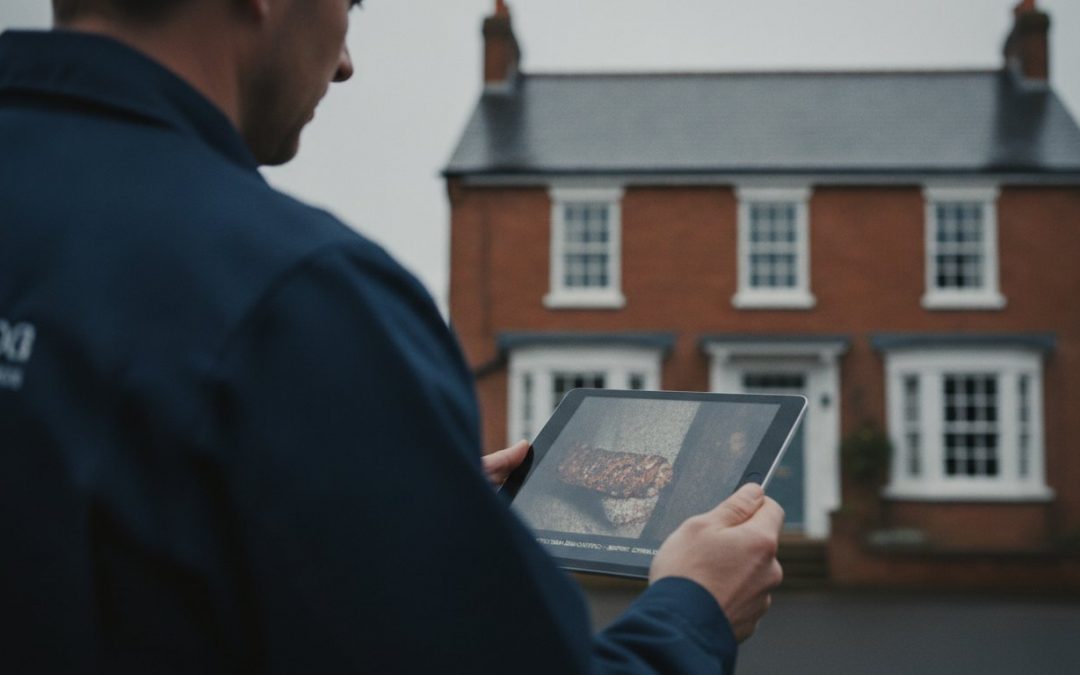
What if the only thing keeping your home’s external brickwork from collapsing is a series of corroded metal strips you can’t even see? It’s a sobering thought for any property owner, especially when horizontal masonry cracks or bulging walls begin to appear. You likely feel a mix of anxiety over structural stability and a deep-seated worry that investigating the problem will require intrusive, messy building work. A professional boroscope inspection for wall ties offers a sophisticated solution to this dilemma, allowing us to see inside your cavity walls with surgical precision.
We understand that protecting your property’s structural integrity shouldn’t mean turning your home into a construction site. By utilizing high-resolution optical equipment through small, 10mm drill holes, we provide a clear photographic report of your wall ties’ condition based on BRE Digest 401 standards. This guide explains how this non-disruptive process identifies hidden corrosion and outlines the expert remedial steps necessary to secure your home’s future. You’ll discover why a specialist survey is the most reliable way to gain peace of mind and ensure your masonry remains safe for years to come.
Key Takeaways
- Learn how a professional boroscope inspection for wall ties uses advanced optical technology to assess structural integrity without the need for invasive brick removal.
- Discover the precision methods used to locate hidden metal ties and identify critical signs of corrosion before they lead to significant masonry failure.
- Understand the five distinct stages of metal decay and how debris bridging within the cavity can accelerate moisture damage to your property.
- Identify the specific external warning signs, such as horizontal mortar cracking and masonry bowing, that signal the need for an immediate professional survey.
- Gain clarity on interpreting technical reports to choose the correct remedial tie systems and installation methods for your property’s specific masonry type.
Understanding Boroscope Inspection for Wall Ties
A professional boroscope inspection for wall ties is a specialist diagnostic procedure that allows a surveyor to see inside the cavity of a building without causing structural damage. This process utilizes a high-resolution optical camera mounted on a flexible or rigid probe, which is inserted through small, precision-drilled holes in the mortar joints. Historically, assessing the condition of wall ties required the physical removal of bricks. This invasive method was messy, expensive, and often left visible scars on the masonry. Modern optical surveys provide a non-disruptive alternative, offering a clear view of the hidden components that keep your home stable.
While some homeowners consider thermal imaging or external visual checks, these methods often rely on guesswork. Thermal imaging can identify cold spots or moisture, but it cannot show the physical degree of metal decay. A boroscope survey provides the visual confirmation required to make an informed decision. It allows us to examine the inner leaf of the wall, where corrosion often begins. This transition to optical technology represents a significant leap in property maintenance, moving from destructive investigation to precision diagnostics.
What are Cavity Wall Ties?
To understand the necessity of an inspection, one must first ask, What is a cavity wall tie? These essential metal components bridge the gap between the inner structural leaf and the outer masonry leaf of a property. They play a vital role in maintaining structural integrity by transferring lateral loads and preventing the external wall from bulging or bowing. The evolution of tie materials has changed significantly over the decades. Many older UK properties used galvanised steel ties, which are highly susceptible to rust when exposed to moisture. Modern standards now require stainless steel or high-quality alloys to ensure long-term durability and safety.
The Purpose of the Boroscope Survey
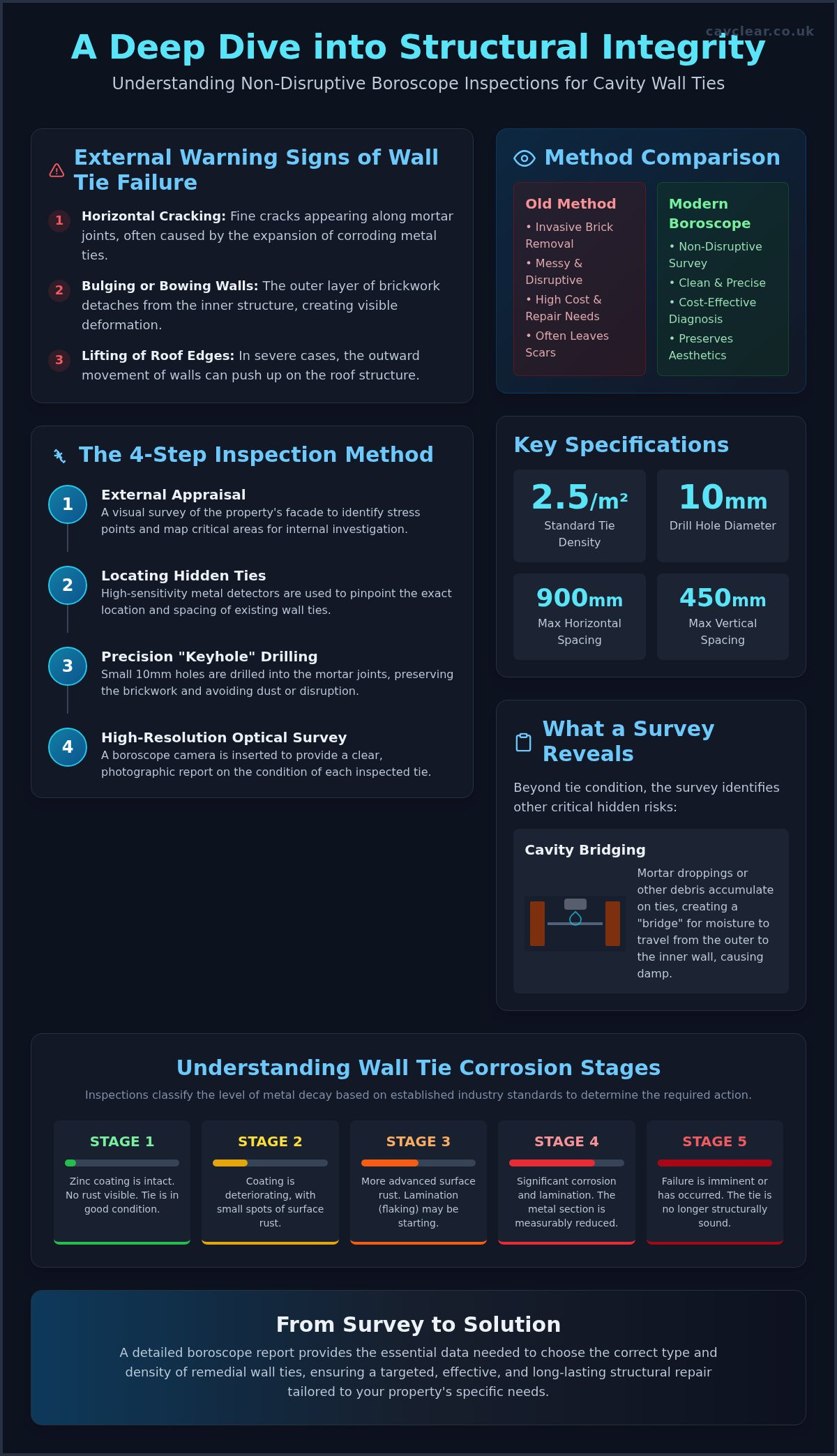
The primary goal of the survey is to provide a comprehensive health check of the cavity. We use these tools to identify the specific type and spacing of existing ties to ensure they meet the standard requirement of 2.5 ties per square meter. Surveyors carefully assess the level of corrosion, looking for “pitting” or “lamination” on the metal surfaces, which we grade using the BRE Digest 401 standards. Beyond the ties themselves, the camera identifies “bridging” within the cavity. This occurs when mortar droppings or debris accumulate on the ties, creating a path for moisture to travel to the inner leaf. Identifying these faults is a vital investment in your property’s future, preventing the need for more expensive structural repairs later.
The Technical Process of a Professional Cavity Survey
Every survey begins with a methodical external appraisal of the property’s facade. We identify specific stress points, such as horizontal mortar cracks or bulging masonry, which are common causes of wall tie failure. This phase allows us to map out the most critical areas for internal investigation, ensuring that the subsequent inspection is targeted and effective. By observing these external symptoms first, we can prioritize elevations that show the highest risk of structural movement.
Locating Hidden Wall Ties
We use high-sensitivity metal detection equipment to find the exact horizontal and vertical spacing of your existing ties. Standard requirements for cavity walls with leaves of at least 90mm thickness dictate a density of 2.5 ties per square meter. This usually equates to a maximum horizontal spacing of 900mm and a vertical spacing of 450mm. By scanning the facade, we ensure a representative sample of ties is inspected across the entire elevation. This step is vital because it reveals “un-tied” areas or regions where previous poor workmanship has left the structure vulnerable to lateral wind loads.
Once we’ve mapped the tie positions, we move to the drilling phase. Unlike traditional methods that require removing entire bricks to see inside the wall, we use a “keyhole” approach. We drill a small 10mm aperture directly into the mortar joints. This precision ensures zero damage to the bricks themselves and maintains the aesthetic integrity of your home. It is a clean, efficient process that avoids the dust and disruption associated with major building works.
The Optical Inspection Phase
During a professional boroscope inspection for wall ties, we insert a high-resolution camera into the 10mm aperture to gain a clear view of the cavity. We capture photographic evidence of the tie-ends embedded in both the inner and outer leaves. This allows us to evaluate the condition of the cavity, checking for moisture ingress, debris, or the presence of failed insulation. Real-time video analysis ensures that no detail is missed during the diagnostic process, providing a level of clarity that external guesswork simply cannot match.
After the inspection is complete, we professionally seal each drill hole. We use a specialized mortar mix specifically coloured to match your existing masonry, making the inspection points virtually invisible to the naked eye. This meticulous approach ensures your property remains secure, weather-tight, and visually unchanged. If you’ve noticed cracks in your external walls, booking a professional wall tie survey is the most reliable way to restore structural safety and protect your long-term asset health.
What a Boroscope Survey Reveals: Identifying Hidden Structural Risks
A professional boroscope inspection for wall ties transforms a hidden cavity into a visible diagnostic field. We don’t just look for rust; we categorize the health of your masonry using the industry-standard five-stage corrosion scale defined in BRE Digest 401. This scale ranges from Stage 1, where the metal remains bright and intact, to Stage 5, which represents total failure. At this final stage, the tie has often vanished into iron oxide, leaving the external leaf of your home entirely unsupported. Identifying these stages early is the difference between a targeted remedial fix and a major structural intervention.
Our surveyors also look for “bridging,” a common technical fault where mortar droppings or construction debris have accumulated across the ties. These bridges create a direct path for moisture to travel from the outer leaf to the inner leaf, bypassing the cavity’s natural drainage. This often results in localized damp patches on internal walls that are frequently misdiagnosed as rising damp. By seeing the bridge directly through the optical probe, we provide a definitive cause for your property’s moisture issues.
Signs of Corrosion and Structural Decay
When metal ties corrode, they don’t just weaken. They expand. A rusted galvanised tie can swell to several times its original thickness. This physical expansion creates a powerful “jacking” effect within the mortar bed. It literally forces the masonry courses apart, creating enough pressure to lift the weight of the brickwork above it. This pressure manifests externally as horizontal cracks at regular intervals, typically appearing every six or seven courses where the ties are located. During the survey, we also identify “pitting.” These are localized craters in the metal that signal a significant loss of tensile strength. Pitting is particularly dangerous because the tie may appear structurally sound at a glance while being internally compromised.
Insulation and Dampness Issues
The boroscope allows us to observe the condition of retrofitted insulation, which is often a primary catalyst for accelerated tie corrosion. If the insulation has become saturated due to driving rain or poor installation, it acts as a permanent damp sponge held against the metal ties. This creates a highly corrosive micro-climate that prevents the metal from ever drying out. We also identify gaps in the insulation. These voids lead to “cold bridging,” where the temperature difference causes internal condensation and mould growth.
Finally, we verify the presence and condition of vertical damp proof courses (DPCs) around window and door reveals. If these barriers are damaged or missing, moisture will inevitably penetrate the building’s envelope. This level of detail ensures that our recommendations aren’t just about fixing a symptom; they are about restoring the long-term asset health of your property. Identifying these risks early allows for precise remedial action, such as cavity wall insulation extraction, to prevent further structural decay.
Key Indicators That Your Property Requires an Urgent Wall Tie Inspection
Identifying structural faults early is the most effective way to prevent the high costs associated with masonry collapse. Property owners often feel a sense of dread when new fissures appear in their brickwork, yet understanding the specific patterns of these faults can provide a clear path toward a resolution. Horizontal cracking at regular intervals, typically every six to seven courses of bricks, is a primary indicator of tie failure. This pattern occurs because the corroding metal expands, forcing the mortar joints apart. If you notice these cracks appearing consistently across an elevation, your property’s structural integrity is likely compromised.
Outward bulging or “bowing” of the external brickwork represents a more advanced stage of failure. This happens when the metal ties have snapped or lost their grip, leaving the outer leaf of masonry completely untethered from the main structure. Without the lateral support of the inner leaf, the wall is susceptible to wind loads and may move independently. In severe cases, this movement leads to the lifting of roof edges or visible separation at the gables. You might also notice internal dampness occurring in horizontal lines that mirror the external tie positions, suggesting that moisture is tracking across corroded or debris-laden metalwork.
External Masonry Warning Signs
It is vital to distinguish between subsidence cracks and those caused by wall tie expansion. Subsidence typically produces diagonal “stepped” cracks that are wider at the top, whereas tie failure results in horizontal fissures that follow the mortar bed. Properties built before 1981 are at a significantly higher risk of these issues, as they often utilize galvanised steel ties that lack the corrosion resistance of modern stainless steel alternatives. If your home features render or pebbledash, these finishes can mask early-stage structural decay for years. By the time cracks become visible through the render, the underlying metalwork is often in a state of total failure.
Mortar and Joint Deterioration
We frequently identify “blown” mortar joints during our assessments. This occurs when the rusting tie has expanded so much that it shatters the surrounding mortar, leading to crumbling joints and increased moisture ingress. This deterioration creates a self-perpetuating cycle; more moisture enters the cavity, which further accelerates the corrosion of the remaining ties. A professional boroscope inspection for wall ties validates these visual suspicions by providing a high-definition view of the ties’ physical state inside the mortar bed. This diagnostic clarity ensures that you don’t spend money on unnecessary repairs while ignoring the true underlying cause of the damage. If you have spotted any of these warning signs, booking a professional wall tie survey is the essential first step in securing your home’s structural future.
From Survey to Solution: Specialist Remedial Wall Tie Replacement
After completing a professional boroscope inspection for wall ties, you receive a comprehensive technical report that serves as the blueprint for your property’s restoration. This document translates high-resolution optical data into a clear remedial strategy, ensuring every structural weakness is addressed with precision. We don’t just identify faults; we provide a logical progression from diagnosis to a permanent fix. The findings from the survey dictate the specific type of remedial system required to restore the lateral stability of your masonry walls.
We don’t simply install new ties and leave the old ones behind. Corroded ties that have already expanded must be isolated or removed to stop the “jacking” effect from causing further masonry damage. If these failed components remain active, they will continue to swell and crack your mortar beds. By using high-grade stainless steel remedial systems, we provide a permanent fix that is immune to the oxidation issues that plagued original galvanised components. This is a vital investment in the property’s future, ensuring long-term asset health and structural safety.
Designing a Remedial Action Plan
A successful remedial plan relies on data-driven density. We typically install replacement ties at a density of 2.5 per square metre to meet modern building regulations, ensuring the load is distributed evenly across the facade. The choice between resin, mechanical, or timber-frame remedial ties depends entirely on the substrate of your inner leaf and the width of the cavity. Our specialists select the anchoring method that provides the highest pull-out strength for your specific building material. You can learn more about the wall tie replacement process to understand how these systems anchor into different masonry types.
The Importance of Specialist Expertise
General builders often lack the specialized optical equipment and diagnostic training required for accurate cavity wall surveys. Relying on non-specialists can lead to missed corrosion or incorrect tie spacing, which ultimately compromises the safety of your home. As a nationwide provider, we offer the professional rigor and accredited methodology needed for total structural peace of mind across the entire United Kingdom. We take pride in rectifying poor workmanship and providing transparent, expert advice. Your next step in protecting your property is booking your comprehensive wall tie survey to ensure a safe and permanent resolution.
Securing Your Property’s Structural Future
A professional boroscope inspection for wall ties is the only definitive method to assess the hidden health of your masonry without causing unnecessary damage. By identifying the specific stage of metal decay and the presence of cavity debris, you move from uncertainty to a clear, data-driven remedial plan. This proactive approach prevents the high costs and safety risks associated with sudden masonry failure. It’s a vital investment in your home’s longevity that ensures your external walls remain stable and secure against the elements.
Our accredited structural technicians provide comprehensive photographic reporting that details every aspect of your cavity’s condition. With nationwide UK service coverage, we ensure that homeowners across the country have access to specialist diagnostics and permanent stainless steel solutions. We focus on restoring structural integrity and property value through methodical, non-disruptive techniques. Don’t wait for minor cracks to become major structural issues. Book Your Nationwide Specialist Wall Tie Survey Today to protect your home’s long-term asset health and restore your peace of mind. We’re here to provide the expert clarity you need to keep your property safe for years to come.
Frequently Asked Questions
How long does a boroscope inspection for wall ties take?
A standard boroscope inspection for wall ties typically takes between one and three hours to complete for an average semi-detached property. The exact duration depends on the number of elevations we need to survey and the ease of access to the external masonry. Our technicians work methodically to scan the walls and inspect a representative sample of ties, ensuring the diagnostic process is both thorough and efficient.
Is a boroscope survey disruptive to my home or garden?
No, this inspection process is designed to be entirely non-disruptive and clean. All work takes place on the exterior of your property, so we don’t need to enter your living spaces. We drill small, 10mm apertures into the mortar joints, which avoids any damage to your bricks. Once the survey is finished, we seal these holes with a matching mortar colour to ensure your home’s appearance remains unchanged.
What happens if the survey finds that my wall ties have failed?
If the survey identifies failed or heavily corroded ties, we provide a clear remedial action plan in your technical report. This usually involves the installation of new stainless steel ties to restore lateral stability to the masonry. We also recommend isolating or removing the original failed ties to prevent their continued expansion from causing further horizontal cracks in your mortar beds.
How much does a professional wall tie survey cost in the UK?
The cost of a professional survey depends on the size of the building and the complexity of the masonry elevations. While prices vary based on the property type, an independent, paid survey is an essential investment that provides an objective assessment for homeowners and lenders. This fee ensures you receive a comprehensive photographic report that is not biased by a sales-lead model, helping you avoid unnecessary and expensive building work.
Can a boroscope see through cavity wall insulation?
Yes, a boroscope can navigate through various types of insulation to assess the condition of the metal ties. It is particularly effective at identifying saturated insulation, which acts as a catalyst for rapid metal corrosion. By seeing through the material, we can spot voids, moisture pockets, or debris bridging that might be compromising your property’s structural integrity or causing internal damp issues.
Do I need a wall tie survey for a mortgage application?
Mortgage lenders often require a specialist survey if a general valuation report identifies signs of masonry movement, such as horizontal cracking or bulging. Lenders view wall tie failure as a significant structural risk and want professional confirmation that the property is stable. Providing a clear, photographic survey report from an accredited specialist is often the only way to satisfy these concerns and progress with a property purchase.
What is the difference between a boroscope and a borescope?
There is no functional difference between the two; they refer to the same optical diagnostic equipment. “Borescope” is the traditional spelling used in engineering and industrial contexts, while “boroscope” has become a common variation within the UK property maintenance sector. Both tools use high-resolution cameras and light sources to provide visual evidence of hidden structural components within narrow cavities.
Is there a specific age of property that is more at risk of tie failure?
Properties built between 1930 and 1981 are at the highest risk because they typically used galvanised steel ties with a relatively thin protective coating. These ties were designed with a limited lifespan and are prone to rust when exposed to moisture over several decades. If your home was constructed during this period, a professional inspection is a vital step in ensuring your masonry remains safe and structurally sound.
Recent Comments