
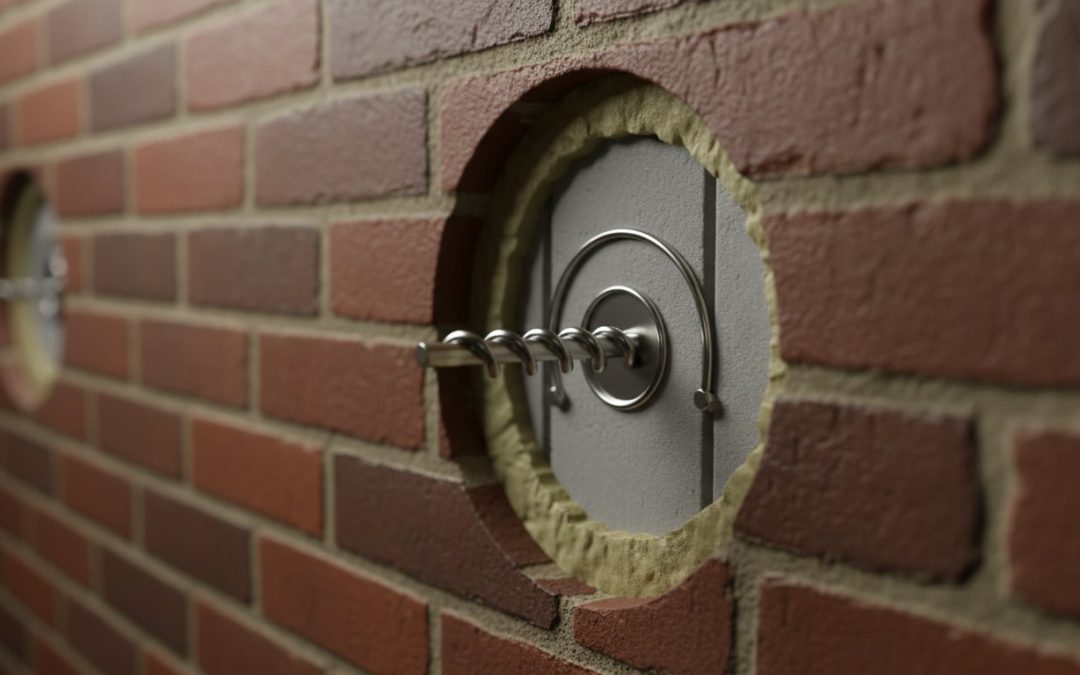
Many homeowners are surprised to learn that the mild steel ties used in properties built before the 1980s can corrode and fail in as little as 15 to 20 years. This structural vulnerability often leads to the urgent question: how long do replacement wall ties last once the original ones have been compromised? When you identify horizontal cracking or bulging brickwork, the fear of structural collapse is a heavy burden to carry. You need to know that your investment in repairs will provide a permanent fix so you don’t have to revisit the issue in a few years.
It’s natural to feel concerned about the integrity of your home and the potential for recurring costs. We understand that you want to restore the safety and comfort of your property with absolute certainty. This guide explores the lifespan of modern remedial wall ties and how specific material upgrades, like austenitic stainless steel, can ensure your home remains structurally sound for over 50 years. We will examine the technical standards governing these repairs, such as BSI PD 6697:2019, and explain why choosing the correct methodology is vital for long term asset health.
Key Takeaways
- Learn why modern stainless steel remedial ties offer a permanent solution with a lifespan exceeding 50 years, far outlasting the original building components.
- Understand exactly how long do replacement wall ties last by evaluating material grades like Grade 316 stainless steel for coastal environments.
- Distinguish between mechanical and resin remedial systems to ensure the chosen technology matches your property’s specific masonry and mortar strength.
- Identify the environmental catalysts and cavity conditions that accelerate metal degradation and how to mitigate these risks effectively.
- Discover how professional borescope inspections provide a clear diagnostic of internal wall health without causing unnecessary disruption to your home.
How Long Do Replacement Wall Ties Last? Lifespan vs. Original Ties
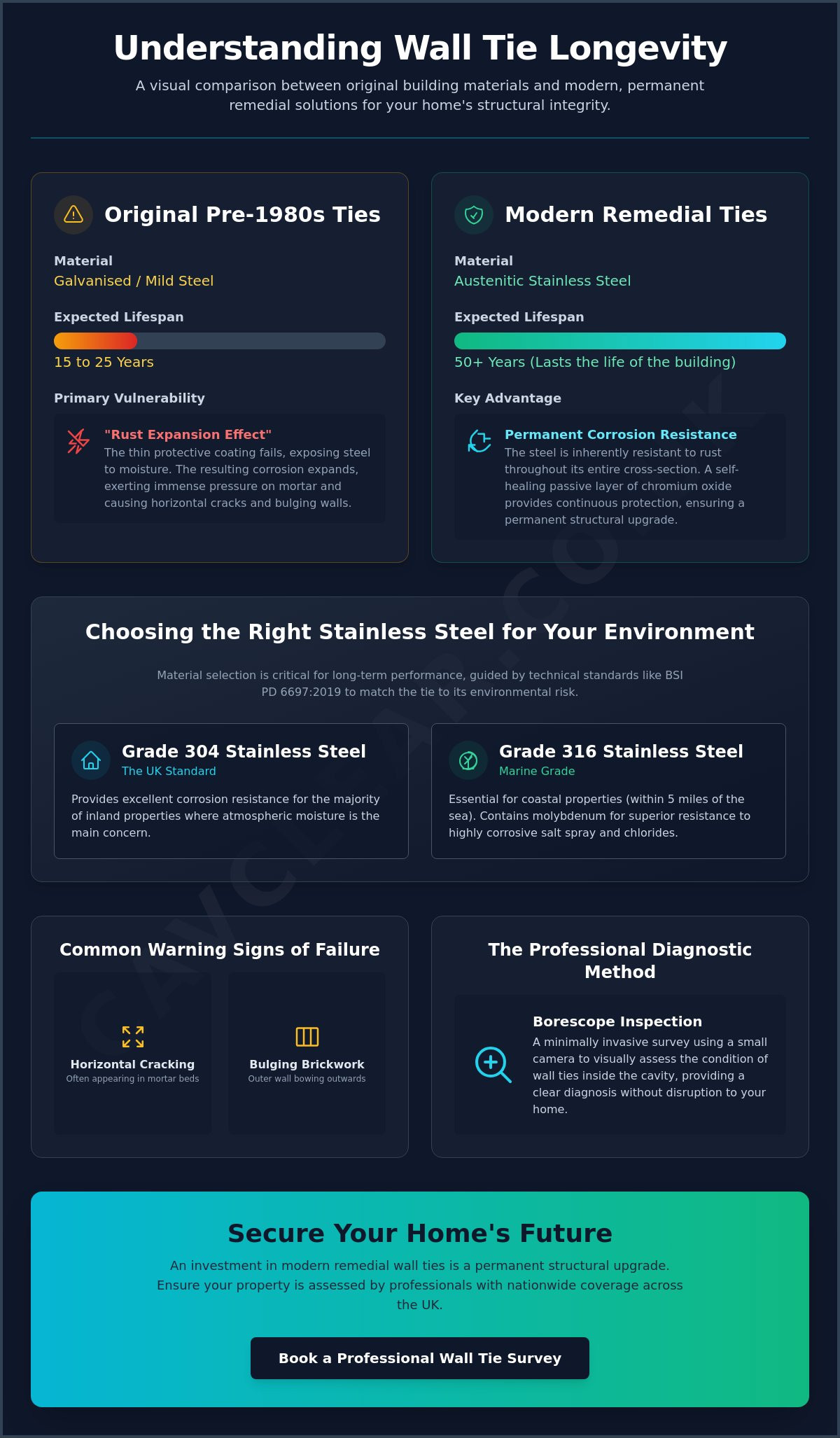
When property owners discover structural faults like horizontal cracking or bulging walls, the most pressing question is usually: how long do replacement wall ties last? Understanding the difference between original building materials and modern remedial solutions is essential for long-term peace of mind. While original galvanised or mild steel cavity wall ties typically enter a failure cycle within 15 to 25 years, modern remedial ties are engineered for extreme longevity. These are not just like-for-like replacements; they are a significant structural upgrade designed to last the remaining life of the building.
The Failure of Original Galvanised Ties
Pre-1981 UK building standards permitted the use of wall ties with relatively thin protective coatings. Over time, moisture within the cavity causes these coatings to fail, exposing the mild steel core to oxygen. This triggers a chemical reaction known as the “rust expansion” effect. As the metal corrodes, the resulting iron oxide occupies several times the volume of the original steel. This expansion exerts immense upward pressure on the mortar beds, which leads to the characteristic horizontal cracking seen in failing properties. It’s a progressive fault. Even after new ties are installed, the original failing hardware continues to degrade and expand, which is why professional isolation of the old ties is often necessary to prevent further masonry damage.
Why Modern Remedial Ties are Different
The industry has moved away from vulnerable coatings in favour of solid austenitic stainless steel. This material is corrosion-resistant throughout its entire cross-section, providing a permanent solution rather than a temporary patch. Modern remedial systems use precision engineering to restore structural integrity with minimal disruption to the property. These ties bypass the failing original hardware by creating a new, secure connection between the inner and outer leaves of the cavity wall. Whether using mechanical expansion or resin-bonded technology, these fixings are designed to handle the specific loads and stresses of your home. This shift in material science means that when you ask how long do replacement wall ties last, the answer is typically 50 to 100 years, effectively outlasting the original building components.
When you see a “lifetime guarantee” on structural repairs, it’s vital to check the material specification. A guarantee is only as strong as the metal it’s written on. By choosing high-grade stainless steel, you’re investing in a permanent structural upgrade that protects your home’s value and safety for decades to come.
Material Grades and Longevity: Why Stainless Steel is the Gold Standard
Stainless steel is the industry standard for remedial work because it addresses the core vulnerability of original ties: oxidation. To understand how long do replacement wall ties last, you must look at the specific grade of steel used. Austenitic stainless steels contain high levels of chromium and nickel. These elements form a self-healing passive layer of chromium oxide on the surface of the metal. Unlike the zinc coating on galvanised ties, which eventually wears away, this molecular protection remains active even if the surface is scratched or abraded during the installation process.
Grade 304 vs. Grade 316: Choosing for Your Environment
Grade 304 is the standard for most inland properties across the United Kingdom. It provides excellent corrosion resistance in typical environments where moisture is the primary concern. However, properties located within five miles of the coast face a different challenge: atmospheric chlorides. Salt spray is highly aggressive and can cause pitting corrosion in standard stainless steel. For these locations, Grade 316, often called Marine Grade, is essential. It includes molybdenum, which offers superior resistance to chloride-induced decay. Following UK Building Regulations (Approved Document A) ensures that the material choice matches the environmental risk, securing the long-term structural health of the asset.
The Myth of ‘Treated’ Mild Steel
Some older repair methods relied on bitumen-coated or heavily galvanised mild steel. These are no longer considered permanent solutions. Coatings are vulnerable to microscopic cracks during transportation or installation. Once the protective layer is breached, moisture enters and triggers rapid core failure. Solid stainless steel eliminates this risk entirely because its corrosion resistance is inherent to the metal itself, not a superficial layer. This is why a professional wall tie survey is the first step in identifying if your current ties meet these modern standards and provide the safety your home requires.
The chemical composition of your replacement ties is the single most important factor in determining their durability. High-quality materials are a non-negotiable requirement for long-term asset health. By opting for solid stainless steel, you ensure that the structural integrity of your home is not dependent on a fragile outer coating that will eventually fail. This methodical approach to material selection transforms a simple repair into a vital investment in the property’s future stability. When you ask how long do replacement wall ties last, the answer depends entirely on using the correct grade for your specific location.
Mechanical vs. Resin Remedial Ties: Comparing Durability and Performance
While the grade of stainless steel determines the metal’s resistance to rust, the anchoring method determines the structural longevity of the repair. When property owners ask how long do replacement wall ties last, they must consider how the tie interacts with the specific masonry of their home. The two primary technologies used across the United Kingdom are mechanical expansion ties and resin-bonded systems. Each has distinct performance profiles depending on the substrate, whether it’s hard engineering brick or softer, historic masonry common in Victorian terraces.
Mechanical Expansion Ties
Mechanical ties function through a torque-driven expansion mechanism. An internal sleeve expands within the inner and outer leaves of the wall, creating a high-friction grip. These are an excellent choice for properties with sound, hard-fired bricks and strong mortar. Because they don’t require chemical curing times, they offer a fast and effective solution for many standard builds. However, their long-term performance can be compromised if they’re installed in soft or friable brickwork. In such cases, the constant pressure of the expansion sleeve can eventually cause the surrounding masonry to crumble; this leads to a loss of structural tension and potentially premature failure of the fix.
Resin-Bonded and Helical Ties
Resin-bonded ties utilize chemical anchors to create a stress-expert connection. This method is often the preferred choice for older properties or those built with perforated bricks. Instead of relying on physical pressure, the tie is bonded to the masonry using a high-performance polyester or epoxy resin. This is particularly effective for timber-framed buildings where flexibility and a secure hold are paramount. To ensure these ties provide a 50-year service life, the resin must be specifically formulated to be UV-stable and moisture-resistant. This prevents the chemical bond from degrading due to the temperature fluctuations and damp conditions common in the British climate.
Selecting the right technology is a precise task that requires a professional wall tie survey. A specialist will assess the density of your bricks and the condition of the mortar to recommend the most durable fixing. This diagnostic approach ensures that the installation is non-disruptive and maintains the original integrity of your masonry. By matching the tie technology to your property’s specific needs, you’re not just performing a repair; you’re making a permanent investment in your home’s future. How long do replacement wall ties last? When the anchoring method is perfectly matched to the substrate, the answer is usually as long as the building itself.
Factors That Compromise Wall Tie Longevity
Even the highest grade of stainless steel can face challenges if the surrounding environment is fundamentally compromised. While we’ve established that the material grade is a primary driver in how long do replacement wall ties last, several external factors can accelerate degradation or lead to localized structural failure. Understanding these risks is the first step toward ensuring your home remains a safe, long-term asset. Structural integrity depends not just on the product, but on the conditions within the cavity itself.
The Impact of Retrospective Cavity Wall Insulation
A significant threat to structural longevity is the presence of retrospective cavity wall insulation. We strongly advise against this practice because it often acts like a giant sponge within the wall cavity. When wind-driven rain penetrates the outer leaf, the insulation absorbs and retains this moisture instead of allowing it to drain away. This creates a permanent ‘wet-zone’ around the wall ties. While stainless steel is highly resistant, constant saturation can lead to mineral deposits that slowly compromise the tie’s performance. More critically, saturated insulation accelerates the corrosion of any remaining original mild steel ties, leading to the rapid onset of rust expansion. If your cavity is filled with damp material, Cavity Wall Insulation Removal is often a necessary precursor to effective structural repair.
Installation Errors and Workmanship
Poor methodology is another common reason why repairs fail prematurely. Correct spacing is vital; standard UK regulations require a minimum of 2.5 ties per square metre. If a contractor installs too few ties or spaces them incorrectly around openings like doors and windows, the remaining ties face localized structural overloading. This stress can eventually lead to masonry fatigue or bond failure. Another critical error is the failure to isolate or remove the original failing ties. As discussed, original ties will continue to rust and expand even after new ones are installed. A general builder might overlook this, but a specialist will ensure the old hardware is neutralized to prevent future cracking.
Structural movement can also place undue stress on new fixings. If a property is suffering from significant subsidence or thermal expansion that hasn’t been addressed, even the best ties will be pushed beyond their design limits. This is why we provide a nationwide service focused on diagnostic accuracy. If you’re concerned about the state of your masonry or the impact of damp insulation, you should book a specialist wall tie survey to ensure your repairs are built to last for decades.
Securing Your Home’s Future with a Professional Wall Tie Survey
Visible cracks in your mortar or bulging brickwork are often the only external warnings of a much deeper structural issue. A visual inspection alone is only the tip of the iceberg because it cannot reveal the level of section loss or corrosion occurring inside the cavity. To accurately determine how long do replacement wall ties last in your specific environment, you need a diagnostic approach that examines the hidden components of your walls. A professional survey provides the technical roadmap required for a permanent fix, ensuring that your property remains a safe and valuable asset for decades.
What to Expect from a Specialist Survey
A specialist survey utilizes non-invasive technology to assess the health of your masonry without causing unnecessary disruption. We use high-precision metal detectors to locate every tie within the wall, followed by borescope analysis. This involves inserting a small camera into the cavity through a tiny hole in the mortar joint, which allows us to physically inspect the condition of the metal and the presence of any debris or damp insulation. We also assess the “pull-out” strength of the masonry. This test verifies that the brickwork is strong enough to support new fixings, which is a critical step before following a Wall Tie Replacement Guide. By gathering this data, we remove the guesswork from structural repairs and ensure the chosen remedial system is perfectly specified for your home.
The CavClear Commitment to Structural Integrity
Our methodology focuses on the long-term health of your property rather than providing a temporary patch. We understand that structural damage is stressful, so we position ourselves as expert solution-providers who prioritize reliability and transparency. Whether you own a single domestic dwelling or manage a large commercial portfolio, our nationwide coverage ensures you have access to high-level specialist standards across the entire United Kingdom. We don’t just identify faults; we provide a clear, methodical path toward restoration that respects the original integrity of your building. This professional oversight is the only way to guarantee that your remedial work provides the permanent peace of mind you deserve. If you’ve noticed signs of movement or simply want to verify the condition of your property, it’s time to take a proactive step. You can Book Your Wall Tie Survey today to secure your home’s future and confirm exactly how long do replacement wall ties last when installed with professional rigor.
Restoring Your Home’s Structural Integrity
Investing in high-grade stainless steel remedial ties is a decision that protects your property for the long term. While original galvanised ties were designed for a limited lifespan, modern materials ensure that when you ask how long do replacement wall ties last, the answer is measured in half-centuries rather than years. By selecting the correct grade of steel and an anchoring method tailored to your home’s specific masonry, you effectively eliminate the threat of rust expansion and structural instability. This choice restores the safety of your home and ensures it remains a sound investment.
Our team of accredited technicians provides nationwide UK coverage to help you identify and resolve these issues before they escalate into more significant damage. We deliver borescope-verified reports that offer a transparent view of your cavity’s health, so you don’t have to guess about the condition of your internal walls. This methodical approach ensures that every repair is a vital investment in your property’s future safety and value. Book a Professional Wall Tie Survey with CavClear today to secure your property with a permanent structural solution. You can rest easy knowing your home is in expert hands.
Frequently Asked Questions
Can I tell if my wall ties have been replaced previously?
You can often identify previous remedial work by looking for small, circular patches in the mortar joints where ties were inserted. These marks are typically spaced at regular intervals across the external elevations of your home. A professional metal detection survey provides a more definitive answer by mapping the exact location and material of every tie within the cavity to confirm if a modern upgrade has occurred.
Do I need to move out of the house during wall tie replacement?
You don’t need to vacate your property while the work is being carried out. The installation process is entirely external and designed to be non-disruptive to your daily routine. Technicians use ladders or scaffolding to access the masonry leaves from the outside; this ensures the interior of your home remains clean and unaffected throughout the project.
What happens to the old, rusty wall ties after the new ones are installed?
Failing original ties must be neutralized to prevent them from causing further damage to your masonry. Technicians typically use a process called isolation, which involves cropping the external end of the corroded tie or encasing it in a special sleeve. This prevents the “rust expansion” effect from continuing to push against the mortar joints and causing new horizontal cracks after the repair is complete.
Are replacement wall ties covered by a guarantee?
When considering how long do replacement wall ties last, property owners should verify the specific long-term assurances provided by their specialist contractor. While modern stainless steel materials are engineered for extreme longevity, the security of the fix depends on the installation methodology. You should always request documentation that outlines the duration and scope of the protection offered for the structural remedial work.
How much does a professional wall tie survey cost in 2026?
The cost of a specialist survey depends on the size of the property and the complexity of the access required for inspection. While industry standards for 2026 provide a general range for these services, you should request a property-specific quote to ensure accuracy. This ensures the price covers the necessary borescope analysis and metal detection required for a comprehensive structural report.
Is wall tie failure covered by standard buildings insurance?
Standard buildings insurance policies typically don’t cover wall tie failure. Insurers generally classify the corrosion of metal ties as “gradual deterioration” or a maintenance issue rather than a sudden, accidental event. Because it’s excluded from most policies, addressing the problem early is essential to prevent more significant and costly structural damage that you’ll have to fund independently.
Can wall tie failure cause the collapse of a chimney stack?
Wall tie failure can lead to the collapse of a chimney stack if the issue is left untreated. Chimneys are particularly vulnerable because they are exposed to the elements on all sides and face high wind loads. When the ties within the stack corrode and expand, the masonry leaves can separate; this creates a significant safety risk to both the roof structure and anyone below.
To further improve the safety and appearance of your roofline, it is often wise to remove any redundant equipment that could become unstable. For expert help with this, Dish Goodbye provides professional removal services for old satellite dishes and aerials across the UK.
How long does the actual installation process take for a semi-detached house?
A standard semi-detached property usually takes between one and two days to complete. This timeframe allows for the precise installation of the new remedial ties and the careful isolation of the failing original hardware. The exact duration depends on the ease of access to the elevations and the specific type of masonry being treated.
Recent Comments