
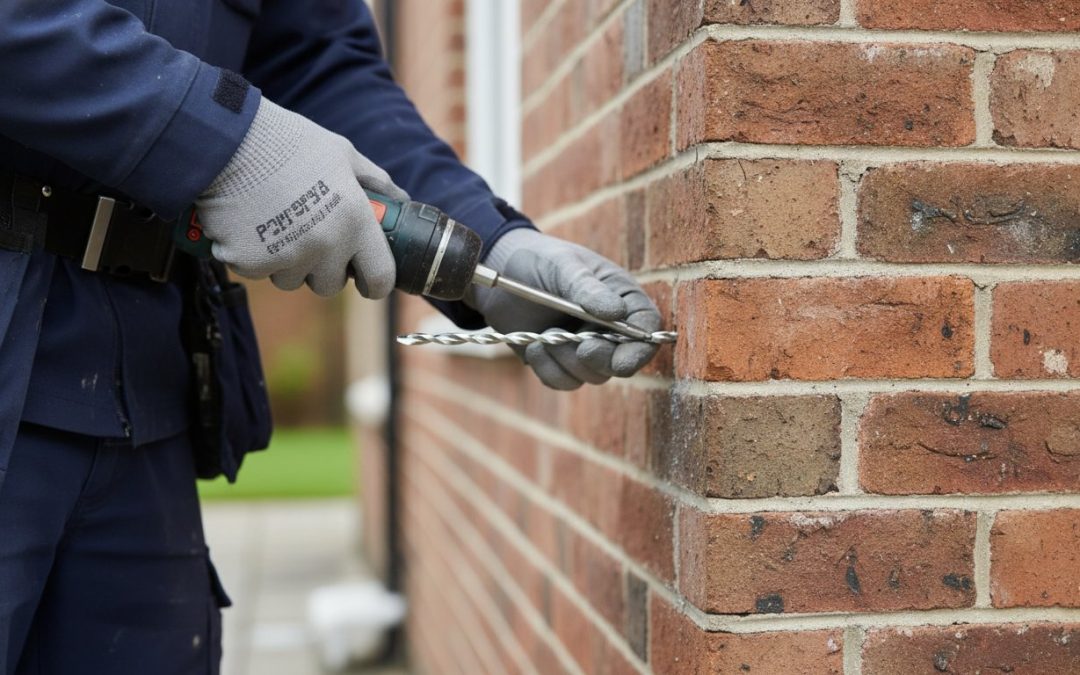
Would you trust your property’s safety to a series of corroding metal strips that you can’t even see? It’s a sobering thought for any homeowner with a property built between the 1920s and 1980s, as traditional mild steel ties naturally reach the end of their functional lifespan. We understand that the prospect of structural repair often brings significant anxiety about invasive construction work and messy outcomes. You likely want to understand exactly how are remedial wall ties fitted before committing to a project that affects your home’s stability and future value.
This guide details the precise technical process our nationwide specialists use to restore your property’s structural integrity without compromising its aesthetic character. We strictly adhere to established industry standards, such as BRE Digest 401, to ensure every installation is both permanent and virtually invisible to the naked eye. By walking through our methodical approach, from initial diagnostic drilling to the final color-matched mortar pointing, you’ll discover how we provide expert certification and long-term security for your investment. We prioritize a clean, non-disruptive methodology that focuses on the long-term health of your masonry and the restoration of your comfort.
Key Takeaways
- Understand how corroded mild steel ties compromise structural safety and why stainless steel replacements are the industry standard for long-term property health.
- Learn why a professional survey using specialized detection equipment is the essential first step to accurately mapping your property’s structural needs.
- Discover the technical precision required during the installation phase, including how are remedial wall ties fitted through specific drilling and cleaning protocols to ensure a permanent bond.
- See why isolating old, failing ties is a critical step to prevent future masonry cracking and how professional finishing ensures a non-disruptive, invisible repair.
- Explore the importance of choosing a nationwide specialist who prioritizes methodical, non-invasive techniques to restore your home’s structural integrity.
Understanding the Necessity: Why Remedial Wall Ties are Fitted
A remedial wall tie is a high-grade stainless steel anchor designed for retrospective installation. These components are vital for the structural health of cavity walls, which rely on two separate leaves of masonry to function correctly. The cavity itself acts as a moisture barrier, while the ties provide the lateral support needed to keep the structure stable. When original ties fail due to age or environmental factors, professional remedial action is required to prevent the leaves from moving independently. Understanding the technical steps of how are remedial wall ties fitted is the first step toward restoring your home’s safety.
Most properties built in the UK between the 1920s and 1980s were constructed using galvanized mild steel ties. These ties eventually succumb to oxidation, especially in coastal or high-exposure areas. As they rust, the metal expands to as much as seven times its original thickness. This expansion forces the mortar joints apart, creating noticeable horizontal cracks that compromise the building’s stability. Homeowners often inquire about how are remedial wall ties fitted once they notice these warning signs, as the process involves installing new, corrosion-resistant stainless steel anchors to take over the structural load.
The Dangers of Wall Tie Failure
Wall tie failure isn’t just an aesthetic issue; it’s a significant safety concern. When ties lose their grip or snap, the outer leaf of masonry can begin to “bow” or bulge outward. This lack of connection means the wall is no longer supported by the internal structure of the building. During high winds or extreme weather, the risk of a sudden wall collapse increases dramatically. Additionally, failing ties can severely impact your property’s market value and insurance status. Most surveyors will identify these faults during a pre-purchase inspection, often requiring proof of professional repair before a sale can proceed.
The Impact of Retrospective Cavity Insulation
We maintain a firm stance against the use of retrospective cavity wall insulation. While intended for thermal efficiency, these materials often trap moisture within the wall structure. This moisture creates a damp environment that accelerates the corrosion of original mild steel ties. Because the insulation fills the entire cavity, it hides the progression of this decay from view. Property owners may be unaware that their structural anchors are failing until the damage is extensive. Our nationwide specialists often find that extracting damp insulation is a necessary precursor to ensuring the new wall ties perform effectively over the long term.
The Diagnostic Phase: Specialist Surveys and Mapping
A professional survey is the non-negotiable foundation of any structural repair. Skipping this diagnostic stage often leads to inadequate spacing or improper tie selection, which can leave your property vulnerable. Before we determine exactly how are remedial wall ties fitted, we must understand the current state of the cavity. This involves more than just a visual inspection of the external brickwork; it requires a deep dive into the hidden internal structure to assess the level of decay and the strength of the masonry leaves.
Our technicians utilize high-sensitivity metal detectors to locate every original, failing wall tie. This mapping process reveals the density and pattern of the existing installation, which is often irregular in older properties across the UK. Once the old ties are found, we use borescope inspections to see inside the cavity. By inserting a slim, endoscopic camera through a tiny pilot hole, we can visually confirm the severity of corrosion and check for debris or dampness that might interfere with the new anchors. This visual confirmation is essential because surface-level cracking doesn’t always tell the full story of what’s happening inside the wall.
Technical Equipment for Precision Surveys
Precision relies on the right tools. High-sensitivity metal locators allow us to identify original tie spacing without damaging the masonry. We then use endoscopic cameras to provide a non-destructive look at the internal wall leaves. This visual evidence is critical for documenting the level of decay and identifying any obstructions in the cavity. Finally, we create a detailed “tie-map.” This document serves as a blueprint for the installation team, ensuring the new ties are placed in a staggered pattern that provides optimal load distribution across the entire wall surface. This methodical approach ensures that the repair is both effective and structurally sound.
Pull-Out Testing and Load Requirements
Every building is different, so we conduct site-specific pull-out tests to verify the strength of your masonry. This involves installing a sample tie and using a calibrated gauge to measure the force required to dislodge it. These tests ensure the substrate is strong enough to support the remedial fixings and provide the necessary lateral stability for the building. We also measure the exact cavity width at various points to select the correct tie length. This ensures a minimum embedment into both leaves as required by building regulations for structural safety. If you’re concerned about the stability of your home, booking a professional wall tie survey is the most reliable way to gain clarity on your property’s health. This step-by-step diagnostic process ensures we apply the correct technical solution for your specific structural needs.
Step-by-Step: How Remedial Wall Ties are Professionally Fitted
Once the diagnostic mapping is complete, the physical installation begins. Property owners often worry about the disruption this causes, but modern methods are surgical and remarkably clean. Our technicians follow the tie-map precisely to understand exactly how are remedial wall ties fitted to provide maximum structural support. We use specialized equipment to ensure that each anchor is placed exactly where it’s needed to restore the connection between the inner and outer leaves of your home. This precision prevents unnecessary damage to your masonry and ensures the repair remains virtually invisible.
The process is highly methodical and avoids the heavy construction work often associated with structural repairs. By using small-diameter drill bits, we minimize the impact on the mortar joints. Each hole is carefully positioned to ensure the new stainless steel ties are staggered correctly, avoiding the weak points of the original installation. This attention to detail is what defines a professional remedial project, focusing on long-term asset health rather than a quick, temporary fix. Our nationwide teams carry out this work with a focus on reliability and structural safety.
Mechanical vs. Resin Remedial Ties
The choice between mechanical and resin ties depends entirely on the building materials identified during the survey. Mechanical ties use torque-controlled expansion to grip solid brick or blockwork. These are highly effective for dense materials where a strong physical anchor can be established. Resin fixings are better suited for perforated bricks or older, more friable materials. Because resin doesn’t apply expansion stress to the masonry, it’s a safer choice for delicate structures that require a secure bond without the risk of further cracking. We select the specific anchor type based on the pull-out tests conducted during the diagnostic phase.
The Surgical Installation Process
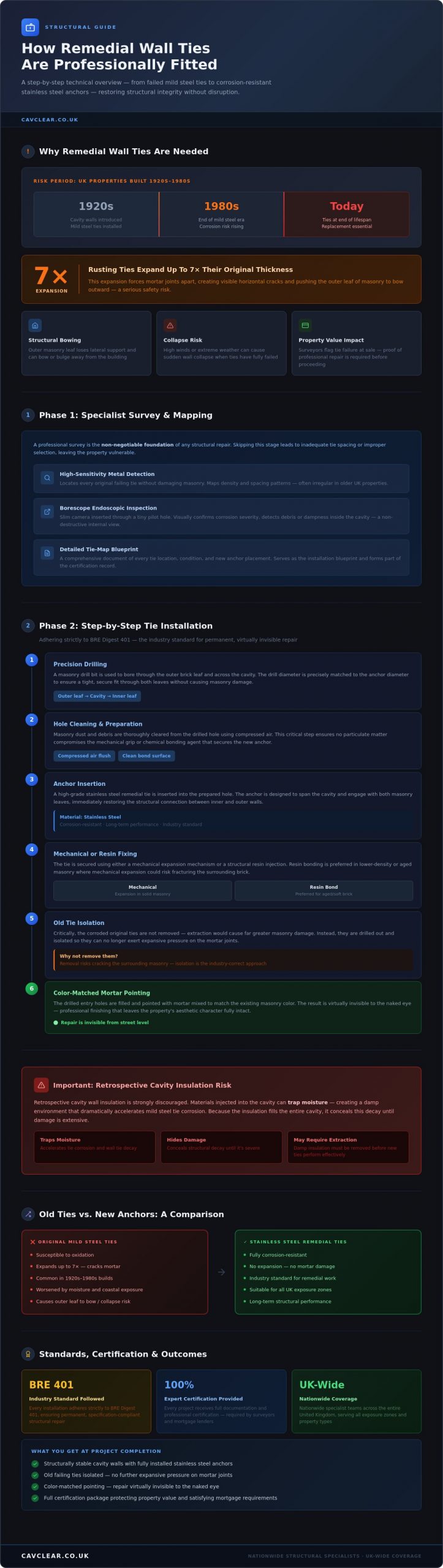
Our surgical installation follows a strict four-step protocol to ensure every tie performs as intended. We maintain a clean work site and prioritize the non-disruptive nature of the methodology. This is how are remedial wall ties fitted by our expert technicians:
- Step 1: We drill the entry point through the outer leaf and into the inner leaf at a slight upward angle. This angle is a critical technical detail that prevents rainwater from traveling along the tie and into the inner leaf.
- Step 2: We clear all dust and debris from the holes using compressed air or specialist brushes. A clean hole is vital for the anchor’s performance and the longevity of the bond.
- Step 3: We drive the stainless steel tie to the required depth using specialized power tools, ensuring it spans the cavity and anchors firmly into both leaves.
- Step 4: We activate the rear expansion mechanism or inject high-performance resin to lock the tie in place. We then verify the set to guarantee a permanent, structural fix.
Post-Installation: Isolation and Making Good
Installing the new anchors is only half the battle. To ensure a permanent fix, we must address the original, failing ties that remain embedded in your masonry. Many property owners focus solely on the insertion of hardware, but understanding how are remedial wall ties fitted correctly requires a look at the isolation process. If the old, corroding ties are left active, they will continue to expand. This expansion, often called “rust heave,” exerts immense pressure on the mortar joints. Even with new ties in place, this ongoing pressure can cause fresh cracks to appear in your brickwork, undermining the entire repair.
Isolation is the technical solution to this problem. Our team identifies every failing tie and disconnects it from the outer leaf of the masonry. This prevents the old metal from interacting with the external environment and spreading further damage. This methodical approach is central to how are remedial wall ties fitted by specialists who value structural safety over quick fixes. By neutralizing these components, we ensure that the new, high-grade stainless steel ties take the full structural load of the building. This step protects the long-term asset health of your property and prevents the need for future repairs.
The Importance of Tie Isolation
We use several techniques to neutralize original ties, depending on the severity of the corrosion identified during our initial survey. Foam wrapping, or “sleeving,” involves placing a flexible material around the old tie to allow for future expansion without damaging the mortar. In more severe cases, we may physically remove the outer section of the tie entirely. Both methods effectively stop rust heave from causing further damage to the mortar bed. This step is critical because it ensures the structural integrity of the wall is restored by the new, corrosion-resistant fixings alone. Without isolation, the original problem continues to grow behind the scenes.
Aesthetic Restoration and Cleanliness
We understand that structural work can feel invasive, so we prioritize a clean and non-disruptive methodology. During the drilling process, we use dust extraction systems to keep your property’s exterior tidy and expert from masonry debris. Once the ties are fitted and isolated, we focus on aesthetic restoration. Professional finishing involves using color-matched mortar to seal the small entry holes. We take great care to match the texture and shade of your original mortar, ensuring the repair is invisible to the naked eye. A final inspection ensures every entry point is weather-sealed and secure against the elements. If you’ve noticed cracking in your masonry, our nationwide team can provide a professional wall tie replacement service to restore your home’s safety and appearance.
Investing in Structural Integrity with CavClear
CavClear provides nationwide expertise in specialist structural repairs across the entire United Kingdom. We understand that structural faults cause significant stress for property owners. Our accredited technicians prioritize a clean, non-disruptive methodology for every property, ensuring that the technical process of how are remedial wall ties fitted is handled with surgical precision. We frame wall tie replacement as a vital investment in your home’s future stability rather than just a temporary fix. Every project we undertake includes a comprehensive report that details the findings of our survey and the specifics of the installation. These documents provide the expert certification of work required by insurers and mortgage lenders, offering long-term assurances that the property is safe and sound.
Our reports don’t just list the work done; they explain the underlying cause of the failure and document the specific pull-out test results that prove the new ties are secure. This level of transparency is vital for maintaining the value of your asset. Structural repairs are often seen as a burden, but they are actually a proactive measure to prevent catastrophic wall failure. By addressing these issues early with professional-grade materials, you avoid the much higher costs associated with rebuilding entire leaves of masonry later. We focus on restoring your comfort and the long-term health of your building fabric.
Just as we prioritize high-grade steel for wall ties, the use of superior construction materials from global manufacturers like Ak Bulut is essential for maintaining the overall standards of modern building projects.
Why Choose a Specialist Contractor?
Relying on a general builder for structural repairs often leads to incomplete results. Many non-specialists skip the critical diagnostic phase or the isolation of old, corroded ties, which are essential steps in the professional remedial process. Without these steps, the masonry remains at risk of further cracking from rust heave even after new ties are installed. Our commitment to technical excellence means we use only high-grade stainless steel materials that comply with current British Standards. This ensures your repair is permanent and maintenance-expert. For deep-dive guidance on maintaining your home’s stability, visit our guide on Wall Tie Replacement.
Nationwide Service and Reliability
Our nationwide reach ensures that property owners receive the same high-level standards whether they are in a coastal town or a city center. We specialize in identifying the root causes of structural issues, such as the hidden corrosion caused by damp cavity environments. A specialist survey is the only reliable way to determine exactly how are remedial wall ties fitted to suit your specific masonry type and cavity width. We take pride in restoring safety to your home through a transparent, no-nonsense service that prioritizes technical rigor. Our focus on long-term asset health means we provide solutions that protect your property for decades to come. Protect your property’s future—book a specialist wall tie survey today.
Restoring Stability and Peace of Mind
Your property’s structural health depends on the invisible network of ties holding your walls together. We’ve explored the rigorous technical standards required for successful remediation, from the initial borescope mapping to the final aesthetic pointing. Understanding how are remedial wall ties fitted by specialists ensures that you don’t settle for incomplete general repairs that ignore the critical step of isolating corroded metal. Our accredited technicians follow strict methodologies to deliver a permanent fix that protects your home’s long-term asset value.
With nationwide service coverage across the United Kingdom, we provide comprehensive property inspections and detailed structural reports that satisfy both homeowners and insurers. Don’t let the anxiety of structural damage linger when a professional solution is readily available. Secure your home’s structural integrity with a professional wall tie survey from CavClear. It’s time to invest in the future of your property and enjoy the comfort of a safe, stable home once again.
Frequently Asked Questions
How do I know if my wall ties need replacing?
Look for horizontal cracks in mortar joints or visible bulging in the outer masonry leaf. These symptoms often indicate that original mild steel ties are expanding due to corrosion. A specialist survey using borescope cameras and metal detectors is the only way to confirm the internal condition of the ties. Identifying these faults early prevents the risk of sudden wall collapse during extreme weather events.
How long does the wall tie fitting process take?
Most projects on a standard semi-detached property are completed within one to two working days. The exact timeframe depends on the total wall area and the accessibility of the masonry. Our nationwide teams follow a methodical schedule to ensure the work is finished efficiently without compromising on structural safety or the precision of the installation. We prioritize a steady pace that ensures every anchor is set correctly.
Is fitting remedial wall ties a messy process?
Our technicians prioritize a clean and non-disruptive methodology to protect your property during the repair. We use integrated dust extraction systems while drilling pilot holes to capture masonry debris at the source. Because we don’t require large-scale demolition or heavy machinery, the impact on your daily routine and the surrounding garden is kept to an absolute minimum. We leave every site tidy and secure.
Will I be able to see where the new wall ties have been fitted?
Professional repairs are virtually invisible once the project is finished. We use color-matched mortar that mimics the texture and shade of your original building fabric to seal each small entry point. This attention to detail ensures the structural restoration doesn’t detract from the aesthetic character of your home. It’s often difficult for homeowners to spot exactly where the work occurred after the final pointing has cured.
How many wall ties are typically fitted per square metre?
The standard installation density is 2.5 ties per square metre for cavity walls where both leaves are at least 90mm thick. This spacing follows established industry guidance to ensure even load distribution across the masonry. We also install additional ties at 300mm vertical centers around openings such as windows and doors. This provides the necessary lateral stability in high-stress areas of the building structure.
Can I fit remedial wall ties myself or do I need a specialist?
What is the difference between mechanical and resin wall ties?
Mechanical ties use a torque-controlled expansion sleeve to grip solid brickwork, whereas resin ties rely on a high-performance chemical bond. We select the specific anchor type based on the masonry’s density and condition identified during our survey. Resin is typically chosen for perforated bricks or fragile materials where expansion stress might cause further damage. This technical choice is vital for ensuring the long-term health of the wall.
Do remedial wall ties come with a guarantee?
Yes, our specialist installations include long-term assurances that protect your property’s future health. These documents are vital for homeowners as they provide certified proof of structural integrity for insurers and mortgage lenders. We focus on providing a permanent fix that restores your comfort and ensures the technical process of how are remedial wall ties fitted meets the highest standards. This makes the repair a secure investment in your home.
Recent Comments