
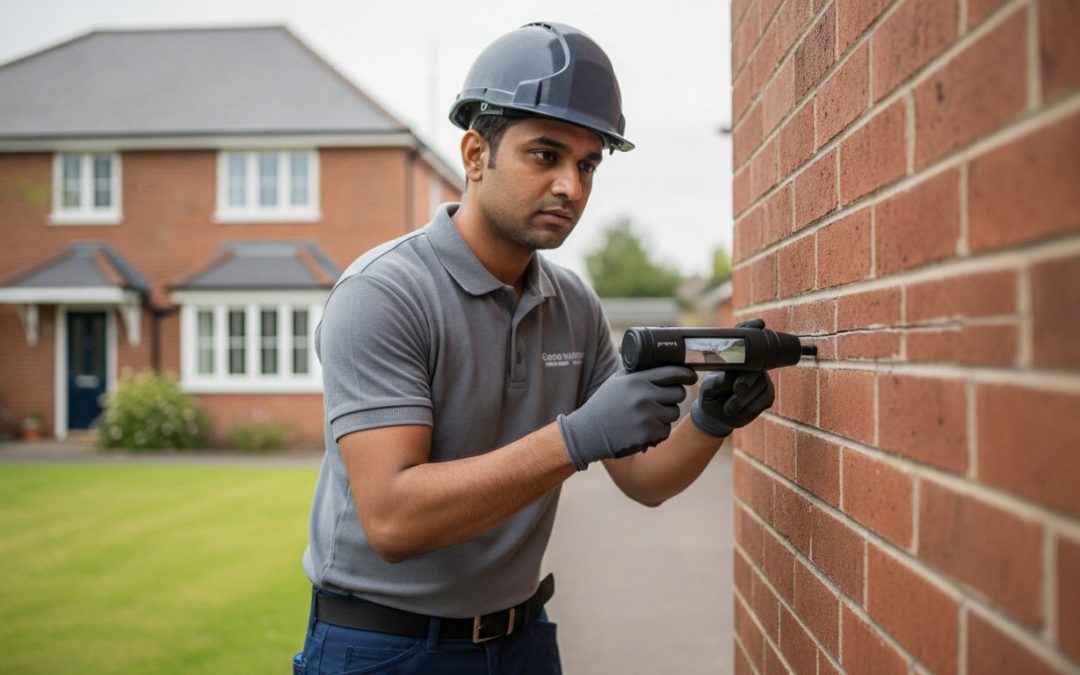
What if the subtle horizontal cracks appearing in your mortar joints aren’t just signs of an aging house, but the first warnings of a serious structural failure? When you’re faced with technical jargon or the fear of hiring a general builder, choosing a wall tie replacement specialist becomes a matter of safety and long-term value. It’s natural to feel wary of contractors who lack specific structural expertise when the stability of your cavity walls is at stake. You need a permanent, non-disruptive solution that restores both your home’s safety and its future marketability.
This guide provides a professional roadmap for homeowners across the UK to identify qualified structural experts who can secure their property’s future. You’ll learn how to evaluate survey methodologies, verify compliance with British Standards like BS EN 845-1, and ensure your masonry receives a permanent fix. This article details everything from interpreting borescope results to selecting a specialist who prioritizes methodical, long-term asset health.
- Understand the technical role of wall ties and why their failure requires immediate, specialist intervention to prevent structural collapse.
- Learn why choosing a wall tie replacement specialist is the only way to avoid the dangerous “patch-up” trap typical of general builders.
- Identify the necessary diagnostic tools for a professional survey, including high-resolution borescopes and calibrated pull-test meters.
- Verify contractor credentials using our 2026 checklist to ensure your property receives a permanent, non-disruptive fix.
- Discover how a professional survey report secures your home’s long-term asset health and facilitates smooth insurance or resale processes.
What is a Wall Tie Replacement Specialist and Why Do You Need One?
A wall tie replacement specialist is a structural contractor who focuses on the non-destructive diagnosis and remedial repair of cavity wall structures. Unlike general builders who may offer a wide range of cosmetic services, these specialists possess the technical training required to address the hidden metal components that hold your home together. Choosing a wall tie replacement specialist ensures that the diagnostic process is rooted in engineering standards rather than guesswork. They are experts in structural stabilization who understand the complex relationship between masonry leaves.
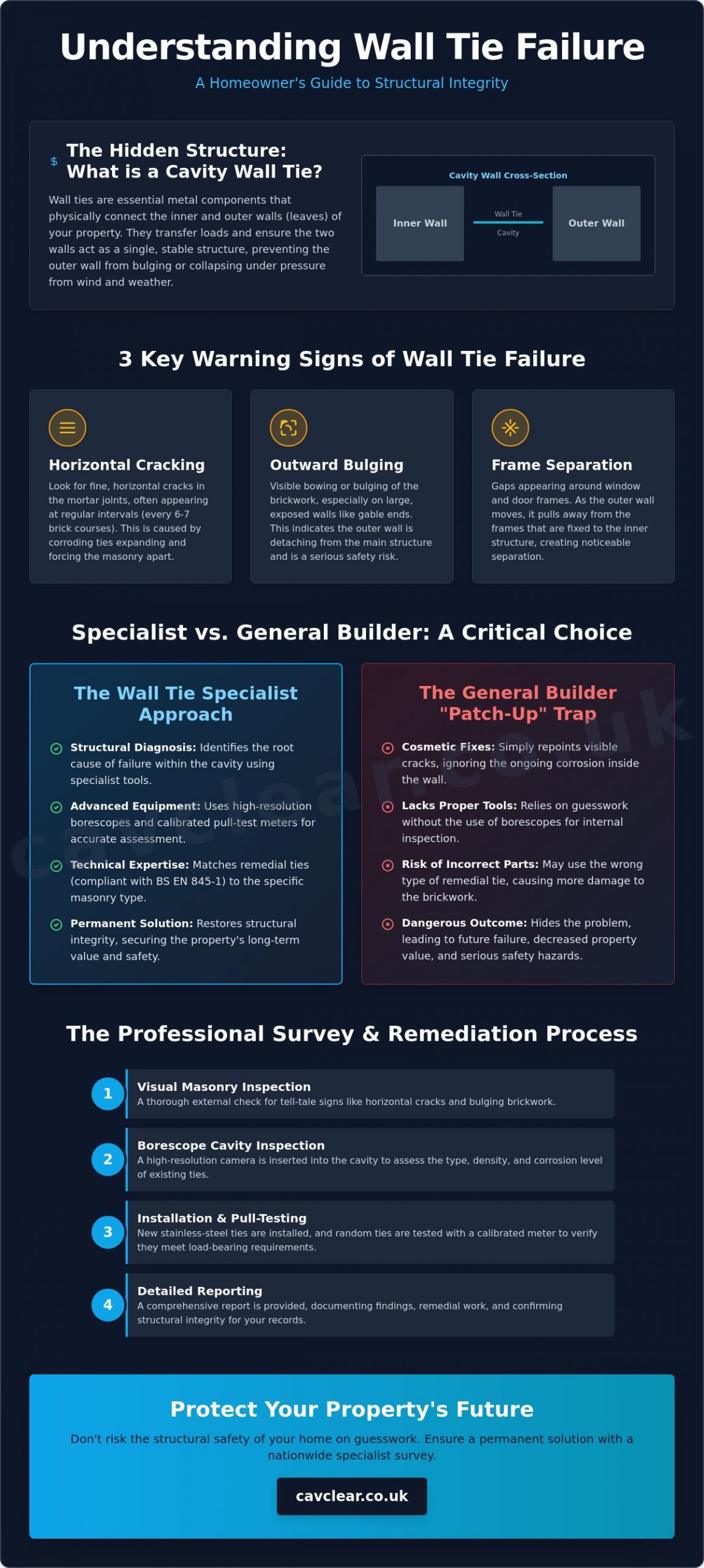
To understand the necessity of this role, you must first understand what a cavity wall tie is and why it’s critical to your property’s stability. These essential metal connectors bind the internal and external leaves of a masonry building. They transfer lateral loads, allowing the two separate walls to act as a single structural unit. When these ties fail, the outer leaf of your home effectively becomes a expert-standing wall, vulnerable to wind loads and gravity. This creates a safety risk that requires a professional remedy.
General builders often fall short during the inspection phase because they lack the high-resolution borescopes and metal detection equipment required for an internal cavity inspection. Without these tools, a contractor cannot accurately determine the density, type, or condition of the existing ties. Neglecting this specialized assessment leads to catastrophic outcomes, such as bulging walls, collapsed masonry, and a significant loss of property value. A specialist provides the precision needed to avoid these structural disasters.
The Mechanics of Wall Tie Failure
Most failures stem from iron oxide expansion, commonly known as rust. As mild steel ties corrode, the resulting rust occupies a much greater volume than the original metal. This expansion forces mortar joints apart, a process often referred to as “wall tie jacking” that physically lifts the masonry. Properties built before 1981 are at a higher risk because they often utilized mild steel ties with inadequate galvanization standards. When choosing a wall tie replacement specialist, ensure they can accurately identify the stage of corrosion to determine the urgency of the repair. Remedial wall ties are modern, stainless-steel components designed to be installed into existing structures to provide a permanent, corrosion-resistant fix.
Identifying the Signs of Structural Distress
Homeowners should monitor their masonry for specific indicators of tie failure. These signs often include:
- Horizontal cracking: Cracks in mortar joints that typically occur at regular intervals of six to seven brick courses.
- Outward bulging: Bowing of the brickwork, which is most prominent on large, exposed areas like gable ends.
- Frame separation: Visible gaps around window frames or the lifting of roof edges as the outer leaf moves away from the internal structure.
Why You Must Avoid General Builders for Structural Repairs
Hiring a general builder for structural repairs often leads to the “patch-up” trap. This occurs when a contractor simply repoints visible cracks without addressing the underlying cause of the movement. Choosing a wall tie replacement specialist is vital because they understand that cosmetic fixes do nothing to stop the ongoing corrosion of internal metalwork. While a builder might fix the symptom, a specialist identifies the fault within the cavity. This ensures that the structural integrity of the property is restored rather than merely hidden behind new mortar.
Specialists rely on technical equipment that general builders rarely possess. High-resolution borescopes allow for a clear view of the internal cavity to assess the level of corrosion. Additionally, calibrated pull-test meters are used to verify that new ties can withstand the necessary lateral loads. Without these tools, any repair is based on guesswork. Choosing a wall tie replacement specialist provides the diagnostic precision required to ensure that the remedial ties are suitable for the specific masonry type, whether it is standard brick, soft stone, or timber frame.
Using the wrong type of remedial tie poses a significant risk to the property. For example, installing a mechanical expansion tie into low-density or fragile brickwork can cause the masonry to split under the pressure of the anchor. Accredited technicians undergo formal training to match the fixings to the substrate, ensuring a secure bond without causing further damage. This level of technical rigour is non-negotiable when the safety of a building’s occupants is at stake.
The Risk of Incorrect Installation
Technical precision is required for correct tie spacing. According to Building Regulations Part A, the standard density for wall ties is 2.5 ties per square metre. This density must increase to 4.4 ties per square metre within 225mm of openings, corners, and movement joints. General builders often ignore these calculations, which can lead to localized structural weakness. Furthermore, old corroded ties must be isolated. This process involve using a foam sleeve or physical barrier to prevent the expanding rust from continuing to fracture the mortar joints. If you suspect your home needs attention, you should schedule a professional cavity wall tie inspection to ensure the correct methodology is applied.
Insurance and Warranty Implications
Mortgage lenders and insurers frequently require a formal report from a recognised specialist before approving a loan or a claim. They need documented evidence that the work complies with British Standards such as BS EN 845-1. A general builder’s invoice is rarely sufficient for these purposes. Understanding the professional survey and reporting fees involved is a key step in securing your property’s long-term value. A specialist provides a long-term guarantee that covers both materials and labour, offering peace of mind for future resale or insurance renewals.
How to Evaluate a Specialist’s Survey Methodology
When choosing a wall tie replacement specialist, the quality of their diagnostic survey is the most reliable indicator of their professional standards. A structural survey must be intrusive to be effective. This means the specialist must look inside the cavity using high-resolution borescopes to visually confirm the condition of the ties. Surface-level observations of cracks or bulging are merely symptoms; the borescope allows the technician to see the extent of the corrosion and the type of tie originally installed. This level of detail is essential for a permanent fix.
Specialists also utilize metal detection to map the existing tie pattern across the entire elevation. This process identifies missing, incorrectly spaced, or poorly positioned connectors that may not be visible through the outer leaf. A thorough survey ensures that the new remedial system addresses every structural weakness. Without this mapping, there is a risk that the new ties won’t provide the uniform stability required by Building Regulations. A comprehensive wall tie survey report should include high-definition photos from inside the cavity, precise tie counts, and a clear remedial plan tailored to your property’s specific needs.
The specialist also evaluates cavity cleanliness during the inspection. Mortar droppings or construction debris often accumulate at the base of the cavity or on the ties themselves. This debris can “bridge” the gap between the masonry leaves, allowing moisture to travel from the external leaf to the internal one. Identifying these bridges is vital, as they often lead to damp issues that can be mistaken for simple condensation or rising damp. Addressing these issues alongside tie replacement protects the long-term health of the building fabric.
The Link Between Insulation and Tie Corrosion
A critical gap in many standard inspections is the failure to account for defective cavity wall insulation. Saturated or degraded insulation can trap moisture directly against the metal ties, significantly accelerating the oxidation process. A true specialist inspects both the ties and the condition of the cavity fill to understand the environment within the wall. If the insulation is found to be causing structural or damp issues, insulation extraction is often necessary to ensure the new wall ties remain dry and effective.
Sample Testing and Pull-Out Trials
Before any work begins, a specialist performs “pull-out tests” using a calibrated meter to ensure the new ties will achieve a secure anchor in your specific masonry. This trial verifies the load-bearing capacity of the substrate, whether it is soft brick or dense concrete block. Testing prevents the failure of the entire remedial system by ensuring the fixings are compatible with the building’s material composition. Diagnostic accuracy is the only way to avoid unnecessary over-spending on repairs that might not suit your property’s unique structural requirements.
Selecting a Specialist: A Homeowner’s Checklist for 2026
Selecting a specialist requires a methodical evaluation of their operational standards and technical expertise. Choosing a wall tie replacement specialist isn’t just about finding a contractor with a drill; it’s about selecting a partner capable of preserving your property’s structural health. Nationwide coverage is a key indicator of a company’s reliability. A business with a presence across the entire United Kingdom has the scale to provide consistent, high-level service regardless of your location. This ensures that the technical rigour applied to your home meets the same exacting standards used on large-scale commercial projects.
Accredited technicians are non-negotiable for structural work. You must verify that the onsite team has undergone specific training in remedial masonry stabilization. This expertise allows them to handle the complexities of different building materials and cavity conditions. A professional specialist also prioritizes a clean and non-disruptive methodology. This includes using dust extraction systems and carefully protecting the building facade during the drilling and isolation process. Your home’s comfort shouldn’t be sacrificed for its stability.
Transparent pricing is another hallmark of a professional service provider. A specialist should provide a detailed breakdown of both the survey fees and the remedial contracting costs. Avoid quotes that combine these into a single, vague figure. Instead, look for a company that frames their service as a vital investment in the property’s future. This long-term focus ensures that the fix is permanent, protecting your asset’s value for decades. If you’re concerned about your property’s stability, you should arrange a professional wall tie survey to obtain a clear, technical assessment of your home’s needs.
Questions to Ask Before You Hire
Before commissioning any work, engage the contractor with specific technical questions to gauge their competence. Ask exactly what equipment they’ll use to inspect the inside of your cavity walls. A specialist will immediately mention high-resolution borescopes. Inquire about how they determine the correct spacing and type of remedial ties; their answer should reference wind loads and masonry density rather than guesswork. Finally, ensure they’ll provide a detailed report that meets the requirements of mortgage lenders and insurers. This document is essential if you plan to sell the property in the future.
Red Flags to Watch Out For
Be wary of contractors who offer a “expert survey” that consists only of a visual external check. Without an intrusive borescope inspection, it’s impossible to accurately diagnose the condition of the metalwork. Another red flag is a quote that doesn’t include the isolation of old, expanding ties. Leaving corroded ties to continue rusting will eventually lead to further masonry cracking, even if new ties are installed. Furthermore, avoid companies that cannot explain what a wall cavity is or how its specific maintenance needs affect tie longevity. A lack of technical knowledge regarding the environment within the wall suggests they won’t provide a permanent solution.
The CavClear Approach: Structural Integrity and Professional Rigour
Choosing a wall tie replacement specialist requires confidence in the provider’s technical standards. CavClear delivers this through a commitment to nationwide excellence, ensuring that property owners across the United Kingdom receive the same level of structural expertise. Our approach is rooted in professional rigour and the use of accredited technicians who understand the complexities of masonry stabilization. We don’t merely treat the visible symptoms of structural distress; we identify and rectify the underlying cause to ensure the long-term health of your asset.
Our technicians utilize advanced diagnostic tools to perform intrusive inspections that general builders cannot match. By using high-resolution borescopes and metal detection, we create an accurate map of your property’s internal cavity. This precision allows us to provide a permanent fix rather than a temporary patch. We also recognize that structural faults often coincide with environmental issues. For this reason, we offer the integration of structural repairs with damp and mould surveys. This holistic strategy ensures that every factor affecting your building’s fabric is addressed in a single, professional diagnostic process.
Efficiency and cleanliness are central to our methodology. We understand that structural work can be stressful, so we use non-disruptive techniques designed to protect your facade and minimize impact on your daily life. Our dust-extraction systems and careful drilling patterns ensure that the remedial process is as clean as it is effective. We frame our services as a vital investment in your property’s future, providing the security and comfort that only a specialist can offer.
Expert Remedial Solutions
The CavClear process for wall tie replacement follows a methodical sequence. It begins with precise metal detection to locate every existing tie, followed by the installation of stainless-steel remedial connectors. We prioritize the isolation of old, corroded ties to stop the expansion of rust that causes mortar cracking. This attention to detail ensures the restoration of safety for every UK property owner we serve. Our stance on property health is absolute: we fix the root cause. Whether the issue is simple tie corrosion or moisture retention caused by defective insulation, we provide a solution that restores structural equilibrium.
Next Steps for Your Property
Securing your home starts with a comprehensive technical inspection. When you book a survey with our specialist team, you can expect a transparent and educational experience. We provide a detailed remedial action plan that outlines every necessary step, including photographic evidence from inside your cavity walls. This report serves as a professional record for insurance or future resale purposes. Secure your property’s future with a professional wall tie survey from CavClear today.
Secure Your Property’s Structural Future
Protecting the structural integrity of your home requires a shift from cosmetic repairs to precise, technical intervention. Choosing a wall tie replacement specialist is the most effective way to ensure that hidden corrosion is correctly diagnosed and permanently rectified. By prioritizing intrusive borescope inspections and detailed pull-out testing, you avoid the risks associated with general builders and ensure your property complies with modern safety standards. This methodical approach not only stabilizes your masonry but also preserves the long-term market value and insurability of your asset.
CavClear provides the professional rigour needed to restore your peace of mind. With nationwide UK coverage and a team of accredited structural technicians, we deliver the diagnostic accuracy your home deserves. Every project is supported by comprehensive technical reporting, giving you a clear record of the remedial work performed. Don’t leave your building’s stability to chance. Book a Specialist Wall Tie Survey with CavClear today and take the first step toward a safer, more secure home.
Frequently Asked Questions
How much does a professional wall tie survey cost in 2026?
The cost of a professional survey is determined by the size of the property and the complexity of the elevations being inspected. This fee covers a comprehensive intrusive investigation where a technician uses high-resolution borescopes to visually confirm the condition of ties inside the cavity. It’s a necessary investment that provides the technical evidence required for insurance purposes or property resale.
Can I replace cavity wall ties myself as a DIY project?
You should not attempt wall tie replacement as a DIY project because it involves critical structural stabilization. Incorrect installation or the use of inappropriate tie types can lead to localized masonry collapse or further splitting of the mortar joints. Specialists use calibrated pull-test meters to ensure each new tie achieves the required anchor strength in your specific building material.
How long do remedial stainless steel wall ties actually last?
Remedial stainless steel ties are designed to last for the remaining life of the building, typically exceeding 60 years. Unlike the original mild steel ties used in older properties, stainless steel is highly resistant to corrosion and does not suffer from iron oxide expansion. This ensures the structural integrity of the cavity wall remains stable without the need for future intervention.
Will replacing my wall ties cause damage to my internal decorations?
Replacing wall ties is an external structural process that does not typically affect your internal decorations. Technicians install the new remedial ties by drilling small, precise holes through the external mortar joints to reach the inner leaf. This clean and non-disruptive methodology ensures that your home’s interior remains untouched while the structural faults are rectified from the outside. If you are planning further interior improvements once your walls are secure, you can learn more about Kroll Interiors for premium wall and floor tiling services.
How urgent is wall tie replacement if I see horizontal cracks?
Horizontal cracking in mortar joints indicates an advanced stage of tie corrosion and should be treated as an urgent structural priority. These cracks are caused by “wall tie jacking,” where expanding rust physically lifts the masonry courses. If left unaddressed, the outer leaf can become unstable and may eventually bow or collapse during periods of high wind load.
Is wall tie failure covered by standard UK buildings insurance?
Standard UK buildings insurance policies generally exclude wall tie failure as it is classified as gradual deterioration or a maintenance issue. Insurers expect property owners to manage the long-term health of the building fabric through regular inspections. Obtaining a specialist report is the best way to document that the property has been professionally stabilized and maintained.
What is the difference between a general builder and a wall tie specialist?
The primary difference lies in the use of specialized diagnostic equipment and structural expertise. A general builder often lacks the borescopes needed for internal cavity inspection or the calibrated meters required for pull-out testing. Choosing a wall tie replacement specialist ensures your property is assessed using methodical, industry-standard techniques that provide a permanent structural solution.
Recent Comments