
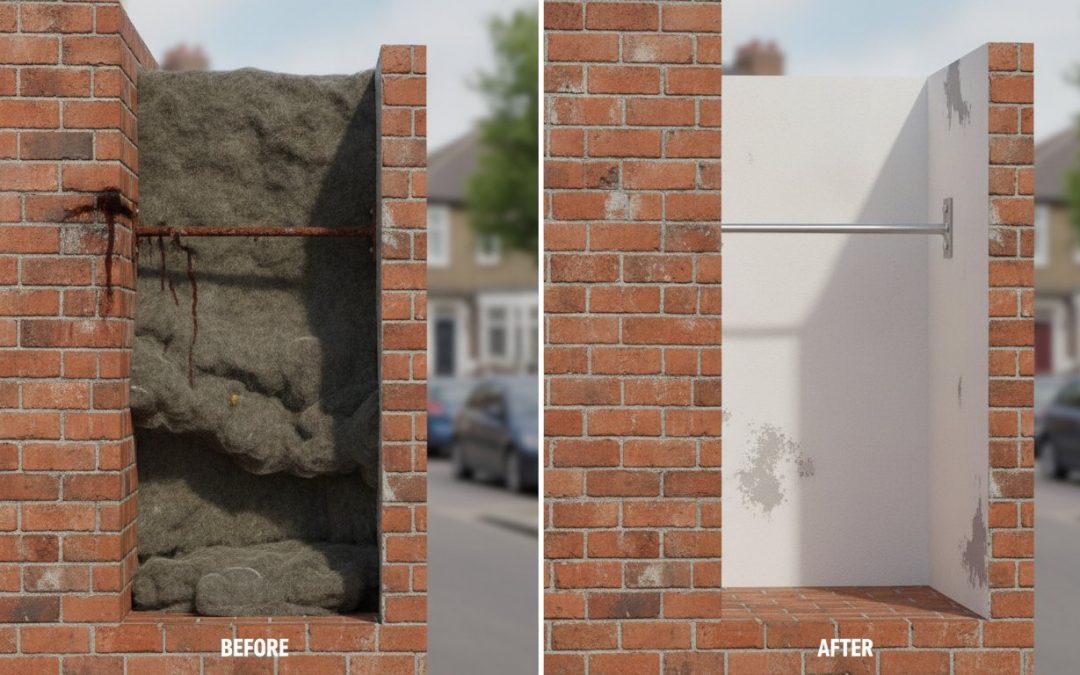
Your home’s cavity wall insulation might be the very thing causing your damp problems and rising energy bills rather than solving them. It’s a frustrating reality for many homeowners who find that what was meant to be a comfort-boosting measure is now ruining internal decor and threatening the building’s fabric. You shouldn’t have to choose between a warm house and a structurally sound one. Understanding the cavity wall insulation removal cost UK is the first step toward reclaiming your property from the hidden damage caused by saturated or incorrectly installed materials.
While extraction is necessary for failing materials, ensuring that beads are correctly applied in new construction is vital for preventing future damp; you can learn more about Cavity Wall Insulation Installation to see how professional systems are designed to function correctly from the start.
We’ll provide a transparent look at the investment required for professional extraction and why this process is essential for protecting your wall ties from corrosion. You’ll learn about the technical methodology used to safely clear the cavity and restore the structural health of your home. This guide covers everything from 2026 pricing factors to the long-term benefits of a clean, functional wall cavity, ensuring you have the expert knowledge needed to make an informed decision for your property’s future.
Key Takeaways
- Understand how property dimensions and the specific type of material, such as bonded foam or mineral wool, influence the total cavity wall insulation removal cost UK.
- Discover the importance of a technical borescope survey to accurately map the cavity and ensure a non-disruptive extraction process.
- Learn why professional removal is essential for preventing the accelerated corrosion of metal wall ties caused by saturated insulation materials.
- Identify the key indicators of a specialist contractor, including the use of industrial vacuum equipment and the provision of clear evidence showing a clean cavity.
- Recognize how cavity extraction serves as a vital investment in your property’s long-term health by eliminating the root cause of damp and interstitial condensation.
Evaluating Cavity Wall Insulation Removal Costs in the UK (2026)
Professional cavity wall insulation extraction is a specialist remedial service designed to restore the original design function of your property’s walls. It’s not a simple cleaning task; it’s a technical intervention required when insulation materials fail or become compromised. Homeowners across the UK typically seek this service when they encounter persistent damp, peeling wallpaper, or a noticeable decline in air quality due to mould growth. These symptoms are often the result of interstitial condensation, where moisture becomes trapped within the wall cavity, turning a supposed thermal barrier into a cold, wet sponge that transfers dampness directly to your interior living spaces.
The total cavity wall insulation removal cost UK residents can expect depends on several technical variables. The architectural footprint is the primary baseline, with terraced houses generally requiring less time and equipment than semi-detached or large detached homes. However, the complexity of the extraction is also dictated by the type of material currently inside your walls. For example, extracting bonded foam is a much more labor-intensive process than removing loose-fill polystyrene beads. It’s vital to understand that the cheapest quote often indicates a lack of specialist equipment. Incomplete extraction is a common result of low-cost services, leaving pockets of wet material that continue to bridge moisture and cause recurring damp issues.
Why Removal is an Investment, Not Just an Expense
Viewing the removal of defective insulation as a vital investment helps protect your property’s long-term asset value. The cost of inaction is almost always higher than the cost of professional extraction. When insulation becomes saturated, it acts as a permanent bridge for moisture to cross the cavity. This leads to escalating repair bills for internal plasterwork and decor. Historically, Cavity Wall Construction and History shows that the 50mm gap was designed specifically to prevent rainwater from reaching the inner leaf of the building. Restoring this gap is essential for passing surveyor reports during a house sale, as defective insulation is a significant red flag for lenders and buyers alike.
The Risk of Retrospective Re-Insulation
We maintain a firm professional stance against the retrospective installation of new cavity wall insulation once the failing material has been removed. The technical purpose of a cavity is to provide a clear path for drainage and ventilation. Once we’ve performed a successful cavity extraction, the space should remain empty to ensure that any moisture penetrating the outer brickwork can evaporate naturally without reaching your internal walls. Maintaining a clear cavity is the only way to guarantee the structural integrity of your home’s protective envelope. For more detail on how these gaps function, you can explore our guide on What is a Cavity Wall? to understand the structural role of the void.
Variables That Determine the Price of Insulation Extraction
Determining the cavity wall insulation removal cost UK homeowners face involves more than just measuring the perimeter of the building. While the total wall area in square metres (m2) serves as the baseline, several technical factors dictate the final investment. When reviewing a UK Government Insulation Cost Analysis, it becomes clear that non-standard properties and difficult materials significantly increase the operational complexity of extraction. A specialist contractor evaluates the density of the material, the height of the elevations, and the current state of the masonry to ensure the property remains structurally sound throughout the process.
The condition of your mortar and brickwork also plays a role in the technical approach. If the mortar is perished or the bricks are “blown,” the extraction team must take additional care to prevent further damage during the drilling of access points. These variables ensure that the quote reflects the actual labour and equipment required to return your home to its original, healthy state. A detailed cavity wall survey can identify the exact material present and any structural obstacles before work begins.
Material Complexity: Foam vs. Beads vs. Wool
The type of material currently residing in your walls is often the biggest variable in pricing. Bonded urea-formaldehyde foam is particularly challenging because it adheres to the inner and outer leaves of the cavity. It requires mechanical or chemical breakdown to loosen it before extraction, which significantly increases labour time. Mineral wool presents a different challenge, especially if it’s saturated. Wet wool often “slumps” to the bottom of the cavity, becoming a heavy, compacted mass that is difficult to remove with standard suction. Polystyrene beads are generally easier to extract, but they require specialized containment systems to prevent thousands of small beads from escaping and causing environmental contamination in your garden or the surrounding neighbourhood.
Access and Property Height
Accessibility is a critical factor for any nationwide UK service provider. Properties with three storeys or those with difficult-to-reach gables often require scaffolding rather than simple ladder access to reach the top of the cavity. This ensures that the extraction is thorough and that no material is left hanging at the highest points of the wall. Reaching the full height of the property is non-negotiable for a permanent fix. Specialised vacuum machinery is essential for a 100% clear cavity. Without this high-powered equipment, it’s impossible to generate the necessary lift to clear debris from taller elevations, potentially leaving behind the very moisture-trapping material you’re trying to remove.
The Technical Process: Why Professional Extraction Justifies the Fee
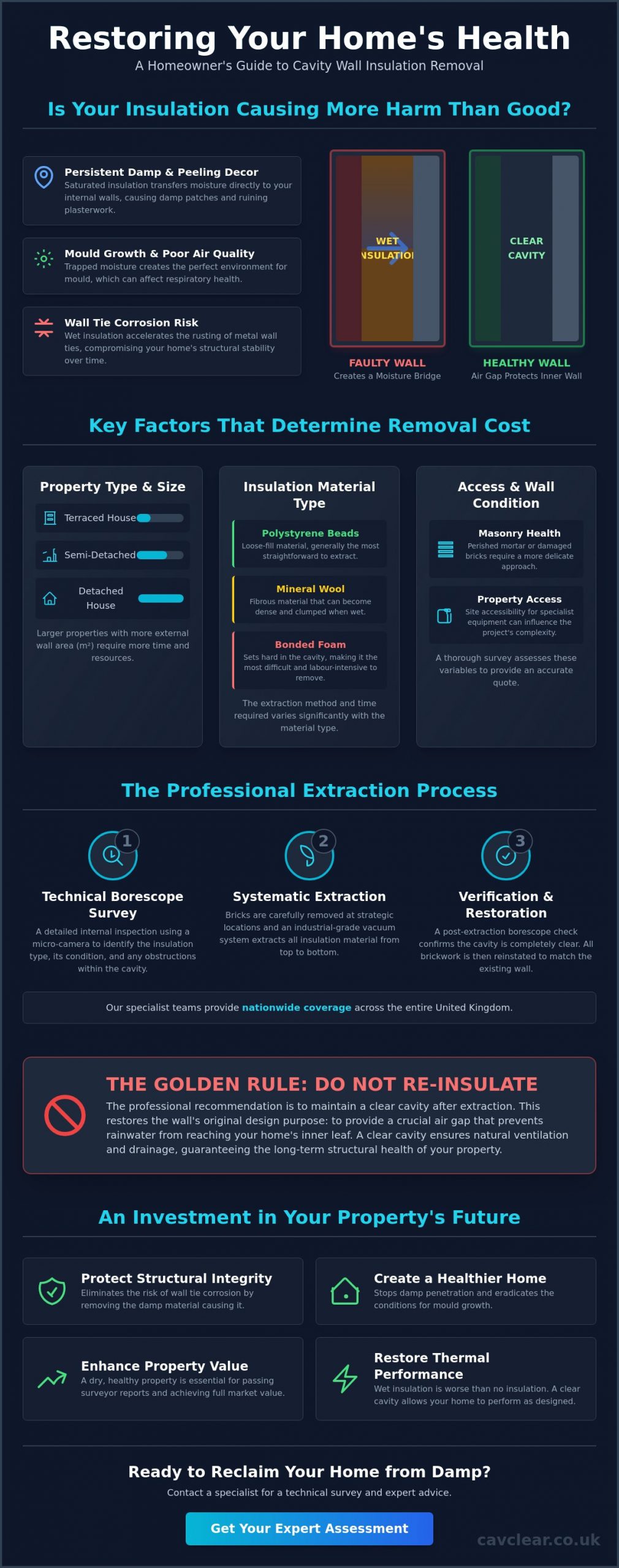
Professional extraction is a detailed technical procedure that requires precision to avoid damaging the property’s structural leaves. It’s the complexity of this process that largely determines the cavity wall insulation removal cost UK homeowners pay. Unlike general building work, extraction involves five distinct phases to ensure every trace of failing material is removed. We treat the property as a structural asset, using methodology that prioritizes long-term integrity over speed.
The process follows a methodical path to ensure a 100% clear cavity:
- Step 1: Technicians perform an initial technical survey using borescopes to map the cavity’s internal state and identify obstructions.
- Step 2: Strategic removal of bricks occurs at the base of the walls to create precise extraction points without compromising structural stability.
- Step 3: Using high-pressure compressed air, the team agitates the material from the top of the wall while industrial vacuums draw it out through the base.
- Step 4: A final borescope inspection is conducted across all elevations to verify that no “cold spots” or debris pockets remain.
- Step 5: Professional mortar colour-matching and brick replacement conclude the work, restoring the property’s aesthetic finish.
The Importance of a Specialist Survey
A Professional Damp Survey is the critical first step in this journey. This diagnostic phase identifies the specific “pattern” of damp on your internal walls, confirming whether saturated insulation is the primary culprit. Relying on official government guidance on CWI issues, our specialists differentiate between simple rising damp and the more complex interstitial condensation caused by defective cavity fill. A technical report provides a definitive roadmap for the extraction, moving beyond a simple visual check to provide a data-driven solution for your property.
Ensuring a Non-Disruptive Methodology
CavClear prioritizes a non-disruptive methodology to protect your home’s aesthetic and environmental health. We use industrial-grade filtration to prevent insulation dust or beads from entering your garden or driveway. Our “clean site” guarantee ensures that the only evidence of our presence is the resolution of your damp issues. By matching the existing mortar precisely, we ensure the property’s facade looks exactly as it did before the intervention. This level of care is a vital component of the cavity wall insulation removal cost UK, providing peace of mind that the work is both thorough and respectful of your home’s appearance.
Beyond the Price Tag: Structural Benefits and Wall Tie Integrity
While the immediate goal of extraction is often to resolve damp, the long-term benefit lies in protecting your home’s structural skeleton. Saturated insulation creates a permanent reservoir of moisture that remains trapped against the metal wall ties connecting your property’s inner and outer leaves. When these ties are exposed to constant dampness, they begin to rust and expand. This process, known as wall tie corrosion, can lead to horizontal cracking or even the bowing of your external walls. Factoring this into the cavity wall insulation removal cost UK homeowners pay transforms the service from a simple repair into a vital structural safeguard.
Ignoring the state of your wall ties while failing insulation is present is a significant risk. The “hidden cost” of delay often manifests as structural instability that requires far more expensive remedial work later. We consider the extraction process the ideal time to perform a comprehensive wall tie inspection. Because the cavity is being cleared, our technicians can easily assess the condition of the metal ties across all elevations, ensuring that the primary connectors of your home remain robust and functional. Protect your property by arranging a professional wall tie inspection alongside your extraction.
Protecting the Structural Skeleton of Your Home
Wall ties are essential components that provide stability by tying the weather-facing outer leaf to the load-bearing inner leaf. During the insulation removal process, you should look for signs of failure such as stepped cracks in the mortar joints or visible bulging in the brickwork. These symptoms often indicate that the ties have already succumbed to moisture-induced oxidation. If your property was built with galvanized steel ties, they’re particularly susceptible to the humid environment created by wet insulation. For a deeper understanding of how to address these issues, read our Wall Tie Replacement Guide to learn about modern stainless steel alternatives.
Restoring Natural Ventilation
A clear cavity allows your property to function as its architects originally intended by facilitating natural ventilation. This airflow is crucial for evaporating any moisture that penetrates the outer brickwork during heavy rain. We ensure that air bricks are completely cleared of any insulation debris, as blocked vents are a primary cause of stagnant air and high humidity levels. By restoring this ventilation, you’re actively eliminating the conditions that lead to Black Mould Growth on your internal walls. A clean, empty cavity is the most effective way to maintain a dry, healthy environment for the long term, preventing the recurring decor damage associated with trapped moisture.
Selecting a Specialist Contractor and Securing Your Property’s Future
Choosing the right contractor for insulation extraction is a decision that impacts the long-term structural health of your home. It’s about more than just comparing bottom-line figures. When you evaluate the cavity wall insulation removal cost UK specialists provide, the middle-ground quote is often the safest and most professional choice. Extremely low bids frequently indicate that a firm is cutting corners, perhaps by using domestic-grade vacuums or skipping the essential final borescope inspection. These omissions lead to incomplete extraction, meaning the moisture-trapping material remains inside your walls to cause further damage.
You should be alert to red flags when inviting contractors to your property. A reputable specialist will always offer borescope evidence of the internal cavity state both before and after the work. If a company doesn’t mention a technical cleanup process or fails to explain how they’ll protect your garden from debris, they likely lack the methodology required for a “clean” extraction. Professional remedial work is a technical discipline that requires specific industrial machinery and a deep understanding of building physics. Don’t settle for general builders who treat extraction as a secondary service.
What to Look for in a Quotation
A comprehensive quotation must be transparent and inclusive of all technical phases. Ensure the proposal explicitly covers the cost of responsible waste disposal and the skilled labour required for mortar colour-matching. You should also look for a detailed methodology statement that outlines how the team will access high elevations and clear the air bricks. Most importantly, ask if the final price includes a post-extraction borescope report. This documentation is your only guarantee that the cavity is 100% clear and that the structural integrity of your wall ties is no longer being compromised by saturated material.
The CavClear Approach to Property Preservation
CavClear operates as a dedicated nationwide specialist, providing a methodical and non-disruptive solution for homeowners across the United Kingdom. We position ourselves as the expert alternative to the poor workmanship of the past. Our approach prioritizes reliability and the total restoration of your home’s comfort. By using high-powered extraction technology and precise diagnostic tools, we ensure that your property’s original ventilation path is fully restored. We view every project as a vital investment in the property’s future, providing a permanent fix that clears the way for a dry, healthy living environment. Book your specialist cavity survey today to protect your home’s future and receive an accurate, fixed-price quote for professional extraction.
Restoring Your Property’s Structural Integrity
Protecting your home from the long-term effects of damp and structural instability requires a technical approach that addresses the root cause. The cavity wall insulation removal cost UK homeowners pay covers far more than simple material extraction; it’s a vital investment in restoring the original design function of your building’s envelope. By clearing the cavity, you’re stopping the moisture bridge that leads to internal decay and the accelerated corrosion of your metal wall ties. This process ensures your property can breathe and shed moisture as it was originally intended.
Our accredited specialist technicians provide nationwide UK service coverage, ensuring every property owner has access to high-level remedial standards. Every project includes detailed technical borescope reporting to verify that the cavity is entirely clear of debris. This transparency gives you the certainty that your home is finally protected from the risks associated with defective insulation. You don’t have to live with the stress of persistent damp or the fear of structural failure. Secure your property’s future with a professional cavity wall survey from CavClear and take the first step toward a dry, healthy, and stable home. Your property’s longevity is our priority, and a clean cavity is the foundation of that lasting comfort.
Frequently Asked Questions
How long does cavity wall insulation removal typically take?
The extraction process typically takes between one and three days to complete for most UK properties. This timeframe depends on the total wall area and the type of material being removed, such as bonded foam or loose-fill beads. Our technicians work methodically to ensure every section of the cavity is cleared before performing the final borescope inspection to verify the results.
Can I remove cavity wall insulation myself to save on costs?
You shouldn’t attempt to remove cavity wall insulation yourself because it requires specialized industrial vacuum equipment and high-pressure compressed air. DIY attempts often lead to incomplete extraction, leaving moisture-trapping debris inside the walls that continues to cause damp issues. Professional removal ensures that the cavity is 100% clear and that your wall ties remain structurally sound throughout the process.
Will removing the insulation make my house significantly colder?
Removing failing or saturated insulation won’t necessarily make your home feel colder. When insulation becomes wet, it loses its thermal resistance and actually draws heat away from your inner walls. Once the cavity is clear and dry, the ambient comfort of your home often improves because the walls are no longer acting as a cold bridge for external moisture to enter your living space.
How do I know if my cavity wall insulation is actually the cause of my damp?
A technical borescope survey is the most reliable way to confirm if insulation is the primary cause of your damp. Our specialists look for specific indicators, such as slumped material or wet patches where the insulation is bridging the cavity. If your internal dampness corresponds with these areas of compromised material, professional extraction is the necessary remedial step to protect your property’s interior.
What happens to the waste material once it is extracted from the walls?
Extracted material is drawn directly into industrial filtration bags using a high-powered vacuum system to prevent environmental contamination. This waste is then removed from your property and transported to a licensed facility for responsible disposal. We handle the entire waste management process, ensuring that your garden and driveway remain clear of any insulation debris or dust throughout the project.
Is there a mess left behind after the extraction process is finished?
Our methodology is designed to be clean and non-disruptive, leaving no significant mess behind once the work is finished. We use specialized containment systems to capture all beads or fibers as they are drawn from the wall. Any small amount of dust near the extraction points is cleared away immediately after we replace the bricks and match the mortar to your existing facade.
Does the removal process involve entering the inside of my home?
The entire extraction process is performed from the exterior of your property, so our technicians don’t need to enter your home. All drilling, agitation, and suction occur through the outer leaf of the masonry. This allows you to continue your daily routine without any internal disruption while we work to restore the structural health and ventilation of your cavity walls.
What is the average cost for a standard 3-bedroom semi-detached house in 2026?
The cavity wall insulation removal cost UK homeowners pay for a 3-bedroom semi-detached house is calculated based on the total square footage and the complexity of the material. Factors such as the height of the building and the presence of obstacles like conservatories will influence the final quote. We provide a fixed-price proposal after a technical survey to ensure the price reflects the specific requirements of your home.
Recent Comments