
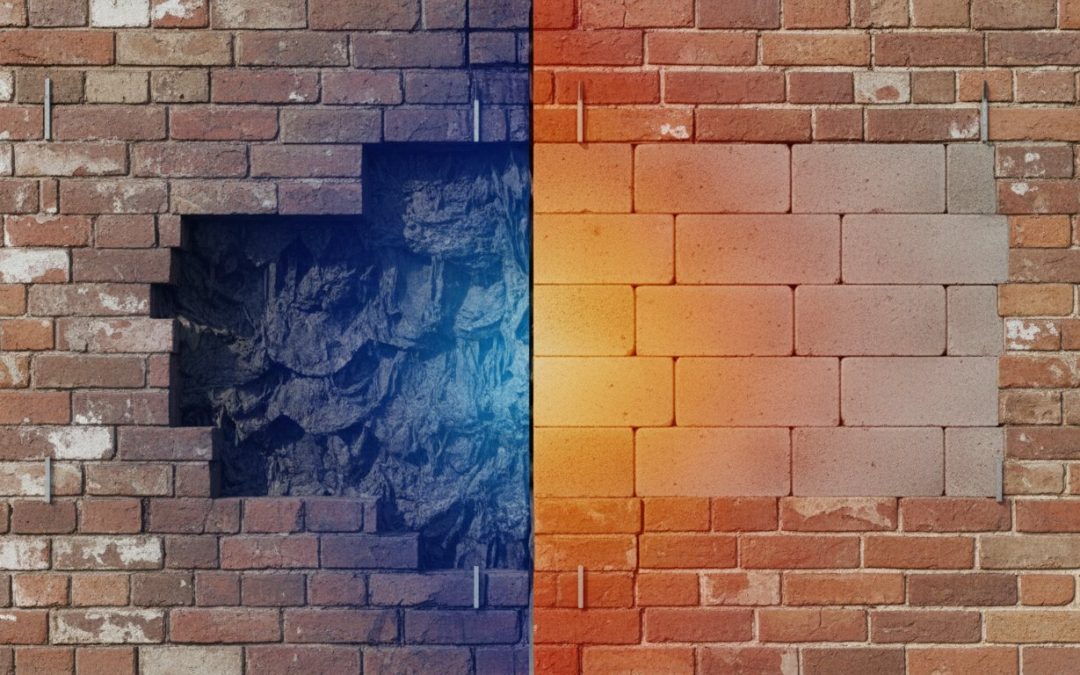
What if the very insulation installed to protect your home and lower your energy bills is now the direct cause of persistent damp, black mould, and potential structural damage? It’s a deeply frustrating position for any homeowner. You made a responsible investment in your property’s thermal efficiency, only to be left with cold internal walls and the recurring worry of what damage is happening unseen within your walls. This 2026 guide has been created to give you clarity and control.
We will walk you through the essential steps to diagnose failed insulation and explain why turning to accredited cavity wall insulation extraction specialists UK is the only guaranteed route to restoring your home’s health and your peace of mind. You’ll discover how to spot the definitive signs of a problem, understand the non-invasive extraction process, and learn the critical questions to ask before hiring a contractor to protect your property for the long term.
Key Takeaways
- Understand the critical link between damp patches on your walls and failing cavity wall insulation, enabling you to identify the problem before it escalates.
- Discover how saturated insulation can accelerate hidden wall tie corrosion and compromise your home’s Damp Proof Course (DPC), creating serious structural risks.
- Learn how to properly vet cavity wall insulation extraction specialists UK by checking for essential accreditations like TrustMark and BBA approval to ensure a professional service.
- Gain insight into the specialist extraction process, from initial borescope inspections to the techniques used for a clean and thorough removal of all damaged material.
The Growing Need for Cavity Wall Insulation Extraction Specialists in the UK
In the modern UK property market, a specialist’s role extends far beyond simple removal. It involves the methodical and safe correction of past installation failures to restore a home’s structural integrity and thermal efficiency. The demand for qualified cavity wall insulation extraction specialists UK has grown directly from the legacy of government-backed energy schemes in the 2000s and early 2010s. While well-intentioned, initiatives like the Carbon Emissions Reduction Target (CERT) led to millions of rapid installations, often without proper assessment of a property’s suitability or the installer’s competence.
Today, homeowners are facing the consequences. Materials that were incorrectly installed or inappropriate for the local climate are now failing. This is particularly prevalent in regions with high exposure to wind-driven rain, as mapped by the UK’s Driving Rain Index. In these areas, what was installed to save energy has now become a conduit for damp, causing significant damage to brickwork, plaster, and timber frames. The solution is not a simple DIY task; it requires accredited professionals. Insulation extraction is the systematic removal of saturated or degraded materials to restore the wall’s original protective air gap.
Why Cavity Wall Insulation Fails in British Climates
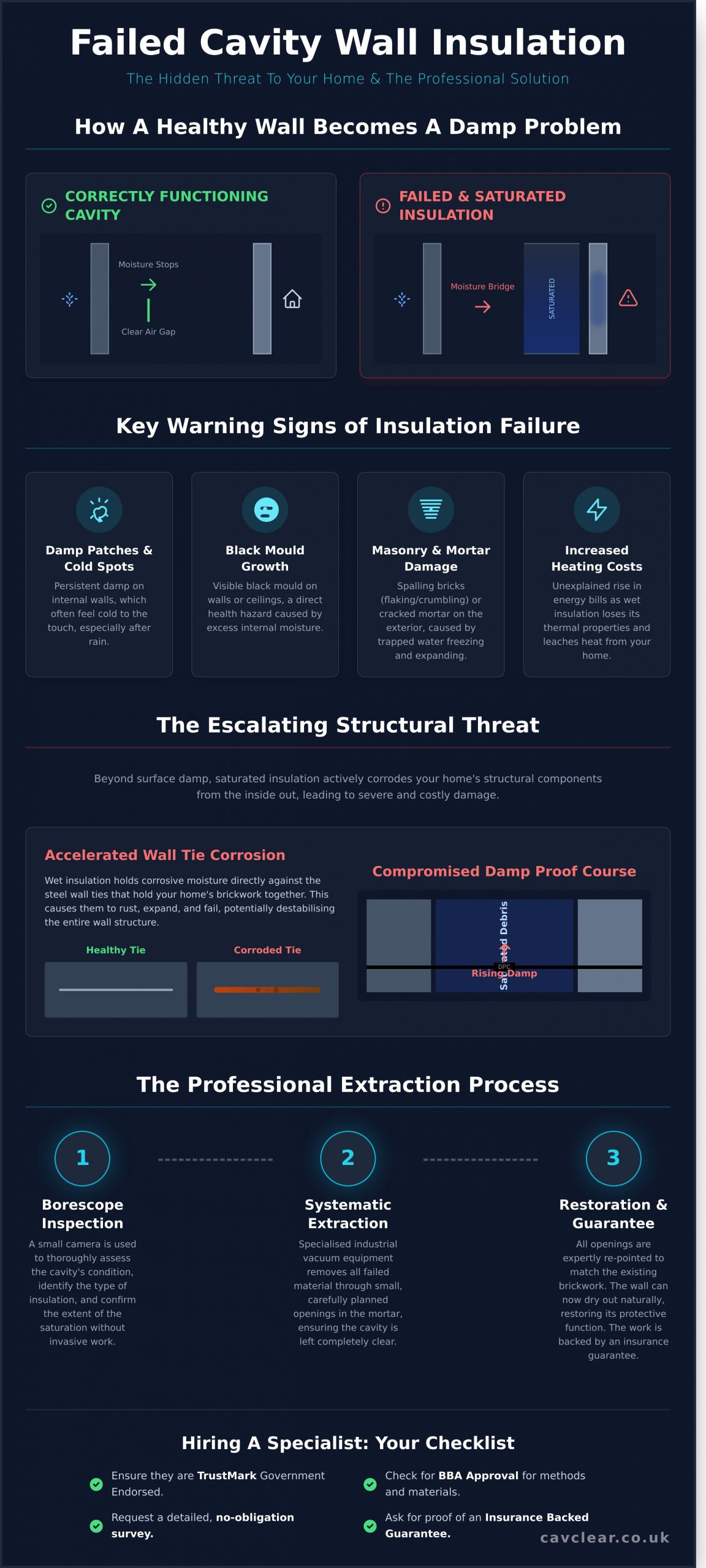
A correctly functioning cavity wall relies on a clear, empty space to prevent moisture from crossing from the outer to the inner leaf of the property. You can learn more about the history and construction of cavity walls to understand their original purpose. When insulation material becomes saturated with water, it creates a “moisture bridge,” effectively transferring damp directly into your living spaces. This failure is often rooted in poor installation practices, such as failing to clear existing debris from the cavity or using materials like mineral wool fibre in homes exposed to persistent driving rain. Looking ahead, climate projections from the Met Office for 2026 and beyond predict warmer, wetter winters with more intense rainfall events, a pattern that will only accelerate the failure rate of these compromised insulation systems.
Signs Your Property Requires Professional Extraction
Identifying failing cavity wall insulation early is crucial to preventing costly structural repairs. While some signs are subtle, others are clear indicators that your property’s defences have been breached. A professional assessment is the only way to be certain, but homeowners should look for these key warning signs:
- Damp Patches and Cold Spots: If you notice persistent damp on internal walls, particularly after rainfall, it’s a classic sign of water transference. These areas will often feel significantly colder to the touch. A specialist uses thermal imaging cameras during a survey to precisely map these cold spots, revealing where the insulation is saturated and ineffective.
- Mould and Masonry Damage: The appearance of black mould on interior walls is a direct health hazard linked to excess moisture. Externally, look for spalling bricks or cracked mortar, which can be caused by the expertze-thaw cycle acting on water trapped within the saturated wall cavity.
- Increased Heating Costs: If your energy bills are rising without explanation, it could be because your wet insulation is no longer providing any thermal benefit. In fact, it can draw heat out of the property, making your heating system work harder for no reason.
If you recognise any of these issues, the first step is to commission a professional damp survey from an accredited technician. This investigation provides a definitive diagnosis, confirming if failing insulation is the root cause and outlining the most effective path to restoring your home’s health and comfort.
Why Defective Insulation is a Structural Threat to Your Home
Correctly installed cavity wall insulation (CWI) can reduce energy bills. However, when it fails, it ceases to be an asset and becomes a persistent threat to your property’s structural integrity and your family’s health. Saturated insulation acts like a hidden sponge within your walls, initiating a chain reaction of decay that is often invisible until significant damage has occurred. Ignoring the initial signs of damp leads to escalating repair costs that dwarf the price of a professional extraction.
The most severe risk lies in its effect on the unseen metal components holding your home together. Failed insulation compromises your property from the inside out, leading to problems far more serious than a cold room.
Wall Tie Failure and Cavity Debris
Your home’s inner and outer brickwork skins are held together by steel wall ties. When insulation becomes saturated, it holds corrosive moisture directly against these ties 24 hours a day. This accelerates rusting and expansion, a process that exerts immense pressure on the surrounding brickwork. The result is horizontal cracking and “spalling,” where the brick face flakes away. A professional extraction process should always include thorough wall tie surveys to assess the extent of any corrosion before it leads to structural failure.
Health Implications of Trapped Moisture
Persistent damp caused by wet insulation creates the ideal breeding ground for mould, which releases spores linked to respiratory problems, allergies, and asthma. Simply painting over mould patches is a temporary cosmetic fix; it fails to address the interstitial condensation occurring within the wall structure. The only permanent solution is to remove the saturated material and restore the building envelope’s natural breathability, creating a dry and healthy indoor environment.
Beyond the immediate structural risks, defective CWI systematically undermines your home’s defences against moisture. Slumped, wet material can clog the base of the cavity, forming a bridge over the Damp Proof Course (DPC). This allows groundwater to bypass this crucial barrier, introducing rising damp into your internal walls. Simultaneously, the saturated insulation creates cold spots, or thermal bridges, on interior surfaces. These areas attract condensation, leading to peeling wallpaper, blistering paint, and the eventual degradation of plasterwork, which can cost upwards of £1,500 per room to rectify.
The financial logic is clear. Proactive removal by cavity wall insulation extraction specialists UK prevents these issues from taking hold. The cost of ignoring the problem is not static; it compounds over time. A damp issue can devalue a property by as much as 20%, and the cost of major structural repairs like a full wall tie replacement can easily exceed £7,500. While the Energy Saving Trust highlights the benefits of correctly installed insulation, it’s critical to recognise when it has failed and become a liability. Understanding the specific threat to your property begins with a professional cavity assessment.
Choosing the Right UK Extraction Specialist: A 2026 Checklist
Selecting the right company to rectify failed cavity wall insulation is one of the most critical decisions you will make for your property’s long-term health. The wrong choice can lead to incomplete extraction, further structural damage, and persistent damp. A professional, methodical approach is not just a preference; it’s a necessity to restore your home’s integrity and protect its value. This checklist outlines the non-negotiable standards you should expect from genuine cavity wall insulation extraction specialists UK.
Your first step is to verify credentials. Look for companies that hold accreditations like TrustMark, the only UK Government-Endorsed Quality Scheme for home improvements. This isn’t just a logo; it signifies that the company has been thoroughly vetted for technical competence, customer service, and financial health. Additionally, check for technicians trained to standards set by bodies like the British Board of Agrément (BBA), which ensures they understand the precise building science behind cavity wall systems. The scale of insulation failure is now so widespread that there is official government guidance available, underscoring the need for accredited professionals.
Be wary of offers for “expert” surveys, particularly from companies that also install new insulation. A genuine diagnostic survey is a detailed, technical process that requires specialist equipment and time. Often, expert assessments are simply a sales tool designed to recommend a new installation, which may be entirely unsuitable for your property. A dedicated extraction specialist charges for a survey because they are providing an impartial, expert diagnosis of the problem, not a sales pitch.
Finally, scrutinise the guarantee. A “25-year remedial warranty” sounds reassuring, but its value depends entirely on the terms. Does it cover the quality of the extraction workmanship? Is it an independent, insurance-backed guarantee (IBG) that protects you if the company ceases trading? Many warranties only cover the new insulation material, not the crucial extraction process itself. A reputable specialist provides a clear, comprehensive guarantee on the extraction work, giving you genuine peace of mind.
Vetting Technical Competence and Equipment
The physical extraction process demands specialised tools. Ensure your chosen specialist uses industrial-grade vacuum extraction units powerful enough to remove all saturated material and debris without damaging your property’s brickwork. A critical part of their process must be the use of a borescope for inspections both before and after the work. This is the only way to visually confirm the cavity is 100% clear. Also, confirm they handle the ethical disposal of waste according to Environment Agency regulations.
While it may seem overly detailed, asking if their diagnostic tools—like thermal cameras and pressure gauges—are regularly calibrated is a sign of a truly professional outfit. Companies that rely on precise measurements, such as the New Zealand-based instrumentation experts CPS (NZ) Ltd, understand that accuracy is critical for effective results.
The Importance of Independent Reporting
A professional extraction is not complete without formal documentation. For mortgage, insurance, or property sale purposes, you will need a detailed technical report. This document, prepared by an accredited technician, should outline the initial findings, the work carried out, and confirmation of a clear cavity. At CavClear, our accredited surveyors provide these comprehensive property inspection reports across the UK, creating the “remedial action plans” that give lenders and insurers the confidence they need to proceed.
The Professional Extraction Process: Step-by-Step
A proper cavity wall insulation extraction is a precise, technical procedure. It’s not about demolition; it’s about the surgical removal of failed material to restore your property’s health. The process follows a strict methodology to ensure every fragment of damp, slumped, or inadequate insulation is removed without compromising your home’s structural integrity or aesthetic appeal.
The entire operation is meticulously planned and executed. Here is what you can expect from a certified technician:
- Initial Site Assessment and Borescope Mapping: The process begins with a detailed diagnostic survey. A technician drills a small, discreet hole, typically 12mm in diameter, and inserts a borescope camera. This provides a live video feed from inside the cavity, allowing for a complete visual inspection of the insulation’s condition, the extent of any moisture, and the presence of debris bridging the damp-proof course (DPC).
- Systematic Brick Removal and Air-Injection: Based on the survey findings, our specialists systematically remove individual bricks at calculated intervals, usually one every 1.5 to 2 metres along the base and at higher levels. This creates controlled access points. A specialised lance then injects high-volume, low-pressure compressed air to safely break apart and fluidise the old insulation without damaging wall ties.
- Continuous Vacuum Extraction: A high-powered industrial vacuum is connected to the access points. All loosened insulation, dust, and rubble are drawn directly out of the cavity and into a sealed containment system on our vehicle. This continuous extraction ensures the site remains clean and prevents harmful fibres from being released into the environment.
- Final Inspection and Masonry Making-Good: Once the cavity is clear, a final borescope inspection verifies that it is 100% empty from top to bottom. We check that wall ties are clean and the DPC is unblocked. The original bricks are then expertly reinstated using mortar that is carefully colour-matched to your existing brickwork, ensuring a seamless and durable finish.
This methodical approach is what separates professional cavity wall insulation extraction specialists UK from general builders, guaranteeing a definitive solution to the problem.
Non-Invasive Techniques for Minimal Disruption
We understand your home is your most valuable asset. Our extraction process is designed for minimal disruption. By removing select bricks rather than cutting large openings, we preserve your property’s facade. The controlled use of compressed air loosens material without the risk of damaging wall ties. All work areas are protected with heavy-duty sheeting, and our powerful vacuum system contains over 99% of dust and debris, keeping your gardens and driveways clean.
Post-Extraction Restoration and Drying
A critical final step is clearing the “cavity belly” at the base of the wall. This ensures the DPC is completely expert, eliminating the primary cause of bridging and damp. Once clear, a typical UK property requires between 4 and 9 months for the brickwork to dry out fully. After this period, you can either maintain a clear, breathable cavity or discuss re-insulating with a modern, BBA-certified material that won’t cause future issues.
If you suspect your property requires a professional assessment, schedule a borescope inspection with our accredited technicians today.
CavClear: Your Nationwide Partner for Structural Integrity
Our commitment is clear: to restore the safety, comfort, and structural integrity of your home. From our technical headquarters in Manchester, we have built a national reputation for excellence. We don’t believe in franchising or diluting our standards. Instead, our core team of accredited technicians travels throughout the country, ensuring every project meets the same meticulous criteria established since our founding. This centralised model means you receive the same high-calibre service whether your home is in Kent or the Scottish Borders.
The CavClear guarantee is more than a piece of paper; it’s our professional promise of a permanent solution. We stand behind every extraction with a comprehensive, insurance-backed guarantee that provides genuine, long-term peace of mind. We don’t just treat the symptoms like damp or cold spots. We diagnose and rectify the root cause, ensuring the problem is fully resolved. As dedicated cavity wall insulation extraction specialists UK, we see our work not as a simple repair, but as a vital investment in your property’s future health and value.
Expertise Beyond Extraction
A successful remediation often requires more than just removing failed insulation. Our technicians are trained to identify and resolve associated structural issues uncovered during the process. This integrated approach includes providing expert wall tie replacement where corrosion threatens your home’s stability. Our “Right Way” philosophy means we meticulously correct the poor workmanship of past installers, leaving your property structurally sound and fully protected. We provide detailed reports, complete with photographic evidence, that satisfy the stringent requirements of mortgage lenders and surveyors.
Get Started with a Specialist Consultation
Taking the first step is a simple, transparent process. You can request a nationwide site visit by contacting our team directly via phone or our online form. We will then arrange for a specialist surveyor, not a salesperson, to visit your property at a time that works for you. During this initial technical consultation, our expert will:
- Conduct a non-invasive boroscopic inspection to view the cavity’s condition.
- Identify the type of insulation installed and assess its performance.
- Check for debris, dampness, and the condition of wall ties.
- Provide a clear, jargon-expert explanation of the findings.
Following the assessment, you will receive a detailed, no-obligation quotation outlining the recommended work. This consultation is the critical first step toward reclaiming a dry, warm, and energy-efficient home you can trust.
Protect Your Property’s Future: Your Next Step
As we move through 2026, it’s clear that failed cavity wall insulation poses a significant structural risk, leading to damp, mould, and costly repairs. The integrity of your home depends on addressing this issue correctly. Choosing the right partner is not just a preference; it’s essential for a permanent solution. That is why the most discerning homeowners partner with accredited cavity wall insulation extraction specialists UK to guarantee the work is done right the first time.
CavClear offers the professional certainty you need. Our accredited specialist technicians provide a nationwide service from our Manchester headquarters, delivering a comprehensive technical report after every survey. This detailed assessment gives you the facts required to protect your property. Your home’s long-term health is our primary concern.
Take the first step towards a dry, secure, and structurally sound home. Book Your Professional Cavity Wall Survey with CavClear Today and secure your peace of mind.
Frequently Asked Questions
Is cavity wall insulation removal messy for my home?
No, professional cavity wall insulation removal is not messy. Our specialists use a powerful, industry-grade vacuum system that feeds directly from the wall cavity into a sealed collection unit. We strategically remove a small number of bricks to gain access, ensuring all dust and debris are contained. The process is designed to be clean and non-invasive, leaving your property tidy upon completion and restoring your peace of mind.
How much does cavity wall insulation extraction cost in the UK for 2026?
The cost for cavity wall insulation extraction in the UK for 2026 is projected to be between £23 and £30 per square metre. For a standard 3-bedroom semi-detached house with around 80m² of wall area, the total cost would range from £1,840 to £2,400. This price depends on the type of insulation material being removed, such as mineral wool or foam, and the ease of access to the property’s elevations.
Can I remove cavity wall insulation myself?
No, you can’t effectively remove cavity wall insulation yourself. The process requires specialised high-pressure air compressors and industrial vacuum equipment to break down and extract the material without damaging your home’s brickwork. Attempting a DIY removal often leaves behind significant debris, which continues to cause damp problems. For a guaranteed and safe result, the work must be completed by a certified technician who can ensure the cavity is completely clear.
Will removing the insulation make my house colder?
Temporarily, yes, removing the failed insulation will reduce your home’s thermal barrier. However, the primary goal of extraction is to eliminate damp, which is far more damaging to your property’s structure. A dry, empty cavity is structurally safer than a wet, insulated one. After extraction, you can install a modern, moisture-resistant insulation material that will restore, and often exceed, your home’s original thermal performance, making it warmer in the long run.
How long does a typical extraction take for a semi-detached house?
A typical extraction for a standard 3-bedroom semi-detached house is completed within 1 to 2 working days. This timeframe allows our technicians to carefully set up containment equipment, systematically extract all the failed insulation from every elevation, and make good the brickwork. Larger detached properties or homes with restricted access may require an additional day to ensure the job is completed to our guaranteed high standards.
What happens to the waste material after it is extracted?
All waste material is handled and disposed of in compliance with UK Environment Agency regulations. Once the insulation debris is extracted into our sealed collection units, it is transported from your property by a licensed waste carrier. The material is then taken to a designated commercial waste facility for responsible processing. This ensures that the entire procedure, from extraction to disposal, is managed professionally and legally, giving you complete confidence.
Do I need a survey before booking an extraction specialist?
Yes, a professional survey is a mandatory first step before booking an extraction. A qualified surveyor must conduct a borescope inspection to assess the insulation’s condition, identify any damp, and confirm extraction is the correct solution. This diagnostic report is essential for an accurate quote and ensures the work is performed correctly. It’s the only way to guarantee you’re getting the right service from accredited cavity wall insulation extraction specialists UK.
Can I get a mortgage on a house with failed cavity wall insulation?
Obtaining a mortgage on a house with failed cavity wall insulation can be challenging. Since 2022, UK lenders have become increasingly cautious, and a surveyor’s report identifying CWI-related damp is a common reason for a mortgage application to be delayed or declined. Presenting a certificate of extraction from an accredited company often satisfies lender requirements, demonstrating that the structural risk has been professionally rectified and allowing the property sale to proceed.
Recent Comments