
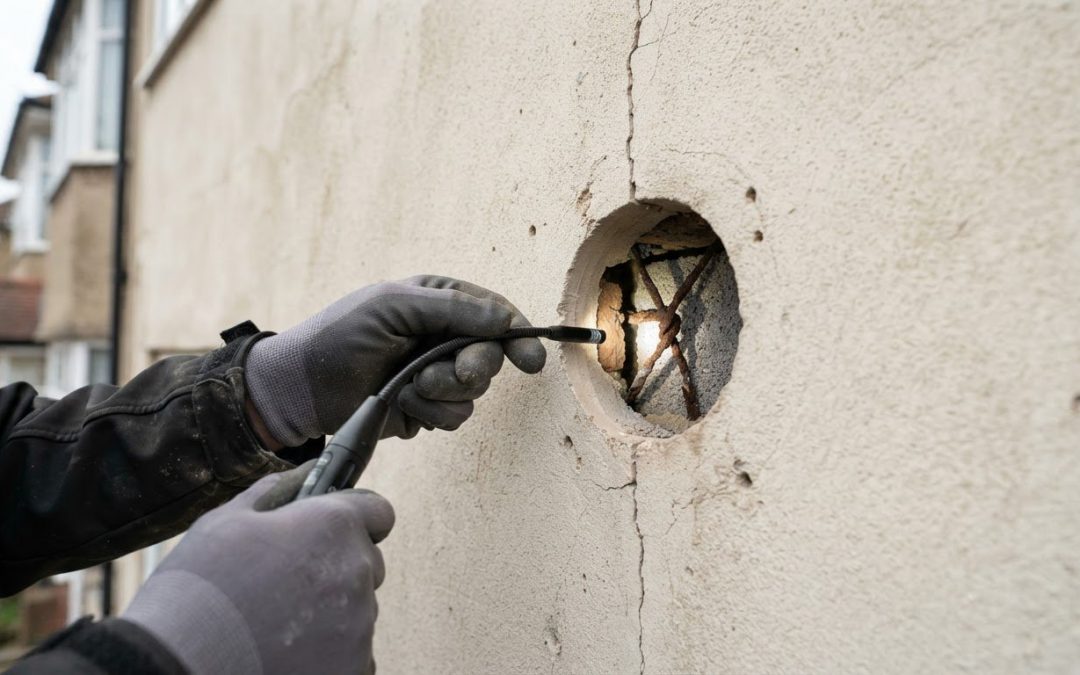
A cracking or bulging wall needs a closer look, but visible damage alone cannot confirm a wall tie problem. Knowing what to do if you suspect a botched wall tie installation starts with a specialist inspection, not an assumption that the ties need replacing.
It is understandable to worry when cracks appear in brickwork or render, or gaps develop around window frames. These can be signs of wall tie failure, but corroding ties may cause no obvious external symptoms. A careful assessment can establish what is happening inside the cavity and whether the installation, the ties themselves or another issue needs attention.
This article explains how wall ties support cavity walls, which warning signs to look for and what can contribute to failure. You will also learn how a specialist assesses the ties, which repair options may suit the findings and what to look for in a competent contractor. This gives you a clearer basis for deciding what to do next without rushing into unnecessary work.
Key Takeaways
- Cracks, bulging masonry and gaps around windows can point to wall tie problems, but a specialist inspection is needed to assess the ties inside the cavity.
- Remedial tie spacing and fixing methods should suit the wall construction, openings and finishes, including render.
- Corrosion, unsuitable materials and poor installation can all contribute to wall tie failure.
- A clear survey report helps connect the inspection findings with an appropriate repair plan.
- Choose a contractor who can assess wall ties and carry out replacement when the findings show it is needed.
How does a specialist install remedial wall ties effectively through finishes such as render?
Before further building work covers the affected masonry, a wall tie specialist can inspect the cavity and assess suspected defects. An optical borescope can show existing metal ties. The findings help determine whether remedial ties are needed and where they should go.
There is no single remedial spacing pattern that suits every UK cavity wall. A common layout uses about 2.5 remedial ties per square metre, arranged in a staggered pattern at 900 mm horizontally and 450 mm vertically. Some situations need closer spacing, such as 450 mm by 450 mm. Openings, wall condition and the tie system affect the specification.
Those figures guide design, not guesswork on site. A specialist assesses the masonry, cavity and existing tie positions before setting out each fixing. For a standard brick cavity wall, a minimum penetration of 50 mm into each leaf is generally suggested. The installer must select a suitable tie and ensure it engages both leaves.
On rendered walls, the installation must pass through the finish without compromising its appearance or the tie’s fixing. The specialist identifies the intended fixing points, drills through the finish and masonry, then installs the selected tie. The holes are closed and the finish made good as appropriate. Accurate setting-out matters: misplaced holes can damage the render or fail to secure the masonry correctly.
Remedial wall ties generally fall into three types: mechanical, resin-bonded and driven. Each uses a different fixing method, so the wall’s construction and inspection findings guide the choice. Existing ties may also need removal where appropriate. A remedial specification should record the chosen system, tie positions and installation details, rather than rely on a generic pattern.
Asked which UK building regulations and standards apply? The relevant technical requirements depend on the wall and remedial tie system. The specialist should document the specification and follow the selected system’s installation requirements; spacing figures alone are not a complete design.
To document suspected defects, take dated photographs of cracks, bulging, render damage or gaps around windows, and note each location on the affected elevation. Give the specialist relevant property or previous repair records. An inspection can then compare visible signs with the ties inside the cavity.
How do I know if my wall ties are corroded?
Visible damage cannot establish whether ties have corroded, moved or were poorly installed. If you are deciding what to do if you suspect a botched wall tie installation, ask for an assessment that distinguishes these possibilities and records the evidence behind its findings.
Visible Signs of Tie Corrosion
External damage is a reason to investigate, not a diagnosis of hidden ties. A survey should map where defects occur and compare their positions with the inspected tie locations.
That comparison can help show whether the pattern points to isolated defects or a wider concern across an elevation. For example, damage concentrated around one repaired section may call for a different investigation from signs spread across several areas. The aim is to connect the visible condition with evidence inside the wall, rather than infer the cause from appearance alone.
Surveying for Tie Failure
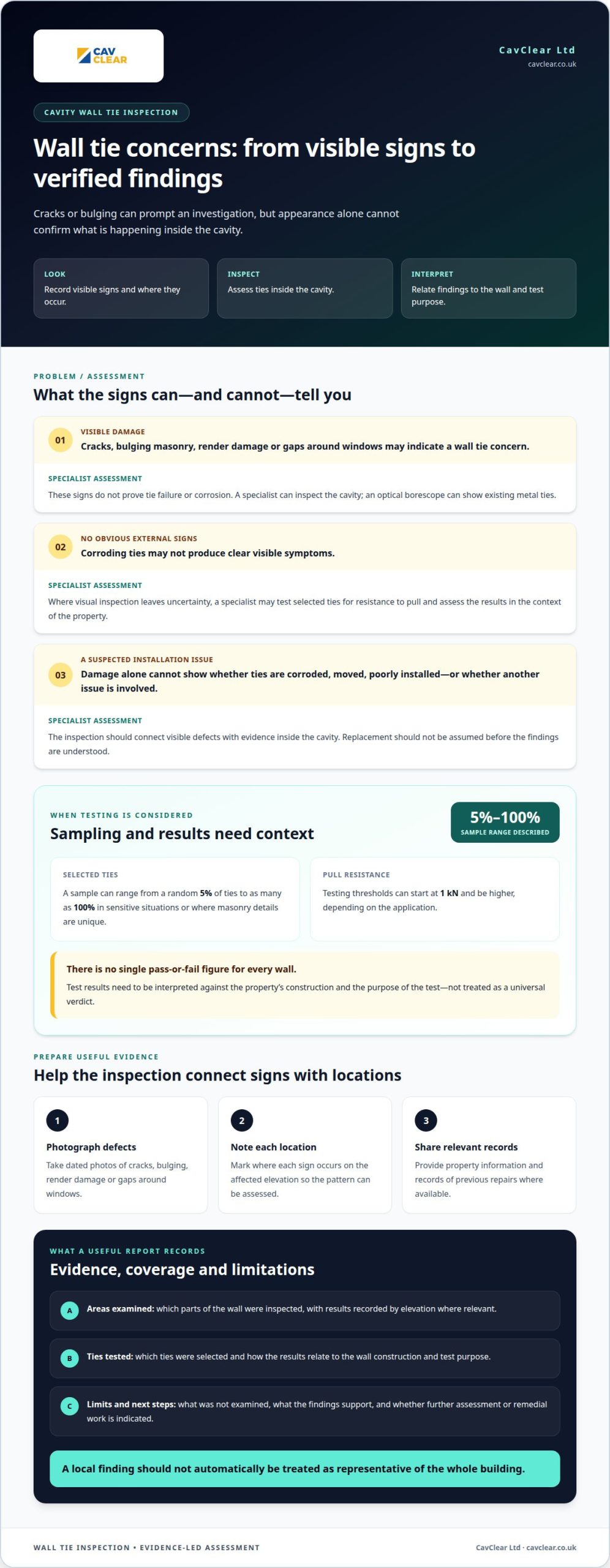
Where visual assessment leaves uncertainty, a specialist may test selected ties for resistance to pull. The sample can range from a random 5% of ties to as many as 100% in sensitive situations or where masonry details are unique.
There isn’t one pass-or-fail test figure for every wall. Wall-tie tension testing thresholds can start at 1 kN and be higher, depending on the application. The result needs to be interpreted against the property’s construction and the purpose of the test, not treated as a universal verdict.
A useful report explains which areas were examined, which ties were tested and how the findings relate to the wall. It should identify any limitations, so readers can distinguish tested evidence from areas not examined. If a property has several elevations, recording results by elevation helps prevent a local finding from being treated as representative of the whole building.
Where poor installation is suspected, the assessment should consider whether the tie arrangement appears consistent across the areas examined. A tension result alone cannot explain every installation issue: location, fixing and masonry context matter too. The surveyor can combine those observations with test results to explain whether the concern relates to tie performance, layout or another defect.
This evidence gives a more useful basis for discussing remedial options than a visual impression alone. The practical answer to what to do if you suspect a botched wall tie installation is to establish what the inspection and any testing actually show. A cavity wall tie inspection can help assess the evidence and inform the next decision.
Choosing a competent structural repair contractor
Wall tie repairs affect the stability and appearance of masonry, so choose a contractor who can connect inspection findings to a clear repair specification. A written survey should explain the observed defects, proposed remedial work and any related brickwork repairs, rather than present replacement as the only option.
Look for a process that includes inspecting the wall, identifying the tie type and condition, and mapping where remedial ties are needed. The report should distinguish evidence of failure from signs that need further assessment. For example, cracking across a mortar joint may need investigation alongside the ties, not an automatic recommendation to replace every tie.
A competent contractor should explain how the repair design suits the property. Relevant details include the masonry, cavity, existing tie positions, wall openings and external finish. Tie spacing may need to be closer around openings, while rendered walls need careful drilling and making good. Ask for these decisions to be set out in writing, with the selected method and areas of work clearly described.
The scope affects the work required and its cost. The number of affected elevations, extent of tie replacement, access requirements and condition of the brickwork all matter. Scaffolding may be needed for upper storeys; one accessible section presents a different job from several high elevations. Render repairs or damaged mortar may add separate work to the structural repair.
Brickwork and mortar repairs should reflect the cause and extent of the damage. A contractor may need to replace cracked mortar locally after installing ties, or address displaced masonry where movement has affected a wider area. Mortar colour and joint profile also affect how repairs blend with existing brickwork. The proposal should distinguish tie work from making-good tasks, so the scope is clear.
Ask for a written report and a clear explanation of how the proposed repair addresses the findings. For an older property, the contractor should consider the original wall construction and tie type rather than assume a standard detail suits every elevation. The report should record the remedial layout and any exclusions, such as unrelated brickwork work.
A wall tie survey is useful before replacement because it establishes the condition and extent of the problem. For a pre-purchase assessment, the report can help a buyer understand which areas need attention and what remedial work is recommended. Compare the proposed scope with the survey findings, including access, mortar repairs and treatment of rendered finishes.
Choose a structural repair contractor who explains the evidence, repair method and work needed to restore the masonry. Clear documentation helps you understand the project scope before remedial work begins.
Common causes of wall tie failure
Wall tie failure can develop through corrosion, unsuitable materials or poor installation. In UK properties, the cause matters because it influences the repair specification. A survey may find corroded original ties, problems with later remedial work, or both. Cracking alone cannot identify which cause applies; the ties and surrounding masonry need assessment.
Insufficient galvanising leaves metal ties less protected against corrosion. This is a concern in properties built before the mid-1980s, particularly homes with older galvanised mild-steel ties. Corrosion can expand the metal, place pressure on mortar joints and contribute to cracking or bulging. The extent of deterioration depends on the tie condition and the wall environment.
Mortar can also affect tie durability. Corrosive black ash mortar is recognised as a cause of tie corrosion, as are marine conditions involving driving rain and salt-laden air. A coastal elevation may therefore face different conditions from a sheltered inland wall. An inspection should consider the mortar and the building’s exposure, not just visible cracking.
Installation quality is another factor. During the late 1980s and early 1990s, increased demand for remedial wall tie work brought a rush of projects, including work by contractors with limited understanding of wall stabilisation or little regard for quality. Poorly executed remedial work can leave the original problem unresolved. Some ties in UK properties lasted only 15 to 20 years.
A botched installation may involve an unsuitable fixing method, inconsistent positioning or inadequate engagement with the masonry. These defects can reduce the support provided between the wall leaves. The installer’s records and a specialist inspection can help establish whether the issue relates to the original ties, later remedial work or ongoing corrosion.
Replacement choices should reflect the inspection findings and exposure conditions. Stainless-steel replacement ties are recommended where existing ties are corroded or too few ties are present. The material and layout need to suit the wall, including areas near openings. Replacing ties without addressing damaged masonry or the cause of corrosion may leave related defects unresolved.
Before work begins, the written specification should identify the affected areas, proposed remedial method and any necessary mortar repairs. Wall-tie remedial work often carries a 20-year guarantee, but the document’s terms and covered work should be clear. A guarantee does not explain the original failure, so the survey findings remain important for understanding the repair.
Wall tie function in cavity walls
A cavity wall has two masonry leaves separated by a gap, and wall ties connect them. Their role is to help the leaves act together while keeping the cavity between them. This connection supports the wall’s stability, so the ties matter even though they are hidden from view.
Cavity wall construction was introduced at the beginning of the 20th Century and has been common in the UK for over one hundred years. The construction is widespread, but each property’s tie arrangement reflects its wall design and build.
In a typical UK cavity wall layout, ties are spaced about 900 mm apart along each row and 450 mm apart vertically, roughly every sixth course of brickwork. This pattern distributes the connections across the masonry. It’s a typical arrangement, not a universal specification: wall dimensions, openings and construction details affect the layout.
Each cavity wall tie bridges the gap between the inner and outer leaves. This connection helps restrain movement between them; it does not replace the masonry or support the whole building on its own. If one leaf begins to move independently, sound ties help maintain the intended relationship between the leaves.
The cavity itself remains an important part of the construction. Ties cross it at planned points, while the open space separates the two masonry leaves. Poorly positioned ties or material bridging the gap can affect how the wall performs. An inspection therefore considers tie position and condition alongside the cavity and surrounding masonry.
Tie failure changes how securely the leaves are connected. Corrosion can weaken a metal tie, while a poorly installed or unsuitable tie may not provide effective restraint. A wall may show movement or cracking, but those signs alone do not establish whether the cause lies with the ties or another part of the construction. A specialist inspection helps determine what the visible condition means.
Remedial repairs need to restore the connection across the cavity, not simply cover surface cracking. A specialist assesses the wall, identifies where support is needed and specifies suitable remedial ties. Their position and fixing must relate to both masonry leaves. That is why a generic tie pattern cannot replace an assessment of the particular wall.
The practical takeaway is that wall ties are small, concealed components with an important structural role. If cracking or movement raises concern, a cavity wall inspection can assess the ties and help distinguish a possible connection problem from other masonry defects.
CavClear
CavClear can help establish whether suspected wall tie problems need further investigation or remedial work. A Wall Tie Survey or Cavity Wall Survey assesses the cavity and provides findings to guide the next step.
Where an inspection identifies failed or corroded ties, Wall Tie Replacement may form part of the recommended remedy. If defective cavity wall insulation is also affecting the cavity, Cavity Wall Insulation Removal may be relevant. The appropriate work depends on the inspection findings, not on cracks alone.
Contact CavClear to discuss suspected wall tie installation problems and arrange an appropriate assessment.
Make your next step an informed one
If you are deciding what to do if you suspect a botched wall tie installation, focus on getting a clear assessment before committing to remedial work. The next useful step is to understand what the inspection finds, which parts of the wall need attention and how the proposed repair addresses those findings. This keeps decisions grounded in your property’s condition, rather than assumptions based on one visible crack.
A measured approach also gives you a clearer basis for planning work and maintaining the property over time. Share relevant details about previous repairs or changes to the wall, then use the inspection findings to discuss the appropriate way forward.
Discuss your wall tie concerns with CavClear and take a considered step towards resolving the issue.
Frequently Asked Questions
What is a wall tie?
A wall tie is a metal connector joining the inner and outer leaves of a cavity wall. It helps keep the leaves connected while the cavity separates them. For a property owner, the key point is that ties are concealed within the wall, so their condition cannot be judged reliably from brickwork alone. A specialist inspection can assess their condition and whether the connection remains effective.
Can the look of the building be preserved, avoiding a ‘polka-dot’ effect?
Repairs can be finished to reduce visible marks, although the result depends on the existing brickwork, mortar and finish. Tie installation points may be filled with mortar selected to blend with the surrounding joints. On rendered walls, the repair also needs to address the surface finish. Discuss appearance as part of the written work scope, especially on prominent elevations or walls with distinctive brickwork.
Don’t my walls need rebuilding if I have wall tie corrosion in my property?
No, corrosion does not automatically mean the walls need rebuilding. Replacement ties can often restore the connection between the masonry leaves without rebuilding. The deciding factor is the wall’s condition: severe bulging or displaced masonry may require more extensive work. A specialist assessment should establish whether the damage is localised or widespread and explain why the proposed repair suits the affected area.
What are the signs of incorrectly installed wall ties in a UK cavity wall?
Possible signs include uneven or irregular cracking, bulging masonry and movement around openings, but these symptoms do not prove poor installation. A fault may also remain hidden if the ties do not engage effectively with both wall leaves. For example, a survey may find tie positions or fixing conditions that differ from the intended layout. Inspection findings, rather than appearance alone, help identify the cause.
What should a specialist inspection involve if you suspect wall ties were installed incorrectly?
A specialist inspection should assess the wall construction, visible defects and ties within the cavity. Depending on the property, the surveyor may use a borescope, metal detector or pull-testing equipment to investigate tie location and condition. The report should record the findings, relevant photographs and recommended remedial work. Previous repair documents can also help identify areas or installation details needing closer assessment.
Who is qualified to inspect and repair wall ties in the UK?
Use a specialist contractor with experience in cavity wall tie surveys, inspections and remedial replacement. The contractor should explain how the survey findings inform a proposed repair, rather than treating every crack as proof of tie failure. CavClear provides Wall Tie Surveys and Wall Tie Replacement, with findings and recommendations provided for the property.
What factors affect the cost of a wall tie inspection and remedial work in the UK?
The scope depends on the property’s construction, how many areas need investigation, the extent of affected masonry and access to each elevation. Repair requirements also vary with the number and type of ties involved, finishes such as render, and any associated brickwork repairs. Scaffolding or other access arrangements can affect the work scope. Survey and remedial costs are property-specific, so a written assessment helps define the work involved.
What methods are used to repair or replace badly installed wall ties?
The method depends on the wall construction and inspection findings. Remedial ties may be mechanical, resin-bonded or driven, each using a different fixing approach. A specialist specifies a suitable system and positions it to connect the masonry leaves. Where appropriate, existing ties may be removed. CavClear uses corrosion-resistant stainless-steel replacement ties where existing ties are corroded or too few are present.
Recent Comments