
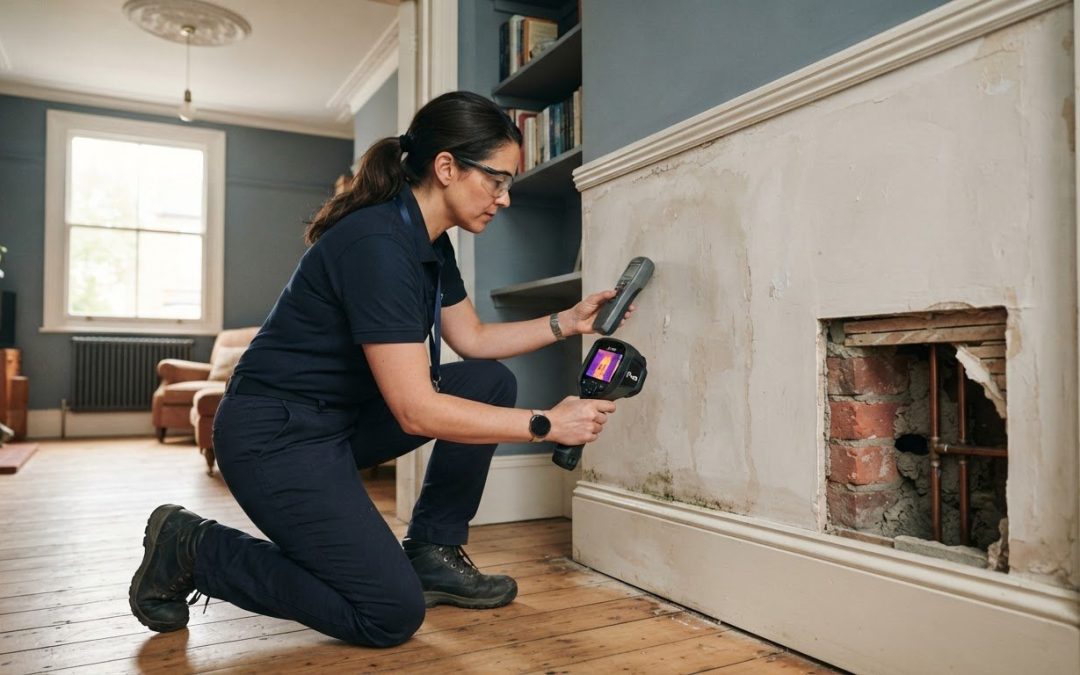
A damp patch on a party wall doesn’t automatically mean water is coming through from next door. Condensation, a plumbing leak or water entering from outside can create similar marks, but each calls for a different response. Knowing how to resolve damp issues affecting a party wall starts with tracing the moisture to its source, not simply covering the stain.
It’s understandable to worry that damp may be affecting an adjoining property, or that a surface treatment will leave the real problem untouched. The wall’s appearance alone rarely reveals where moisture is coming from, so choosing a repair too soon can leave the underlying cause unresolved.
This guide explains common sources of party-wall damp, what to record and how to match a remedy to the evidence. It also explains when a specialist damp survey or closer inspection of the cavity or wall ties may be appropriate, so you can make informed decisions about the next step.
Key Takeaways
- Staining, peeling finishes, musty odours and mould indicate moisture, but don’t identify its source or prove it is coming through the party wall.
- Consider condensation, plumbing leaks, external water entry and moisture bridging before choosing a repair.
- Record where and when symptoms appear, and check accessible areas for signs that could guide further investigation.
- Understanding how to resolve damp issues affecting a party wall means matching treatment to a confirmed or well-supported moisture source.
- If damp persists, spreads or remains unexplained, a specialist survey can provide recorded findings and remedial recommendations.
How to recognise damp affecting a party wall and why the source matters
A party wall is shared by adjoining properties or separates connected buildings. Damp on it can be worrying, particularly when you’re unsure whether moisture is coming from your home, a neighbour’s property or outside. Visible marks help you describe the problem, but they can’t diagnose it on their own.
A damp symptom is what you can see or smell; the moisture source is the route or condition causing it. This distinction matters. A stain, peeling paint or patch of mould suggests moisture may be present, but doesn’t show where it began or how it reached the wall.
Which signs can appear on a shared wall?
Look at the affected area as a whole. Note where the marks are, how large they are, whether their edges are distinct or irregular, and whether they sit near the floor, ceiling, a corner or a fitting. These details can help guide an inspection, but no single pattern proves a particular cause.
Record whether finishes are blistering or flaking, whether mould returns after cleaning, and whether a musty smell persists after the room has been aired. Take dated photographs from the same position and note any changes. This gives you a useful record to discuss with a specialist or, where appropriate, the adjoining owner.
Why does identifying the moisture source come first?
Damp may originate inside either property or result from an external defect. Repainting or applying a surface treatment before investigating can hide the symptom while leaving moisture in place. If the source remains, marks or damaged finishes may return and the wall may continue to be exposed to moisture.
Different suspected causes call for different checks. A plumbing leak may need attention to the relevant pipework; water entering from outside may call for an inspection of the wall or nearby exterior details. If room conditions point towards condensation, assess those conditions rather than assuming water is penetrating the wall. The appropriate remedy depends on the findings. For background on established damp proofing methods, including damp-proof courses and membranes, see this overview. A method should only be considered if it suits the diagnosed problem.
Understanding how to resolve damp issues affecting a party wall starts with observations, not a standard treatment. Keeping a clear record and investigating the likely moisture path can help avoid repeat decorating and unnecessary disruption. It also gives both households a firmer basis for deciding what to check next.
What causes damp on a party wall? Trace moisture before choosing a repair
A shared wall can become damp for several reasons, and its position alone doesn’t show which one applies. Moisture might enter from outside, escape from plumbing in either property, form through condensation or travel across a material that bridges a moisture barrier. Treat these as possibilities to investigate, not a diagnosis.
Damp patterns can guide an investigation, but they can’t confirm the cause on their own. The location and spread of a mark are useful clues when considered alongside the building’s layout, condition and history.
Could the damp be coming from outside or inside the adjoining property?
Compare the affected area with nearby kitchens, bathrooms, water pipes and other services in both properties. A leak may show up near pipework, but water can travel through building materials before becoming visible, so distance alone isn’t proof. If you can safely see the corresponding exterior, look for defects such as damaged pointing, cracked finishes or leaking gutters and downpipes that could allow rainwater to reach the wall.
Discuss your observations calmly with the adjoining owner. Sharing dates, photographs and the location of nearby plumbing or exterior defects can help narrow the investigation without assigning blame. Don’t open walls or disturb services to check for a leak. Arrange an appropriate inspection if the source isn’t accessible.
Can cavity conditions or wall ties be involved?
Possibly, but internal staining alone doesn’t establish a cavity defect or a problem with wall ties. The wall’s construction and inspection evidence need to support that line of enquiry. If existing cavity insulation appears relevant, seek a specialist assessment before deciding on remedial work. CavClear’s UK guide to cavity wall insulation removal explains this option. Removal should only be considered where investigation supports it.
What clues should you check before choosing a repair?
Use the wall’s position to guide checks, not to settle the diagnosis. Note whether the damp is close to a plumbing route, an external rainwater fitting or a place where different materials meet. A possible moisture bridge also needs to be assessed in context, as the building details determine whether moisture can pass across or around a barrier.
- External water entry: Check whether visible defects outside align with the affected area indoors.
- Plumbing leak: Note nearby services and whether symptoms appear close to them.
- Condensation: Record room conditions and where moisture forms. Don’t assume mould alone proves condensation.
- Cavity concerns: Seek inspection evidence before linking damp to insulation, debris or wall ties.
Following how to resolve damp issues affecting a party wall means matching any repair to a confirmed or well-supported source. If proposed work affects a party wall in England or Wales, consult the Party Wall etc. Act 1996 and obtain suitable advice about the work. A survey can help establish whether cavity or wall-tie concerns are relevant before you decide what to do.
How to distinguish condensation, water ingress and cavity-related damp
Several moisture sources can produce similar marks on a party wall. Use the pattern and room conditions to decide what needs checking, not to diagnose the cause from appearance alone. A moisture meter reading can add information, but it isn’t a complete diagnosis. Readings need to be considered alongside the building’s construction and other evidence.
| Possible cause | Observations to record | Evidence that needs checking |
|---|---|---|
| Condensation | When and where moisture appears, whether it varies with room use or ventilation, and whether nearby surfaces feel cold. | Room conditions, ventilation and moisture-producing activities, considered alongside the building fabric. |
| Water ingress | Whether damp changes after wet weather, and how its position relates to external walls, plumbing routes or fittings. | Accessible exterior surfaces, rainwater goods, pointing, plumbing and other possible entry paths. |
| Cavity-related issue | Where symptoms sit in relation to changes in wall construction or areas with existing cavity insulation. | The wall’s construction and, where indicated, a cavity wall or wall tie inspection. |
What observations may point towards condensation?
Record when moisture forms and where it appears. Note whether it changes with room use, ventilation or activities that release moisture, such as cooking or bathing. Also note nearby cold surfaces, but treat them as clues rather than proof. An inspection may need to consider household conditions as well as the building itself. The BRE guide Diagnosing the causes of dampness explains why identifying the source matters before selecting remedial work.
What observations may point towards water ingress or cavity defects?
Compare the affected area with accessible external defects, nearby plumbing routes and changes in wall construction. A cavity wall or wall tie inspection may be relevant if the property’s construction and other findings support that possibility. Internal staining alone isn’t enough to establish a defect. If you need a structured assessment and written recommendations, read this professional damp survey guide.
Knowing how to resolve damp issues affecting a party wall depends on weighing these observations together. A suitably qualified surveyor can assess the evidence and recommend further checks, helping ensure the proposed remedy addresses the likely source rather than just the visible symptom.
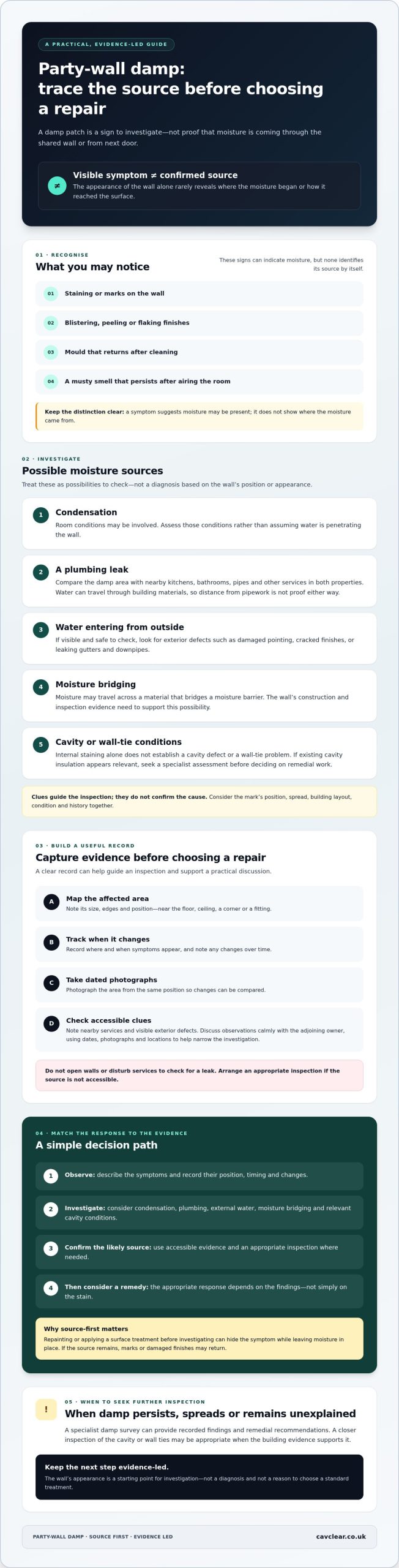
How to resolve party-wall damp: a practical, evidence-led action plan
A clear process helps you move from concern to a proportionate repair without committing to work before the cause is understood. Keep the adjoining owner informed if inspection or remedial work may involve their side of the wall, and agree practical access arrangements before an inspection.
- Document the symptoms. Take dated photographs, note where damp appears and record when it changes or returns. Add a simple timeline and mention any recent repairs, leaks or changes to the room.
- Check accessible areas. Look for visible signs near the affected wall, such as plumbing, damaged finishes or an external defect you can view safely. Record observations from the adjoining side only if you have permission to access it.
- Discuss what you’ve found. Share photographs and notes calmly with the adjoining owner. This may help identify relevant services or changes on either side without assuming who or what is responsible.
- Arrange appropriate investigation. If the source remains uncertain, ask a suitably qualified specialist to assess the wall and relevant surrounding areas. Agree the inspection scope and ask for the findings and remedial recommendations in writing.
- Review the result. Compare the proposed work with the evidence, then monitor the area after the repair. Keep dated notes and photographs to record whether symptoms fade, persist or return.
What should you prepare before arranging an inspection?
Have your timeline, photographs and notes about recent changes ready. Write down what you can see from each accessible side of the wall and list questions about the inspection, written report and how recommendations follow from the evidence. This gives the specialist useful context and helps you understand the next steps.
How should you assess a proposed remedy?
Ask which moisture source the specialist suspects and what observations support that view. Check that the proposed work addresses the source and affected area, not only the damaged finish. If the explanation is unclear, ask for clarification before proceeding. Avoid invasive work until the likely cause and extent have been assessed. A generic treatment may leave the original problem in place.
Agree how access and communication will be handled if work could affect the adjoining property. After the repair, continue photographing the area from a consistent position and note any changes. This record can help show whether the remedy has addressed the moisture issue or whether further assessment is needed.
If inspection evidence points to a cavity concern, explore CavClear’s cavity wall surveys to investigate that specific issue. The right next step depends on the findings, not on a one-size-fits-all treatment.
When to arrange a damp survey for a party wall
Arrange a specialist assessment if damp persists despite reasonable steps to manage room moisture, spreads beyond its original area or has no clear explanation. A survey is also worth considering when marks keep returning after redecoration, or when observations from either side of the wall suggest a leak, external defect or cavity concern. An investigation can help clarify what needs attention before you choose remedial work.
A useful survey should leave you with more than a general description of the symptoms. It should set out the areas inspected, record relevant observations, explain the findings and identify likely moisture sources within the agreed scope. It should also distinguish between conclusions supported by the inspection and issues that need further investigation.
What should a damp survey report help you understand?
Look for a clear link between each recommendation and the evidence recorded. The report should identify the areas inspected, what was observed and which moisture sources are considered likely. Where the cause remains uncertain, it should say so and describe any further checks that may be appropriate. Recommended remedial work should relate to those findings, rather than focus only on the visible finish.
How can you choose a suitable specialist?
Ask about the specialist’s experience with damp and, if the property evidence points that way, cavity walls or wall ties. Check that they’ll provide documented findings and explain how recommendations follow from the inspection. CavClear provides damp surveys across the United Kingdom, with cavity wall and wall tie inspections where relevant. Its accredited technicians prepare reports and recommend remedial action. For more points to consider, see this guide to choosing dampness specialists.
Before booking, ask what the survey will cover, whether it can assess the areas causing concern and what written information you’ll receive. Share your photographs and symptom timeline in advance, and mention any adjoining-property access that may need to be coordinated. A clear scope helps set expectations and keeps the investigation focused on the wall and its likely moisture pathways.
If you’re unsure how to resolve damp issues affecting a party wall, a survey can provide a structured starting point without committing you to a particular repair. Discuss a damp survey with CavClear to explore whether an inspection is suitable for your concerns.
Take the next step towards a lasting repair
Damp on a party wall is a symptom, not a diagnosis. Moisture may come from inside either property, an external defect, condensation or a cavity-related issue. Record what you observe, then use the evidence to guide an investigation before choosing a repair. This source-first approach helps avoid treatments that only hide damaged finishes while moisture remains.
Knowing how to resolve damp issues affecting a party wall means matching remedial work to the likely cause and checking whether symptoms change afterwards. If damp persists, spreads or remains unexplained, a specialist survey can provide a clearer basis for decisions. CavClear’s accredited technicians inspect properties, and reports include professional remedial recommendations. Its services are available across the United Kingdom.
Discuss a damp survey with CavClear to explore whether an inspection could help clarify the next step. With a better understanding of the moisture source, you can make a more informed decision about the wall.
Frequently Asked Questions
Is damp on a party wall always caused by a leak?
No. A leak is one possible source, but damp may also relate to condensation, water entering from outside or moisture moving through a building detail. Similar-looking marks can have different causes, so appearance alone isn’t enough to diagnose the problem. Record where and when the damp appears, then arrange an appropriate inspection if the source isn’t clear or the affected area persists or spreads.
Can damp travel through a party wall from a neighbouring property?
Moisture can reach a shared wall from different directions, including from within either property or through an external defect. It may also travel through building materials before becoming visible, so the position of a damp patch doesn’t necessarily show where the moisture started. Compare observations from accessible areas on both sides, with permission, and discuss them calmly with your neighbour. Avoid assigning responsibility until the evidence has been assessed.
How do I tell condensation from water ingress on a shared wall?
Look for patterns and context, but don’t treat either as conclusive. Record when moisture appears, whether it changes with room use or ventilation, and whether it’s near cold surfaces. Also note nearby plumbing or visible exterior defects, such as damaged pointing or rainwater goods. Condensation and water ingress can produce overlapping symptoms, so a suitably qualified specialist may need to assess the building and its conditions.
What should I do first if I find damp on a party wall?
Document the affected area before choosing a treatment. Take dated photographs, note the location and size of the marks, and record when they change or return. Check accessible areas for relevant signs, such as nearby plumbing or an exterior defect, without opening walls or disturbing services. If the source isn’t clear, arrange an appropriate investigation. Avoid repainting or applying a surface treatment as a substitute for finding the cause.
When should I arrange a damp survey for a party wall?
Consider a survey if damp persists, spreads or remains unexplained, or if marks return after redecoration. An inspection can record the affected areas, assess relevant building conditions and identify likely moisture sources within its agreed scope. A useful report should explain which findings are supported by the inspection, which need further checks and what remedial work is recommended. This evidence can help you choose a suitable next step.
Can cavity wall insulation cause damp on a party wall?
Existing cavity wall insulation may be relevant in some cases, but its involvement depends on the property’s construction and inspection evidence. Internal staining alone can’t confirm an insulation problem. If the wall’s construction or other findings point to a cavity-related issue, ask a specialist to assess it before deciding on remedial work. A cavity wall survey or insulation assessment may help establish whether this is connected to the damp.
Will repainting or applying a damp treatment resolve party-wall damp?
Not necessarily. Repainting or applying a surface treatment may improve the appearance, but it won’t stop moisture if the underlying source remains. First establish the likely cause, then choose work that addresses it. A plumbing leak, external water entry and condensation call for different investigations and responses. Ask a specialist to explain how any recommended treatment relates to the inspection findings before proceeding.
Recent Comments