
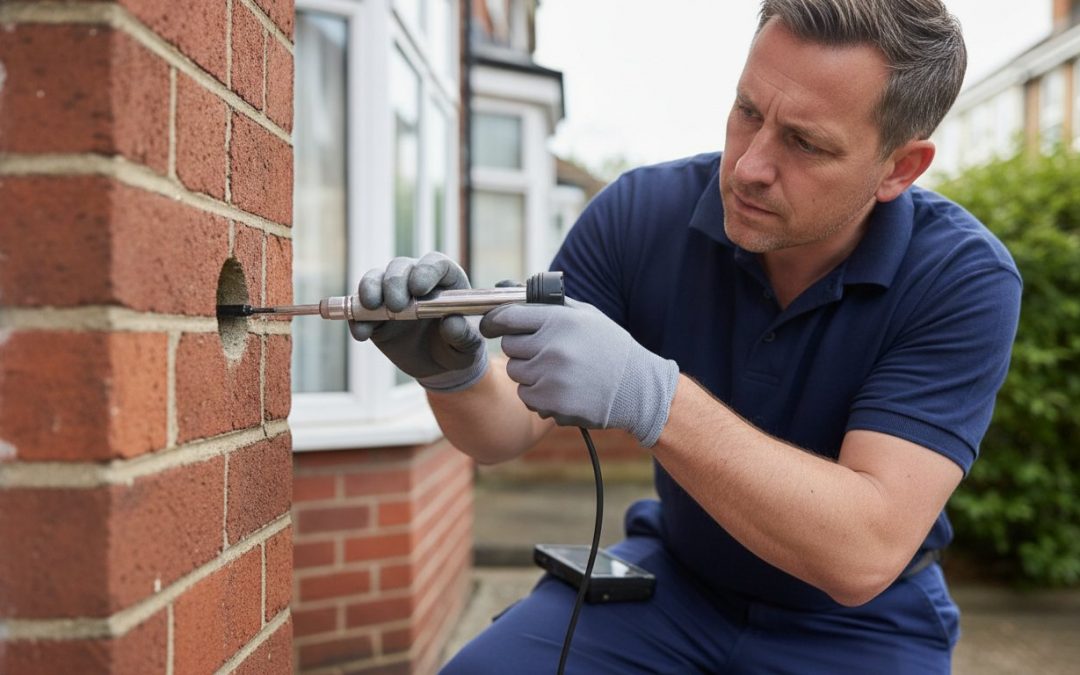
The steel ties holding your property’s masonry together are often the most overlooked component of its structure, yet their failure can lead to catastrophic wall collapse if left unaddressed. For many UK homeowners, the first sign of trouble is a subtle horizontal crack or a slight bulge in the brickwork, symptoms that often trigger immediate anxiety about safety and repair costs. It’s frustrating to receive conflicting advice from general builders who may not understand the specific complexities of cavity wall physics or the risks associated with certain types of insulation.
We understand that protecting your home’s structural integrity is your priority, and you deserve a solution that’s both permanent and non-disruptive. By consulting a dedicated wall tie replacement specialist, you can move away from guesswork and toward a methodical, survey-led resolution. This guide will show you how to identify the technical markers of tie corrosion, why a specialist survey is essential for an accurate diagnosis, and how nationwide expertise ensures your property remains a safe, stable investment for decades to come. You’ll discover a clear path to restoring your home’s health using industry-standard methodologies that prioritize cleanliness and precision.
Key Takeaways
- Identify the visual indicators of structural distress, such as horizontal mortar cracking and external bulging caused by iron-oxide expansion.
- Understand how retrospective cavity wall insulation can compromise structural health by trapping moisture against original steel ties.
- Discover the diagnostic methodology used by a wall tie replacement specialist, involving non-invasive boroscope inspections to assess tie condition.
- Learn why a methodical, survey-led approach is essential for a permanent and non-disruptive restoration of your home’s stability.
- Recognize the value of nationwide technical standards in ensuring the long-term safety and asset health of your property.
Why You Need a Wall Tie Replacement Specialist for Your Property
A wall tie replacement specialist is a dedicated contractor who focuses specifically on the stabilization and structural restoration of masonry cavity walls. Unlike general builders who manage broad construction projects, these specialists possess the technical knowledge and equipment required to diagnose internal metal fatigue within a building’s envelope. Their primary objective is to restore the structural bond between a property’s internal and external walls, ensuring the building remains safe and weather-tight without the need for large-scale reconstruction.
UK homes built with cavity walls rely on these hidden components to maintain structural cohesion. To understand what a cavity wall tie is, one must view it as the essential bridge that anchors the external brick leaf to the internal load-bearing structure. Without these functional connectors, the outer wall acts as an independent, expert-standing skin that’s vulnerable to wind loading and thermal movement. This section explains why a specialized approach is the only way to guarantee a permanent fix.
The Role of Wall Ties in UK Structural Integrity
Wall ties prevent the outer masonry leaf from bowing or collapsing outward by transferring lateral loads to the stronger internal leaf. Over decades, the materials used for these ties have evolved significantly. Properties built before the 1980s often contain mild steel ties with limited galvanization, which have a limited lifespan in many UK environments. Modern standards now dictate the use of stainless steel, which offers superior corrosion resistance. Ensuring the correct density, typically 2.5 ties per square metre, is vital for maintaining stability. A wall tie replacement specialist ensures that these modern standards are met, providing the necessary reinforcement to keep the masonry secure against the elements.
General Builder vs. Specialist Contractor
Choosing a specialist over a general builder is a matter of precision and long-term security. General contractors often lack the specialized instruments required for an accurate diagnosis, which can lead to “guesswork” repairs that might overlook corroded ties. A specialist uses a methodical diagnostic process that includes:
- High-resolution boroscopes: These allow technicians to visually inspect the condition of ties inside the cavity through tiny, non-disruptive holes.
- Calibrated metal detectors: These tools map the exact location of every existing tie to ensure comprehensive coverage.
- Specialized extraction tools: These enable the clean removal or isolation of old, expanding ties without damaging the surrounding brickwork.
Accredited technicians understand the complex dynamics of cavity walls and the risks of using incorrect remedial tie types. They ensure that new ties are installed to the precise depth required for a mechanical or resin-based bond. This professional rigor transforms a potentially messy repair into a clean, efficient intervention. By hiring a wall tie replacement specialist with nationwide coverage, you’re investing in a high-level technical standard that protects your property’s value as a long-term asset.
Identifying the Signs of Cavity Wall Tie Failure
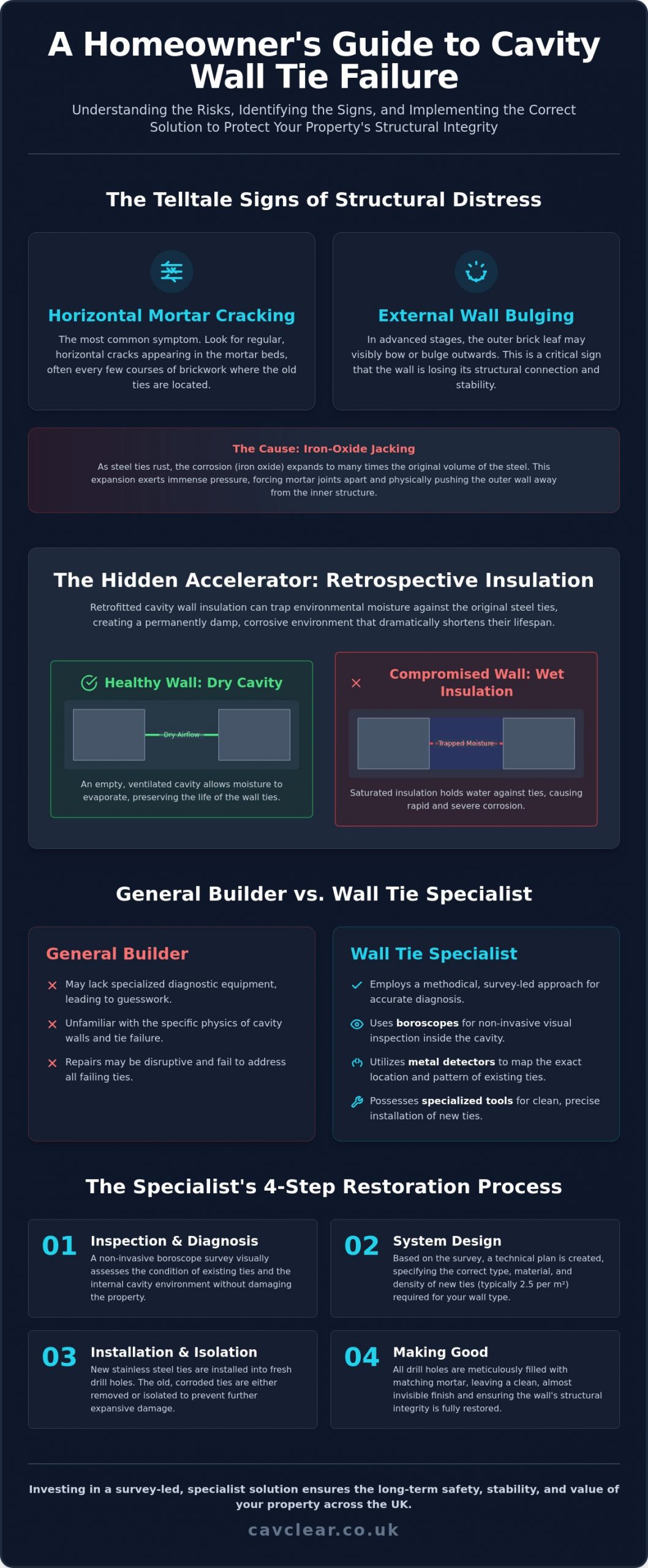
Detecting structural issues early is the most effective way to prevent the high costs associated with masonry collapse. When the metal ties within a cavity wall begin to corrode, they undergo a chemical transformation that physically alters the building’s facade. This process, known as iron-oxide jacking, occurs because rust occupies a significantly larger volume than the original steel. As the ties expand, they exert immense upward pressure on the mortar joints, leading to the characteristic signs of wall tie failure that property owners should monitor.
The most common symptom is horizontal cracking in the mortar joints, typically appearing every six courses of brickwork where the original ties were bedded. This isn’t merely an aesthetic flaw; it’s a signal that the outer leaf of your home is losing its connection to the structural core. In advanced stages, you may notice visible bowing or bulging of the external brickwork. This is particularly prevalent on gable ends, where large areas of masonry are subjected to significant wind loads without the support of internal floors or partitions. A wall tie replacement specialist can identify these shifts before they compromise the building’s safety.
External Indicators of Masonry Movement
It’s vital to differentiate between different types of masonry distress. While “stepped” cracking often indicates foundation movement or subsidence, horizontal bed-joint expansion is almost exclusively linked to tie corrosion. You may also observe “spalling,” where the face of the brick literally pops off due to the internal pressure of an expanding tie. Another red flag is the appearance of gaps around window and door frames. If the frames seem to be pulling away from the masonry, it’s often because the outer leaf is leaning outward, away from the internal structure. If you notice these changes, booking a professional wall tie survey is the only reliable way to confirm the extent of the hidden damage.
Internal Structural Red Flags
While most signs are external, internal changes can also indicate a failing cavity. Cracks in interior plasterwork that mirror the location of external masonry issues suggest that the entire wall assembly is under stress. You might also encounter sudden damp ingress in specific, isolated spots. This happens when a corroded tie tilts or snaps, allowing water to track across the cavity to the inner leaf. In extreme cases, the outer wall moves so far that it lifts the roof edges, creating a “pagoda” effect at the eaves where the tiles appear to turn upward. These are serious indicators that the masonry is no longer adequately supported. A wall tie replacement specialist will use diagnostic tools to assess these risks and provide a permanent, non-disruptive fix that restores your home’s structural integrity.
The Hidden Link: How Retrospective Insulation Accelerates Tie Corrosion
The structural health of a cavity wall depends on its ability to manage moisture through natural ventilation and drainage. When retrospective cavity insulation is introduced, this delicate balance is often disrupted. We maintain a firm stance against the installation of retrospective insulation because it frequently acts as a bridge for moisture to travel between the external and internal masonry leaves. Instead of allowing water to drain away, the material can trap humidity directly against the metal ties, creating a corrosive micro-environment that significantly accelerates the failure of original galvanised steel components.
Why Retrospective Insulation is a Structural Risk
The technical risks associated with filling a previously clear wall cavity are substantial. These spaces were designed to provide a physical break that prevents dampness from reaching the interior of the home. When packed with insulation, the material can become saturated over time, especially in properties exposed to driving rain or coastal conditions. This saturation leads to “rust-heave,” a process where the wall ties expand with enough force to literally lift the masonry courses. As a nationwide wall tie replacement specialist, we frequently encounter properties where structural distress was directly triggered by these installations. Consequently, performing a thorough cavity wall insulation removal is often a structural necessity to preserve the building’s integrity and protect new remedial ties.
The Impact of Moisture Retention on Steel Ties
Original galvanised ties rely on a dry environment to maintain their protective zinc coating. In a damp, insulated cavity, this coating fails prematurely, exposing the underlying steel to oxidation. The resulting iron-oxide expansion can increase the thickness of the tie by up to seven times its original size. This expansion isn’t just a chemical change; it’s a physical force that cracks mortar joints and destabilizes the outer leaf of the building. For homeowners, following professional guidance on assessment and replacement is critical to understanding how environmental factors impact their property’s future health. Maintaining a clear, ventilated cavity is the only way to ensure that new stainless steel ties aren’t subjected to the same corrosive stresses. A qualified wall tie replacement specialist will always prioritize the removal of defective materials to safeguard the building’s structural integrity. This methodical approach ensures that the repair isn’t just a temporary fix, but a vital investment in the property’s long-term asset health.
The Professional Wall Tie Survey and Replacement Process
A professional wall tie replacement specialist follows a methodical, four-stage protocol to ensure your property’s structural safety. This process moves from non-invasive diagnostics to precision engineering, ensuring that the root cause of masonry instability is addressed without causing unnecessary disruption to the building’s fabric. By adhering to strict technical standards, specialists can provide a permanent fix that general builders often overlook. The process is designed to be clean, efficient, and transparent, providing homeowners with documented proof of their property’s restored health.
The standard remedial procedure involves four critical steps:
- Step 1: Mapping and Detection. Technicians use calibrated metal detectors to locate the exact position of every existing wall tie. This ensures that no corroded components are missed during the subsequent inspection and isolation phases.
- Step 2: Boroscope Inspection. High-definition endoscopes are inserted through tiny, discrete holes in the mortar. This allows the specialist to visually confirm the level of corrosion and the current condition of the cavity.
- Step 3: Remedial Installation. New stainless steel ties are installed at the correct density and spacing, creating a fresh, corrosion-resistant bond between the masonry leaves.
- Step 4: Isolation. The original, corroded ties are isolated or detached from the outer leaf. This prevents ongoing iron-oxide expansion from causing further “rust-heave” and cracking in the future.
Conducting a Non-Disruptive Wall Tie Survey
Modern diagnostic tools allow for a comprehensive assessment without the need to remove bricks or cause structural damage. Using high-definition endoscopes, a specialist can view the internal cavity and capture photographic evidence of tie condition, moisture levels, and any debris present. This level of detail is provided in a technical report, which is essential for insurance purposes or property sales. Because wall tie failure is often linked to moisture ingress, a specialist survey is frequently recommended as a vital component of a professional damp survey to ensure all environmental and structural risks are identified simultaneously.
Remedial Replacement Techniques
The choice of replacement tie depends on the specific masonry type and the width of the cavity. Specialists typically use mechanical, resin-bonded, or helical remedial ties, each designed for maximum pull-out strength. It’s critical that these new ties are manufactured from grade 304 or 316 stainless steel, as these materials offer the long-term corrosion resistance necessary for the UK climate. Once the ties are secured, the final step involves color-matching the mortar used to seal the drill holes. This ensures that the structural repair is virtually invisible, preserving the aesthetic appeal of your home. If you suspect your property is showing signs of movement, you should arrange a specialist wall tie survey to obtain a definitive diagnosis and a clear path toward resolution.
Securing Your Property with Nationwide Wall Tie Specialists
Choosing a wall tie replacement specialist with nationwide reach provides a level of consistency that local general builders simply cannot match. While regional contractors often vary in their diagnostic rigor, a national provider like CavClear operates under a unified set of technical standards across the entire United Kingdom. This ensures that whether your property is in a coastal town or a city center, the methodology remains precise, safety-conscious, and focused on long-term asset health. We view structural repairs not as a reactive fix, but as a vital investment in the safety and future marketability of your home. Our nationwide coverage means that property owners with multiple assets can rely on a single, high-level standard of care regardless of location.
The onsite environment is managed with the same level of professional rigor as the technical survey. We understand that structural work can feel invasive, so we prioritize a clean and non-disruptive methodology. This includes using dust-extraction equipment during drilling and ensuring that all debris is removed from the cavity and the site. By maintaining a safety-conscious workspace, we protect both the inhabitants and the building’s fabric. This proactive approach separates a true specialist from a general contractor, as every step is designed to restore structural integrity without compromising the property’s daily function.
Why Expertise and Technical Standards Matter
Following strict industry methodologies is the only way to ensure masonry stabilization is successful. We focus on the restoration of comfort by addressing the root cause of structural distress, such as the moisture-driven corrosion discussed in previous sections. Our accredited technicians provide detailed technical reports that include photographic evidence and precise mapping of remedial work. These documents are invaluable for insurers and future property buyers, as they offer transparent proof that the structural integrity has been professionally restored. A specialist’s report transforms a hidden repair into a certified asset, removing the uncertainty that often surrounds property transactions involving older masonry.
Long-Term Assurances for Your Home
Installing remedial stainless steel ties offers a permanent solution to the destructive forces of rust-heave and masonry bowing. Once the original, failing ties are isolated and the new structural bond is established, the risk of further cracking is effectively eliminated. This expert intervention provides the peace of mind that comes from knowing your home’s envelope is secure against wind loading and thermal movement. The use of grade 304 or 316 stainless steel ensures that the fix is not just temporary, but a lasting part of the building’s architecture. Protecting your property’s future begins with an accurate diagnosis. Booking your specialist survey is the first step toward securing your home and ensuring its structural stability for decades to come.
Securing Your Home’s Long-Term Structural Health
Our nationwide UK coverage ensures that every homeowner has access to specialist accredited technicians who deliver detailed technical structural reports. These documents provide the transparency you need for insurance purposes and future property valuations. By choosing a professional, survey-led solution, you’re not just performing a repair; you’re making a vital investment in your property’s future stability. Book your nationwide wall tie survey with CavClear today to obtain a definitive diagnosis and restore your peace of mind. It’s the most effective way to protect your home’s value and ensure your family’s safety.
Frequently Asked Questions
What are the signs of cavity wall tie failure?
The most visible signs include horizontal cracking in mortar joints, typically appearing every six courses of brickwork. You might also notice bulging or bowing in external walls, particularly on gable ends, or a “pagoda” effect where the eaves appear to lift. These symptoms are caused by the expansion of corroding steel ties, which exert immense pressure on the masonry as they rust.
Is it expensive to replace wall ties in a standard UK home?
The total investment depends on the size of your property and the density of ties required to meet current technical standards. While structural repairs require professional expertise, the cost is significantly lower than the expense of rebuilding a collapsed wall leaf. A wall tie replacement specialist will provide a detailed assessment of the specific work needed to restore your home’s stability and safety.
How long do remedial cavity wall ties typically last?
Modern remedial ties manufactured from grade 304 or 316 stainless steel are designed to last for the remaining life of the building, often exceeding 50 years. This is a significant improvement over the mild steel ties used in many UK homes built before the 1980s, which often failed after just 15 to 20 years. Stainless steel provides a permanent solution to corrosion in almost any environment.
Do I really need a specialist wall tie survey before buying a house?
A specialist survey is a vital part of the due diligence process when purchasing an older cavity-wall property. Standard homebuyer reports are often visual only and cannot confirm the condition of the metal ties hidden within the cavity. A specialist uses boroscopes to provide a definitive diagnosis, protecting you from unexpected structural repair costs after you’ve completed the purchase.
How much does a professional wall tie survey cost in 2026?
Survey fees are determined by the property’s scale and the level of diagnostic detail required for a conclusive report. A professional wall tie replacement specialist uses high-definition endoscopes to capture photographic evidence of the internal cavity. This results in a technical report that satisfies insurers and mortgage lenders by providing a clear, factual account of the building’s structural health.
Can wall tie failure be caused by cavity wall insulation?
Retrospective cavity wall insulation often accelerates the failure of original steel ties by trapping moisture within the wall. This damp environment causes the protective galvanised coating on older ties to fail, leading to rapid corrosion and iron-oxide expansion. Maintaining a clear, ventilated cavity is essential for preventing this type of structural decay and preserving the integrity of the masonry.
How long does the wall tie replacement process take?
For a typical semi-detached or detached house, the replacement process usually takes between one and three days. The exact timeframe depends on the number of ties that need to be isolated and the total area of masonry being stabilized. Because the process is methodical and uses specialized equipment, it’s completed efficiently with minimal disruption to your daily routine.
Will replacing my wall ties cause a mess or damage my brickwork?
Professional replacement techniques are designed to be clean and virtually invisible upon completion. Technicians drill small, discrete holes in the mortar joints to install the new ties, which are then sealed with color-matched mortar. This non-disruptive methodology ensures that your brickwork remains undamaged and your home’s exterior aesthetic is preserved while the structural integrity is fully restored.
Recent Comments