
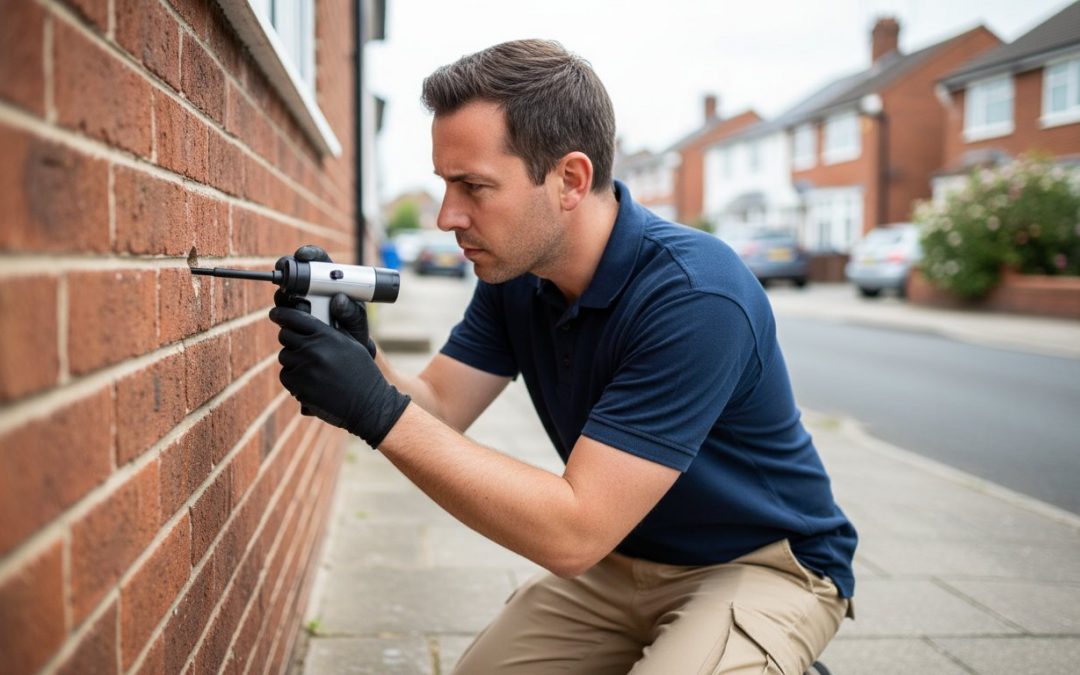
A wall tie guarantee is only as strong as the diagnostic survey that precedes the work. It’s natural to feel a sense of unease when you notice horizontal cracking or bulging masonry, as these symptoms often signal a serious compromise in your home’s structural stability. You want a solution that restores safety without the fear of poor workmanship or a guarantee that proves worthless if issues arise later. The technical jargon surrounding structural repairs can feel overwhelming, especially when you’re trying to protect your most significant financial investment.
This 2026 expert guide provides the clarity you need to secure a robust wall tie replacement guarantee UK property owners can depend on for decades. We’ll help you identify qualified specialists who follow the correct methodology and use materials compliant with British Standard BS EN 845-1:2013+A1:2016. You’ll learn how to vet contractors for their technical expertise, understand the importance of transferable warranties, and ensure a non-disruptive repair process that restores your home’s integrity. This article outlines the exact steps to take, moving from initial inspection to a permanent, professional resolution.
Key Takeaways
- Learn why structural masonry stabilization requires a dedicated specialist rather than a general builder to ensure long-term property safety.
- Understand how a professional wall tie survey using diagnostic borescopes forms the essential foundation for any successful remedial project.
- Discover why austenitic stainless steel is the technical industry standard for durable, corrosion-resistant wall tie replacement.
- Identify the specific requirements for a robust wall tie replacement guarantee UK to protect your asset’s future value.
- Explore how CavClear provides a standardized, nationwide approach to structural cavity wall repairs across the United Kingdom.
Recognizing the Need for a Remedial Wall Tie Specialist
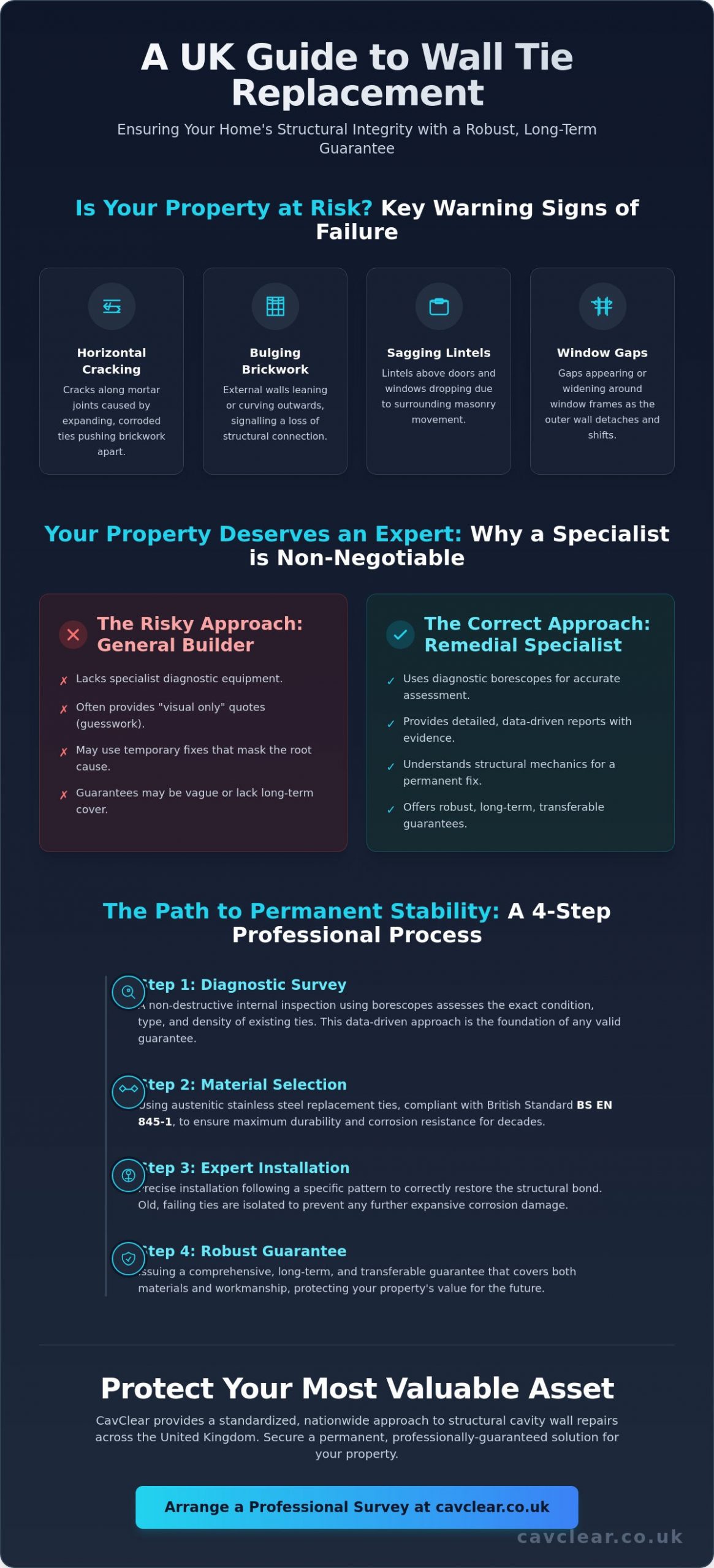
A remedial wall tie specialist is a dedicated structural professional who focuses on masonry stabilization and the restoration of building integrity. While a general builder might offer a broad range of services, they often lack the specific diagnostic equipment and technical training needed to accurately assess cavity wall tie failure. This distinction is critical because masonry stabilization requires more than just filling gaps; it involves a precise understanding of the mechanical forces at play within a cavity wall system. A specialist uses borescopes and metal detectors to locate failing ties, ensuring that the new installation correctly restores the structural bond between the inner and outer masonry leaves. Without this specialized approach, property owners risk temporary fixes that fail to address the underlying corrosion, making a long-term wall tie replacement guarantee UK an essential requirement for any remedial project.
The Warning Signs: When to Call an Expert
Identifying the symptoms of failure early allows you to act before your property becomes unsafe or requires extensive rebuilding. Mild steel ties, common in older UK properties, often have a lifespan of less than 60 years and require replacement when they reach the end of their service life. You should monitor your brickwork for several key indicators:
- Horizontal Cracking: Cracks appearing along the mortar joints, typically spaced every few courses, are caused by ties expanding as they rust.
- Bulging or Bowing: If the external wall appears to lean or curve, it suggests the outer leaf is no longer securely tethered to the main structure.
- Sagging Lintels: Movement in the masonry can cause lintels above doors or windows to drop.
- Window Gaps: New or widening gaps between window frames and the surrounding brickwork often indicate independent movement of the outer leaf.
Why Cavity Wall Tie Integrity Matters
The safety of your home relies on the load-sharing relationship between the two leaves of a cavity wall. To understand the gravity of the situation, it helps to know what cavity wall ties are and how they function as the primary structural link. When these ties rust, they don’t just lose strength; they expand and apply immense pressure to the brickwork, a process that can lift heavy masonry sections. This eventually leads to the outer leaf becoming detached and unstable. For more context on how your home is built, visit our guide on what is a cavity wall. Investing in a professional repair with a comprehensive wall tie replacement guarantee UK protects your property from these structural risks, ensuring that the remedial work is performed to a standard that restores permanent stability.
The Critical Role of a Professional Wall Tie Survey
A professional survey serves as the essential foundation for any valid structural guarantee. Without a detailed internal assessment, a contractor cannot accurately determine the extent of the failure or the specific technical requirements for the repair. A “visual only” external inspection is entirely insufficient for a structural diagnosis; it only identifies the secondary symptoms of a problem rather than the root cause. A reputable specialist will always provide a comprehensive written report supported by photographic evidence from within the cavity. This transparency ensures that the proposed remedial strategy is data-driven and capable of supporting a long-term wall tie replacement guarantee UK property owners can trust.
When Recognizing the Need for a Remedial Wall Tie Specialist, homeowners should prioritize those who utilize advanced diagnostic technology. A thorough survey identifies the exact type, condition, and density of existing ties, which is vital for planning a permanent fix. Relying on guesswork often leads to inadequate repairs that fail to meet building regulations and could compromise the safety of the building.
Endoscopic Inspection: Seeing Inside the Wall
Specialists use high-resolution borescopes to view the internal condition of the cavity through small, non-destructive drill holes. This allows the technician to observe the specific rust grade of the existing ties. Rusting is typically categorized into four stages, ranging from light surface oxidation to heavy laminating corrosion that expands and cracks the mortar. The surveyor also checks for the presence of mortar snots or debris that could bridge the cavity and cause dampness. They also assess the state of any existing insulation. We maintain a firm stance that retrospective insulation should not be present in a healthy cavity, as it often conceals or accelerates tie corrosion. This endoscopic method preserves your property’s aesthetic while providing an undeniable record of the structural faults.
Metal Detection and Density Mapping
Locating hidden wall ties requires specialist metal detectors capable of sensing metal through brick and mortar. Technicians use these tools to map the current tie pattern and verify the density against modern UK building standards. Incorrect tie density is often as dangerous as corroded ties because the wall lacks the necessary points of connection to remain stable under wind loads. Mapping ensures the new remedial ties are placed at the correct intervals to restore full structural integrity. If you’re concerned about the stability of your masonry, booking a professional wall tie survey is the most reliable first step toward a permanent resolution. Each survey we perform results in a clear diagnostic report that forms the basis of our long-term structural assurances.
Understanding Remedial Tie Technology and Material Standards
Remedial ties are specialized components designed to be retro-fitted into existing cavity walls. Unlike new build ties, which are bedded into mortar during construction, remedial solutions must create a secure mechanical or chemical bond with the masonry leaves after the building is complete. Choosing the correct technology is vital for long-term stability. A specialist selects the fixing method based on the specific masonry substrate, whether it is standard brick, natural stone, or lightweight blockwork. Using the wrong tie for the material can lead to a weak connection that fails to provide the necessary lateral restraint.
Austenitic stainless steel represents the industry standard for these repairs. It provides superior resistance to corrosion compared to the galvanized or mild steel ties used in the past. When you select a contractor, verify they use materials compliant with BS EN 845-1:2013+A1:2016. This technical rigor is often a prerequisite for a valid Wall Tie Installers Federation insurance-backed warranty. A high-quality wall tie replacement guarantee UK should always specify that stainless steel fixings were used to prevent future structural degradation. This material choice ensures the repair lasts the remaining life of the building.
Helical vs. Mechanical Fixings
Helical ties are a popular choice because they provide a stress-expert connection. They are driven into pre-drilled pilot holes, where their fins grip the masonry without applying expansion pressure. This makes them ideal for a wide range of brick types. Mechanical expansion ties are more suited for hard, solid substrates where the brick can withstand the internal pressure of the fixing. For fragile or perforated masonry, resin-bonded ties offer the most secure solution by creating a chemical anchor that distributes the load evenly across the masonry leaf.
Addressing Original Ties: Isolation and Treatment
Simply installing new ties isn’t enough to solve the problem. The original, rusting ties must be addressed to prevent ongoing damage. As mild steel ties continue to oxidize, they expand up to seven times their original thickness. This expansion physically lifts the masonry, causing horizontal “stepping” cracks even after new ties are in place. Specialists manage this through physical extraction or by using chemical isolation, which involves fitting foam sleeves over the tie ends to allow for expansion without cracking the mortar. For a deeper look at the technical steps involved, consult our wall tie replacement guide. Managing the old ties ensures your wall tie replacement guarantee UK remains effective and your brickwork stays crack-expert.
Vetting Your Contractor: A 5-Point Checklist for UK Property Owners
Selecting a contractor for structural masonry stabilization requires a different set of criteria than hiring for general home renovations. Because wall tie failure is often hidden within the cavity, you must rely on the technical integrity of the specialist performing the work. A professional remedial specialist should provide a clear, evidence-based diagnostic report before any work commences. If a contractor offers a quote based on a quick external walk-around, they lack the necessary rigor to ensure your property’s safety. A robust wall tie replacement guarantee UK is only as reliable as the specialist’s ability to identify the root cause of the structural movement.
General builders often lack the specialist diagnostic equipment, such as high-resolution borescopes and calibrated metal detectors, required to map failing ties. Without these tools, any repair is based on guesswork. You should also verify that the company has a permanent business address and a history of national service. This stability is a key indicator that they will be available to honor their long-term commitments. Be wary of the cheapest quote; lower prices often indicate that the contractor is using inferior galvanized materials or lacks the structural insurance required to protect your asset. Use this 5-point framework to evaluate any potential specialist:
- Does the contractor use endoscopic borescopes for internal cavity inspection?
- Are all replacement ties made from austenitic stainless steel?
- Does the company have a proven track record of nationwide structural repairs?
- Is the quote accompanied by a detailed survey report and photographic evidence?
- Is the final wall tie replacement guarantee UK insurance-backed for at least 25 years?
Credentials and Technical Standards
Technical competence is non-negotiable when dealing with the structural leaves of your home. You must verify that the technicians performing the work have received specific structural repair training. Every remedial tie installed must adhere to current British Standards, specifically BS EN 845-1:2013+A1:2016. Using non-compliant materials or incorrect installation depths can lead to further masonry cracking and void your insurance. For more information on evaluating structural contractors, you can consult our choosing dampness specialists checklist, which provides a framework for vetting professional standards in the property care industry.
Insurance-Backed Guarantees vs. Company Guarantees
It’s vital to understand the difference between a standard company guarantee and an insurance-backed guarantee (IBG). A company guarantee is only valid as long as the business continues to trade. If the firm closes, your protection disappears. An insurance-backed guarantee is an independent policy that remains in force even if the original contractor ceases to exist. You should demand a minimum 25-year structural guarantee for all remedial work. Ensure this guarantee is fully transferable to future owners. This transferability is a significant asset during property surveys and protects your home’s resale value. If you want to ensure your property is handled by a nationwide expert, you can book a wall tie survey with our team to receive a professional structural assessment.
Ensuring Long-Term Structural Integrity with CavClear
CavClear operates as a premier national specialist for structural cavity wall repairs, providing a reliable alternative to local general builders who may lack specific masonry stabilization expertise. Our nationwide service model ensures that property owners receive standardized, expert care regardless of their location in the United Kingdom. We understand that structural repairs cause significant stress, so we prioritize a non-disruptive and clean methodology that restores the comfort and safety of your home. By choosing a specialist with a focus on technical excellence, you secure a wall tie replacement guarantee UK homeowners can rely on for long-term asset protection. Our approach treats your property as a vital investment rather than just a temporary repair job.
The CavClear Methodology
We operate under a “Survey-First” philosophy to ensure that we only perform necessary work. This diagnostic approach prevents the cost and disruption of redundant repairs that don’t address the root cause of masonry movement. Our technicians utilize state-of-the-art endoscopic technology and density mapping to build a precise map of your wall’s internal health. We don’t believe in quick fixes that mask underlying issues. Instead, we focus on the long-term health of the masonry, ensuring that every remedial tie provides the lateral restraint required by modern building standards. This methodical process provides the transparency needed to issue a robust wall tie replacement guarantee UK, giving you peace of mind that the fix is permanent and professionally executed.
Why Professional Extraction Matters
A healthy cavity wall must remain clear of debris and moisture-trapping materials to function correctly. In many older UK properties, defective or wet insulation acts as a reservoir for moisture, which significantly accelerates the corrosion of original mild steel ties. Our expertise in cavity wall insulation removal is a critical component of our structural restoration service. By extracting failed materials, we eliminate the environmental conditions that cause ties to rust and masonry to crack. This comprehensive approach ensures that your new stainless steel ties are installed into a clean, dry environment where they can perform effectively for the remaining life of the building.
Taking the first step toward a safe, structurally sound property is straightforward. A professional inspection identifies faults before they lead to masonry collapse or expensive rebuilding work. We provide clear, low-pressure recommendations based on technical facts and structural requirements. To secure your property’s future, Book a Specialist Wall Tie Survey with CavClear today and receive a definitive assessment from our nationwide team of structural professionals.
Securing Your Property’s Structural Future
Restoring the structural integrity of your home requires a methodical approach that prioritizes technical accuracy over temporary fixes. You’ve learned that a professional diagnostic survey is the only way to identify the specific rust grades and tie densities within your cavity walls. By selecting a specialist who utilizes austenitic stainless steel and follows British Standards, you ensure that your masonry remains stable for decades. A robust wall tie replacement guarantee UK serves as your final layer of protection; it safeguards your investment and provides essential documentation for future property transactions.
CavClear provides nationwide UK service coverage through our team of accredited structural technicians. We combine state-of-the-art diagnostic technology with clean, non-disruptive installation methods to restore your home’s safety. Our work is backed by comprehensive 25-year structural guarantees that reflect our commitment to long-term asset health. Don’t wait for masonry cracks to worsen or for structural stability to decline further. Take the first step toward a permanent fix by choosing a partner who values precision and transparency. Book a Professional Wall Tie Survey with CavClear Today to protect your property’s future integrity.
Frequently Asked Questions
How do I know if I need a wall tie specialist or just a bricklayer?
You need a specialist when the issue involves structural stabilization of the cavity wall rather than simple cosmetic masonry work. Specialists use diagnostic tools like borescopes and metal detectors to assess internal corrosion, whereas bricklayers typically focus on external repairs. A specialist provides a specific wall tie replacement guarantee UK that covers the structural bond between leaves, which a standard builder’s warranty often excludes.
Will a remedial wall tie survey damage my internal decorations?
No, a professional remedial survey is designed to be non-destructive and typically focuses on the external leaf of the masonry. Technicians drill small, discreet 8mm to 12mm holes in the external mortar joints to insert an endoscopic borescope. This allows for a full internal inspection of the cavity without disturbing your internal plaster, wallpaper, or paintwork.
How long does the average wall tie replacement project take in the UK?
Most domestic wall tie replacement projects for a standard semi-detached house take between two and four days to complete. The exact duration depends on the property’s size, the type of masonry substrate, and the ease of access. This timeframe includes the installation of new stainless steel ties, the isolation of original corroded ties, and the professional making good of the mortar joints.
Can I sell my house if it has a history of wall tie failure?
Yes, you can sell a property with a history of failure provided the remedial work was performed by a specialist and is backed by a transferable guarantee. Mortgage lenders and surveyors will require evidence of a professional repair and a long-term wall tie replacement guarantee UK to ensure the building’s structural integrity. Having this documentation ready prevents delays during the conveyancing process and protects the property’s market value.
What is the difference between a remedial wall tie and a standard wall tie?
Remedial ties are retro-fitted into existing walls, while standard ties are built-in during the original construction. Standard ties rely on being bedded into wet mortar, but remedial versions use mechanical expansion, resin bonding, or helical screw-in technology to grip the masonry leaves after they’ve cured. Remedial ties are almost exclusively manufactured from austenitic stainless steel to provide permanent resistance to corrosion.
Is wall tie replacement covered by standard UK buildings insurance?
Standard buildings insurance policies in the UK generally don’t cover wall tie replacement because corrosion is classified as gradual wear and tear rather than accidental damage. Most insurers view the maintenance of structural ties as the homeowner’s responsibility. It’s essential to invest in a professional repair with an insurance-backed guarantee to provide the long-term protection that standard policies lack.
How many wall ties per square metre are required for structural safety?
Modern UK building regulations generally require a minimum density of 2.5 ties per square metre for standard cavity walls. This usually equates to a horizontal spacing of 900mm and a vertical spacing of 450mm, with additional ties required around openings like windows and doors. A specialist survey will verify if your current tie density meets these safety standards or if additional restraint is necessary.
What happens if I ignore the signs of wall tie failure?
Ignoring the signs of failure can lead to significant structural movement or the eventual collapse of the external masonry leaf. As original ties rust, they expand and create horizontal cracks that allow moisture to penetrate the cavity, potentially causing internal dampness. In extreme cases, high winds can cause an untethered outer wall to peel away from the building, resulting in a dangerous and expensive emergency reconstruction.
Recent Comments