
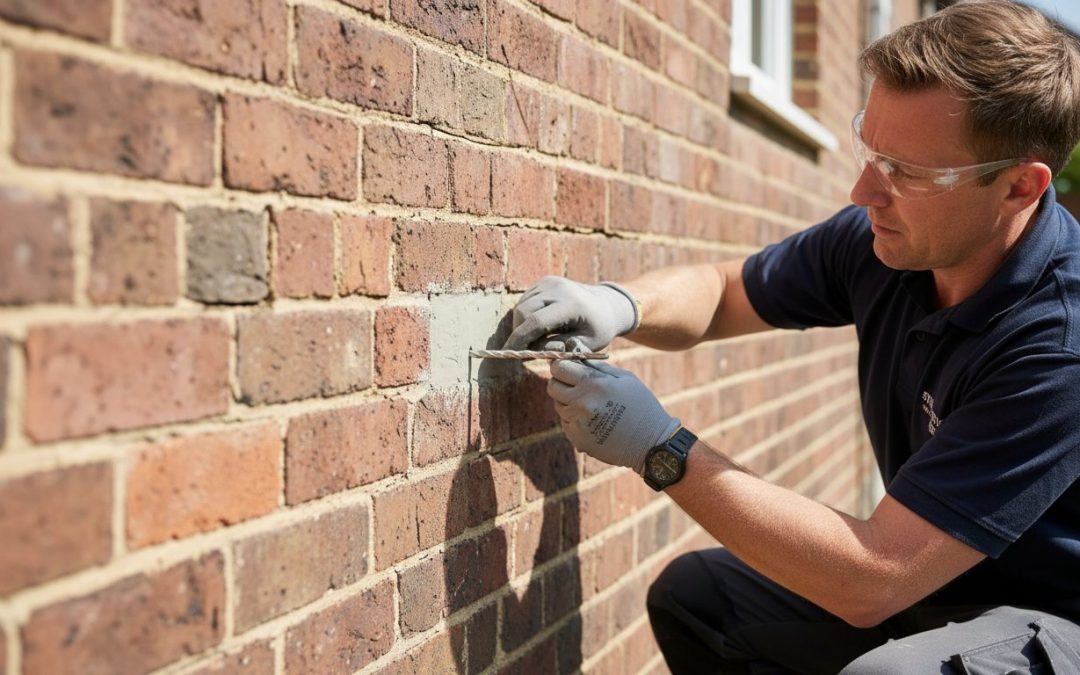
Properties built between 1920 and 1980 rely on internal metal wall ties that often have an expected lifespan of just 15 to 20 years. If your home was constructed during this era, these critical structural components may already be failing silently behind your masonry. We understand the stress that comes with spotting cracks or receiving conflicting survey results, especially when you’re worried about the potential for structural collapse or messy, disruptive repair work. Identifying the need for urgent wall tie replacement is a vital step in protecting your property’s future and restoring your peace of mind.
In this guide, you’ll learn how to spot the specific red flags of tie failure and understand the professional remedial steps required to secure your walls. We’ll explain how moisture trapped by aging cavity insulation can accelerate corrosion and why using stainless steel ties that meet BS EN 845 standards is the only reliable fix. You’ll gain a clear technical understanding of the fault and discover a clean, non-disruptive methodology that stabilizes your home without the chaos of a traditional building site. This approach ensures the long-term health of your asset while maintaining the comfort and safety of your living environment.
Key Takeaways
- Learn how to distinguish between minor cosmetic issues and critical indicators like horizontal mortar joint cracking that signal internal masonry stress.
- Understand the role of defective cavity insulation in creating damp bridges that accelerate the corrosion of your property’s structural skeleton.
- Discover why a professional survey is the first step in determining if your property requires an urgent wall tie replacement to prevent further brickwork expansion.
- Explore the technical “isolation” phase where corroded ties are neutralized safely using a clean, non-disruptive methodology.
- See how securing a comprehensive remedial report protects your property’s long-term asset health and satisfies the requirements of future buyers and insurers.
When Wall Tie Failure Becomes an Emergency
Understanding what are wall ties is essential for any homeowner with a property built with cavity walls. These metal components serve as the primary structural stabilizer for UK cavity walls, anchoring the outer masonry leaf to the inner load-bearing leaf. While they remain hidden within the cavity, their role is critical. Without them, the two leaves of the building act independently, which compromises the overall stability of the structure.
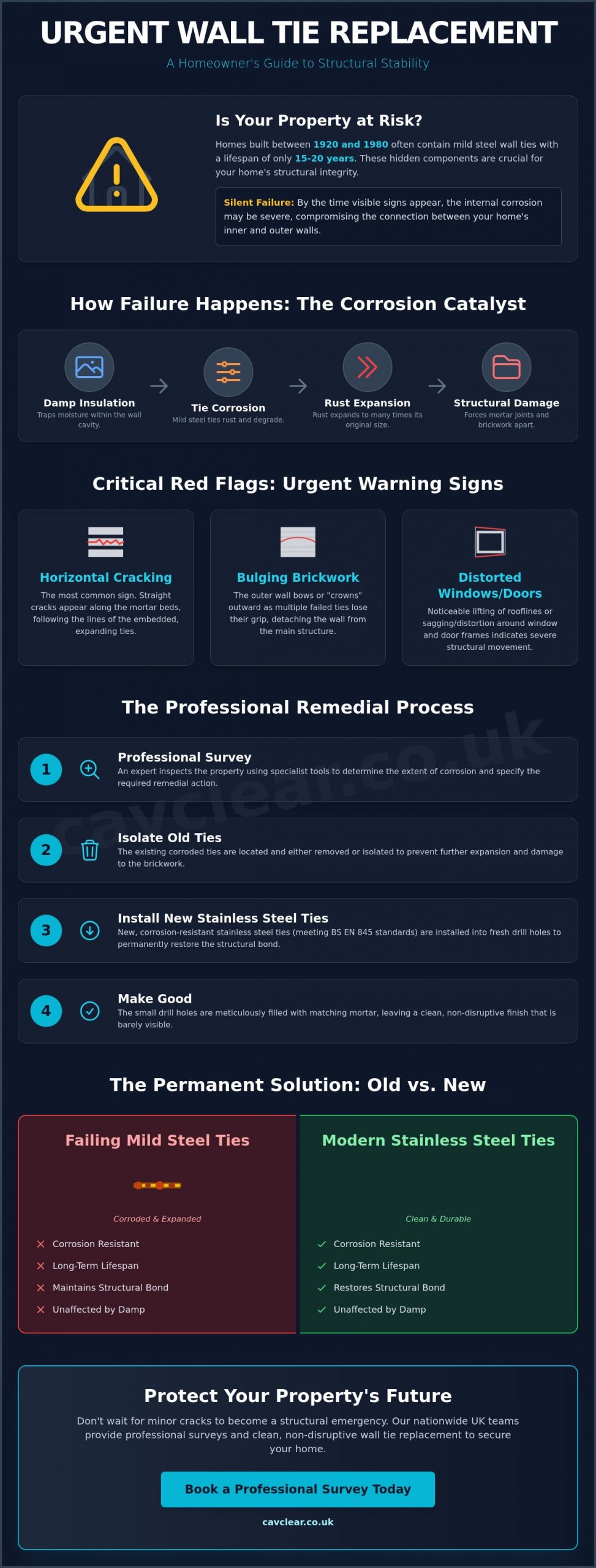
Corrosion occurs when the protective zinc or bitumen coating on older ties degrades, exposing the mild steel to moisture. As iron oxide (rust) forms, the metal expands to several times its original thickness. This physical expansion exerts immense pressure on the surrounding mortar, forcing the brickwork apart and creating visible horizontal cracks. At this stage, the need for urgent wall tie replacement transitions from a maintenance recommendation to a structural necessity.
Structural specialists often categorize failure on a scale. Level 1 indicates early-stage oxidation where monitoring is often sufficient. However, Level 4 represents a critical state where ties have snapped or lost all structural grip. Ignoring a Level 4 diagnosis is dangerous. During high winds, the outer leaf can experience “suction” forces that pull the masonry away from the building. Without secure ties, this often leads to a sudden and catastrophic collapse of the outer wall.
The Anatomy of a Cavity Wall Tie
Original ties in mid-century homes were typically manufactured from mild steel. These were embedded into the mortar beds during construction to provide lateral restraint. Over time, exposure to damp conditions causes these ties to fail. Modern remedial solutions utilize high-grade stainless steel, which offers superior resistance to chemical attack and moisture. These replacement ties are mechanically or resin-anchored into the masonry to restore the structural bond permanently. A wall tie is the primary structural stabilizer for UK cavity walls.
Why “Urgent” Cannot Be Ignored
The instability found in masonry is inherently progressive. One failed tie redistributes its load to neighbors, creating a rapid domino effect across the elevation. It’s a situation that quickly spirals if left unchecked. Beyond the physical danger, failing to commission an urgent wall tie replacement can invalidate insurance policies. Insurers often view this as gradual deterioration rather than an accidental event. Mortgage lenders also flag these defects, potentially halting sales until a professional survey confirms the wall is stable.
Critical Red Flags: Identifying Urgent Structural Warning Signs
Recognizing the physical signs of wall tie failure is the first step in preventing serious property damage. While many homeowners mistake masonry cracks for simple settlement, specific patterns indicate a much more severe structural issue. Horizontal cracking in the mortar joints is the most common early indicator of corrosion. As the metal ties oxidize, the resulting iron oxide occupies a greater volume than the original steel. This expansion forces the mortar apart, typically creating cracks that follow the horizontal bed joints.
It’s important to distinguish these from stepped cracking. Stepped cracks often follow the mortar joints diagonally and are frequently associated with foundation settlement or subsidence. In contrast, straight horizontal lines that correlate with the positions of the original ties are a hallmark of corrosion. When these cracks become widespread, an urgent wall tie replacement is necessary to stabilize the masonry before the outer leaf begins to detach from the building’s main structure.
Advanced distress often manifests as bulging or crowning of the brickwork. This occurs when the cumulative expansion of multiple ties causes the outer leaf to bow outward, losing its vertical alignment. You might also notice lifting rooflines or distortion around window frames. These symptoms suggest that the structural integrity of the wall is severely compromised. If you observe these indicators, scheduling a professional wall tie inspection can provide the technical clarity needed to plan a resolution.
Visual Indicators in External Masonry
Rust expansion cracks typically appear at regular intervals, usually every three to six courses of brickwork. This pattern matches the vertical spacing of ties installed during original construction. You’ll often find these signs are more prominent on south-westerly facing walls. These elevations bear the brunt of driving rain, which accelerates the corrosion process in properties with aging ties. In extreme cases, individual bricks may become loose or rattle within the leaf, indicating that the tie has completely lost its connection to the masonry.
Internal Signs and Secondary Damage
Structural failure isn’t always confined to the exterior. Failed ties often collect debris or allow moisture to cross the cavity, creating damp bridges. This results in internal damp patches that mirror the location of the ties outside. In severe scenarios, the movement of the outer leaf can pull on the inner leaf, leading to wall plate displacement and cracks in the ceiling. Homeowners should conduct a preliminary walk-around using this checklist:
- Are there horizontal cracks appearing at regular intervals?
- Do windows or doors seem difficult to open or close?
- Can you see a visible bulge when looking along the line of the wall?
- Are there localized damp spots on internal walls despite no obvious plumbing leaks?
Identifying these issues early allows for a planned, non-disruptive urgent wall tie replacement rather than a more costly and intrusive emergency rebuild later.
The Catalyst: How Damp and Defective Insulation Accelerate Failure
The presence of wet or defective insulation within a cavity wall is often the primary driver of accelerated metal decay. While a clear cavity provides a vital air buffer that allows moisture to evaporate, retrospective insulation can act as a permanent sponge. When this material becomes saturated, it creates a “damp bridge” that holds water directly against the structural ties. This constant exposure to moisture creates a corrosive micro-environment that rapidly strips away protective zinc coatings, leaving the underlying steel vulnerable to oxidation. It’s a technical failure that compromises the building’s skeleton from the inside out.
Performing an urgent wall tie replacement without addressing the state of the insulation is often a temporary fix. If the cavity remains filled with damp material, the new components will eventually face the same environmental stress. This is why a professional cavity wall insulation removal is frequently the first stage in a comprehensive remedial programme across the UK. By extracting the defective material, we restore the cavity’s original function and ensure the long-term health of the new structural components. Our nationwide teams focus on clearing the path for a permanent structural solution.
The Danger of Retrospective Cavity Insulation
CavClear advises against the installation of retrospective cavity wall insulation due to the significant structural risks it presents. Most UK properties built with a cavity were designed to breathe. When insulation is injected into these spaces, it often slumps over time or becomes contaminated with masonry debris. This slumped material traps water at the base of the walls or around the ties, holding moisture indefinitely. Certain older insulation materials can even trigger chemical reactions when they come into contact with mild steel, which speeds up the deterioration process significantly.
Dampness and the Corrosion Cycle
Penetrating damp is a significant catalyst in the corrosion cycle. When external masonry is porous or cracks begin to form, rainwater migrates through the outer leaf and is absorbed by the internal insulation. This saturation doesn’t just damage the ties; it often leads to visible internal issues. A detailed survey for black mould or damp can often reveal these underlying structural faults before they manifest as external cracks. Structural stability is impossible to maintain in a perennially damp cavity. Identifying the need for urgent wall tie replacement often starts with identifying the moisture source that triggered the failure in the first place.
The Remedial Process: Professional Standards for Wall Tie Replacement
Professional wall tie remediation requires a methodical approach that prioritizes structural security and aesthetic preservation. It’s a complex diagnostic process that begins with a comprehensive wall tie survey. Using high-resolution endoscopes, our technicians visually confirm the condition of the existing ties and the cavity itself. This step is non-negotiable. It allows us to identify the specific level of corrosion and determine the exact requirements for an urgent wall tie replacement. We don’t rely on guesswork; we use visual evidence to guide every remedial decision.
The final stage of the process involves the installation of high-grade stainless steel remedial ties. These are typically resin-fixed or mechanical-expansion ties, depending on the specific density and type of the masonry. Once the structural link is restored, we focus on the aesthetic finish. Our operatives use color-matched mortar for repointing, ensuring the repair is virtually invisible. This attention to detail preserves the property’s visual appeal while restoring its structural integrity. It’s a precise solution that addresses the root cause of the fault while maintaining the home’s original character.
Step-by-Step Remedial Methodology
Our technicians follow a rigorous three-step protocol to ensure every elevation is stable and secure:
- Step 1: We use precision metal detectors to map the location of every original tie. This ensures no hidden points of corrosion are overlooked during the intervention.
- Step 2: Endoscopic inspections verify the cavity is clear of debris and confirm the extent of tie degradation across different elevations.
- Step 3: We install new stainless steel ties at the correct density, which is usually 2.5 per square metre, adhering to modern technical standards.
Isolation vs Extraction
A common and dangerous mistake in the industry is simply adding new ties without addressing the old ones. If the original corroded ties remain active, they’ll continue to expand. This ongoing oxidation forces the brickwork apart even after new ties are installed, leading to further cracking. Our methodology involves an “isolation” phase. We use specialist sleeves or physical removal techniques to neutralize the old ties, preventing any further structural movement. This ensures the urgent wall tie replacement is a permanent fix rather than a temporary patch.
This process is part of the clean and non-disruptive methodology we employ nationwide. We understand that structural work can feel invasive, so we design our remedial programmes to minimize mess and noise for the property owner. If you’ve identified red flags in your masonry, you can book a technical wall tie inspection today to begin the stabilization process. Taking action now protects your long-term asset health and prevents the need for more costly masonry reconstruction in the future.
Restoring Stability: Long-term Assurances for Your Property
Investing in a permanent structural fix is a vital step in securing the future value of your home. While the discovery of masonry cracks is stressful, performing an urgent wall tie replacement using modern materials effectively eliminates the risk of future corrosion. We utilize high-grade stainless steel ties that comply with BS EN 845 standards. Unlike the original mild steel components found in many mid-century properties, these remedial ties are immune to the oxidation process that causes brickwork expansion. This intervention transitions your property from a state of structural uncertainty to one of long-term stability.
A key part of this restoration is ensuring the internal environment of the wall remains healthy. Understanding what is a wall cavity helps homeowners appreciate why we prioritize a clean, clear space between masonry leaves. By removing debris or damp insulation alongside the tie replacement, we restore the building’s ability to manage moisture naturally. This comprehensive approach doesn’t just treat the symptom of a failing tie; it addresses the environmental factors that triggered the decay in the first place. It’s a technical methodology designed to protect the property’s internal structural skeleton for decades.
Asset Protection and Market Value
Structural integrity is a primary concern for mortgage lenders and insurers. When a property shows signs of masonry distress, it often triggers red flags in a RICS HomeBuyer report, which can stall or collapse a sale. By commissioning a professional remedial programme, you secure the certification needed to satisfy these rigorous inspections. Providing a technical report that confirms the old ties are isolated and the new stainless steel system is correctly installed gives future buyers and insurers absolute peace of mind. Early intervention is always the most cost-effective path; it prevents the need for emergency reconstruction of the outer leaf, which is far more expensive and disruptive than a planned urgent wall tie replacement.
Nationwide Expertise You Can Trust
CavClear operates as a nationwide specialist, providing expert structural solutions to homeowners across the entire United Kingdom. Our technicians are trained to identify the specific nuances of regional building styles and the environmental stressors that affect different types of masonry. We understand the anxiety that structural faults cause, and our goal is to move you from worry to a state of calm, informed action. We provide a transparent diagnostic process that identifies the exact fault and offers a clear, non-disruptive path to resolution. Secure your property today with a professional wall tie survey to ensure your home remains safe, stable, and protected for the long term.
Securing Your Home’s Structural Future
Addressing structural faults early is the most effective way to protect your property’s value and ensure the safety of its occupants. By recognizing red flags like horizontal cracking and identifying the role of damp insulation in the corrosion cycle, you can take control of your home’s stability. A planned urgent wall tie replacement restores the essential bond between your masonry leaves, preventing the catastrophic risks associated with total wall failure. It’s a vital investment in your property’s future. Our approach focuses on long-term asset health, replacing corroded components with permanent stainless steel solutions that meet strict technical standards.
As a nationwide specialist, CavClear provides expert technicians across the UK who prioritize a clean and non-disruptive remedial methodology. We provide comprehensive structural reports that satisfy the requirements of both homeowners and insurers. This process moves you from a state of uncertainty to absolute peace of mind. Our methodology is transparent and methodical. It ensures your property remains a safe and secure investment. Book a Professional Wall Tie Survey with CavClear today to receive a definitive diagnosis and a clear path toward a permanent structural resolution. Your home deserves the protection of professional rigor.
Frequently Asked Questions
How much does urgent wall tie replacement cost in 2026?
The cost of remedial work depends on several technical variables, including the size of the property, the density of ties required, and the height of the elevations. Factors such as the need for scaffolding and the current condition of your masonry will also influence the final investment. Because every property presents unique structural challenges, we provide tailored quotes following a detailed technical survey to ensure the solution matches your specific requirements.
Can I sell my house with wall tie failure?
Selling a property with active structural failure is difficult because most mortgage lenders flag these issues during the survey process. RICS surveyors specifically look for signs of masonry distress, and a failure to address these can lead to a significant reduction in valuation or a total mortgage rejection for the buyer. Providing a professional report that confirms an urgent wall tie replacement has been completed is often the only way to secure a smooth sale and satisfy legal enquiries.
How long does the wall tie replacement process take?
A standard remedial project for a typical semi-detached home usually takes between two and three days to complete. This timeframe includes the initial mapping of existing ties, the installation of new stainless steel components, and the final mortar tinting. Larger detached properties or those requiring complex cavity wall insulation extraction may require additional time. Our methodology is designed to be efficient and non-disruptive, allowing you to maintain your daily routine while we stabilize the structure.
Will the replacement work be visible on my external walls?
Professional remedial work is designed to be virtually invisible once the project is finished. We drill small pilot holes to install the new ties and then seal these using mortar that is carefully color-matched to your existing masonry. This precision ensures that the structural integrity is restored without compromising the aesthetic appearance of your home. It’s a clean process that preserves the character of the building while providing a permanent fix.
What happens if I ignore horizontal cracks in my brickwork?
Ignoring horizontal cracks allows the internal corrosion process to accelerate, leading to progressive structural instability. Over time, the expanding rust will continue to force the brickwork apart, which can eventually cause the outer leaf of the wall to bow or even collapse entirely during high winds. Taking action with an urgent wall tie replacement when you first spot these red flags prevents the need for a far more expensive and intrusive total wall rebuild later.
Is wall tie replacement covered by standard buildings insurance?
Standard buildings insurance policies typically do not cover the cost of replacing failed wall ties. Insurers generally categorize tie corrosion as gradual deterioration or “wear and tear,” which is a standard exclusion in most property contracts. Because the failure happens over many years rather than as a single accidental event, the financial responsibility for the repair usually falls on the property owner. It’s best to view this work as an essential maintenance investment in the property’s long-term health.
How do I know if my cavity wall insulation is causing tie corrosion?
The only definitive way to confirm if insulation is accelerating corrosion is through a technical endoscopic inspection. Our technicians use high-resolution cameras to look inside the cavity for signs of saturated material or “slumping” that holds moisture against the metal ties. If we find that the insulation is damp, we often recommend a professional cavity wall insulation extraction. This removes the moisture source and ensures the new ties aren’t immediately subjected to the same corrosive environment.
What is the difference between a mechanical and a resin-fixed remedial tie?
Mechanical ties use a physical expansion sleeve that grips the masonry as the tie is tightened, making them ideal for solid, high-density brickwork. Resin-fixed ties use a high-strength chemical adhesive to bond the tie to the inner and outer leaves, which is often preferred for softer masonry or perforated bricks. The choice between these systems depends on the results of our initial pull-out tests. We select the fixing method that provides the maximum structural restraint for your specific wall type.
Recent Comments