
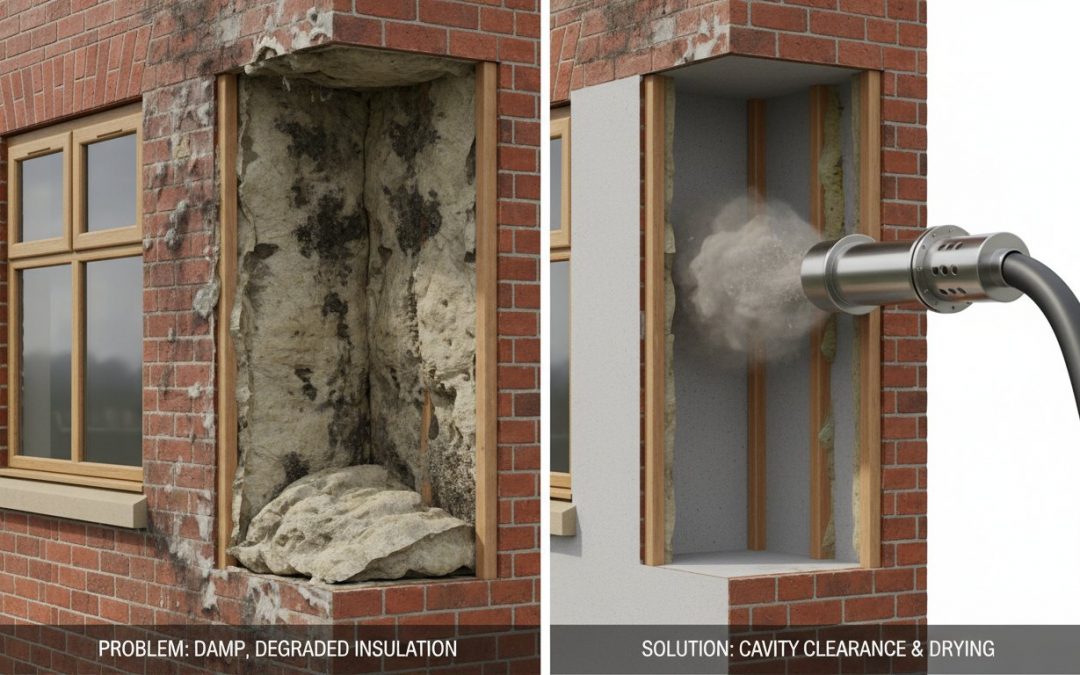
Your home’s cavity was originally designed to function as a clear drainage plane, and forcing it to hold material against its engineering is often the primary reason your walls feel cold. Since 1995, over 6 million UK properties have been fitted with cavity fill, yet many of these installations are now failing due to the UK’s high levels of wind-driven rain. Many homeowners ask, can you remove and replace cavity wall insulation, after discovering that saturated material is bridging the gap and allowing moisture to seep into their internal living spaces. It’s an exhausting cycle to face persistent black mould and rising energy bills when your insulation is no longer fit for purpose.
We understand the stress of watching your property’s structural integrity decline due to damp debris and corroding wall ties. This guide provides a specialist’s perspective on why extraction is the only reliable way to restore your home’s health. You’ll discover why we never recommend “replacing” cavity fill with more retrospective material, focusing instead on a permanent solution that ensures a dry, breathable environment. We’ll outline the precision extraction process and how removing these thermal bridges protects your investment for the long term.
Key Takeaways
- Understand that failing insulation can be professionally extracted using non-invasive industrial equipment to restore your property’s structural health and comfort.
- Discover why the answer to “can you remove and replace cavity wall insulation” focuses on prioritising a clear cavity to prevent penetrating damp and protect your wall ties from corrosion.
- Learn how specialist remediation techniques ensure your home remains clean and tidy while permanently removing damp-inducing debris from the building envelope.
- Identify the critical link between wet insulation and long-term structural damage, and why maintaining a clear cavity is a vital investment in your home’s future.
- Gain peace of mind by choosing accredited specialists who follow rigorous national standards to guarantee a permanent fix for insulation-related property issues.
Can You Remove and Replace Cavity Wall Insulation?
Yes, you can remove failing or damaged cavity wall insulation through a professional extraction process. Specialist teams use industrial-grade vacuum machinery and compressed air to clear the wall void of compromised materials. However, the question of whether you should “replace” it is more complex. While the extraction of saturated or slumped material is a standard remedial procedure, the specialist stance often leans toward leaving the cavity clear to restore the building’s structural integrity.
The primary drivers for removal include penetrating damp, interstitial condensation, and the accumulation of construction debris within the void. These issues often arise when the original cavity wall construction is compromised by retrospective insulation that wasn’t suited to the property’s exposure zone. Our role as specialists is to extract these failed materials, clearing the way for the wall to function as it was originally designed. Restoring this clear air space is essential for the long-term health of the masonry and the comfort of the occupants.
Signs Your Cavity Wall Insulation Has Failed
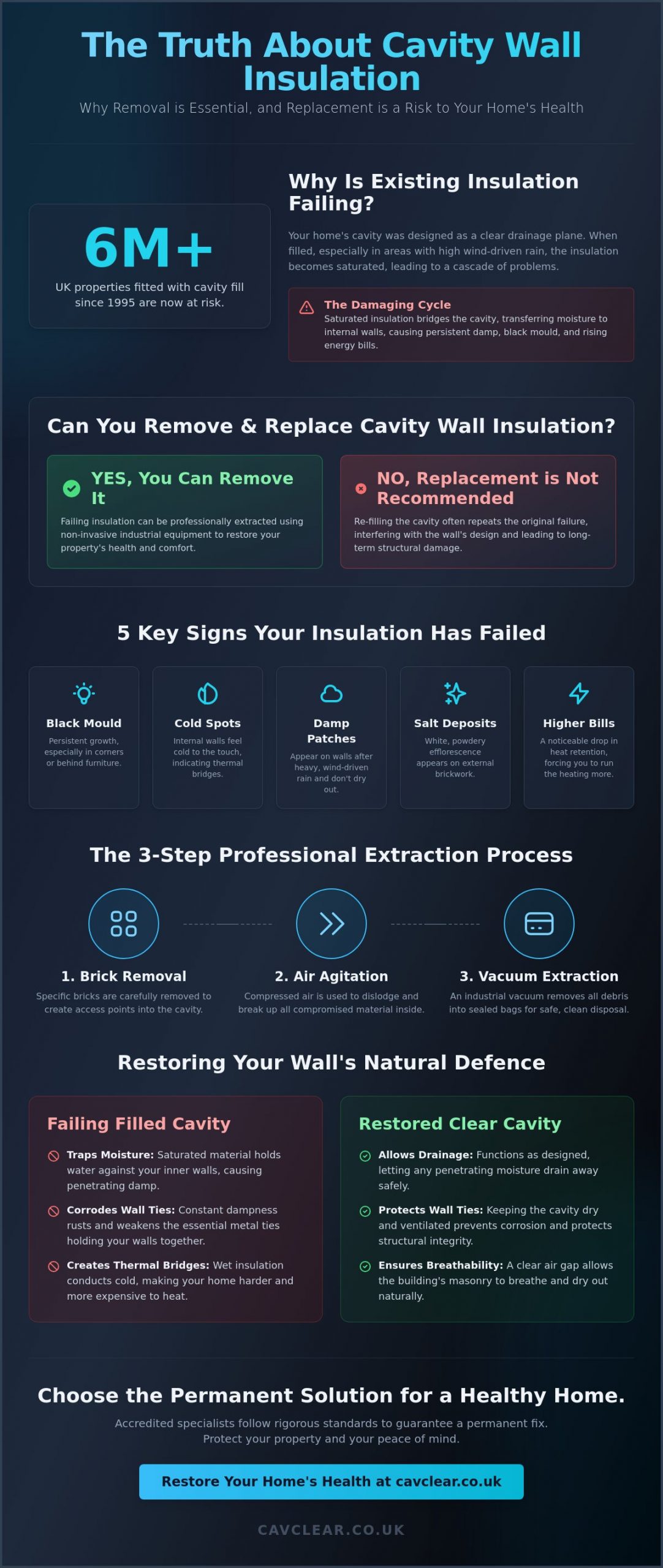
Identifying failed insulation early can prevent extensive structural damage. You might notice persistent black mould growth, particularly in the upper corners of rooms or behind furniture. This occurs because saturated insulation loses its thermal properties and instead conducts cold directly to the internal leaf. If you touch your internal walls and feel distinct cold spots, or if you see damp patches appearing after heavy driving rain, it’s likely the material has failed. When insulation slumps to the bottom of the wall, it creates “thermal bridges” that allow heat to escape and moisture to settle, leading to hidden decay.
- Internal damp patches that don’t disappear with ventilation.
- Visible salt deposits or “efflorescence” on external brickwork.
- A noticeable drop in thermal retention despite running the heating.
- Increased humidity levels inside the home, often exceeding 60% on a hygrometer.
Why Traditional ‘Replacement’ May Not Be Recommended
We don’t recommend the retrospective installation of new cavity insulation once the old material is removed. Filling a cavity again often repeats the exact technical failures that caused the initial damp issues. Most UK properties were designed with a clear cavity to act as a barrier against moisture. When this space is filled, it interferes with the wall’s natural moisture management system, often leading to wall tie corrosion and timber rot. A breathable cavity is a structural standard where a clear air gap allows moisture to evaporate and drain away naturally. By keeping the cavity clear, you ensure the property remains dry and the structural components are protected from the elements for decades to come.
The Professional Extraction Process: How It Works
Modern extraction techniques are designed to be non-invasive and highly efficient. As specialists, we focus on restoring the structural integrity of your property without causing unnecessary disruption to your daily life. The process relies on a combination of high-pressure compressed air and industrial-grade vacuum units. These tools work in tandem to dislodge and remove compromised materials through small, controlled openings. It’s a method that prioritises cleanliness; we use dust-extraction systems to ensure your home’s exterior remains tidy throughout the duration of the works. When homeowners ask can you remove and replace cavity wall insulation, they’re often relieved to learn that the process is mechanical and doesn’t involve stripping internal plaster or damaging the facade.
Step-by-Step: The Extraction Journey
The journey begins with the strategic removal of specific bricks at the base of the wall. These serve as extraction points, typically spaced every 1.5 to 2 metres along the elevations. By creating these temporary openings, we can access the bottom of the cavity where debris and wet material often collect. Specialists then use directional air tools to break up bonded or saturated materials. Whether your home contains deteriorated mineral wool, failed urea-formaldehyde foam, or loose polystyrene beads, the high-pressure air ensures every pocket is agitated and loosened.
Once the material is loose, our industrial vacuum units draw the waste directly into sealed bags for safe disposal. This prevents the spread of dust and ensures that no contaminated material is left to cause future moisture bridging. If you’re researching the technical aspects of these systems, you might find the Energy Saving Trust guide to cavity wall insulation useful for understanding how these materials were originally intended to function. However, when these materials fail or become saturated, a professional extraction is the only way to protect your masonry from long-term damage.
Post-Extraction Inspection and Finishing
Verification is the most critical stage of our process. We use high-definition borescope cameras to inspect the internal cavity space through the existing drill holes. This allows us to confirm the area is 100% clear of debris and that the wall ties are visible and unobstructed. Clearing the cavity is essential for preventing damp; even a small amount of leftover material can act as a bridge for water to travel from the outer leaf to the inner leaf of your home.
After the inspection, we focus on the aesthetic restoration of your property. We use professional mortar matching techniques to ensure that the bricks we removed are replaced seamlessly. Our goal is to make the extraction points invisible to the naked eye, maintaining the original look of your brickwork. Finally, we provide a comprehensive completion report that details the work undertaken and the state of the cavity. If you’re concerned about the health of your walls, you can book a specialist survey to assess the current state of your insulation. This methodical approach ensures your home is returned to a dry, safe, and thermally stable condition.
The Replacement Debate: Protecting Your Home After Extraction
Homeowners often worry that their property will feel significantly colder once the insulation is gone. It is a logical concern. However, the primary purpose of a cavity is to act as a barrier against moisture. When you ask can you remove and replace cavity wall insulation, you must consider the structural health of the building first. Extraction acts as a necessary reset for your home. It returns the wall assembly to its original design, allowing the building to breathe as intended by the architects who built it.
In the United Kingdom, the Building Research Establishment (BRE) categorizes regions into four exposure zones based on wind-driven rain. Properties in Zone 3 and Zone 4, which cover large portions of the coast and western Britain, are at high risk of water ingress. In these areas, an empty 50mm cavity is the most effective defense against penetrating damp. Removing wet or slumped material stops the bridge that allows water to travel from the outer leaf to your internal decorations. While you might see a minor change in heat retention, the trade-off is a dry, structurally sound environment that prevents the growth of toxic black mold.
Risks of Re-Insulating the Cavity
Specialists frequently advise against installing new cavity fill after an extraction. Even modern materials can fail if the property is subject to heavy weather. New insulation often acts as a wick, drawing moisture across the gap during prolonged periods of rain. This creates a recurring cycle of dampness that damages wall ties and internal plasterwork.
Filling the gap also blocks essential airflow. Cavities require ventilation to clear any moisture that naturally accumulates through condensation or minor masonry porousness. By leaving the cavity clear, you ensure that the wall structure remains dry and the risk of wall tie corrosion is minimized. Most industry experts now view retrospective cavity fill as a high-risk practice that compromises long-term property integrity.
Alternative Ways to Improve Thermal Efficiency
If you are concerned about your home’s U-value after a specialist extraction, there are safer ways to retain heat. You don’t have to compromise your wall’s function to stay warm. Consider these professional alternatives:
- External Wall Coatings: Applying a clear, hydrophobic cream to the brickwork can reduce water absorption by over 90%. This keeps the masonry dry, which naturally improves its thermal performance.
- Internal Dry Lining: Installing insulated plasterboard on the inside of cold-facing walls provides a thermal break without affecting the cavity.
- Loft Insulation: Upgrading to the current 270mm standard in your attic is one of the most cost-effective ways to prevent heat loss.
- Window and Door Upgrades: Modern double or triple glazing often provides a better return on energy savings than risky cavity fills.
When considering can you remove and replace cavity wall insulation, the focus should shift toward these external and internal solutions. They provide the warmth you need while ensuring the cavity remains a dedicated drainage and ventilation space for the life of the building.
Structural Integrity: Wall Ties and Damp Surveys
Wet insulation acts as a permanent sponge within your home’s skeleton. When homeowners ask, “can you remove and replace cavity wall insulation”, they’re often reacting to visible damp, but the invisible damage to structural wall ties is frequently more severe. In UK properties built between 1920 and 1980, these ties were typically manufactured from galvanised steel. These metal components are highly susceptible to corrosion when trapped in a damp environment. As the metal rusts, it expands to several times its original thickness. This expansion exerts immense pressure on the mortar joints, leading to horizontal cracking and, in extreme cases, the detachment of the outer brick leaf.
A cavity extraction provides the only realistic opportunity to assess these critical components. It’s the perfect time to identify if your home requires wall tie replacement to maintain stability. Debris at the bottom of the cavity, often called “mortar snots,” also creates a bridge. This allows moisture to bypass the cavity and soak directly into the internal walls. This bridging is a primary cause of damp patches appearing just above the skirting boards at floor level. Removing the saturated material breaks this bridge and stops the moisture path instantly.
The Importance of a Specialist Survey
Our specialists don’t guess what’s happening inside your walls. An accredited surveyor uses high-definition borescopes to inspect the cavity’s internal condition during a damp survey. We look for “telltale” signs of movement, such as bulging brickwork or failing lintels. This diagnostic approach ensures we identify the root cause of the damp before any extraction begins. It’s a methodical process that prioritises the long-term health of the building over a quick, temporary fix.
Restoring the Wall’s Natural Defence
The original design of a cavity wall relies on a clear, ventilated space to keep the property dry. By removing failed or wet material, we restore the wall’s natural ability to shed water. A clear cavity allows the inner leaf to remain dry and warm, which is the most effective way to prevent the spread of black mould. We also ensure that essential ventilation points, such as weep holes and air bricks, are completely clear of obstructions.
When considering if you can you remove and replace cavity wall insulation, remember that the extraction is a restorative act. It returns the building to its intended state, allowing the structure to breathe and the thermal performance to be managed correctly without risking the masonry. To ensure your property is structurally sound and expert from hidden damp, you should book a professional cavity inspection with a specialist team.
Why Choose a Specialist for Cavity Wall Remediation?
Cavity wall extraction is a complex technical process that requires more than just standard construction knowledge. While a general builder might offer to assist, they often lack the industrial grade vacuum machinery and high definition borescope cameras needed to verify a cavity is completely clear. Leaving even 5% of wet debris behind creates localized cold bridges. These spots allow moisture to bypass the cavity and settle on your internal walls, leading to persistent damp patches. A specialist contractor employs accredited technicians who follow rigorous standards to ensure the structural integrity of your home remains intact throughout the process.
When homeowners ask can you remove and replace cavity wall insulation, the focus must first be on the “right way” to clear the void. Professional extraction prevents the accidental damage to wall ties and brickwork that often occurs with DIY or non-specialist attempts. Furthermore, the value of a professional report cannot be overstated. If you decide to sell your property, 90% of mortgage lenders and surveyors will require documented proof that the cavity is clear and the property is structurally sound. A specialist report provides this essential paper trail, protecting your home’s market value.
- Specialist Equipment: We use high volume suction systems designed specifically for insulation recovery.
- Accredited Technicians: Our teams are trained in the latest extraction protocols.
- Comprehensive Documentation: You receive a full digital report including borescope photographic evidence.
- Debris Clearance: We guarantee the removal of all foreign objects, including mortar droppings and old insulation.
CavClear’s Nationwide Expertise
CavClear operates across the entire UK, delivering a reliable service that prioritizes property health and transparency. We don’t just remove material; we provide a technical roadmap for your home’s recovery. Our specialists use non-invasive techniques to assess the condition of your masonry and wall ties. Because every property is unique, we provide tailored remedial recommendations based on the specific moisture levels and debris types found in your walls. This precision ensures your home returns to its optimal thermal state without unnecessary disruption.
Take the First Step Toward a Dry Home
Early intervention is the most effective way to prevent escalating repair costs. Delaying the extraction of wet or slumped insulation allows moisture to saturate the inner leaf of your masonry, which can lead to timber decay and mold. A professional survey acts as a diagnostic tool, identifying exactly where the system has failed. When considering can you remove and replace cavity wall insulation, remember that a specialist inspection is the only way to gain true peace of mind. Contact our team today to schedule an inspection and secure the long term health of your property.
Protecting Your Property’s Structural Future
Restoring your home’s health starts with a precise understanding of your property’s cavity condition. While the question of can you remove and replace cavity wall insulation is common, the focus must remain on a clean, professional extraction that allows the building to breathe as originally intended. Our accredited national technicians use specialist borescope inspections to pinpoint debris and assess wall tie integrity across the entire structure. This technical approach removes the underlying source of damp and prevents further structural deterioration. Every project we undertake includes comprehensive structural reports, providing you with the transparency and peace of mind needed for a permanent fix. It’s time to secure your home’s thermal efficiency and long term safety through specialist remediation. We don’t just clear the problem; we ensure your property is protected for decades to come. Trust our expertise to restore your comfort and property value.
Book your specialist cavity wall survey with CavClear today
Frequently Asked Questions
Is it worth removing cavity wall insulation if I have damp?
Yes, removing compromised insulation is the only way to break the bridge that allows moisture to travel from the outer leaf to your inner walls. Leaving saturated material inside the cavity leads to structural decay and persistent mould growth. A specialist extraction restores the essential air gap required for natural ventilation. This process protects your property’s long-term health and prevents further damage to your internal decorations.
How long does it take to extract insulation from a standard house?
A professional extraction for a standard three-bedroom semi-detached house typically takes between one and two days. Our teams use high-powered industrial vacuums to ensure the cavity is completely cleared of all debris and dust. Larger detached properties or homes with restricted access may require up to three days for a thorough clean. We follow a methodical process to ensure the structure remains stable throughout the duration of the work.
Can wet cavity wall insulation dry out on its own?
No, wet insulation trapped within a confined masonry cavity won’t dry out naturally because it lacks sufficient airflow. Materials like mineral wool or urea-formaldehyde act like a sponge, holding moisture directly against the inner leaf. This constant dampness causes wall ties to corrode and can lead to timber rot in floor joists. You must extract the saturated material to allow the masonry to breathe and prevent permanent structural damage.
Will my house be colder once the insulation is removed?
You might notice a slight change in temperature, but removing wet or slumped material often improves the living environment by eliminating damp-induced cold spots. Saturated insulation actually pulls heat out of the building through thermal bridging. Once you can remove and replace cavity wall insulation with a modern, breathable alternative or leave the cavity clear, the walls can finally dry. This restoration prevents the “fridge effect” caused by damp masonry.
Does cavity wall insulation removal cause a lot of mess?
Our specialist extraction process is designed to be clean and non-invasive, with almost all work conducted from the property’s exterior. We drill small, 25mm holes in the mortar joints to vacuum out the failing material. Our teams use advanced dust-extraction systems to contain debris and ensure your garden and driveway remain tidy. We finish the job by repointing the entry holes with colour-matched mortar to maintain your home’s aesthetic appeal.
How do I know if my wall ties need replacing after extraction?
We use high-definition borescope cameras to inspect the condition of your wall ties once the cavity is clear. If we identify horizontal cracking in mortar joints or visible rust on the metal ties, replacement is necessary. Data from the 2021 English Housing Survey suggests that millions of older homes face tie failure due to moisture exposure. Replacing these components during the extraction phase ensures the structural integrity of your walls for decades.
Can I remove the insulation myself as a DIY project?
You shouldn’t attempt this as a DIY project because it requires specialist industrial machinery and technical expertise to avoid structural damage. Improper removal often leaves pockets of debris that continue to cause damp issues or block essential ventilation. Professional technicians are trained to identify hidden obstacles like electrical cables or gas pipes within the cavity. Our accredited service provides the peace of mind that the extraction meets rigorous safety standards.
What is the average cost of cavity wall insulation extraction in 2026?
Industry data for 2026 indicates that professional extraction costs typically range from £20 to £28 per square metre of wall area. For a standard UK terraced home, this often equates to a total investment between £1,800 and £2,600. Prices vary based on the specific material being removed and the ease of access to the elevations. Investing in a professional extraction prevents much higher costs associated with long-term damp remediation and structural repairs.
Recent Comments