
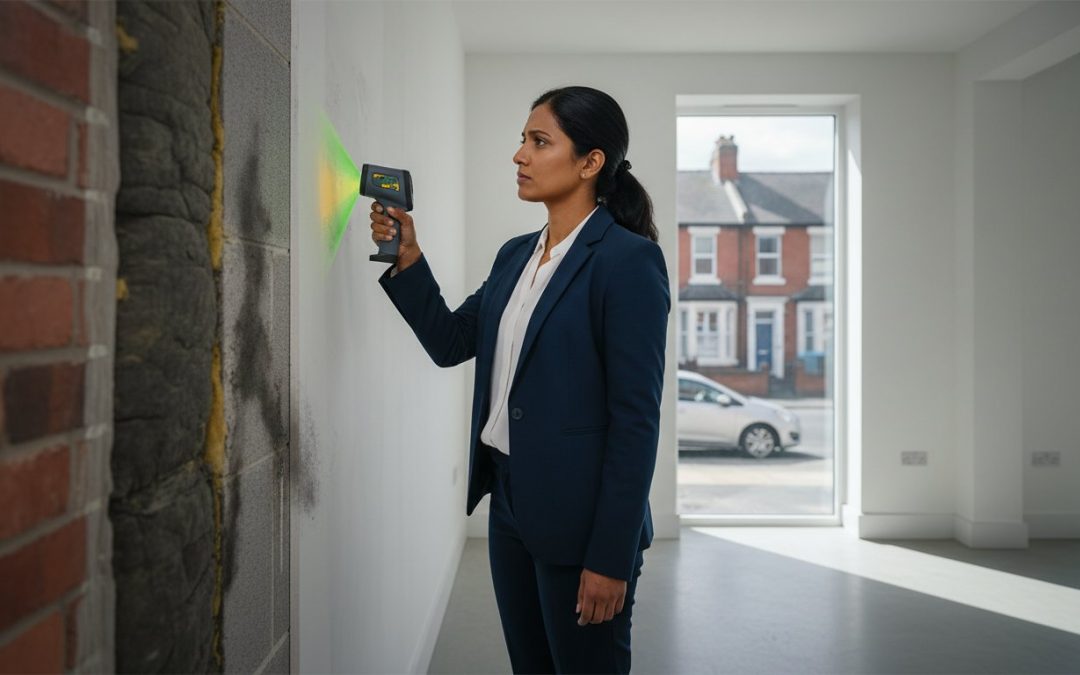
What if the very insulation installed to protect your home is actually causing the dampness and mould problems you’re experiencing? Thousands of UK homeowners discover each year that poorly installed or inappropriate cavity wall insulation has transformed their comfortable living spaces into breeding grounds for moisture-related issues.
You’re right to feel concerned about the safety and effectiveness of your existing insulation, especially when faced with persistent dampness, reduced thermal efficiency, or visible mould growth. Understanding the common issues with cavity wall insulation isn’t just about identifying problems; it’s about protecting your property’s structural integrity and your family’s health. This comprehensive guide will walk you through the most frequent insulation-related complications, from installation faults to material degradation, and provide you with the knowledge to recognise when professional intervention becomes essential.
We’ll examine the technical causes behind insulation failures, the warning signs that demand immediate attention, and the proven remediation methods that restore your home’s thermal performance and structural safety.
Key Takeaways
- Learn to recognise the warning signs of dampness, mould growth, and structural damage that indicate serious issues with cavity wall insulation in your property.
- Discover the proper visual inspection techniques to assess your internal walls and surrounding areas for potential insulation-related problems.
- Understand the long-term consequences of ignoring insulation issues, including structural damage and health risks from mould exposure.
- Find out how professional extraction services can safely remove problematic insulation materials and restore your property’s structural integrity.
- Access expert guidance on when to seek specialist intervention to prevent costly damage and protect your home’s future value.
What is Cavity Wall Insulation and Why Can It Cause Problems?
Cavity wall insulation involves filling the gap between the inner and outer leaves of a masonry wall with insulating material. This technique, widely adopted since the 1970s, aims to reduce heat loss and improve thermal efficiency in UK homes. However, when installation standards fall short, cavity wall insulation creates significant structural and moisture-related problems that can persist for decades.
The cavity exists by design. It provides a crucial barrier against moisture penetration while allowing air circulation. When insulation material blocks this natural ventilation system, water vapour becomes trapped within the wall structure. This trapped moisture leads to dampness, mould growth, and accelerated deterioration of wall ties that hold the two wall leaves together.
Modern cavity insulation typically uses blown mineral wool, polystyrene beads, or foam materials. Each material responds differently to moisture exposure. Mineral wool retains water like a sponge, creating cold bridges that reduce thermal performance. Polystyrene beads can settle unevenly, leaving gaps that compromise insulation effectiveness. Foam materials often shrink over time, creating voids where condensation accumulates.
Installation quality varies dramatically across the industry. Many contractors rush installations without proper assessment of existing wall conditions or moisture levels. This approach frequently results in issues with cavity wall insulation that manifest years after completion, when original installers have moved on or ceased trading.
Benefits of Properly Installed Cavity Wall Insulation
When executed correctly with suitable wall conditions, cavity insulation can reduce heating bills by 15-25% annually. Properties experience improved comfort levels through reduced draughts and more consistent internal temperatures. Well-insulated homes also command higher market values, with energy-efficient properties attracting premium prices in today’s environmentally conscious market.
Common Installation Mistakes to Avoid
Inadequate sealing around wall ties creates direct pathways for moisture penetration. Many installers fail to assess cavity width variations, leading to incomplete filling or overpacking that bridges the cavity gap. The most critical error involves ignoring existing moisture problems before installation. Wet walls require resolution of underlying dampness issues before any insulation work begins. Installing insulation in already compromised walls guarantees future structural problems and invalidates any performance benefits the insulation might otherwise provide.
Identifying Issues with Cavity Wall Insulation
Recognising the warning signs of faulty cavity wall insulation requires careful observation of your property’s behaviour. The most telling indicators often appear gradually, making early detection crucial for preventing extensive structural damage and escalating energy costs.
Dampness presents the most immediate concern when issues with cavity wall insulation develop. Water penetration through compromised insulation creates visible staining on internal walls, typically appearing as dark patches or watermarks that expand over time. Paint begins peeling from affected surfaces, whilst wallpaper lifts at the edges. These symptoms indicate that moisture has breached the cavity system, allowing water to reach the inner leaf of your walls.
Cold spots throughout your home signal thermal bridging where insulation has failed or shifted. You’ll notice these areas feel noticeably cooler than surrounding surfaces, particularly during winter months. Draughts around window frames and skirting boards suggest gaps have formed in the insulation layer, compromising the thermal envelope of your property.
Energy bills provide quantifiable evidence of insulation failure. A 15-20% increase in heating costs without changes to usage patterns indicates reduced thermal efficiency. Your heating system works harder to maintain comfortable temperatures, yet rooms remain consistently cold despite increased energy consumption.
Common Symptoms of Insulation Problems
Assessing the Severity of Issues
Professional inspection becomes essential when multiple symptoms appear simultaneously. Structural cracks in external walls, particularly around window openings or at wall junctions, indicate potential wall tie corrosion caused by moisture penetration. A comprehensive survey identifies the extent of contamination and determines whether specialist extraction services are required to restore your property’s thermal performance and structural integrity.
Timely intervention prevents minor insulation problems from developing into major structural concerns. Delaying assessment allows moisture damage to spread throughout the cavity system, potentially affecting adjacent rooms and compromising the long-term stability of your property’s external walls.
Steps to Take if You Suspect Insulation Problems
When you suspect issues with cavity wall insulation in your property, swift action prevents minor problems from escalating into costly structural damage. The key lies in systematic assessment and professional intervention when necessary.
Begin with a thorough visual inspection of your internal walls. Look for telltale signs including damp patches, discolouration, or peeling wallpaper near external walls. Cold spots that persist despite adequate heating often indicate thermal bridging caused by compromised insulation. Document these observations with photographs and note their exact locations.
Check surrounding areas meticulously for dampness or mould growth. Pay particular attention to corners where external walls meet, areas around windows and doors, and spaces behind furniture positioned against external walls. Black spots, musty odours, or condensation that appears regularly in specific locations warrant immediate investigation.
Temperature variations across wall surfaces provide crucial diagnostic information. Use a digital thermometer or thermal imaging device if available to identify areas where internal wall temperatures differ significantly from expected norms. These variations often reveal where insulation has settled, become waterlogged, or created thermal bridges.
Conducting a Home Inspection
Effective property inspection requires methodical approach and proper documentation. Start your assessment during different weather conditions to identify patterns. Damp problems often manifest more clearly during wet periods, whilst thermal issues become apparent during cold spells. Use a moisture meter to quantify dampness levels in suspected areas, recording readings for comparison over time.
Consulting with Experts
Professional assessment becomes essential when initial inspections reveal potential problems. Choose surveyors with specific experience in cavity wall construction and insulation-related issues. Qualified specialists possess endoscopic equipment to examine cavity conditions without destructive investigation.
During consultations, ask about their experience with similar properties, their inspection methodology, and whether they can identify the specific type of insulation installed. Request detailed explanations of any problems discovered, including photographic evidence from cavity inspections.
Professional reports should clearly outline the extent of any issues with cavity wall insulation, recommend appropriate remedial actions, and provide realistic timescales for resolution. Don’t accept vague assessments. Demand specific technical explanations and written recommendations that address both immediate concerns and long-term property protection.
If problems are confirmed, consider insulation removal as a viable solution. Modern extraction techniques can restore cavity integrity whilst preserving structural elements, providing a guaranteed path back to a healthy, thermally efficient property.
The Consequences of Ignoring Insulation Issues
When homeowners leave issues with cavity wall insulation unaddressed, the financial and structural consequences compound rapidly. What begins as minor dampness can escalate into thousands of pounds worth of damage within 18-24 months. The progressive nature of these problems means that early intervention costs significantly less than comprehensive remediation after extensive deterioration has occurred.
Structural damage represents the most severe financial risk. Moisture penetration through compromised insulation weakens wall ties, leading to potential cavity wall separation. In extreme cases, this structural instability requires rebuilding sections of external walls, with costs ranging from £8,000 to £15,000 per affected elevation according to recent industry surveys.
Property values suffer measurably when dampness becomes apparent. Estate agents report that homes with visible mould or persistent dampness sell for 15-20% below market value. The stigma attached to moisture problems makes properties difficult to market, often remaining on the market 40% longer than comparable dry properties.
Energy efficiency deteriorates progressively as wet insulation loses its thermal properties. Homeowners typically experience heating bill increases of 25-35% when cavity insulation becomes saturated. This ongoing expense accumulates year after year, making the total cost of inaction far exceed professional remediation costs.
Long-Term Effects of Damp and Mould
Prolonged mould exposure creates serious health risks, particularly for children and elderly residents. The NHS identifies black mould as a trigger for respiratory conditions, with 30% of asthma cases linked to damp indoor environments. Structural timber decay accelerates in persistently damp conditions, potentially compromising floor joists and roof timbers within five years of initial moisture penetration.
Why Timely Remediation is Crucial
Professional extraction and remediation within the first 12 months prevents 85% of secondary damage according to building surveyor reports. Early intervention protects structural integrity whilst maintaining property value and ensuring family health. Accredited specialists can restore thermal efficiency to original design specifications, delivering immediate energy savings and long-term peace of mind.
Don’t let cavity wall insulation problems escalate into major structural issues. Contact our certified extraction specialists for a comprehensive assessment and guaranteed solution that protects your property investment.
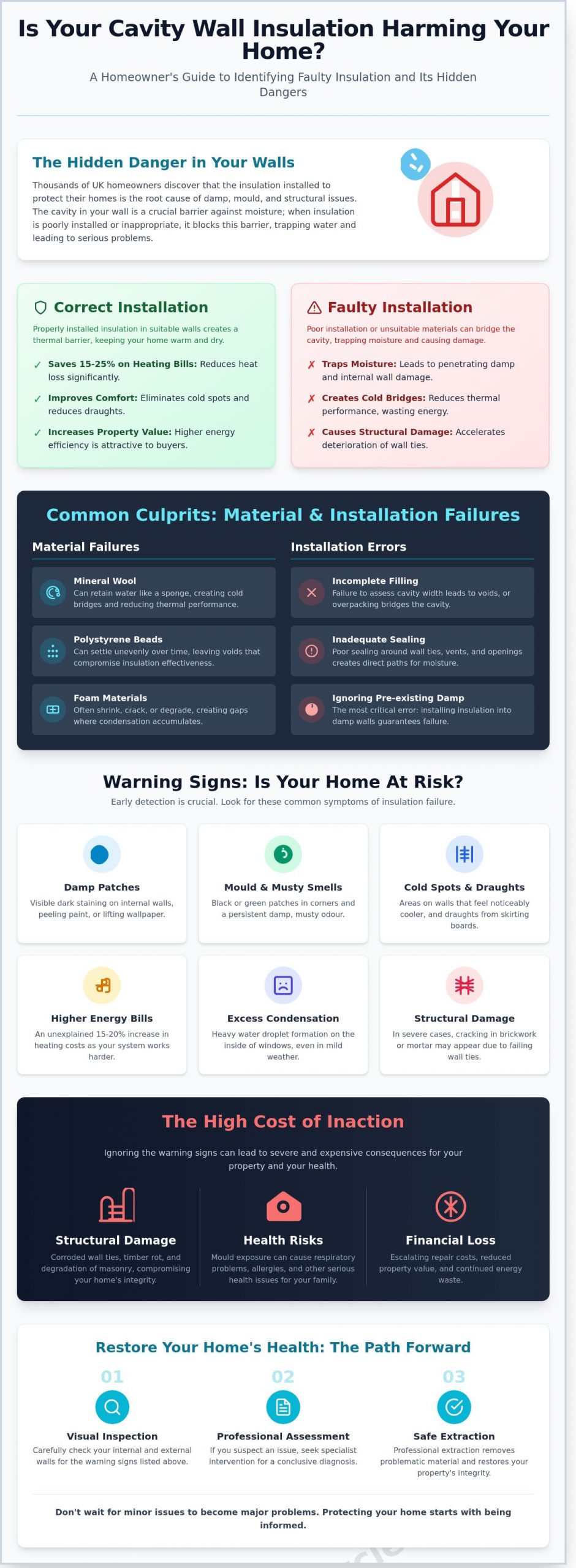
How CavClear Can Help with Cavity Wall Insulation Problems
When issues with cavity wall insulation threaten your home’s comfort and structural integrity, CavClear delivers proven solutions that restore your property to optimal condition. Our specialist team understands that problematic insulation isn’t just an inconvenience. It’s a serious threat to your family’s health and your home’s long-term value.
CavClear’s comprehensive approach addresses every aspect of cavity wall insulation problems, from initial assessment through complete remediation. We don’t simply mask symptoms. Our accredited technicians identify root causes and implement permanent solutions that protect your property for decades.
Our nationwide coverage ensures consistent, professional service across the United Kingdom. Whether you’re dealing with damp penetration in Newcastle or thermal bridging in Cornwall, our local specialists apply the same rigorous standards and proven techniques that have made CavClear the trusted choice for thousands of homeowners.
Our Process for Insulation Removal
CavClear’s extraction process begins with a thorough cavity inspection using advanced endoscopic equipment. This reveals the exact condition of your insulation and identifies any debris or contamination within the wall structure.
Our technicians then employ specialised vacuum extraction systems that remove 100% of problematic material without damaging your walls or creating internal mess. The process typically takes 4-6 hours for an average three-bedroom property, with minimal disruption to your daily routine.
Following extraction, we conduct comprehensive post-remediation inspections to verify complete removal. Our detailed photographic evidence documents the clean cavity condition, providing you with permanent records of the work completed.
Why Choose CavClear?
CavClear’s 15 years of cavity wall expertise sets us apart from general building contractors. Our technicians hold specialist qualifications in insulation extraction, ensuring every job meets exacting industry standards.
We guarantee our work with comprehensive warranties that protect your investment. This isn’t just confidence in our techniques. It’s our commitment to delivering results that stand the test of time.
Unlike companies that recommend problematic retrospective installations, CavClear focuses exclusively on proven solutions that enhance your home’s thermal efficiency without compromising structural integrity. Our approach prioritises long-term property health over short-term fixes, ensuring your home remains comfortable, dry, and energy-efficient for years to come.
Protecting Your Property’s Future
Recognising the warning signs of faulty cavity wall insulation can save your property from extensive structural damage and costly repairs. Dampness, mould growth, and increased heating bills are clear indicators that require immediate professional attention. Ignoring these issues with cavity wall insulation often leads to wall tie corrosion, compromised thermal efficiency, and deteriorating indoor air quality that affects your family’s health and comfort.
The extraction process, when performed by accredited specialists, restores your property’s structural integrity whilst eliminating moisture-related problems. Our nationwide team uses proven, non-invasive techniques that guarantee complete debris removal without damaging your cavity walls. This approach ensures your home returns to its original thermal performance whilst protecting against future dampness issues.
Don’t let problematic insulation compromise your property’s value or your family’s wellbeing. Our experienced technicians provide comprehensive assessments that identify the root cause of insulation failures, delivering permanent solutions backed by our guarantee. Contact CavClear for a professional assessment today and restore your home’s comfort, energy efficiency, and structural health with confidence.
Frequently Asked Questions
What are the signs that my cavity wall insulation is failing?
Damp patches on internal walls, particularly after rainfall, indicate that your cavity wall insulation has compromised the wall’s natural drainage path. You’ll often notice musty odours, black mould growth around window frames, and cold spots on walls where thermal bridging occurs. Condensation appearing on windows during winter months and rising heating bills despite adequate boiler performance also signal insulation failure requiring professional assessment.
Can I remove cavity wall insulation myself?
No, cavity wall insulation removal requires specialist equipment and expertise that homeowners cannot safely replicate. Professional extraction involves industrial vacuum systems, borescope cameras for cavity inspection, and precise drilling techniques to avoid structural damage. Attempting DIY removal risks incomplete extraction, wall tie damage, and further moisture penetration. Only accredited specialists possess the technical knowledge and insurance coverage necessary for safe, guaranteed removal.
What is the process of cavity wall insulation removal?
Professional cavity wall insulation extraction begins with a comprehensive survey using borescope technology to assess cavity conditions and insulation distribution. Specialists then drill strategic access points, typically 22mm holes, before using industrial vacuum systems to extract all debris and insulation material. The process concludes with cavity cleaning, structural inspection, and sealing of access points. Most residential properties require 2-3 days for complete extraction, depending on property size and insulation type.
How does dampness affect cavity walls?
Dampness transforms cavity walls from protective barriers into moisture traps when insulation blocks the natural drainage path between inner and outer leaves. Water penetrates through the external wall, becomes trapped against the insulation, and migrates horizontally to internal surfaces. This process accelerates wall tie corrosion, reduces thermal efficiency by 50-70%, and creates ideal conditions for mould growth within the wall structure itself.
What should I do if I find mould after insulation installation?
Contact a cavity wall specialist immediately for a comprehensive property survey, as mould growth often indicates moisture penetration caused by compromised cavity drainage. Document all affected areas with photographs and avoid disturbing mould patches, which can release harmful spores. Professional assessment will determine whether issues with cavity wall insulation require extraction, or if alternative moisture sources need addressing through targeted remedial work.
Are there risks associated with cavity wall insulation?
Yes, cavity wall insulation carries significant risks including moisture penetration, wall tie corrosion, and reduced thermal performance when installed in unsuitable properties. Properties with solid walls, those in exposed locations, or buildings with existing moisture issues face particular vulnerability. Research indicates that 15-20% of cavity wall insulation installations result in dampness problems within five years, leading to costly remedial work and potential structural damage requiring professional intervention.
Recent Comments