
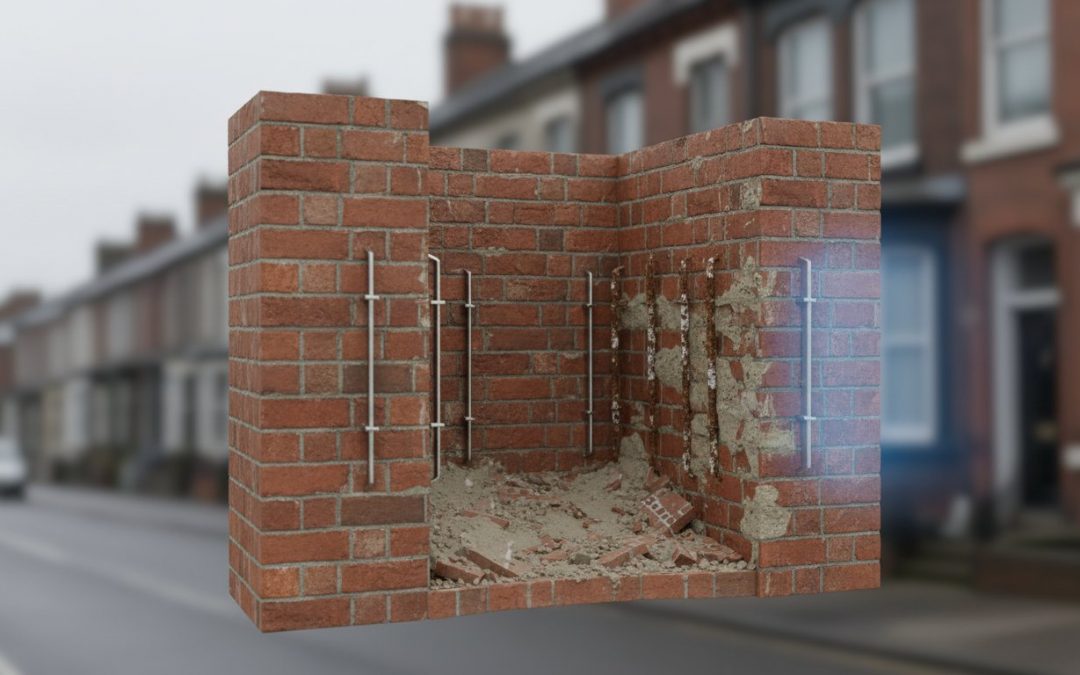
In 2026, structural surveyors report that nearly 25% of UK masonry issues stem from undetected debris within the cavity rather than simple age. Does that thin, jagged line running through your wall of bricks signify a minor settlement or the beginning of a costly structural failure? Most homeowners view their masonry as an immovable fortress. However, it’s often the most misunderstood part of a property’s anatomy. Seeing damp patches on internal plaster or crumbling mortar is understandably stressful, especially when you’re unsure if the building remains safe.
This guide provides the technical clarity you need to move beyond guesswork and secure your home’s future. You’ll discover the technical reality behind your brickwork, from identifying structural failures to maintaining long-term damp protection. We’ll examine the critical differences between solid and cavity constructions, highlight the early warning signs of distress, and explain exactly when a specialist survey becomes essential for your peace of mind. By understanding how the extraction of debris and the condition of wall ties affect your thermal efficiency, you can ensure your property remains a dry, secure investment.
Key Takeaways
- Understand the evolution of UK property construction, moving from traditional solid masonry to modern cavity designs to enhance structural resilience.
- Learn how a managed 50mm to 100mm cavity acts as a vital barrier against wind-driven rain, protecting your interior from moisture ingress.
- Identify the hidden symptoms of wall tie failure and sulphate attack that can jeopardise the long-term stability of a standard wall of bricks.
- Distinguish between rising and penetrating damp to ensure the correct remedial solutions are applied to your property’s Damp Proof Course (DPC).
- Discover why specialist borescope inspections are the only reliable method for diagnosing internal structural faults that remain invisible to the naked eye.
Understanding the Anatomy of a Wall of Bricks in UK Properties
Every wall of bricks in a UK property serves as the primary barrier against a climate that delivers an average of 1,150mm of rainfall annually. Understanding how these structures function is vital for any homeowner concerned about long-term stability. Most houses built before the 1920s feature solid wall construction, typically 225mm thick. Modern properties instead utilise a double-skin or cavity system. This design creates an internal air gap that prevents water from migrating from the external face to the interior rooms. It’s a system designed specifically to handle the persistent wind-driven rain common in the British Isles.
The mortar between the units isn’t just a glue; it acts as a sacrificial element. It’s designed to be slightly softer and more permeable than the bricks themselves. This ensures that moisture evaporates through the joints rather than through the brick faces, which prevents the masonry from cracking during expertze-thaw cycles. For a deeper look at these construction methods, Understanding Brickwork provides a technical foundation for these traditional building techniques. When mortar fails, it’s doing its job by protecting the more expensive brick units, though it requires timely repointing to maintain structural safety.
Solid Brickwork vs Cavity Walls
Identifying your property’s construction type is the first step in effective maintenance. You can determine this by examining the bonding pattern. If you see “headers” (the short ends of bricks) interspersed with “stretchers” (the long sides), you likely have a solid wall. If the pattern shows only the long sides of the bricks, it’s almost certainly a cavity wall. The introduction of the cavity in the early 20th century was a direct response to the damp issues found in solid-walled homes. It effectively broke the bridge that allowed rain to soak through to the internal plaster, though it created a new requirement for clear, debris-expert air spaces.
The Importance of Brick Porosity and Permeability
Bricks are naturally porous, meaning they absorb and release moisture. This breathing process is essential for the health of a wall of bricks. Victorian bricks were often fired at lower temperatures, making them highly permeable and reliant on lime-based mortars to manage water. Modern bricks are denser and have lower absorption rates. Problems often arise when homeowners apply non-breathable masonry paints or waterproof coatings. These substances trap moisture within the brickwork, leading to spalling, where the brick face flakes off due to internal pressure. Maintaining the natural permeability of your masonry is the only way to ensure the structural longevity of your home.
Cavity Construction: The Invisible Mechanics of Your Walls
Most British homes built after 1920 feature a cavity wall design. This construction method uses two separate leaves of masonry. The external wall of bricks acts as a primary shield against the elements. Between these leaves sits a gap, typically measuring 50mm to 100mm. This isn’t wasted space; it’s a functional barrier designed to manage the UK’s high levels of wind-driven rain. It ensures that moisture penetrating the outer masonry cannot reach the inner living space. Without this physical break, capillary action would pull water directly into your plasterwork, leading to damp and structural decay. Maintaining the integrity of this gap is essential for the long-term health of any building.
When rain hits a masonry surface, the bricks absorb a portion of the water. In heavy storms, this moisture can travel through the full depth of the outer leaf. The cavity provides a drainage plane where water runs down the internal face of the outer skin. It’s then directed back outside through weep holes located at the base of the wall. This system only works if the air space remains unobstructed. If the cavity is blocked, moisture finds a direct path to your internal walls. This results in cold spots, damp patches, and eventually, the growth of black mould. Our nationwide specialist team often finds that these issues stem from poor original construction or later mismanagement of the wall space.
The Vital Role of Wall Ties
Wall ties are critical components that bind the internal and external skins into a single structural unit. UK builders have used various materials over the last 100 years, from galvanised wire to modern stainless steel. These ties provide the lateral stability needed to keep the outer wall of bricks upright and aligned. If they fail due to corrosion or poor installation, the external leaf becomes independent and unstable. We recommend regular inspections of your masonry. If damage is detected, professional wall tie replacement is a critical structural necessity to prevent bulging or total wall collapse.
Why Cavity Debris is a Structural Threat
A clean cavity is often more important for a home’s health than an insulated one. During construction, mortar droppings often fall into the gap and settle on the ties. This debris creates “moisture bridges” that allow water to bypass the cavity and soak the inner leaf. Saturated rubble also accelerates wall tie corrosion by trapping moisture against the metal. Homeowners should consult official guidance on wall safety checks to identify early signs of masonry distress. Debris compromises thermal efficiency by holding cold moisture against the inner skin, which draws heat out of your rooms. Removing this material is the only way to restore the wall’s intended protective performance.
If you’re concerned about the internal condition of your masonry, you can book a specialist survey to ensure your property remains dry and structurally sound for the future.
Common Structural Issues Affecting Brick Walls
Maintaining a wall of bricks requires an understanding of the chemical and environmental forces that act upon masonry over decades. Sulphate attack remains a significant concern for UK properties built between 1945 and 1980. This chemical reaction occurs when soluble sulphates in the bricks or environment react with the tricalcium aluminate in Portland cement. The resulting expansion causes the mortar to crumble and lose its structural bond, often leading to horizontal cracking and leaning. Physical damage also stems from the expertze-thaw cycle. When water enters porous masonry and expertzes, it expands by approximately 9%. This creates immense internal pressure that eventually forces the face of the brick to detach.
Structural movement isn’t always a sign of imminent failure, but specific patterns require immediate attention. Homeowners should look for the following indicators of distress:
- Stepped cracks that follow the mortar lines, often indicating minor settlement.
- Vertical fissures wider than 3mm, which may suggest significant subsidence.
- Sagging lintels or arch failures above window and door openings.
- Visible salt deposits, known as efflorescence, which indicate chronic moisture ingress.
Identifying Wall Tie Corrosion
Corrosion of wall ties is a hidden epidemic because the damage happens deep within the cavity. Before the 1981 revision of British Standard 1243, many ties were manufactured from mild steel with insufficient galvanisation. Over time, these ties rust and expand to several times their original thickness. This expansion forces mortar joints apart, leading to distinct horizontal cracking every six or seven courses. In severe cases, the external leaf of the wall detaches from the internal structure, creating a “pregnant wall” effect where the brickwork visibly bulges. A UK government report on cavity walls highlights the complexity of these structures, reinforcing why early detection via a specialist survey is vital. Without professional intervention, the risk of total wall collapse increases during high winds.
Spalling Bricks and Mortar Erosion
Spalling occurs when the protective face of a brick pops off, exposing the softer core to the elements. This is frequently accelerated by the use of hard cement mortar for re-pointing. A traditional wall of bricks needs to “breathe” by letting moisture evaporate through the joints. If a contractor replaces traditional lime mortar with modern cement, moisture becomes trapped within the brick itself. During a expertze-thaw cycle, this trapped water causes the brick face to fail. Eroded mortar joints also create direct pathways for rainwater to penetrate the cavity. This doesn’t just cause internal damp; it significantly increases the rate of wall tie degradation by keeping the cavity environment permanently humid.
How to Identify and Manage Damp in a Brick Wall
Moisture is the primary enemy of any wall of bricks. Homeowners often struggle to distinguish between rising damp and penetrating damp, yet the distinction is vital for a correct repair. Rising damp occurs when groundwater travels upwards through porous masonry via capillary action. This process is usually halted by a Damp Proof Course (DPC), a physical barrier installed during construction. If you notice tide marks or salt deposits on internal walls below 1.2 metres, it’s likely your DPC has failed or been bypassed.
Penetrating damp is a different challenge. It occurs when water enters the structure from the outside, often appearing at any height on the wall. Attempting to “block up” a wall with waterproof paints or sealants is rarely an effective solution. These coatings frequently trap moisture inside the masonry, which prevents the building from breathing and leads to accelerated structural decay. Professional management focuses on identifying the source of ingress rather than merely masking the symptoms.
Penetrating Damp and the Cavity System
A functional cavity wall is designed to act as a rain screen, where the outer leaf takes the brunt of the weather and the air gap prevents moisture from reaching the interior. However, external defects like cracked bricks or perished mortar allow water to flood the cavity.
A common site of failure is a “bridged” damp proof course. This happens when homeowners install raised garden beds, new patios, or driveways above the level of the original DPC. Data from property surveys in 2024 indicates that approximately 35% of damp issues in post-war UK housing are caused by these external ground level changes. When planning such upgrades, consulting a specialist firm like WillsByrne Construction & Landscaping LTD can prevent these issues by ensuring ground levels remain safe. Similarly, for ongoing residential or commercial upkeep, JBM Custom Contracting provides the professional property maintenance services necessary to catch potential problems early. When the DPC is bridged, water travels directly across the debris or ground material into the inner wall of bricks, bypassing all built-in protections.
The Risks of Saturated Wall Insulation
When moisture enters the cavity, it often encounters retrofitted insulation materials. Certain materials, such as mineral wool or certain foams, can act like a sponge once they become wet. Instead of providing thermal benefits, this saturated material holds water against the inner leaf of the property. This leads to persistent internal mould growth and significantly reduces the home’s thermal efficiency.
The presence of wet insulation is also a primary cause of wall tie corrosion. Metal ties that hold the two leaves of a wall together will rust and expand when kept in a permanently damp environment. This expansion can cause horizontal cracking in the mortar joints. In these scenarios, extraction of the compromised material is the only way to restore the wall’s health. Our specialists use non-invasive techniques to remove the debris and allow the cavity to dry naturally.
If you’re concerned about damp or suspect your insulation is failing, contact our specialist team
Professional Surveys and Remedial Solutions for Brickwork
A visual inspection from the pavement is never sufficient to determine the health of your home. While a wall of bricks might appear solid and well-maintained, the internal cavity often hides progressive structural decay or saturated insulation that remains invisible to the naked eye. Relying on surface-level observations leads to a false sense of security; by the time cracks or damp patches appear on internal plaster, the structural damage is usually advanced. Specialist surveys identify these hidden risks early, preventing the need for more expensive, large-scale reconstructions later.
Technical wall tie surveys rely on precision equipment rather than guesswork. Our surveyors use high-frequency metal detectors to map the existing tie grid and industrial borescopes to inspect the cavity. These endoscopes require only a small 10mm hole, allowing us to view the condition of the metal ties with 1080p clarity. We don’t just look for rust; we check for “expanding” corrosion that can actually lift a wall of bricks, causing horizontal cracking along mortar joints. This methodical approach ensures we treat the root cause of property damp, such as debris bridges, rather than just masking the symptoms.
What Happens During a Specialist Survey?
The process begins with a non-destructive assessment of the cavity’s contents. Surveyors use endoscopes to navigate the 50mm to 100mm gap between the leaves of masonry, checking for insulation settlement or mortar “snots” that have collected on ties. We identify exactly why moisture is bridging the gap. Standard wall ties in UK homes built before 1981 often have a limited lifespan of 15 to 30 years, and our reports provide the technical evidence required for insurance providers or property sales. For businesses needing to manage these structural risks, working with commercial insurance brokers wakefield ensures your property portfolio is adequately protected. You’ll receive a clear, photographic breakdown of the cavity’s condition, which is vital for maintaining the building’s long-term value.
Restoring Your Property’s Health
Modern remedial techniques are clean and non-invasive. We use specialist high-pressure air tools and industrial vacuums to perform insulation extraction, ensuring no debris remains to cause future damp. It’s a precise science; choosing a specialist contractor ensures the extraction follows a specific sequence to prevent structural instability. This process restores the vital air gap within your walls, allowing the building to breathe and significantly improving thermal efficiency. Our nationwide team operates to strict standards, ensuring the “right way” is the only way your property is treated. To protect your home’s structural integrity, book a professional survey today and secure a permanent solution for your brickwork.
Beyond structural stability, many homeowners look toward comprehensive modernization to increase property value; you can learn more about Direct Renovation Contractor Singapore for insights into high-quality renovation planning that bypasses middleman costs.
Just as homeowners invest in the structural integrity of their property, many also prioritise personal aesthetic care; to discover advanced fat-dissolving treatments and body contouring, visit Beauty Worx Aesthetics.
Securing the Future of Your Property’s Structure
Maintaining the structural integrity of your home requires a proactive approach to brickwork maintenance. You’ve learned how the invisible mechanics of a cavity wall function and the specific ways damp can compromise a wall of bricks over time. Ignoring signs of wall tie corrosion or debris buildup within the cavity often leads to significant structural instability. Our accredited technicians provide nationwide coverage, delivering the technical precision needed to identify faults before they escalate into safety risks. We specialise in non-invasive extraction and structural repairs, ensuring your property remains dry and stable. Every inspection includes a detailed technical report suitable for both homeowners and insurers. This documentation provides a clear roadmap for necessary repairs, focusing on long-term property health rather than temporary fixes. Protecting your investment starts with professional insight. Our team uses 2026 industry-standard diagnostic tools to ensure every survey is accurate and transparent. You’ll receive a permanent solution that restores both the safety and comfort of your living space, providing the perfect foundation for high-quality interior styling from Living Chic, professional display solutions from Coker Exhibition Systems Ltd (CokerExpo), and premium decorative hardware from VentCoverCreations.com.
Contact our specialist team for a comprehensive wall tie or damp survey
Take the first step toward a safer, drier home today.
Frequently Asked Questions
How can I tell if my wall of bricks is solid or cavity?
You can identify the construction by examining the brick pattern on the external face. If you only see the long sides of the bricks, known as stretchers, it’s likely a cavity wall. If you see short ends, called headers, every few bricks, it’s a solid 225mm wall. Cavity walls generally measure over 250mm thick, while solid walls are typically thinner. Understanding your wall of bricks is the first step in diagnosing damp issues.
What causes horizontal cracks in a brick wall?
Horizontal cracks often signal that your wall ties are corroding and expanding within the mortar joints. When steel ties rust, they can expand to 7 times their original thickness, which forces the masonry apart. This specific type of damage is most common in UK properties built between 1920 and 1980. You’ll usually notice these cracks appearing every 4 to 6 courses of bricks where the ties are located.
Can a brick wall collapse due to rusty wall ties?
Yes, a brick wall can collapse if the wall ties have failed due to advanced corrosion. These ties provide the essential structural link between the inner and outer leaves of a property. Without this connection, the outer leaf becomes an independent, unstable skin. High winds or minor ground movement can then cause the entire wall of bricks to buckle or fall outward, posing a significant safety risk.
Is it normal for bricks to feel damp after rain?
While bricks are naturally porous, they shouldn’t remain damp for prolonged periods after rainfall. Most UK bricks have a water absorption rate between 5% and 12%. If the surface stays wet for more than 48 hours, it’s a sign that moisture is trapped. This often happens when saturated insulation or construction debris bridges the cavity, preventing the masonry from drying out through natural evaporation.
How do I stop my brick wall from crumbling?
You can prevent crumbling, known as spalling, by removing the source of moisture and repairing the mortar joints. Spalling occurs when water enters the brick and expands during the 30 to 40 frost cycles the UK experiences annually. You should replace damaged bricks and use a breathable lime-based mortar for older homes. Ensuring your cavity is clear of debris also prevents moisture from being held against the brickwork.
What is the lifespan of a standard UK brick wall?
A standard UK brick wall has a projected lifespan of more than 100 years if it’s maintained correctly. Data from the Building Research Establishment indicates that masonry is one of the most durable construction materials available. However, the mortar joints are more vulnerable and typically require repointing every 30 to 60 years. Regular inspections help catch wall tie corrosion before it reduces the structure’s lifespan.
Why is there mould on the inside of my brick wall?
Mould on the interior surface is frequently caused by cold bridging where debris or wet insulation sits inside the cavity. This creates a cold spot on the internal wall where warm, moist air condenses. When the surface temperature falls below 12 degrees Celsius, condensation forms, providing the perfect environment for mould spores. A specialist extraction is often the only way to permanently resolve this issue and restore warmth.
Can I remove debris from my own wall cavity?
You shouldn’t attempt to remove cavity debris yourself as it requires specialist industrial vacuums and borescope cameras. Professional extraction involves removing specific bricks at the base of the wall to create access points without compromising structural stability. DIY attempts often leave 40% of the material behind or cause further blockages. Our nationwide team uses non-invasive techniques to ensure the cavity is completely clear and your home remains dry.
Recent Comments