
That £25 tin of damp-proof paint you bought last month isn’t just a waste of money; it’s likely masking a structural failure that could cost you £5,000 or more in wall tie repairs later. It’s frustrating to watch black mould return to your corners or smell that persistent musty odour despite your best efforts to clean and ventilate. You’ve probably tried every high-street remedy, yet the moisture remains, threatening the very fabric of your home’s cavity walls. Working with a qualified damp specialist ensures you move beyond surface-level symptoms to find the technical root cause of moisture ingress.
Discover how a professional identifies the specific faults, such as debris in the cavity or compromised wall ties, that lead to persistent dampness. We’ll show you how we provide permanent structural solutions that restore your home to a dry, healthy environment. This guide outlines the diagnostic process our surveyors use across the UK to provide the peace of mind that comes with a long-term guarantee and restored structural integrity. We focus on the right way to perform extractions and repairs, ensuring your property remains a safe investment for decades to come.
Key Takeaways
- Understand how a professional damp specialist utilizes advanced diagnostic technology to pinpoint the exact structural cause of moisture ingress rather than just treating surface symptoms.
- Identify the fundamental differences between rising and penetrating damp to ensure the correct remedial measures are applied to your property’s masonry and structural framework.
- Learn why defective retrospective cavity wall insulation often acts as a bridge for moisture, leading to internal dampness and compromised thermal efficiency.
- Discover why technical surveys using borescopes are essential for assessing the internal health of your walls and identifying hidden debris or wall tie corrosion.
- Explore the specialist process of cavity wall extraction and structural restoration required to eliminate moisture issues permanently and protect your home’s long-term value.
What Defines a Professional Damp Specialist in 2026?
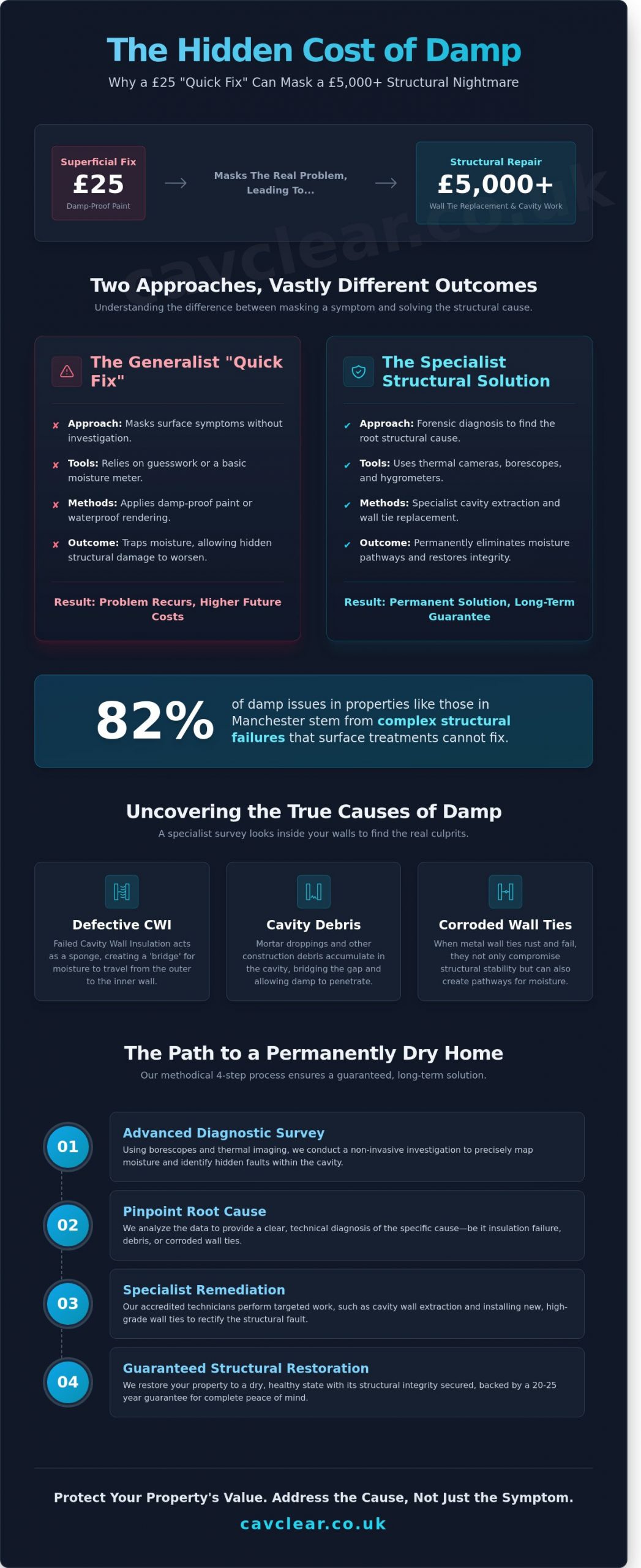
A professional damp specialist in 2026 is a technical contractor dedicated to identifying and rectifying the structural causes of moisture ingress. Unlike a general builder who might offer a broad range of renovation services, a specialist focuses exclusively on the science of the building envelope. They operate with a forensic mindset, using data to drive their recommendations rather than relying on visual guesswork. This distinction is vital because 82% of damp issues reported in Manchester properties stem from complex structural failures that a standard “patch-up” repair cannot fix. By 2026, the industry has shifted away from temporary solutions toward holistic property health, ensuring that every intervention supports the long-term integrity of the home.
The difference between a generalist and a specialist lies in the diagnostic equipment used during the initial survey. While a builder might carry a basic moisture meter, a specialist employs thermal imaging cameras, hygrometers, and microwave sensors to map moisture levels deep within masonry. These tools allow for a non-invasive look at what’s happening inside the walls. Understanding the different forms of structural dampness is the first step in any professional survey. This technical approach ensures that the proposed solution addresses the root cause, whether it’s a failed damp-proof course or a bridge in the cavity wall. It’s about accuracy and transparency from the start.
Operating as a nationwide company allows us to maintain consistent standards across diverse UK property types. Manchester’s Victorian terraces present different challenges compared to modern semi-detached homes, yet the requirement for structural excellence remains the same. We don’t believe in regional variations in quality. Every project follows a strict protocol that prioritises thermal efficiency and structural safety. This national reach means our technicians are trained to the highest 2026 standards, bringing a level of expertise that local handymen simply can’t match. It’s this commitment to professional rigor that provides homeowners with genuine peace of mind.
The Role of Technical Accreditation
Certified technicians are essential for accurate moisture profiling. In 2026, accreditation isn’t just a badge; it’s a guarantee that the person surveying your home understands complex building physics. Professional indemnity insurance and long-term guarantees, often spanning 20 to 25 years, are standard for a reputable damp specialist. These protections ensure that if a problem recurs, the homeowner isn’t left with additional costs. We move beyond simple damp-proofing to provide comprehensive structural maintenance. This includes identifying where previous poor workmanship, such as the dangerous installation of retrospective cavity wall insulation, has caused systemic dampness and wall tie corrosion. We take pride in rectifying these errors the right way.
Beyond the Surface: The Specialist Approach
Surface treatments like damp-proof paint or internal waterproof rendering often do more harm than good. They mask deeper structural failures, allowing moisture to continue degrading the masonry out of sight. A specialist approach involves identifying the specific source of moisture before any work begins. If the source isn’t stopped, the damp will eventually return, often with more intensity. We focus on protecting the long-term value of your property investment by ensuring the building can “breathe” and manage moisture naturally. This methodical process avoids the cycle of repeated, ineffective repairs. It’s a no-nonsense strategy designed to restore comfort and safety to your living environment permanently.
Identifying the Three Primary Types of Dampness
Manchester’s architectural heritage includes thousands of Victorian and Edwardian terraces. These older properties often present complex moisture profiles where different types of dampness intersect. A qualified damp specialist must distinguish between these distinct sources to prevent costly, incorrect treatments. Misdiagnosis often leads to homeowners paying for “solutions” that fail to address the root cause of the problem.
Rising damp occurs when ground water travels upwards through porous bricks and mortar via capillary action. It typically reaches a maximum height of 1.2 metres above the ground level. The primary cause is usually a breached, bridged, or non-existent damp proof course (DPC). This issue is specific to the ground floor and is rarely the cause of moisture on upper storeys.
Penetrating damp involves horizontal water ingress through the building envelope. It often stems from external defects like perished mortar, cracked render, or debris-filled wall cavities. Unlike rising damp, it can appear at any height and is frequently intensified by heavy wind-driven rain, which is a common occurrence across the United Kingdom.
Condensation is an internal moisture issue. When warm, moisture-laden air hits cold surfaces, it reverts to liquid. This is frequently exacerbated by “cold bridging,” where structural elements bypass insulation and create cold spots on internal walls. In many UK homes, this is the most prevalent form of dampness, yet it’s often the most misunderstood.
Rising Damp vs. Penetrating Damp
Differentiating these two requires a methodical approach. Rising damp leaves a characteristic “tide mark” of hygroscopic salts just above the skirting boards. If you see localised patches higher up a wall or near the ceiling, you’re likely dealing with penetrating damp. External ground levels play a vital role here; any soil or paving sitting less than 150mm below your DPC creates a bridge for moisture. Faulty guttering or blocked cavities often drive penetrating moisture deep into the inner leaf of the masonry, and for more details on how professionals handle these external elements, you can check out Archers Roofing Services Ltd. Our surveyors operate nationwide to identify these specific structural failures before they compromise the building’s stability.
The Condensation and Mould Connection
Condensation is the leading cause of black mould, specifically Stachybotrys chartarum. This fungus thrives in corners and behind furniture where airflow is stagnant and surfaces remain cold. According to the UK guidance on damp and mould, persistent exposure to these spores leads to significant respiratory issues and weakened immune systems. Improving the thermal envelope of your home is the only permanent solution. This involves ensuring cavities are clear of debris and ventilation is adequate. If your home feels perpetually humid, a professional cavity assessment can identify hidden obstructions that compromise your wall’s thermal performance. Dealing with the source of the moisture is far more effective than simply cleaning the mould away. A damp specialist will look for these thermal anomalies using calibrated tools to ensure your home remains a safe, dry environment for the long term.
Why Defective Cavity Wall Insulation is a Hidden Damp Catalyst
UK homes built with cavity walls after 1920 were designed to have a clear 50mm air gap. This gap acts as a vital barrier against the driving rain common in Manchester and the North West. When insulation is retrospectively pumped into this space, it often fails because the UK climate delivers over 1,000mm of annual rainfall in many regions. This volume of water eventually permeates the outer brickwork. Instead of the moisture evaporating or running down the internal face of the outer leaf, it hits the insulation material.
Once the insulation becomes saturated, it creates a physical bridge between the wet outer leaf and the dry inner leaf. This bypasses the original design intent of the building. A qualified damp specialist often identifies this as the root cause of penetrating damp that refuses to dry out through traditional heating or ventilation. The moisture moves via capillary action across the “bridge,” leading to damp patches on internal plasterwork that correspond directly with the areas of wet insulation outside.
The Problem with Saturated Insulation
Mineral wool and urea-formaldehyde foam are particularly susceptible to moisture retention. Data shows that mineral wool can hold up to 15% of its weight in water before it even begins to sag. This moisture destroys the thermal efficiency of the wall. A 5% increase in moisture content can lead to a 50% reduction in the R-value of the insulation, meaning the material actually draws heat out of the home rather than keeping it in. Wet insulation also prevents the wall from breathing. This traps condensation inside the living space and leads to black mould growth. Extraction is the only viable remedy to restore the property’s thermal integrity and prevent further decay.
Structural Implications of Cavity Debris
Cavities are rarely clean. During construction, mortar droppings, known as “snots,” often collect on wall ties or at the base of the wall. When insulation is added, it gets caught on these obstructions, creating cold spots and moisture traps. Over a 25-year period, this trapped moisture accelerates the oxidation of metal wall ties. Corroded ties can expand to several times their original thickness, causing horizontal cracking in the mortar joints and potentially compromising the stability of the entire outer leaf.
Cavity extraction is the process of mechanically removing failed materials to restore airflow. This procedure is essential for homeowners who notice persistent cold spots or tide marks on their walls. A damp specialist will use borescopes to inspect the cavity before recommending a full extraction. Failing to remove this debris ensures that any internal remedial work will be temporary, as the source of the moisture remains trapped within the structure.
CavClear recommends a complete extraction over any attempt to “top up” failing insulation. Adding new material to a saturated cavity only increases the weight on the wall ties and further restricts essential airflow. Our nationwide teams use industrial-grade vacuums and compressed air to ensure a 100% clear cavity, providing a permanent fix for insulation-related damp. This methodical approach ensures the building can breathe again, protecting the structural health of the home for decades to come.
The Importance of a Professional Damp and Structural Survey
A visual inspection of a property is rarely enough to diagnose the root cause of moisture ingress. Surface-level signs like peeling wallpaper or salt staining often indicate a deeper, structural failure that remains hidden from the naked eye. Relying on a quick walkthrough leads to misdiagnosis, which often results in homeowners spending thousands on “quick fix” damp-proofing injections that fail to address the actual problem. A qualified damp specialist uses a scientific approach to map moisture and identify the precise origin of the issue.
Modern diagnostic techniques have moved beyond simple guesswork. For properties in Manchester, particularly those built with cavity walls between 1920 and 1990, the problem is frequently found within the wall itself. Debris or degraded insulation can bridge the cavity, allowing water to transfer from the outer leaf to the inner wall. Without a professional survey, these internal faults remain invisible, leading to recurring mould growth and structural decay. Identifying these faults early prevents the slow degradation of wall ties and internal timber frames.
Non-Invasive Diagnostic Tools
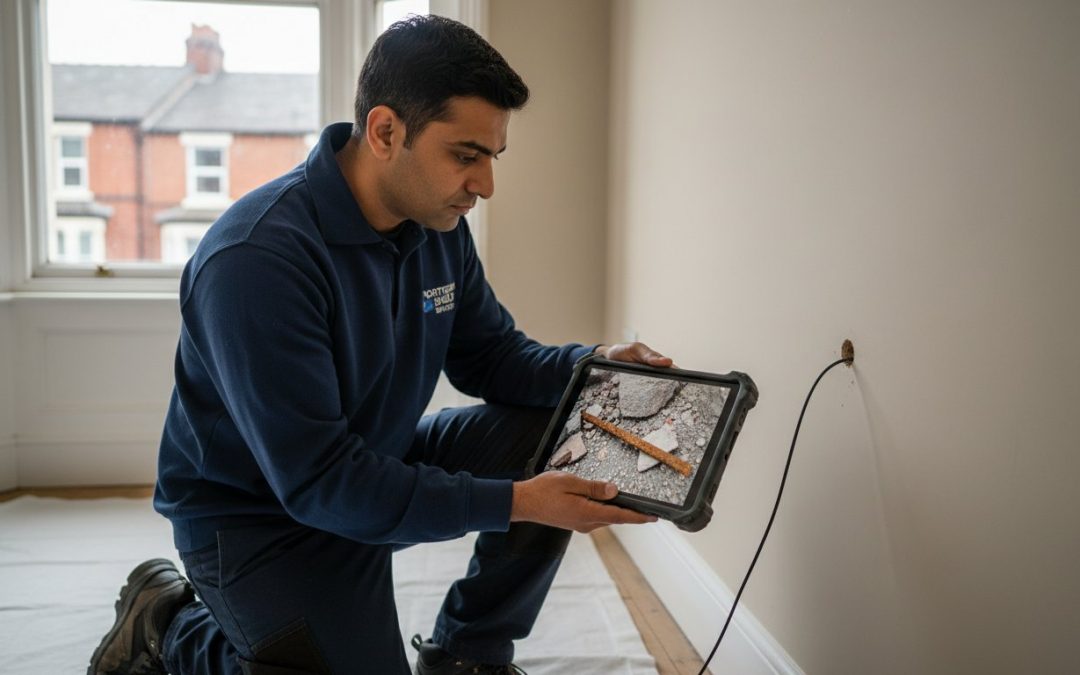
Specialists use moisture meters to create a detailed profile of dampness across different wall sections. These readings aren’t just single data points; they help identify patterns of rising or penetrating damp. Borescope inspections are equally vital. By inserting a small camera through a 10mm hole in the mortar joint, a surveyor can inspect the health of wall ties and the state of any existing insulation. This process reveals if mortar droppings or “snots” are causing moisture bridges that bypass the property’s natural defences.
- Thermal Imaging: This technology identifies cold spots and thermal bridges where condensation is likely to form due to missing or slumped insulation.
- Borescope Analysis: Provides visual evidence of cavity obstructions, rubble, or inappropriate materials that shouldn’t be inside the wall.
- Moisture Mapping: Tracks the movement of water through masonry to find the entry point, often pinpointing failed pointing or blocked air bricks.
These professional surveys provide the evidence required for insurance providers and are essential during property sales. Data from 2023 suggests that 85% of buyers feel more confident proceeding with a purchase when a technical damp report is provided upfront. It removes the uncertainty that often stalls property transactions in the UK market. A specialist’s report acts as a definitive record of the building’s health, ensuring no hidden surprises emerge after the keys change hands.
Interpreting the Specialist Report
It’s vital to understand the difference between a basic “estimate” and a technical remedial recommendation. An estimate tells you the price, but a specialist report provides a roadmap for permanent property restoration. The document should include high-resolution imagery from the borescope and a clear explanation of the structural faults found. This technical evidence ensures that the proposed work, such as cavity cleaning or debris extraction, is necessary and targeted. It moves the conversation away from guesswork toward engineering-led solutions.
Booking damp and mould surveys is the first step in property recovery. It shifts the focus from hiding symptoms to fixing the building’s envelope. A comprehensive report from a damp specialist ensures that remedial plans are based on facts rather than assumptions. This methodical approach protects the structural integrity of your home and restores the thermal efficiency of your walls, providing a long-term solution rather than a temporary patch. You’ll receive a clear list of priorities, from urgent structural repairs to secondary ventilation improvements.
If you’ve noticed recurring damp patches or a musty smell in your Manchester home, don’t wait for the problem to worsen. You can book a professional cavity inspection today to receive a definitive diagnosis and a guaranteed plan for restoration.
Specialist Remedial Solutions for a Dry, Healthy Home
A professional damp specialist understands that a property needs to breathe to remain structurally sound. When cavity wall insulation becomes saturated, it stops acting as a thermal barrier and starts acting as a bridge. This allows moisture to travel from the outer brickwork directly to your internal walls. Resolving this issue isn’t about covering up the patches of mould; it’s about restoring the original design of the building. By removing the wet material, we re-establish the 50mm air gap that keeps your home dry. This process is essential for long-term property health and prevents the return of damp conditions.
Cavity Extraction and Cleaning
Specialists remove debris and failed insulation using a methodical, non-invasive process. Technicians start by removing individual bricks at the base of the walls to create exit points. They then use compressed air and high-powered industrial vacuums to clear the cavity through 12mm holes drilled into the mortar joints. This technique ensures the external appearance of your home remains unchanged. The immediate benefits are significant. A clean cavity allows the inner leaf to dry out, which can improve thermal efficiency by up to 15% compared to a wall filled with sodden material. For homeowners struggling with penetrating damp, cavity wall insulation removal is the most effective way to restore the property’s natural moisture management system.
Debris often collects at the bottom of the cavity over many years. This rubble can bridge the damp proof course, leading to rising damp symptoms that aren’t easily fixed with standard treatments. Our extraction process includes a full camera inspection to ensure every piece of rubble and insulation is gone. This transparency gives you peace of mind that the job’s been done right the first time. It’s a clean, efficient solution that addresses the root cause rather than just the symptoms.
Wall Tie Restoration and Structural Security
Damp environments within a wall cavity often lead to the corrosion of wall ties. These metal components are vital because they secure the inner and outer leaves of your property together. When they rust, they expand to several times their original size. This expansion forces the mortar joints apart, leading to horizontal cracking or visible bulging in the brickwork. It’s a serious structural concern that requires immediate attention from a specialist. We identify these faults using borescope inspections to view the condition of the ties without dismantling the wall.
To fix this, we install remedial stainless steel ties that are resistant to corrosion. These are fixed into the brickwork to provide a permanent, secure bond. We then isolate or remove the old, failing ties to prevent further damage to the masonry. Linking your repair programme to wall tie replacement services ensures your home remains safe and stable for decades. Most remedial tie installations come with a 25-year guarantee, reflecting the durability of the materials used.
Effective moisture management also requires proper ventilation. We often find that properties with damp issues have blocked air bricks or inadequate airflow. A damp specialist will assess these areas to ensure that once the cavity is clear, the air can circulate expertly. This prevents the stagnant conditions that allow mould spores to thrive. Our nationwide service means we bring this level of expertise to every corner of the UK, providing a consistent and professional standard of care. We don’t use high-pressure sales tactics; we provide clear, technical advice based on the specific needs of your building. Choosing a damp specialist with a focus on remedial excellence is the only way to ensure your home stays dry and healthy for the future.
Creating a truly healthy home goes beyond just structural integrity. Once you’ve addressed issues of damp and air quality, it’s also worth considering the quality of the water you use every day. For homeowners looking to ensure their water is pure and safe, consulting a water treatment specialist like A Clear Alternative can provide peace of mind and tailored solutions.
Secure Your Property’s Structural Integrity Today
Protecting a building from moisture requires more than a temporary fix. It demands a technical understanding of how a cavity wall functions. Defective insulation often acts as a bridge for dampness, leading to wall tie corrosion and compromised internal finishes. By 2026, the industry standard for remediation focuses on non-invasive extraction to restore the home’s original design. Our accredited technicians provide nationwide coverage, delivering detailed technical reports that pinpoint precise faults before they lead to expensive structural repairs. Choosing a qualified damp specialist ensures your remedial work adheres to current construction standards while focusing on long-term thermal efficiency.
CavClear operates across the United Kingdom, using precision tools to remove debris and replace damaged wall ties without disturbing your masonry. This methodical approach eliminates the root cause of dampness rather than masking the symptoms. You’ll receive a clear, professional roadmap to a dry and healthy home. It’s time to restore your peace of mind and protect your investment for the future.
Book your professional damp and structural survey with CavClear today
Frequently Asked Questions
What is the difference between a damp specialist and a general builder?
A damp specialist possesses specific diagnostic equipment and technical training to identify the root cause of moisture ingress, whereas a general builder often focuses on cosmetic repairs. Specialists use thermal imaging and protimeters to map moisture levels within the building fabric with precision. This technical approach prevents unnecessary work. General builders may overlook hidden issues like cavity wall debris that a specialist identifies immediately.
How much does a professional damp survey cost in the UK?
A professional damp survey in the UK typically costs between £200 and £600 depending on the property size and location. This fee covers a comprehensive inspection of the internal and external walls to identify structural faults. Investing in an accurate survey ensures that the subsequent remediation work targets the actual problem. It prevents the 25% average overspend often associated with misdiagnosed damp issues.
Can defective cavity wall insulation cause rising damp?
Defective cavity wall insulation doesn’t cause rising damp, but it frequently mimics its symptoms by allowing moisture to bridge the cavity. When insulation becomes saturated, it transfers water from the external leaf to the internal wall. This process creates damp patches at the base of walls that look like rising damp. A qualified damp specialist will differentiate between these two distinct issues using targeted diagnostic tests.
How long does it take to extract failed cavity insulation?
Extracting failed cavity insulation from a standard semi-detached home usually takes between 1 and 2 days. Our technicians use high-pressure compressed air and industrial vacuums to ensure the cavity is 100% clear of debris. This non-invasive process involves removing bricks at the base of the wall to facilitate a thorough clean. We monitor the progress to guarantee the structural integrity of your home remains intact throughout.
Is black mould always a sign of a structural damp problem?
Black mould isn’t always a structural issue, but it often indicates poor thermal efficiency or underlying moisture within the walls. In approximately 70% of cases, mould results from condensation caused by cold bridging. If your cavity insulation is slumped or wet, it creates cold spots where water vapour settles. A damp specialist can determine if the mould stems from ventilation habits or a failing building envelope.
What happens if I leave wall tie corrosion untreated?
Untreated wall tie corrosion leads to horizontal cracking, bulging walls, and eventually the collapse of the outer masonry leaf. As ties rust, they expand to several times their original size, which forces the mortar joints apart. This structural failure often results from moisture trapped in the cavity by retrospective insulation. Replacing ties early prevents the need for a full wall rebuild, which can cost upwards of £10,000.
Do you provide damp specialist services across the whole UK?
Yes, we provide comprehensive services across the entire United Kingdom, including major hubs like Manchester, London, and Glasgow. Our national network of accredited technicians ensures that every homeowner has access to professional extraction and remediation services. We maintain consistent standards of workmanship regardless of your location. This nationwide reach allows us to offer guaranteed solutions for property owners facing complex moisture problems.
Will removing my insulation make my house colder?
Removing wet or failed insulation actually improves the thermal health of your property because saturated material conducts cold rather than resisting it. Wet insulation acts like a cold sponge, drawing heat out of your home and increasing energy bills by up to 15%. Once the cavity is clear and dry, the natural air gap provides better insulation than damp debris. This restoration of the cavity ensures long-term property health.
Recent Comments