
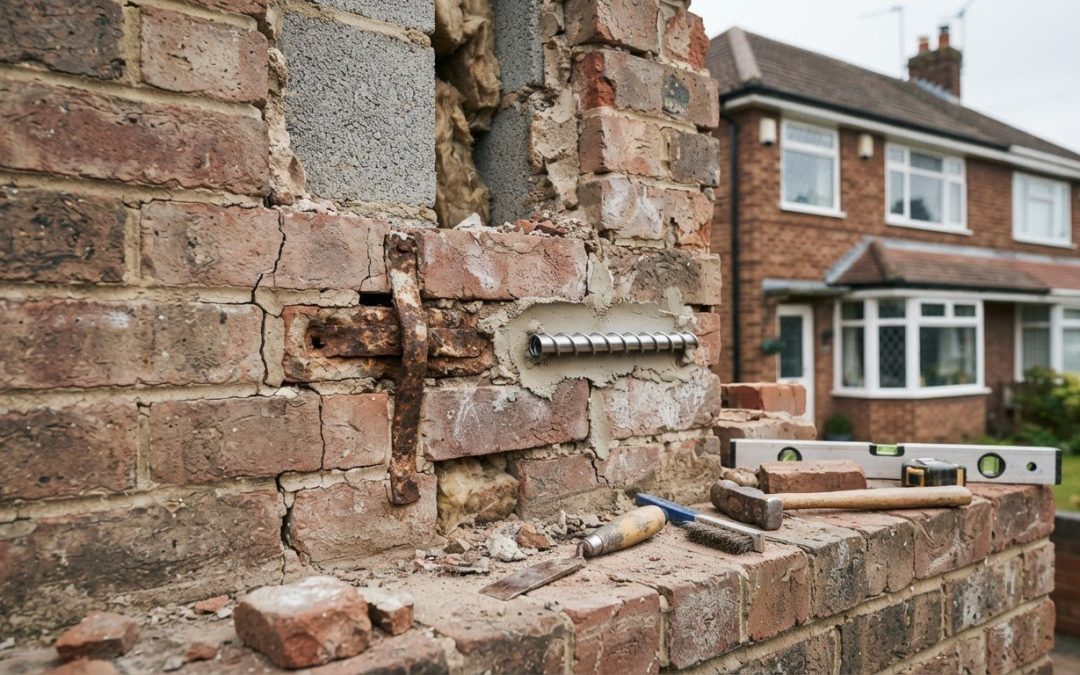
For homeowners asking whether wall tie replacement is worth the cost, it can be when an inspection confirms that ties are failing and the masonry needs support. Corroding ties can put pressure on surrounding brickwork, while failed ties can allow the leaves of a cavity wall to separate. The right repair depends on the condition of the ties and the extent of any damage.
It’s understandable to weigh the expense against the disruption, particularly when cracks or movement have appeared. The cost of wall tie work is property-specific and depends on the affected areas, access and repairs required. A survey establishes the scope before work is planned.
This article explains the options for dealing with damaged ties, what affects the cost, and how replacement is carried out. It also covers warning signs, safety considerations, warranties and the standards that inform professional work, helping you judge whether repair is a sound investment in your property’s long-term condition.
Key Takeaways
- Replacement is worthwhile when a survey confirms that corroded or failed ties are affecting the wall’s stability; stable ties may not need replacing.
- The scope and cost of remedial work depend on factors such as the affected elevations, access and the condition of the brickwork.
- Look out for recurring cracks, bulging brickwork and changes in how doors or windows open, then arrange a specialist assessment rather than attempting tie replacement yourself.
- Professional installation involves assessing the existing ties and selecting replacements to suit the wall and site conditions.
- Understand the workmanship warranty and the standards that inform tie selection and installation before deciding how to proceed.
Choosing between retaining, isolating, removing or replacing ties
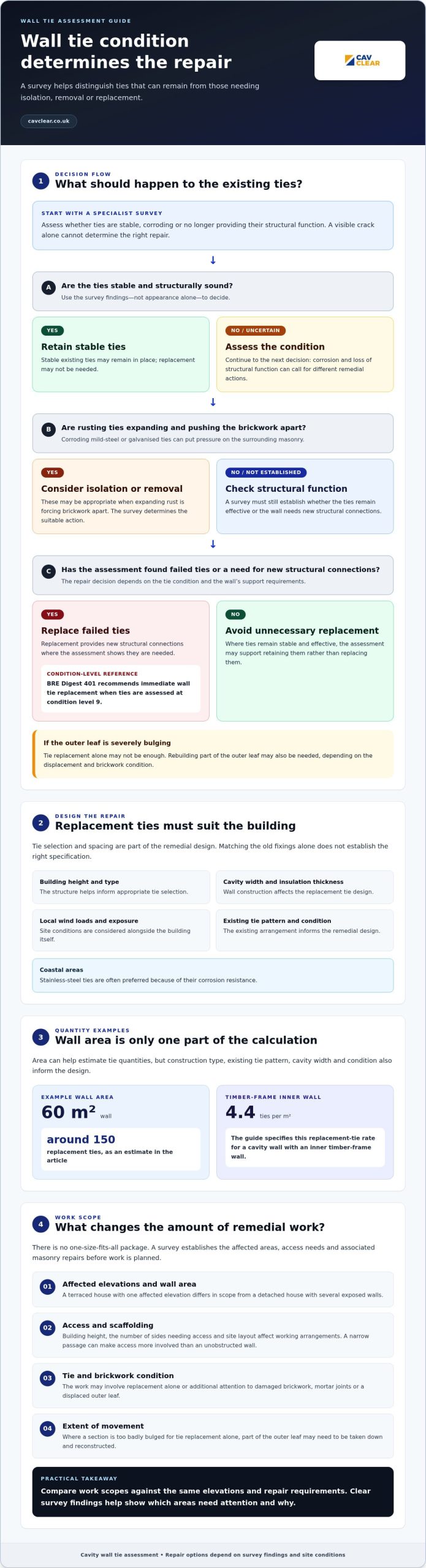
Not every existing wall tie needs replacement. A survey should establish whether ties remain stable, show corrosion, or have lost their structural function. BRE Digest 401 recommends immediate wall tie replacement when ties are assessed at condition level 9. Its Table 4 links the corrosion scale to remedial action, helping distinguish intervention from monitoring.
Stable old ties may remain in place. If rusting ties continue expanding and pushing brickwork apart, isolation or removal may be appropriate. Replacement is needed when assessment shows the cavity wall requires new structural connections. The decision tree in BRE Digest 329 guides remedial tie selection. A visible crack alone cannot establish which option suits the wall.
When an inspection confirms failure, the key question is whether replacement is worth the cost of preventing further movement. Corroded mild-steel or galvanised wall ties expand, putting pressure on surrounding masonry and can cause cracking, bulging, and in extreme cases collapse of the outer leaf. Severe bulging may require rebuilding as well as tie work. The scope depends on the affected elevations, access, tie condition and associated masonry repairs. A survey helps identify the work needed.
Wall area can help estimate tie quantities, but it doesn’t set the design by itself. A 60 m² wall would usually require around 150 replacement ties. For a cavity wall with an inner timber-frame wall, the guide specifies 4.4 replacement ties per square metre. These examples show why construction matters alongside area. Existing tie patterns, cavity width and condition also inform the remedial design.
Replacement ties must suit the building, rather than simply match the old fixings. Selection considers building height and type, cavity width, insulation thickness, local wind loads and exposure. Stainless-steel ties are often preferred in coastal areas because of their corrosion resistance. Replacement tie spacing should be considered as part of the remedial design. A stable tie changes the calculation: is wall tie replacement worth the cost if it remains structurally sound? Assessment helps determine whether it should be retained.
Failed ties can affect a home’s value and marketability, so clear findings matter to buyers and sellers. A pre-purchase Wall Tie Survey can help a buyer understand the wall’s condition, repair scope and any brickwork concerns. Sellers can use survey findings to explain identified work and completed repairs. The practical distinction for buyers is between stable ties that can remain and confirmed failure requiring remedial action.
- Retain stable ties; isolate, remove or replace them when the assessment supports that action.
- Compare the repair scope with the potential for further brickwork damage.
- Use wall area as a starting point, then account for construction and exposure.
HOW MUCH DOES WALL TIE REPLACEMENT COST?
Replacing failed ties addresses the connections between the wall leaves, while rebuilding restores a damaged section of cavity wall. The suitable option depends on tie condition, brickwork movement, access and how much masonry needs repair.
Costs by Property Size and Elevations
Property size and the number of affected elevations influence how much wall needs inspection and remedial work. A terraced house with one affected elevation has a different scope from a detached house with several exposed walls. More wall area can mean more replacement ties, installation work and materials. Comparing quotations is useful only when each describes the same elevations and scope.
Existing Ties, Scaffolding and Additional Work
The condition of the existing ties affects whether work involves replacement alone or additional repairs. A survey assesses whether ties are corroded or stable and whether the brickwork needs attention. Access also matters: upper-storey work may require scaffolding, while a clear ground-level elevation may need different arrangements. Mortar condition and the location of damage can add work beyond installing new ties.
Scaffolding is a separate project factor because it provides access across the elevation and supports safe working. Building height, the number of sides requiring access and the site layout affect what is needed. A narrow passage beside a house, for example, can make access more involved than an unobstructed front wall. These conditions influence the overall scope, not just the number of ties.
Repair requirements can extend beyond tie installation. If work disturbs mortar joints, they may need to be reinstated. Where the outer leaf has moved, the extent of displacement and condition of the surrounding brickwork shape the repair. A survey helps separate tie replacement from associated tasks, so the quotation reflects the actual work rather than an assumed standard package.
Rebuilding may be needed when a section is too badly bulged for tie replacement alone to restore the wall. The affected part of the outer leaf may need to be taken down and reconstructed; scaffolding and the size of the section affect the scope. Replacement is more targeted when the masonry remains serviceable. A survey helps determine whether ties, brickwork or both need remedial attention.
For this work, the price is tailored to the requirements and provided after a quote request; affected elevations, access, tie condition and masonry repairs shape the scope. Clear inspection findings help establish which areas need remedial work and what that work involves.
Is wall tie failure dangerous?
Failed wall ties can let a cavity wall’s inner and outer leaves separate, weakening their lateral support. Early assessment matters because severe failure can lead to partial or complete wall collapse.
Failure Signs and Causes
Wall tie failure occurs when corrosion or deterioration prevents ties connecting the two masonry leaves from performing their structural role. UK houses built roughly between the 1920s and 1981 are at greater risk because ties from that period were often galvanised steel with a thin protective coating. Rust can expand, placing pressure on the surrounding brickwork.
Look for horizontal cracks that repeat at regular intervals across a wide area, especially along mortar joints. Hairline cracks around window and door openings can also be a sign of a wall tie problem. Bulging brickwork is another warning sign. Difficulty opening or closing windows and doors may occur as a wall moves.
Crack direction can help inform an assessment, but appearance alone cannot confirm the cause. Repeating horizontal cracks across a broad area may be associated with tie problems, while subsidence or settlement can cause diagonal cracks. A stepped diagonal crack, for example, may point to movement that needs a different assessment, such as the slab and structural issues addressed by concrete repair specialists like Foundation Werks. Don’t assume every crack indicates failed ties.
Safety Concerns and Inspection
A cavity wall with failed ties may lose the connection that restrains its outer leaf. In severe cases, separation can progress to partial or complete wall collapse, while neglected defects can also increase water ingress. Bulging masonry or widening cracks call for prompt professional assessment, rather than cosmetic filling that leaves the cause unresolved.
An inspection checks the existing ties rather than relying on external signs alone. A specialist may drill 10 mm pilot holes and use a borescope to view ties inside the cavity. Metal detectors can also help assess tie positions and spacing. Together, these methods help establish tie type, condition and whether corrosion is present.
Survey findings help distinguish tie failure from other causes of movement and guide suitable remedial work. Inspectors consider the crack pattern, wall movement and condition of the ties across the affected area. A single isolated crack, for example, is not the same evidence as repeated horizontal cracking alongside corroded ties. A written report can explain whether replacement or further investigation is appropriate.
Wall tie replacement installation process
Professional replacement begins with an assessment of the wall, followed by selection and installation of suitable remedial ties and a review of the completed work. The wall’s condition, cavity construction and access determine the method and tie arrangement.
An initial inspection identifies visible cracking, movement and the wall’s construction. A detailed survey then assesses existing ties and informs the remedial design. Installers need to account for the cavity width, masonry condition and any insulation within the cavity. Those details affect the tie selected and its required length. A single elevation replacement usually takes one to two days for a two-person team once scaffolding is erected.
Remedial wall ties include helical ties, which are 9 mm ties driven into a smaller pilot hole. Tie selection is not interchangeable: building height and type, cavity width, insulation thickness, local wind loads and exposure all affect suitability. Replacement ties are stainless steel and are typically installed closer together than original ties. This denser pattern helps provide the required restraint across the wall.
Spacing follows the wall’s construction and the assessed requirements. A typical recommended remedial density is around 2.5 ties per square metre. Where at least one masonry leaf is less than 90 mm thick, the guide specifies 5.0 replacement ties per square metre. For a cavity wall with an inner timber-frame wall, it specifies 4.4 ties per square metre. The installer must use the figure applicable to the specific wall type.
Placement matters as much as density. Replacement ties should typically sit at least 200 mm from existing tie positions, avoiding reliance on the same fixing points. They should be embedded at least 50 mm into both masonry layers, linking the outer and inner leaves. A post-installation survey checks the remedial work against the planned arrangement and records the completed tie positions.
After installation, any further repairs depend on what the work exposed or disturbed. Mortar joints around access points may need reinstating, while existing cracks or displaced brickwork need separate assessment. A window opening, for example, may need careful attention because ties and cracking near openings affect the same section of masonry. Local brickwork repairs should address the defect, not conceal continuing movement.
The completed work should be recorded alongside the original survey findings. This links the identified condition to the remedial ties installed and any follow-up masonry repairs. For homeowners, the written record clarifies what was done across the elevation and helps distinguish completed tie work from unrelated defects that may still need attention.
Professional warranties and regulatory compliance
Wall tie failure is generally treated as gradual deterioration and may not be covered by buildings insurance. Home warranty cover depends on the wording and exclusions in the individual policy, so read the documents supplied with the property or previous work.
A workmanship warranty and an insurance-backed guarantee are different forms of protection. Specialist contractors often offer insurance-backed guarantees lasting 20 to 30 years, but terms vary. Read the document for its duration, covered work, exclusions and process for reporting a fault. Check whether protection applies only to replacement ties or also to associated work, such as mortar repairs.
Keep the written specification and completion records together. Useful details include the wall areas treated, the type and locations of replacement ties, and any related repairs. If a later inspection identifies cracking near a repaired elevation, for example, these records can show whether that area was included in the original work.
Photographs can make the record more useful. Images taken before and after installation help show the brickwork’s condition and the finish of reinstated mortar joints. A written report can explain the work undertaken and note any areas outside the agreed scope. Together, these documents give a homeowner or future buyer a clearer account of the wall’s remedial history.
Warranty documents should explain what to do if a concern arises. Note the reporting route, any time limit for notifying the provider and the evidence they may need. Keep dated photographs if new movement or cracking appears. A photograph showing a crack beside a window, for instance, can help distinguish a new change from damage recorded before installation.
Insurance and warranty documents serve different purposes. Buildings insurance may not cover gradual tie deterioration, while a workmanship warranty relates to the work described in its terms. Neither should be assumed to cover every later defect. Read the exclusions alongside the work specification, especially if the project included tie replacement but excluded separate brickwork repairs.
Before work begins, keep the survey findings, written scope and any warranty information together. After completion, add the report, photographs and repair details. This record helps clarify what was assessed, what was installed and which areas were addressed, supporting informed maintenance decisions over time.
CavClear: Cavity Wall Insulation Removal
CavClear provides Wall Tie Surveys and Wall Tie Replacement when inspection identifies corroded or failing ties affecting cavity-wall stability. A Cavity Wall Survey can also help assess the wall system where cracking, moisture or insulation concerns need investigation.
Where defective cavity wall insulation is contributing to damp or moisture problems, Cavity Wall Insulation Removal may form part of the appropriate remedial work. The right next step depends on the survey findings and the condition of the cavity, masonry and ties. An assessment helps distinguish insulation-related concerns from structural tie failure, so the recommended work addresses the identified problem.
For an assessment of your cavity wall or wall ties, contact CavClear or visit cavclear.co.uk.
Make your next step a clear one
Deciding whether wall tie replacement is worth the cost is ultimately about protecting your property’s long-term condition, not simply resolving a visible crack. A useful next step is to note where movement or cracking appears, keep relevant inspection findings together and use them to guide maintenance decisions. This gives you a practical reference if the wall’s condition changes or the property changes hands.
If you’re unsure about the cause or appropriate remedial work, a specialist assessment can help clarify the options. CavClear provides Wall Tie Surveys and Wall Tie Replacement, as well as Cavity Wall Insulation Removal where defective insulation is part of the problem. The recommendation depends on the condition of the cavity wall and the survey findings.
Contact CavClear about wall ties to discuss the next step for your property. A measured decision can help you move forward with greater confidence.
Frequently Asked Questions
Will the cracks come back after repair?
Cracks may reappear if movement continues or a repair treats only the visible damage. A filled crack can look sound while the underlying cause remains, so keep dated photographs and note changes in its position or appearance. If a crack returns, compare it with earlier images and have the affected area reassessed. This helps establish whether movement persists or a separate issue has developed, such as foundation shifting where house leveling specialists like Crown Leveling evaluate structural movement.
What are the signs that wall ties need replacing in a UK home?
Cracking that repeats across an elevation, bulging brickwork or changes around openings can indicate a wall tie problem. These signs need assessment, not visual diagnosis alone. For a useful record, photograph each affected area and note whether doors or windows have started sticking. The location and pattern of these changes can help an inspector decide what to examine inside the cavity.
How much does wall tie replacement cost in the UK in 2026?
Wall tie replacement costs vary by property, so there isn’t one suitable figure for every UK home in 2026. The price is based on the assessed work and is provided after a quote request. The affected wall areas, access arrangements, tie condition and any associated masonry repairs influence the scope. Review the quotation to understand which tasks it includes and which are separate.
What factors affect the cost of wall tie replacement, such as property size and access?
The main cost factors include how much wall needs treatment, how many elevations are involved and how installers can reach them. Scaffolding may be needed for upper walls, while restricted access can affect site arrangements. The condition of the mortar and brickwork also matters if repairs are needed alongside tie work. Check that the property-specific quotation identifies the elevations and associated tasks included.
How long does wall tie replacement take and what does the work involve?
The timeframe depends on the property, access, type and extent of works; the expected programme should be explained before work begins. The work generally involves assessing the wall, selecting suitable ties, installing them and recording the completed work. Scaffolding, the number of affected elevations and any masonry repairs influence the programme. Make sure the scope distinguishes tie installation from additional repairs.
What happens if defective wall ties are not replaced?
If defective ties continue to lose their holding function, the outer leaf may move further away from the inner wall. That movement can worsen existing defects and allow more water to enter through damaged masonry. The consequences depend on the wall’s condition, so a periodic visual record can help identify changes. Don’t treat new bulging or widening cracks as a cosmetic issue alone.
How long do replacement wall ties last, and what warranties are available?
There isn’t one lifespan that applies to every replacement installation; material, exposure and workmanship all affect service life. Warranty cover varies, so read its duration, exclusions and covered work carefully. Check whether it applies to the ties alone or includes related repairs. Keep the warranty with the installation record, photographs and specification so future owners can understand the work completed and the stated cover.
What information should I prepare before a wall tie survey?
Prepare a brief history of the affected areas, including when cracking or movement was first noticed and any repairs already made. Recent photographs can show how the appearance has changed. Note access restrictions, such as extensions or narrow side passages, and mention any known cavity insulation. These details help the surveyor plan the inspection and relate visible changes to the wall’s construction.
Recent Comments