
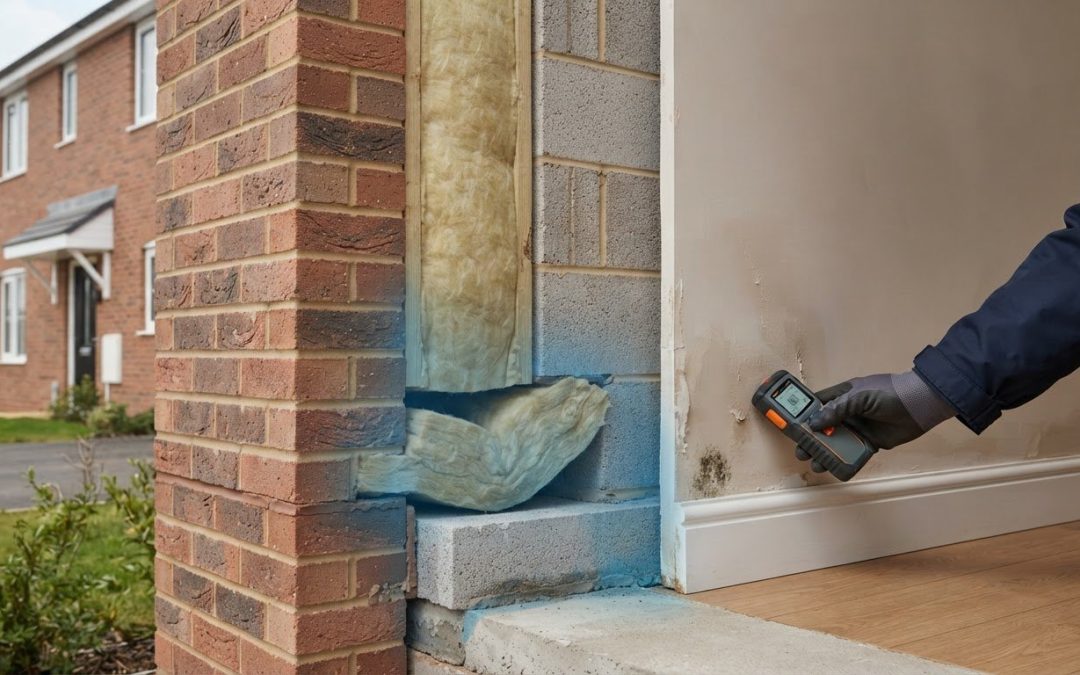
Low-level damp doesn’t automatically mean a failed damp-proof course. The signs cavity insulation is bridging DPC can resemble other moisture problems, so treating visible symptoms without investigating the cause may not resolve the issue.
Damp near skirting boards, peeling paint, a musty smell or localised mould can prompt questions about the cause. These clues are worth noting, but none confirms insulation bridging on its own. DPC bridging occurs when a material creates a route for moisture to cross the cavity or bypass the damp-proof course, potentially transferring moisture from the outer wall towards the inside.
This article explains which signs may point to bridging, what they can’t tell you by themselves and how a suspected cavity-wall problem can be investigated. Ventilation may help manage condensation, but it won’t correct a physical moisture path through the cavity. A cavity wall survey can assess the evidence before remedial work is considered, including cavity wall insulation removal where the findings support it. This helps you investigate the cause without assuming every insulated property needs the same response.
Key Takeaways
- Learn how to assess the signs cavity insulation is bridging DPC without treating low-level damp as proof of the cause.
- Understand how insulation or other material in a cavity may create a route for moisture past the damp-proof course.
- See why ventilation may help manage indoor moisture but cannot repair a physical bridge within a cavity wall.
- Record when damp appears and relevant property history to help make an inspection more informative.
- Find out how a cavity wall survey can investigate suspected defects, with cavity wall insulation removal considered only when findings support it.
What signs could mean cavity wall insulation is bridging the DPC?
A damp-proof course (DPC) is a barrier within a wall intended to limit moisture rising through masonry. In a cavity wall, the inner and outer masonry leaves are separated by a cavity, as outlined in Cavity Wall Construction. If insulation contacts or crosses the DPC, or becomes wet and settles against the base of the cavity, it may create a route for moisture to pass through the wall in some circumstances. This possibility merits investigation, but the presence of insulation doesn’t mean a bridge exists.
Low-level damp on an internal wall may be one clue. Look for staining, peeling or blistering paint, lifting wallpaper, damaged plaster or localised mould, particularly near skirting boards. Damp patches that become more noticeable after heavy or wind-driven rain are also worth recording. These are observations, not a diagnosis. Condensation, penetrating damp through the outer wall and other building defects can produce similar signs.
Which visible clues should a homeowner note?
A clear record can help a specialist understand how symptoms behave. Note the room and wall affected, how high the marks extend, and whether the damage is near a corner, window, external wall or skirting board. Record whether it is confined to one area or appears across several walls, and whether it changes over time or after particular weather.
- Photograph the same areas periodically, dating the images where possible.
- Record changes to staining, mould, paint, wallpaper or plaster.
- Note relevant events, such as heavy rain or changes in how the room is used.
Keep your checks visual. Don’t remove plaster or finishes, drill into the wall or disturb the cavity to investigate. These steps can damage materials without establishing the cause.
Why symptoms alone cannot confirm a DPC bridge
Condensation can leave moisture on cold surfaces, while penetrating damp may enter through defects in the external wall. Other faults can also damage internal finishes. Because these causes can look alike, a low-level damp patch can’t show whether insulation is wet, where it sits in the cavity or whether it crosses the DPC.
A warning sign can justify an investigation, but it cannot confirm a DPC bridge. Consider the signs cavity insulation is bridging DPC alongside the property’s condition and other possible moisture paths. Don’t treat them as proof that the DPC has failed or that insulation must be removed.
Accurate diagnosis depends on examining the property and, where appropriate, the cavity itself. A cavity wall survey can assess suspected insulation and related defects before remedial options are recommended.
How can cavity wall insulation bridge a DPC, and how is it investigated?
A cavity wall has two masonry leaves with a gap between them. That gap helps limit moisture travelling from the outer wall to the inner wall, so its condition and any materials within it matter. A bridge can form if wet or displaced insulation, mortar debris or another material creates a route across the cavity and past the DPC. Insulation bridging occurs when material in the cavity creates a path for moisture to bypass the DPC and reach the inner masonry. It is a possible defect, not an inevitable result of cavity wall insulation.
The route moisture could take depends on the wall’s construction and the DPC’s position. Cavity depth and condition, insulation location, and any alterations or defects can all affect what an inspection needs to establish. Damp at the base of an internal wall, for example, cannot show whether insulation touches the DPC or whether a different moisture path is present. Investigating signs cavity insulation is bridging DPC therefore requires evidence about the wall, not symptoms alone.
What a specialist may check in the cavity
A cavity wall survey assesses relevant construction details and the wall’s condition in the context of the reported problem. A specialist may inspect the external wall and DPC area, then use a borescope through a small drilled opening to view the cavity. A local opening-up inspection may be appropriate in some cases. The method depends on the property and the question being investigated, and no single observation should be interpreted in isolation.
Findings need to be considered alongside the location and pattern of internal damp, the building’s details and relevant property history. This helps distinguish evidence about insulation position or a cavity obstruction from assumptions based only on a surface mark.
How a survey separates possible causes
A careful assessment considers more than one explanation. A specialist may examine whether the cavity or insulation could be providing a moisture route, while also considering penetrating damp, condensation, external defects and other possible sources. The aim is to understand how moisture may be reaching the affected area, rather than choose a remedy before investigating the cause.
Where damp or mould appears connected to a suspected cavity-wall problem, a damp and mould survey may form part of the investigation. Recommendations should follow the evidence observed at the property. Cavity wall insulation removal may be considered if inspection findings support it, but it isn’t an automatic response to low-level damp or the presence of insulation.
A cavity wall survey can help investigate suspected insulation and related wall defects before remedial work is considered. It provides a practical next step when the cause remains uncertain.
Ventilation, chemical DPC treatment, or cavity-wall remediation: what differs?
These approaches address different possible causes of damp, so the right response depends on the findings of an investigation. Ventilation can help manage moisture generated inside a home. Chemical DPC treatment is intended to address rising damp by creating a barrier in masonry. Cavity-wall investigation focuses on a possible moisture route through the wall itself. Choosing between them without identifying the likely source can mean treating the wrong problem.
Low-level damp alone doesn’t establish that insulation is bridging a DPC. The signs cavity insulation is bridging DPC may prompt an assessment, but they can’t show whether indoor condensation, rain penetration, a cavity defect or another cause is responsible. Each option has a different purpose, and none is a universal fix.
What ventilation may and may not address
Cooking, bathing, drying clothes and everyday breathing all add moisture to indoor air. Using extractor fans where fitted, opening windows when practical and keeping air flowing through rooms can help manage this moisture and reduce condensation risk. Ventilation is relevant where indoor moisture is contributing to damp or mould on cold surfaces.
Airflow doesn’t inspect or alter the cavity. If a physical route is allowing moisture to cross the wall, ventilating the room won’t remove it. Ventilation may still help indoor conditions, but it can’t confirm a cavity bridge or be relied on to resolve damp caused by a confirmed wall defect.
When investigation may point beyond ventilation or chemical treatment
Chemical DPC treatment and cavity-wall remediation are not interchangeable. Chemical treatment may be considered where investigation supports rising damp and finds it suitable. It does not establish whether insulation is bridging a DPC or correct a moisture path through the cavity. Applying it based only on damp near floor level risks addressing a different cause from the one affecting the wall.
If evidence suggests a cavity defect, a cavity-focused survey can assess the wall and insulation rather than assuming ventilation or DPC treatment is the answer. Depending on the findings, the next step may be monitoring, further investigation or a proportionate remedial measure. Cavity wall insulation removal is a potential option only where the inspection findings justify it, not a standard response for every insulated property.
For more detail on the process and considerations, see this complete UK guide to cavity wall insulation removal. If the source remains uncertain, a cavity wall survey can help examine suspected insulation-related defects before remedial work is considered. The aim is to match the response to the evidence, so indoor moisture management and any cavity-wall work address the problems they are suited to.
What should you do if you suspect insulation is bridging the DPC?
Take a measured approach. Damp near floor level can be unsettling, but it doesn’t confirm rising damp or a cavity bridge. The signs cavity insulation is bridging DPC are reasons to gather information and arrange an appropriate assessment, not grounds to assume a particular treatment or insulation removal is needed.
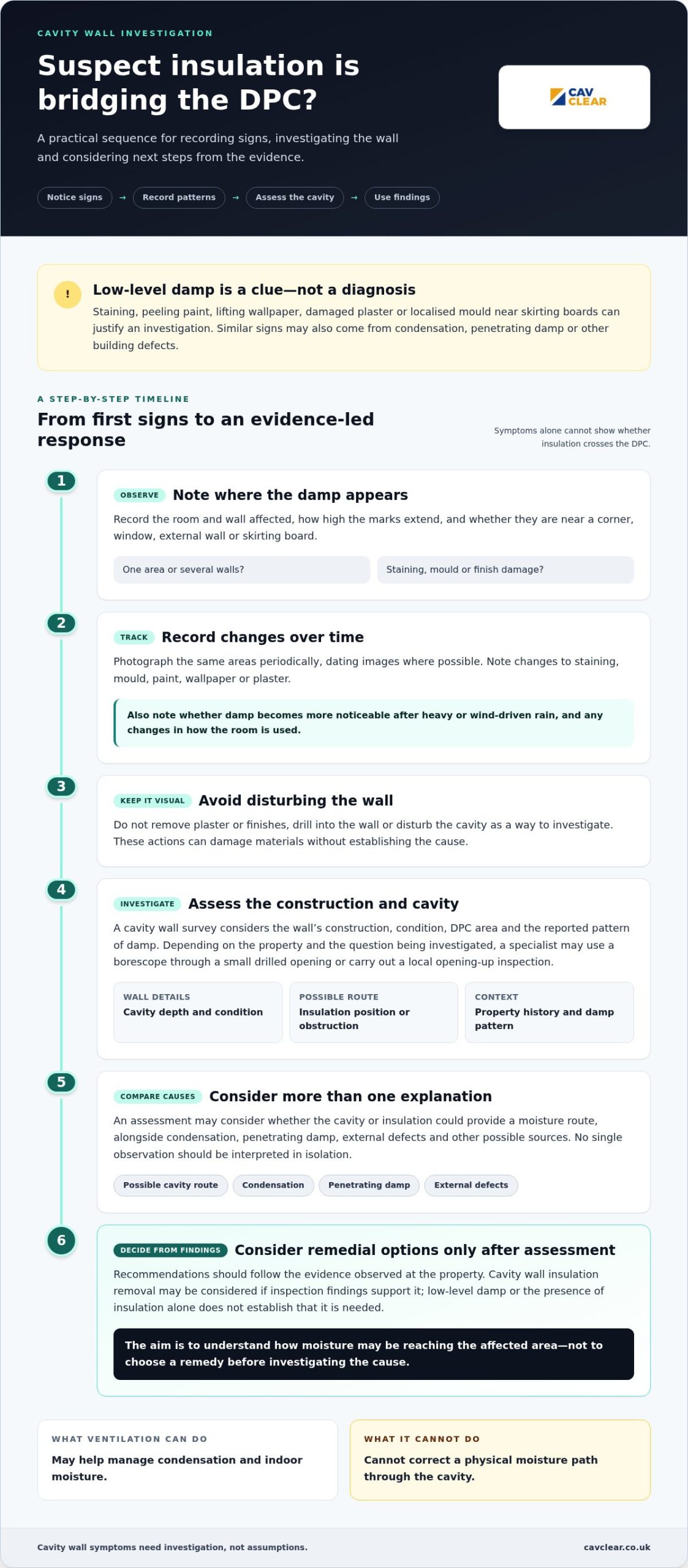
A simple sequence can help you move from concern to clearer evidence:
- Document the symptoms. Note where they appear, how high they extend and whether the affected area is changing. Keep dated photographs if useful.
- Record relevant property history. Note known work to the wall, changes to external ground levels, previous damp investigations or other alterations, if you have that information.
- Arrange a suitable inspection. A cavity wall survey can investigate suspected insulation or other cavity defects. The assessment should suit the property and the concern.
- Review the findings. Look for a clear distinction between what was observed, what it may indicate and what action is recommended.
What information helps an inspection?
Include when symptoms began and whether they change after heavy or wind-driven rain, during colder weather, or with household activities such as cooking and bathing. Record whether damp is confined to one wall or room, and note any known work to the masonry or cavity. These details provide useful context, but don’t identify the cause by themselves.
Share your observations without presenting them as a diagnosis. A timeline, photographs and property history can help the surveyor compare the reported pattern with the wall’s construction and condition. You don’t need to disturb plaster or open the cavity to prepare for an inspection.
How to understand survey findings and recommendations
Useful findings separate direct observations from conclusions. For example, a report should make clear what was seen during the inspection and explain how that evidence relates to a possible moisture path. Recommendations should connect to identified defects and state their purpose, rather than default to chemical DPC treatment or cavity wall insulation removal before the cause is established.
Responses may differ depending on the evidence and the wall’s condition. Further investigation may be appropriate, while remedial work should be considered only where findings support it. If you want background on the assessment process, this professional damp survey guide explains what a survey and report can help clarify. For context on how the wall is built, see this guide to what a wall cavity is.
If a cavity-wall defect is suspected, a CavClear cavity wall survey can investigate the construction and condition before remedial options are considered. This keeps the next step focused on evidence and the long-term condition of the property.
How can CavClear investigate suspected cavity insulation bridging?
Damp marks can raise a reasonable concern, but they can’t show on their own what is happening inside a wall. CavClear carries out cavity wall surveys nationwide across the UK to investigate suspected insulation problems and related wall defects. A survey considers the property’s details and observed condition, helping establish whether further cavity-wall investigation or remedial work is appropriate.
The signs cavity insulation is bridging DPC are a starting point for assessment, not a diagnosis. An inspection considers the wall construction and evidence available at the property, rather than assuming every insulated cavity is defective. Where findings point to a possible insulation-related problem, cavity wall insulation removal may be considered as a specialist remedial option. It isn’t an automatic recommendation.
What a cavity-wall-focused assessment can clarify
A cavity wall survey can help assess whether the suspected issue relates to insulation, another cavity defect or a different feature of the wall. Findings may indicate whether further investigation is useful and which parts of the construction need attention. Recommendations should reflect what the assessment identifies, rather than rely on symptoms alone.
Wall ties may also warrant assessment if there are relevant signs, such as cracking or movement in the masonry. These are separate considerations from possible insulation bridging, although both relate to the condition of a cavity wall. Where wall-tie concerns are relevant, a wall tie replacement guide explains more about that remedial work.
How remedial recommendations should follow the evidence
Survey findings should guide whether removal or another response is appropriate. A recommendation needs to relate to the defect observed and explain why the proposed next step fits the property. If the evidence doesn’t support cavity wall insulation removal, it shouldn’t be treated as the default solution. The right response depends on the inspection findings and the wall’s condition.
CavClear is TrustMark registered for cavity wall insulation removal and is a member of the Wall Tie Installers Federation. These credentials relate to the stated areas of work, but they don’t replace an assessment of an individual property. A clear, property-specific report gives homeowners a basis for understanding the findings and considering proportionate next steps.
If you’re concerned about possible insulation bridging, arrange a CavClear survey to investigate the wall and its condition. An inspection can clarify what the evidence supports and whether further cavity-wall work should be considered.
Move forward with a clear plan for your property
The phrase “signs cavity insulation is bridging DPC” describes a concern, not a confirmed fault. The useful next step is to base decisions on what an assessment finds in your home. This can help you focus on appropriate action, avoid unnecessary work and protect the property’s condition over time.
If damp has raised questions about your cavity wall, you don’t need to settle on a cause or remedy before seeking advice. A property-specific survey can provide a clearer basis for deciding what to do next. CavClear investigates cavity-wall concerns and carries out cavity wall insulation removal where findings support that response.
Take a measured next step. Arrange a cavity-wall survey with CavClear to investigate the condition of your wall and consider suitable options. Clear information can help you approach the next decision with confidence and focus on your home’s long-term condition.
Frequently Asked Questions
Can cavity wall insulation bridge a damp proof course?
Yes, cavity wall insulation may create a bridge in some circumstances if it contacts or crosses the DPC, but this isn’t inevitable. The wall’s construction, the DPC’s position and the condition of the cavity all affect how moisture might move. A damp patch alone can’t show whether insulation forms a bridge. A property-specific inspection should establish what is happening before remedial work is recommended.
What are the first signs that cavity wall insulation may be bridging the DPC?
Low-level damp, staining or damaged paint, plaster and wallpaper are observations worth recording, especially if they change after wet weather. They don’t confirm bridging. Condensation, penetrating damp and other defects can cause similar marks. Note which room and wall are affected, the height and spread of the damage, and whether it changes over time. If concerns persist, arrange a suitable cavity-wall assessment.
Can ventilation fix damp caused by cavity wall insulation bridging the DPC?
Ventilation can help manage indoor moisture from activities such as cooking, bathing and drying clothes, but it can’t repair a physical defect inside a cavity wall. It also can’t establish whether insulation is bridging the DPC. If damp continues despite managing indoor moisture, further investigation may be needed. The findings can help determine whether ventilation, cavity-wall remediation or another response is appropriate.
Does damp at the bottom of a wall prove that the DPC has failed?
No. Damp near the floor doesn’t, by itself, prove DPC failure, rising damp or insulation bridging. Condensation, rain penetration and other building defects may create overlapping symptoms. A survey considers the wall construction, cavity, DPC and surrounding conditions before reaching a property-specific conclusion. The position of external ground or nearby masonry defects, for example, may provide useful context that an internal mark alone cannot.
Does suspected DPC bridging always mean cavity wall insulation must be removed?
No. Cavity wall insulation removal isn’t automatic, and an insulated property doesn’t necessarily have a defect. An inspection needs to establish whether insulation is contributing to the moisture problem and whether removal is justified by the evidence. Recommendations may vary with the wall’s condition and the findings. A remedy should address the identified cause, not be selected simply because insulation is present.
How can a survey check for cavity wall insulation bridging?
A specialist assessment considers the property’s construction, reported symptoms and the condition of the cavity. Depending on access and the question being investigated, a borescope or local opening-up may be appropriate to examine materials inside the wall. The method varies with the property. Findings should make clear what was directly observed and what remains an interpretation, so recommendations aren’t based on assumptions alone.
Can cavity wall insulation bridging cause mould indoors?
Moisture associated with a cavity-wall defect may contribute to damp conditions where mould develops, but mould can have several causes, including condensation. Its presence doesn’t show that bridging is responsible in a particular home. Record the affected rooms and surfaces, and note whether mould appears around cold corners, windows or external walls. An assessment can consider possible cavity defects alongside other sources of moisture.
Recent Comments