

What should you improve first to move an F-rated home towards band D? The answer depends on the property’s construction and condition. An EPC gives recommendations, but it does not diagnose building defects. If you’re concerned about damp, cold rooms or existing cavity wall insulation, it’s understandable to ask about cavity wall insulation removal cost UK homeowners may face. First establish whether the insulation is contributing to a problem and whether removal is relevant.
An F rating can feel daunting, particularly when recommendations appear costly or difficult to prioritise. But a low rating alone does not show that a specific measure is necessary or that cavity wall insulation has failed. Property-specific evidence helps distinguish energy-efficiency improvements from issues that need specialist investigation.
This guide explains how to use an EPC as a starting point, compare potential improvements and decide when a cavity-wall survey may help. Cavity wall insulation removal is a remedial option, not a standard energy-efficiency measure, and should be considered only when inspection findings support it.
Key Takeaways
- Use an F-rated EPC to start a property-specific plan, not as proof that a particular upgrade is needed.
- Review the certificate, compare it with the home, prioritise suitable measures and reassess the evidence before deciding what to do next.
- Consider fabric, heating and control improvements in light of the property’s condition. Not every recommendation will suit every home.
- Assess cavity wall insulation removal cost in the context of survey findings. Removal is relevant only when inspection identifies a cavity-wall problem.
- Gather your EPC and note any comfort or moisture concerns. A cavity-wall survey can help clarify the condition of existing insulation where questions remain.
Why an EPC rating of F needs a property-specific improvement plan
An EPC gives a home an energy-efficiency band from A to G, based on an assessment of features that affect its assessed performance. A is the most efficient end of the scale and G the least, so an F rating indicates low assessed energy efficiency. It does not, by itself, identify a building defect or explain every cause of high energy use.
An EPC assesses a home’s energy performance. Evidence about the individual property should guide which improvements are suitable. The recommendations are a starting point, not a diagnosis of damp, failed insulation or another fault. Band D can be a goal to investigate, but no single measure guarantees that rating.
What does an F-rated EPC tell a homeowner?
The certificate records an energy assessment, not a complete building-condition survey. Find the current rating and recommendations, then note the features recorded by the assessor. You can compare the current rating with the potential rating shown, but treat that potential as an estimate, not a promised result.
A house may feel cold, use substantial energy or have an F rating, but these are not interchangeable indicators. Comfort is affected by how the home is heated and used; energy use reflects household behaviour and conditions; the EPC rating reflects the assessment. An EPC alone cannot establish whether moisture or cold rooms are linked to cavity wall insulation. For background on the certificate’s purpose and rating system, see Energy Performance Certificate (United Kingdom) on Wikipedia.
Why does moving from F to D depend on the property?
Construction, existing features and the evidence recorded during assessment all affect which recommendations make sense. A home with a loft, a particular wall construction and an older heating system presents different options from a property with different materials or upgrades already in place. The same recommendation will not necessarily suit both.
For example, one homeowner might see a recommendation relating to loft insulation, while another may need to investigate an existing cavity wall before deciding whether wall-related work is appropriate. This is an illustration, not a prediction of either home’s rating change. Consider each EPC recommendation alongside the property’s actual condition.
- Review the recorded rating, property details and recommendations.
- Compare those details with what you know about the home’s construction and existing features.
- Investigate concerns such as damp, cold rooms or an uncertain cavity-wall history before choosing related work.
For homeowners weighing up cavity wall insulation removal cost UK, the EPC band alone cannot show whether removal is relevant. A cavity-wall inspection can help establish whether a problem exists; removal is a specialist remedial option only when findings support it. Assess the recommendations and property evidence first, then decide on a suitable sequence of work.
How EPC recommendations translate into a practical improvement sequence
An EPC lists possible measures, but it does not decide which work should happen first. Compare the recommendations with the home’s actual features, then investigate uncertainties before committing to work.
How should you read the recommendations on an EPC?
Read each recommendation alongside the property details on the certificate. If it refers to a feature you do not recognise, such as a particular wall construction or heating control, note the question and check what is present. The EPC describes assessed features and suggests potential improvements. It is not a defect diagnosis: a recommendation about a wall does not confirm that it is damaged or its insulation has failed.
Before planning, gather relevant information. Note existing heating and insulation features, previous upgrades, and concerns such as persistent cold rooms, damp or visible changes to the brickwork. Keep observations separate from confirmed findings. This helps you decide whether a recommendation can be acted on directly or whether the underlying condition needs investigating first.
How can you prioritise possible improvements?
Compare recommendations by their relevance to your home, the available evidence and how they fit with other planned work. Keep fabric measures, such as those relating to walls or lofts, distinct from heating-system and control recommendations. A suggested control upgrade is different from investigating an external wall. Neither should automatically take priority without considering the property and the project.
Use this sequence to keep decisions grounded:
- Review the certificate: note the current rating, recorded features and each recommended measure.
- Inspect the home: compare the report with visible features and available records, and note anything that needs clarification.
- Prioritise suitable measures: consider relevance, evidence and project order. Treat possible dependencies as questions to resolve, not assumptions.
- Reassess the evidence: after work is completed, keep a record of what was done and review the property information before deciding whether a new assessment is appropriate.
Review the EPC, compare it with the home, prioritise evidence-based work, then reassess the completed improvements. Do not assign a specific band increase to an individual measure unless reliable evidence supports it. The eventual rating depends on the home and the evidence available for the assessment.
An EPC cannot establish whether cavity wall insulation removal is needed or determine the condition of the cavity. Nor can it determine the cost of removal. The property and the volume of material involved need to be assessed. If the certificate or your observations raise questions about existing insulation, a cavity wall insulation survey can help clarify the findings before you plan work.
Compare potential EPC improvements without assuming every measure fits
EPC recommendations can cover different parts of a home, but they are not a universal checklist. Include a measure in your plan only if it suits the property and the evidence supports it. Keep potential energy-efficiency improvements separate from remedial work: cavity wall insulation removal addresses an identified cavity-wall problem. It is not, by itself, an EPC improvement and does not guarantee a different rating.
Which types of recommendations might appear on an EPC?
Recommendations may relate broadly to the building fabric, heating system or controls. Check the certificate’s wording and recorded property features rather than assuming a recommendation applies. Use the categories below to organise questions, not as a list of work every home needs.
| Recommendation category | What it may relate to | What to consider |
|---|---|---|
| Fabric | Elements that form the home’s envelope, such as roof, floor, windows or walls. | Compare the recommendation with the construction and existing features recorded for your property. Wall-related advice does not confirm a cavity defect. |
| Heating | The home’s heating equipment and how it provides warmth. | Check whether the recommendation fits the system already in place and your intended improvement sequence. |
| Controls | How heating is managed, including the controls noted in the assessment. | Confirm what is installed and whether the suggested change addresses a relevant feature of your home. |
When could a cavity-wall issue affect the improvement plan?
Cold areas or damp patches can have more than one possible cause. Their presence alone does not prove that cavity wall insulation is defective, wet or contributing to a problem. If the EPC, property records or visible concerns raise questions about the cavity, a specialist cavity wall survey can help establish its condition. Base any remedial decision on the findings, not the F rating alone.
For background on how the space between a home’s external and internal walls is formed, see What is a Wall Cavity? The Complete Guide to UK Property Structure. Understanding the construction can help you frame useful questions, but it cannot replace an inspection of the actual wall.
If inspection identifies an insulation problem, cavity wall insulation removal may form part of the remedial plan. Its purpose is to address that condition, not to add an energy-efficiency measure or deliver a particular EPC band. A homeowner guide to cavity wall insulation removal can explain the service; the decision still depends on property-specific findings.
The same distinction matters when considering cavity wall insulation removal cost UK homeowners may encounter. An EPC cannot establish whether removal is required or determine the work involved. Use its recommendations to identify questions, then base decisions about the cavity on appropriate inspection evidence.
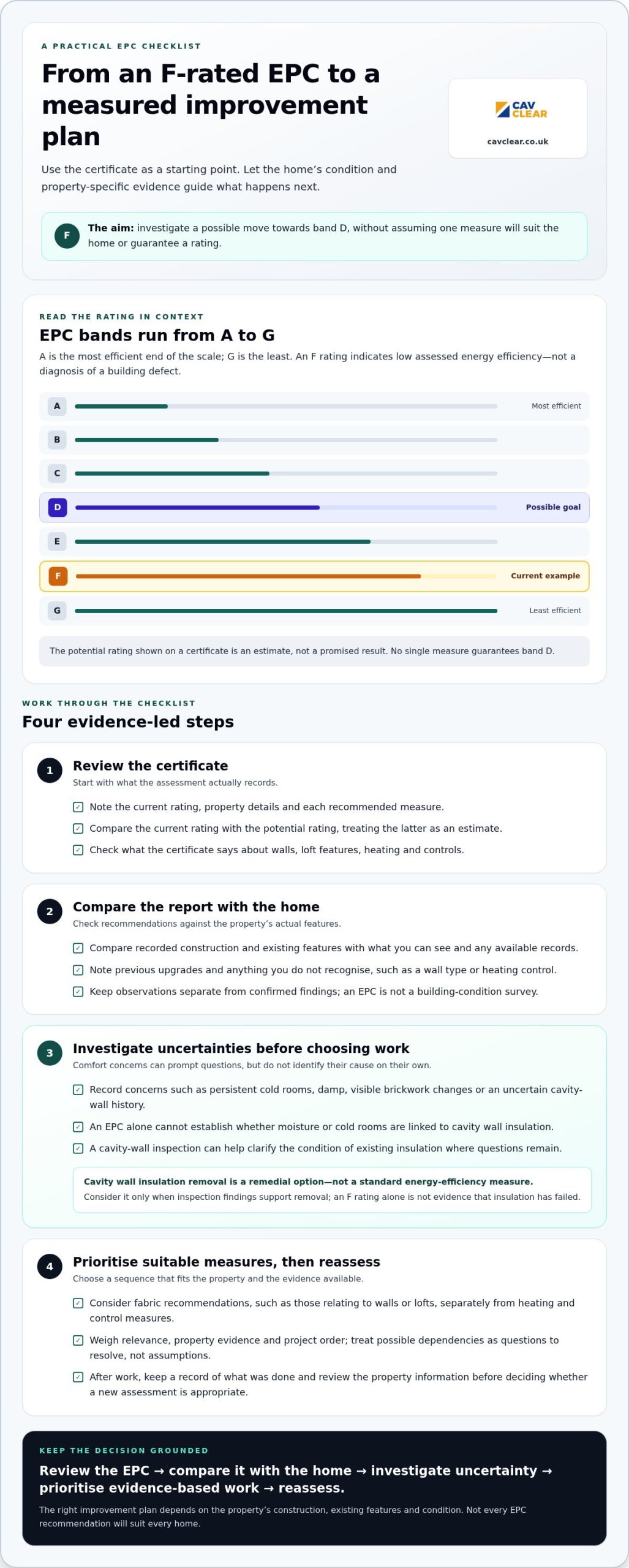
How to turn an F-rated EPC into a measured action plan
A useful action plan connects each proposed improvement to evidence about the property. That evidence may come from the EPC, your observations, previous records or a specialist inspection. Keeping these sources together helps separate confirmed information from assumptions and makes it easier to decide what needs attention first.
What information should homeowners gather first?
Start with the existing EPC. Note its date, current rating, recorded property features and recommendations. Then collect relevant documents, such as records of previous insulation or heating work and earlier property inspection reports. These can help explain why a feature appears on the certificate or whether the home has changed since it was assessed.
Record visible concerns clearly, but do not assign a cause. For example, note where a damp patch or area of cracking appears, when you first noticed it and whether it has changed. This is useful information, not a diagnosis. A symptom alone does not prove a cavity-wall defect or a specific insulation problem.
When is a cavity-wall survey a useful next step?
A specialist cavity-wall survey may help if the home’s records, visible concerns or existing reports raise questions about the cavity or its insulation. It can investigate the cavity and identify relevant defects. A report sets out findings and recommended remedial solutions, giving you a clearer basis for deciding what to do. It does not guarantee a particular EPC result.
If you want a plain-English explanation of cavity construction, the guide What is a Wall Cavity? The Complete Guide to UK Property Structure can help you understand the basic structure. That background is useful, but it cannot establish the condition of a particular property.
Use this checklist to shape your next steps:
- Gather: Find the EPC and note its date, rating and recommendations.
- Record: Write down relevant property details, previous work and observable concerns.
- Investigate: Arrange specialist inspection if the cavity’s condition is uncertain or concerns need assessment.
- Prioritise: Match each proposed improvement to the evidence and the needs of the home.
- Keep records: Retain survey reports, recommendations and details of completed work for any later assessment.
Keeping records creates a clear trail from the original recommendation to the work considered or completed. It can also help an assessor review relevant property information later. The rating may change after improvements, but no particular band can be promised in advance.
If cavity-wall concerns need investigating, CavClear provides specialist cavity-wall surveys and reports with findings and remedial recommendations. Any consideration of cavity wall insulation removal cost should follow evidence about the property, not the EPC band alone. Arrange a cavity-wall survey to clarify the condition before deciding whether remedial work belongs in your plan.
When CavClear cavity wall insulation removal may fit an EPC improvement journey
An F-rated EPC alone is not a reason to remove cavity wall insulation. Removal is considered when inspection identifies a relevant problem with the insulation or another cavity-wall defect that needs remedial attention. This keeps the decision focused on the home’s condition rather than treating removal as a standard energy-efficiency measure.
CavClear is a nationwide UK specialist in cavity wall insulation removal and cavity-wall remedial work. The company is TrustMark registered for cavity wall insulation removal and a member of the Wall Tie Installers Federation. These credentials do not promise a change in EPC rating or a particular outcome.
What can a CavClear survey help establish?
A cavity-wall survey can investigate existing insulation and check for related defects where property concerns or records raise questions. The inspection findings help establish whether remedial attention may be appropriate. Damp patches, cold rooms or cracking alone do not confirm the cause. The report sets out findings and recommended remedial solutions to help inform next steps.
The right response depends on the individual property and inspection findings. An insulated cavity may not have a defect, and removal is not automatically necessary. Where findings support it, cavity wall insulation removal can address an identified problem. Where they do not, an F rating by itself is not evidence that this work is needed.
How does remedial work relate to the wider EPC plan?
Remedial work can form part of responsible property maintenance, but its purpose differs from measures intended to improve assessed energy performance. If inspection identifies an issue, resolving it may be important for the property’s condition. It does not, on its own, guarantee an EPC improvement or a move to band D.
Keep the wider plan anchored to the EPC recommendations and evidence about the home. A practical record can include:
- the relevant EPC recommendation and the feature it relates to;
- survey findings about the cavity or related defects;
- any remedial work completed and its supporting documentation;
- other suitable improvements to consider separately.
This helps keep remedial decisions distinct from energy-efficiency measures and gives you a clear record to refer to if the home is assessed again. Consider cavity wall insulation removal cost in the context of the property and inspection findings, not as something that can be inferred from its EPC band.
If you have concerns about existing cavity-wall insulation or related defects, you can arrange a CavClear cavity-wall survey. The inspection will investigate the property and provide findings with recommended remedial solutions. A survey is a measured first step, not a commitment to removal or a particular EPC outcome.
Make your next step evidence-led
Improving an EPC rating is a process, not a single upgrade to select from a list. Keep your records together and treat each decision as part of a longer-term plan for the property. If a recommendation or visible concern raises questions about the cavity, establish what is happening there before deciding whether remedial work belongs in your plans.
This also puts questions about cavity wall insulation removal cost UK homeowners may have in the right context. The cost depends on the property and the work required, including its scale and the volume of material to be removed. The EPC can help frame the wider improvement journey, while a cavity-wall survey can provide evidence about the cavity itself.
CavClear specialises in cavity-wall surveys and remedial work. If you need to investigate a concern, book a cavity-wall survey with CavClear to clarify the findings and inform your next decision.
Frequently Asked Questions
Can a home move from EPC band F to band D without major work?
Possibly, but it depends on the home’s starting point and what the assessment records. Some properties may have suitable smaller improvements to consider, while others may need several measures or investigation of underlying issues. Review the potential rating and recommendations, then compare them with the home’s actual features. Do not assume that one small change will be enough to reach band D.
Does cavity wall insulation removal improve an EPC rating?
Not automatically. Removal is remedial work for an identified cavity-wall insulation problem, rather than an energy-efficiency upgrade in itself. Its effect on an EPC depends on the home and the information available to the assessor after the work. Keep the survey findings and completion records. A later assessment can consider the property’s condition and recorded features, but the rating outcome cannot be guaranteed.
How can I tell whether an EPC recommendation applies to my property?
Compare the recommendation with the features and construction details recorded on your certificate. If advice refers to a particular wall type or heating control, check whether that feature is actually present. Review records of previous upgrades too, since the home may have changed since the assessment. If details do not match or remain unclear, treat the recommendation as a prompt for further investigation, not proof that work is required.
Can damp or cold walls affect an EPC assessment?
Damp or cold areas may prompt questions about the home, but they do not establish a cause or determine an EPC band. An energy assessment and a building-condition investigation answer different questions. Note where the concern appears and share relevant information during an assessment or inspection. If the wall or cavity may be involved, specialist investigation can help establish whether a cavity-wall issue is present before remedial work is planned.
What evidence should I keep after completing home improvements?
Keep dated invoices, descriptions of completed work, product or system information where available, and relevant survey or inspection reports. If work addresses a cavity-wall concern, retain the findings that informed the decision alongside the completion documentation. Store these with the EPC and note which recommendation the work relates to. This gives an assessor useful background later, although records alone do not determine a new rating.
Does an EPC rating show how much energy a household actually uses?
No. An EPC rating describes assessed energy performance, not a household’s metered consumption. Actual use can vary with factors such as the number of occupants, preferred room temperatures, time spent at home and heating habits. Two households in similar properties may therefore use different amounts of energy. Use bills or meter readings to understand actual consumption, and the EPC to review the property features included in its assessment.
Should I arrange a cavity-wall survey before planning remedial work?
If you have concerns about existing cavity insulation, damp, cold areas or cracking, a survey can help clarify whether the cavity or a related defect needs attention. Symptoms alone do not diagnose the cause. CavClear’s survey report sets out inspection findings and recommended remedial solutions for the individual property. This evidence can inform decisions about cavity wall insulation removal cost UK homeowners may need to consider, without treating the EPC band as a diagnosis.
Recent Comments