
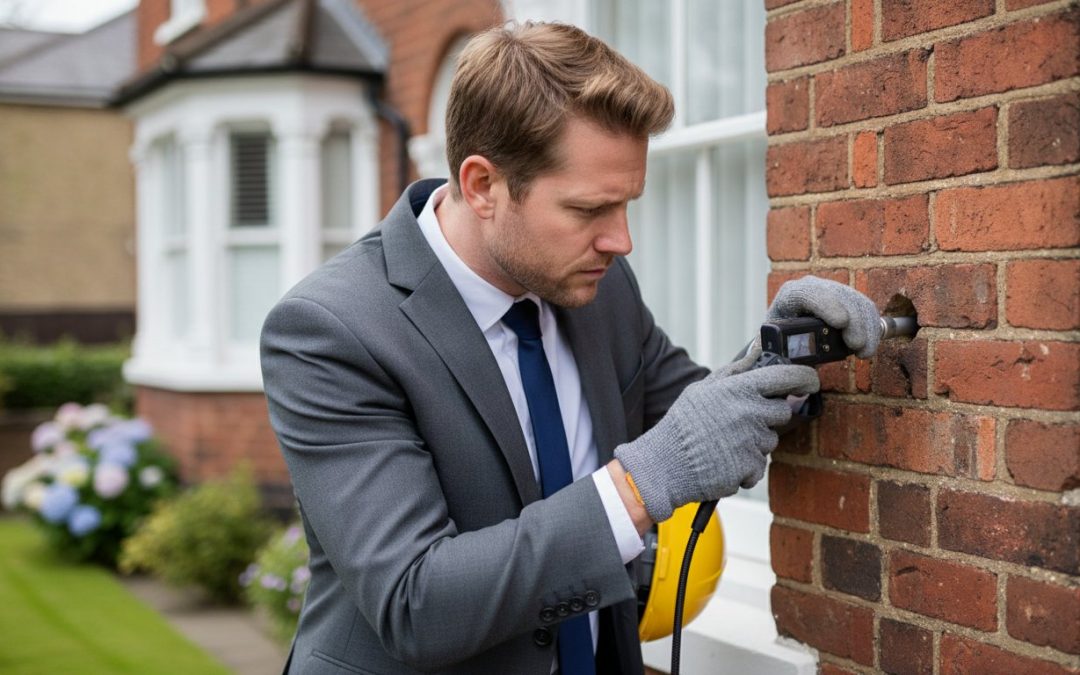
A “expert” visual inspection often proves to be the most expensive mistake a homeowner can make when structural integrity is on the line. While it’s tempting to avoid an upfront wall tie survey cost, relying on a cursory glance rather than a technical diagnostic can lead to misdiagnosed faults or unnecessary remedial work. You likely feel the pressure of a looming mortgage deadline or the anxiety of seeing horizontal cracks appearing in your masonry. It is a stressful experience to worry that your property’s outer leaf might be unstable, especially when lenders require professional certainty before they will approve a loan.
This guide explains exactly what a specialist inspection entails and how a fixed-price survey provides the documented evidence needed to satisfy structural engineers and banks. You’ll discover the specific technical inclusions of a professional report, such as borescope investigations and metal detection used to map tie density. We will outline how a methodical assessment using BRE Digest 401 standards protects your long-term asset health and prevents the collapse of the external leaf. By the end of this article, you will understand how to secure a reliable quote and gain total clarity on the structural state of your home.
Key Takeaways
- Learn why a technical diagnostic is essential for accurately assessing the metal ties connecting your property’s masonry leaves.
- Understand how property size, height, and accessibility requirements directly influence the total wall tie survey cost for your home.
- Discover what a professional report contains, including borescope photographic evidence and detailed maps to satisfy mortgage lenders.
- Identify why early detection of horizontal cracking or bulging masonry through a survey prevents the high expense of full-scale wall stabilization.
- Explore the methodical, non-disruptive process used by specialist technicians to provide a clear path toward structural restoration.
Understanding the Value of a Professional Wall Tie Survey
A professional wall tie survey acts as a vital diagnostic tool for any property owner concerned about the structural condition of their home. This technical inspection evaluates the hidden metal components that secure your external masonry to the internal structure. While many homeowners initially focus on the wall tie survey cost, the fee is a safeguard for your property’s long-term asset health. The investment covers the time of an accredited technician and the deployment of specialist equipment, such as high-resolution borescopes and deep-field metal detectors.
In the UK, a formal survey report is often a mandatory requirement for mortgage lenders and structural insurers. Banks need documented evidence that a building is stable before they will release funds for a purchase or remortgage. A simple visual check from the pavement cannot provide this level of assurance. Instead, a comprehensive invasive inspection involves drilling small, non-disruptive holes into the mortar joints to physically view the condition of the ties within the cavity. This process provides a definitive answer regarding the safety of the building envelope.
The Role of Wall Ties in Structural Integrity
To understand the necessity of this inspection, you must first understand what cavity wall ties are and why they fail. These metal connectors are essential for preventing the outer leaf of masonry from bowing, bulging, or collapsing under wind loads. Properties built before 1981 are particularly vulnerable. During this era, galvanised steel ties were standard, and many have now reached the end of their natural life expectancy. Corrosion causes these ties to expand; this physical change can force apart mortar joints and weaken the entire structure.
Why “no-obligation” Surveys Often Cost More in the Long Run
It’s common to encounter offers for “expert” inspections, but these often carry a hidden conflict of interest. Commission-based surveyors may feel pressured to find faults where none exist to justify a sales target. By paying a transparent wall tie survey cost, you ensure that the technician’s priority is data accuracy rather than securing a repair contract. A paid, independent survey provides an unbiased remedial action plan. This methodical approach identifies whether you need a full replacement or if localized repairs are sufficient, which protects your finances from unnecessary construction work.
Technical Factors That Determine Wall Tie Survey Costs
Determining a wall tie survey cost requires an assessment of the technical complexity of the property. A larger detached home naturally requires a higher volume of inspection points compared to a terraced house. Each elevation must be sampled to ensure a representative view of the building’s structural health. Height also plays a significant role. Multi-storey properties often necessitate specialist high-reach equipment or ladders, which adds to the logistical requirements of the visit. These factors influence the time required to complete a thorough diagnostic of the building envelope.
The presence of existing cavity wall insulation can further complicate the process. Borescope cameras require a clear line of sight to examine the tie’s condition. When a cavity is filled, the technician must work more slowly to navigate the material, which increases the total time spent on-site. To maintain professional surveyor standards, a specific number of borescope holes are required to provide a statistically significant sample of the wall’s condition. This rigorous approach ensures that no localized failure is missed during the diagnostic phase.
Specialist Equipment and Methodology
Technicians use high-resolution borescopes to visually inspect ties inside the cavity. This method is non-disruptive, as it avoids the need to remove bricks. Before drilling pilot holes, deep-field metal detectors locate the exact position of the existing ties. This precision prevents unnecessary damage to the masonry. Modern equipment is also calibrated to detect varying stages of ferrous oxide, allowing the specialist to identify early-stage rust before it leads to structural failure. This level of detail is why a professional wall tie survey cost is a sound investment in property safety.
Property Scale and Inspection Density
A typical three-bedroom semi-detached home follows a standard inspection pattern. However, for commercial properties or blocks of flats, the scale increases significantly. Technicians look for a minimum density of 2.5 ties per square meter to meet current structural requirements. Gable ends often require a higher density of inspection points. These areas are subject to higher wind loads and thermal movement, making them more susceptible to tie failure. Ensuring a thorough cavity wall tie inspection is the only way to confirm the safety of these high-stress zones. A methodical mapping of the property ensures every potential weakness is documented.
What Is Included in a Specialist Wall Tie Report?
A specialist wall tie report serves as a definitive structural record for your property. When you invest in a professional wall tie survey cost, you aren’t just paying for a site visit; you’re purchasing a technical specification that satisfies building insurers and mortgage lenders. This document provides a clear, evidence-based assessment of the building’s stability, accounting for every elevation of the structure. It specifically addresses how property height and accessibility requirements, such as the need for specialist ladders or high-reach equipment, scale the complexity of the inspection.
A high-quality report must include several critical data points to be considered valid for professional use:
- A comprehensive property map: This diagram illustrates exactly where the technician performed borescope inspections and metal detection, ensuring no elevation was overlooked.
- Photographic evidence: High-resolution images taken from inside the cavity show the physical state of the ties, providing visual proof of any pitting, thinning, or expansion.
- Corrosion classification: Technicians categorize the findings based on established industry scales to provide an objective view of the risk level.
- Remedial specifications: If faults are identified, the report details the specific type and density of replacement ties required to restore structural integrity.
Corrosion Grading and Risk Assessment
Technicians use a 1 to 4 scale to classify the severity of tie degradation. Stage 1 represents ties in good condition with minimal zinc loss, while Stage 4 indicates total failure where the tie has snapped or expanded significantly. Some ties exhibit “hidden” failure; they appear intact to the naked eye but have lost the tensile strength needed to hold the masonry leaves together. The corrosion grading system is the industry standard for determining repair urgency and prioritizing structural safety.
Remedial Action Plans and Budgeting
The findings in your report act as a precise blueprint for any necessary wall tie replacement. Because the report identifies the exact locations of failed components and notes where specialist access is required, it allows for accurate, fixed-price quotes rather than vague estimates. This transparency prevents budget overruns during the repair phase. You should retain this document as a vital part of your property’s history. It provides essential disclosure for future buyers and serves as proof of maintenance for structural surveyors during the sales process, ensuring that the wall tie survey cost contributes to the long-term value of your asset.

Comparing Survey Costs vs. The Price of Neglect
The financial risks associated with ignoring signs of wall tie failure far outweigh the initial wall tie survey cost. When property owners overlook horizontal cracking or bulging masonry, they allow a technical fault to evolve into a structural emergency. Early detection through a specialist diagnostic allows for targeted, localized repairs. Without this evidence-based intervention, a building may eventually require full-scale wall stabilization, which is a significantly more invasive and expensive undertaking. A professional report ensures that you address the root cause before the building’s integrity is compromised.
Structural health directly influences property valuation and the ease of future resale. Lenders often refuse to release funds for properties showing even minor signs of masonry movement. If you’re dealing with cavity wall insulation problems, the risk of tie corrosion increases due to moisture retention within the cavity. A proactive survey identifies these risks early, allowing you to manage your asset effectively and maintain its market value. Protecting the building skeleton is a vital investment in the property’s future.
Structural Risks of Untreated Corrosion
Rusting wall ties undergo a physical phenomenon known as expansion. As ferrous oxide builds up, the tie increases in volume, forcing mortar joints apart and creating visible horizontal cracks. This process doesn’t just damage the aesthetics; it physically separates the two leaves of the wall. In severe cases, particularly during high winds, the outer leaf can collapse entirely because it’s no longer secured to the internal structure. This structural movement also creates pathways for water ingress, leading to internal dampness and further degradation of the building envelope.
Protecting Your Property Investment
Proactive maintenance is always more cost-effective than emergency structural intervention. A specialist survey provides the peace of mind that comes with a clean bill of health for your property’s skeleton. It transforms structural anxiety into a manageable maintenance plan. By understanding the exact state of your ties, you can schedule repairs on your own terms rather than reacting to a sudden failure. You should view the wall tie survey cost as a strategic tool for long-term asset management. To secure your property’s stability, you can book a professional wall tie survey today.
Booking Your Professional Wall Tie Survey
The process of securing your property begins with a structured booking sequence designed to provide maximum technical clarity. Initially, you should contact a specialist contractor to obtain a fixed-price wall tie survey cost quote. This ensures financial transparency from the outset and avoids the ambiguity of variable estimates. Once you’ve agreed on the fee, a surveyor schedules a site visit to perform a non-disruptive cavity inspection. They use high-resolution borescopes to view the internal condition of the masonry without removing bricks. Following the site visit, you’ll receive a detailed technical report containing photographic evidence within a set timeframe. Finally, a structural expert will review these findings with you to determine the most efficient path toward restoration; for projects in London or Hertfordshire affecting shared boundaries, Christopher Anthony Surveyors offers fixed-fee party wall surveying to ensure your work remains compliant.
Why Choose an Independent Specialist?
Selecting a firm that focuses specifically on wall tie surveys and structural preservation is essential for an unbiased assessment. Independent specialists prioritize data accuracy over sales targets, ensuring that your report reflects the true state of your building’s skeleton. It’s vital to ensure your surveyor employs the latest diagnostic technology to meet 2026 industry standards. As a nationwide provider, we offer consistent reporting standards across the entire United Kingdom. This ensures that every homeowner receives the same high level of professional rigor and technical expertise, regardless of their location.
Next Steps for Property Owners
To prepare for your survey, ensure the technician has clear access to all external elevations of the property. This includes moving garden furniture or clearing debris away from the base of the walls. During the visit, you can maximize the value of the inspection by asking the surveyor about the specific density of the ties they’ve located or the presence of any debris within the cavity. These details help you understand the long-term health and efficiency of your building envelope. If you’re ready to secure your home’s structural future and resolve any concerns regarding the wall tie survey cost, you can book a professional wall tie survey with CavClear today. This methodical approach ensures your property remains a safe, stable investment for the future.
Protecting Your Property’s Long-Term Stability
Maintaining the structural integrity of your home requires more than a visual assessment. It’s about securing the building’s skeleton against the invisible threats of corrosion and expansion. A professional wall tie survey cost represents a vital investment in your home’s future market value and structural safety. By choosing a technical diagnostic over a cursory glance, you gain the documented evidence needed to satisfy lenders and protect your asset from the high costs of emergency repairs.
Our accredited technicians provide nationwide structural inspections, delivering detailed technical reports that include photographic borescope evidence. We operate with transparency, offering fixed-price survey fees that ensure you receive expert advice without hidden sales agendas. This methodical approach identifies faults before they become catastrophic failures. Secure your property’s future with a professional Wall Tie Survey from CavClear. You can restore comfort and certainty to your home by choosing a specialist committed to structural excellence.
Frequently Asked Questions
How much does a wall tie survey cost on average in 2026?
The total wall tie survey cost depends on several technical variables, including the property’s size, height, and the number of elevations that require inspection. Larger detached homes or multi-storey buildings often require more inspection points and specialist access equipment, which influences the final fee. Technicians provide a fixed-price quote after assessing these factors to ensure you have a transparent understanding of the investment required for a structural diagnostic.
Will a wall tie survey damage my bricks or mortar?
A specialist survey is a non-disruptive process that preserves the aesthetic and structural integrity of your masonry. Technicians drill small pilot holes, typically between 10mm and 12mm, directly into the mortar joints rather than the brickwork itself. Once the borescope inspection is complete, these holes are sealed with a matching mortar compound. This ensures the building envelope remains watertight and the intervention is virtually invisible to the naked eye.
How long does a specialist wall tie inspection take to complete?
A thorough inspection for a standard three-bedroom semi-detached home usually takes between two and three hours to complete. This timeframe allows the technician to locate existing ties using metal detection and perform multiple borescope checks across all elevations. Larger properties or those with complex access requirements may take longer. The goal is to collect a statistically significant sample of data to provide a definitive assessment of the building’s structural health.
Do I need a wall tie survey for a mortgage application?
Mortgage lenders frequently request a specialist wall tie report if a general RICS survey identifies signs of masonry movement or horizontal cracking. Banks require documented evidence that the property is structurally sound before they will release funds for a purchase or remortgage. Providing a technical report from an accredited specialist satisfies these lending criteria and prevents structural concerns from holding up your property transaction or causing a valuation down-valuation.
What are the main signs that I need to book a wall tie survey?
Visible horizontal cracks in the mortar joints and bulging or bowing of the external brickwork are the primary indicators that your wall ties may be failing. You might also notice that window frames are pulling away from the masonry or that the roofline appears uneven. If your property was built before 1981, it’s likely that the original galvanised ties have reached the end of their lifespan and require a professional diagnostic to ensure continued safety.
Can a wall tie survey be combined with a damp or insulation inspection?
Technicians can often assess the condition of your cavity wall insulation while performing a structural survey. Using a borescope allows the surveyor to see if insulation material is wet, slumped, or contributing to the corrosion of the metal ties. This combined approach is highly efficient for homeowners concerned about dampness. It provides a comprehensive overview of the building’s environmental performance and structural integrity during a single, non-disruptive site visit.
Is a wall tie survey valid for a specific number of years?
While a report doesn’t have a legal expiration date, most lenders and insurers consider a survey valid for approximately three to five years. Structural conditions can change over time, particularly if the property is exposed to severe weather or if moisture levels within the cavity increase. Maintaining a recent record of your wall tie health is a proactive way to manage your property as a long-term asset and ensure future resale value.
What happens if the survey identifies that my wall ties have failed?
If the survey identifies tie failure, the report will include a detailed remedial specification for wall tie replacement. This involves installing new stainless steel ties to restore the connection between the inner and outer leaves of the masonry. The specialist will also recommend the best method for isolating the old, corroded ties to prevent further expansion damage. This clear path toward a resolution ensures your home returns to a state of total structural stability.
Recent Comments