
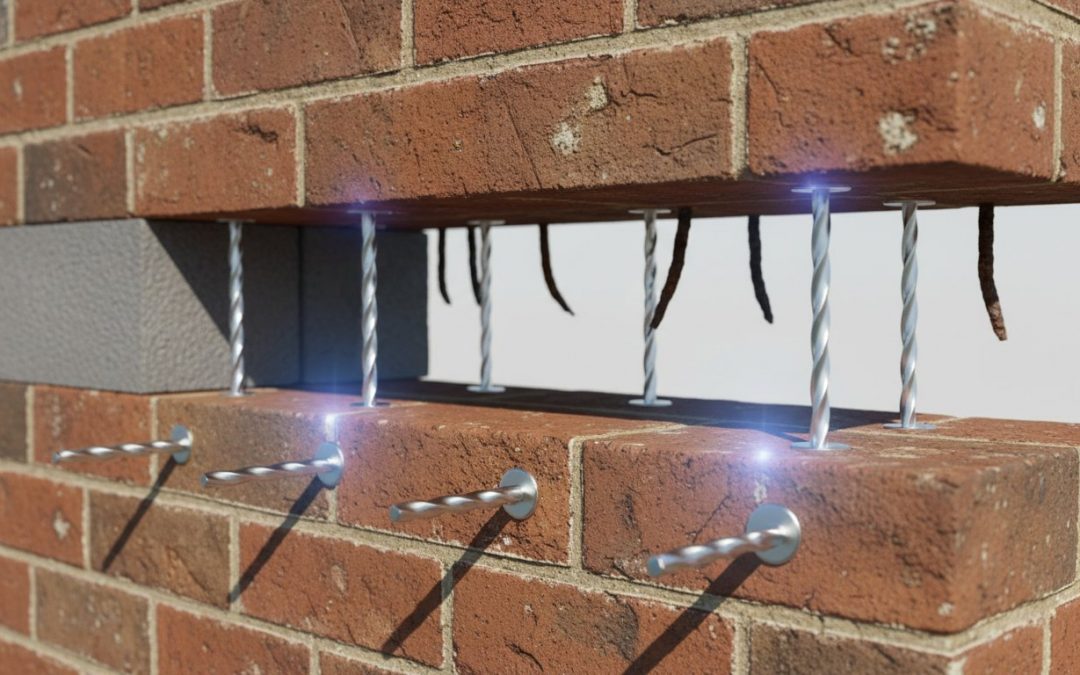
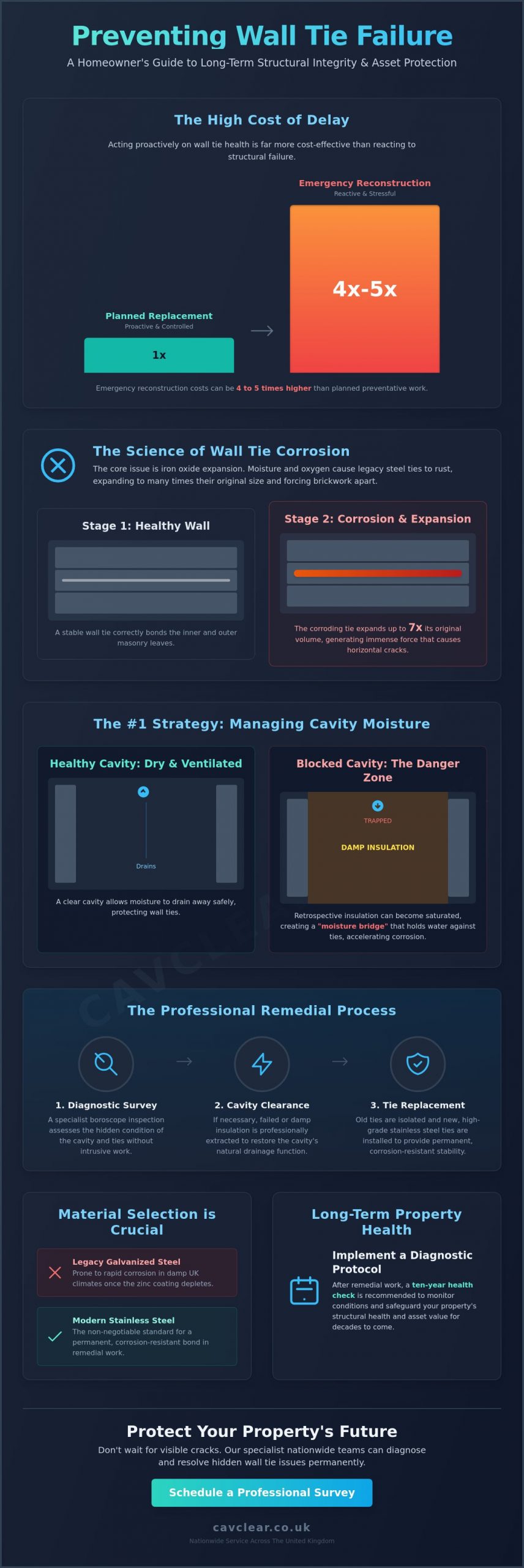
The cost of emergency wall reconstruction can be four to five times higher than a planned wall tie replacement. When masonry begins to show signs of distress, the structural integrity of your home is already at risk. It’s a stressful situation for any property owner, especially when the underlying cause of the failure is hidden deep within the cavity. You need the confidence that once a repair is made, it’s permanent and your asset is protected.
We understand the anxiety that comes with structural faults, but preventing future wall tie failure is entirely possible with the right technical approach. This specialist guide outlines professional strategies to safeguard your property and ensure long-term structural health. You’ll learn how to manage moisture levels and why using high-grade stainless steel is a non-negotiable standard for permanent stability. We will examine the diagnostic process, from detailed cavity wall surveys to the vital role of cavity wall insulation extraction in protecting your masonry for decades to come.
Key Takeaways
- Learn the specific chemical trigger that causes iron oxide expansion and forces brickwork apart, leading to visible structural distress.
- Discover why maintaining a dry cavity through professional extraction is the only reliable method for preventing future wall tie failure.
- Identify the specific grades of stainless steel required to provide a permanent, corrosion-resistant bond in modern remedial work.
- Understand how to implement a long-term diagnostic protocol and ten-year health checks to safeguard your property’s asset value.
- See how a specialized, single-workflow approach minimizes disruption to your home while restoring full structural stability.
The Science of Wall Tie Corrosion: Why Prevention Starts with Understanding
Wall tie failure represents the critical loss of the structural connection between the inner and outer leaves of a masonry building. These Cavity Wall Ties are essential for stabilizing the external facade against wind loads and structural stresses. When they fail, the two leaves act independently, which leads to bulging, leaning, or even total collapse. Understanding the chemical process behind this decay is the first step in preventing future wall tie failure and protecting your property’s long-term asset health.
The primary culprit is iron oxide expansion. When legacy galvanized steel ties encounter moisture and oxygen, they begin to corrode. This chemical reaction creates rust, which occupies approximately seven times the volume of the original steel. This is not a passive process. The expansion generates immense physical force within the mortar bed. This pressure eventually overcomes the weight of the masonry above it, forcing the brickwork apart and causing visible horizontal cracks. Many homes built across the United Kingdom between the 1920s and early 1980s utilized mild steel ties with a thin zinc coating. In our damp climate, these coatings eventually sacrifice themselves, leaving the core steel vulnerable to rapid oxidation.
Common Triggers for Accelerated Corrosion
Environmental factors significantly dictate the speed of decay. Properties located in coastal regions face a higher risk due to salt-laden air, which acts as a catalyst for the oxidation process. Porous mortar also plays a major role. If the mortar is soft or sandy, it absorbs rainwater like a sponge, holding moisture directly against the metal tie. Additionally, original construction defects, such as ties installed with a downward slope toward the inner leaf, can create localized stress points that accelerate failure in specific areas of the elevation.
Visual Indicators vs. Hidden Decay
Identifying the problem early is difficult because corrosion is often a hidden process. Horizontal cracking along the mortar joints typically only appears in the final stages of failure when the expansion force is at its peak. Before this happens, the ties may have already lost their structural capacity. We use specialist boroscope inspections to look inside the cavity, allowing us to identify early-stage oxidation before the brickwork moves. It’s also vital to distinguish between different types of movement. While horizontal bed-joint cracking is a classic sign of tie expansion, “stepped” cracking often indicates foundation settlement or different structural issues. A professional nationwide wall tie survey is the only way to confirm the true state of your property’s structural health.
Managing Cavity Moisture: The #1 Strategy for Preventing Tie Failure
A cavity wall is not just an empty space. It is a functional component of the building envelope designed to manage moisture. Rainwater naturally penetrates the outer leaf of masonry. The cavity ensures this water drains away before it reaches the inner leaf. When this space is clear, air circulates and keeps the environment dry. If the cavity becomes blocked or filled with non-breathable materials, this drainage cycle stops. Moisture remains trapped against the metal components, which is the leading cause of corrosion. Managing this environment is the most effective method for preventing future wall tie failure.
The presence of water is the catalyst for the chemical decay of steel. Without moisture, the oxidation process cannot occur. Therefore, the long-term health of your property depends on maintaining a dry, ventilated cavity. This is why a simple tie replacement is rarely enough; the environmental conditions that caused the initial failure must be rectified to ensure permanent stability.
The Problem with Retrospective Cavity Insulation
Many properties across the United Kingdom suffer from the unintended consequences of retrospective insulation. While intended to improve thermal performance, these materials often act as a reservoir for dampness. When insulation becomes “wet” due to wind-driven rain or condensation, it holds moisture directly against the wall ties for extended periods. This constant contact accelerates the oxidation process. We strictly advise against retrospective insulation because it creates “moisture bridges” that bypass the cavity’s natural defenses. Professional cavity wall insulation extraction is often a non-negotiable step in restoring structural health. Removing this defective material allows the masonry to breathe and ensures the new ties remain in a dry, safe environment.
Restoring Natural Ventilation
Ventilation is just as important as drainage. Weep holes are small openings in the outer leaf that allow moisture to escape and air to enter. If these are blocked by debris or mortar “snots” from the original construction, humidity levels within the cavity will rise. High humidity creates an electrolytic environment where corrosion can thrive, even without direct water contact. Our methodology focuses on ensuring the cavity is completely clear of obstructions. This prevents the formation of damp pockets that could compromise remedial work. A professional cavity wall survey can identify these hidden blockages before they cause irreversible damage to your property’s stability. By restoring the cavity to its original design intent, you provide the best possible protection for your investment.
Material Selection and Remedial Standards: Choosing for the Future
Selecting the correct materials is the final and most critical step in preventing future wall tie failure. While managing moisture addresses the cause of decay, the physical replacement components must withstand the internal environment of the cavity for the rest of the building’s life. Modern engineering has moved beyond the sacrificial coatings of the past. We now rely on high-grade alloys that offer permanent resistance to oxidation, even in the most challenging UK climates. This shift in standards ensures that once a structural repair is performed, it doesn’t need to be revisited by the next generation of property owners.
For most residential properties, Grade 304 stainless steel is the industry standard. It provides excellent corrosion resistance in standard environments. However, for properties located within five miles of the coast or in heavily industrialized areas, Grade 316 marine-grade stainless steel is essential. This alloy contains molybdenum, which provides superior protection against chloride-induced pitting. Choosing the wrong grade in a salt-laden environment can lead to premature degradation, undermining the entire remedial investment. Our nationwide specialists always specify the material grade based on the specific environmental stressors of your location.
Technical Specifications of Remedial Ties
Helical ties have become the preferred choice for modern remedial work. These ties feature a screw-like profile that is driven into a small pilot hole, creating a high-strength mechanical connection without the need for expansive resins or large-scale masonry removal. This methodology is clean, non-disruptive, and provides immediate structural load-bearing capacity. A vital feature of any remedial tie is the central drip profile. This ensures that any condensation forming on the tie drops into the center of the cavity rather than tracking across to the inner leaf. Additionally, matching the tie length to the specific cavity width is vital. A tie that is too short won’t achieve the necessary pull-out resistance, while one that is too long can interfere with the external facade’s finish.
While these mechanical fixings are the standard for masonry, other engineering sectors rely on specialized chemical locking technologies to ensure that threaded components remain secure under stress; you can learn more about Bondrite Adhesives Ltd and their expert technical guides for high-performance sealants and bonding agents.
Isolation and Neutralisation
Simply installing new ties isn’t enough to protect a property’s long-term health. The “old tie” problem remains a significant threat. If corroded mild steel ties are left active within the mortar bed, they will continue to expand as they oxidize. This ongoing expansion can cause fresh cracking in the masonry, even after new ties are in place. We utilize professional isolation techniques, such as fitting foam sleeves or physically cropping the external ends of the old ties. This process “neutralizes” the old components, allowing them to expand harmlessly without putting pressure on the brickwork. When combined with correct tie spacing—typically 2.5 ties per square meter—this approach ensures maximum wind-load resistance and total structural peace of mind.
Ongoing Property Health: Monitoring and Diagnostic Protocols
Structural stability is not a static state. It is an ongoing investment in your property’s future. We recommend that property owners establish a 10-year property health check cycle for all structural components. This proactive approach ensures that small environmental changes don’t lead to large-scale failures. Preventing future wall tie failure requires more than just high-quality materials; it demands a commitment to ongoing diagnostic monitoring. By identifying subtle shifts in masonry or moisture levels early, you can avoid the high costs associated with emergency structural repairs.
Thermal imaging technology provides a non-invasive method for detecting hidden moisture pockets within the cavity. These cameras identify cold spots on the external leaf, which often signify damp insulation or debris that has settled at the base of the wall. When combined with a professional damp survey, these diagnostic tools allow us to map the internal environment of your walls with high precision. This data is vital for maintaining the dry conditions necessary for long-term tie health.
Proactive Masonry Maintenance
The external leaf of your property is the first line of defense against the elements. Defective pointing is a primary entry point for wind-driven rain. When mortar joints crack or erode, they channel water directly into the cavity, saturating the wall ties and accelerating oxidation. We advise homeowners to inspect their pointing regularly, especially around window and door apertures. Using breathable masonry water repellents can also protect the outer leaf without trapping moisture inside the brickwork. If you notice new cracks appearing in these high-stress areas, it’s a clear signal that the structural environment is changing and requires professional attention.
The Importance of Accredited Surveys
Technical documentation is a vital asset for any property owner. When you decide to sell or remortgage your home, lenders will often require proof of structural integrity. A visual check from the ground is never sufficient for these purposes. Comprehensive wall tie replacement documentation provides a detailed record of the materials used and the methodology applied. These reports secure your asset value by proving that the property has been maintained to modern technical standards. If you are concerned about the current state of your masonry, you can book a nationwide cavity wall survey to receive a definitive diagnostic report and restore your peace of mind.
Specialist Remedial Solutions: Restoring and Protecting Your Property
A permanent fix requires more than just a new set of ties; it requires a complete restoration of the cavity environment. We’ve developed a streamlined methodology that integrates comprehensive diagnostic surveys, insulation extraction, and precision tie replacement into a single, efficient workflow. This holistic approach is the definitive standard for preventing future wall tie failure and ensuring the long-term asset health of your property. By addressing the root causes of decay alongside the structural symptoms, we provide a solution that’s both technically superior and deeply reassuring for the property owner.
Our methodology prioritizes the use of non-disruptive technologies. Modern helical tie installation allows us to restore structural integrity with minimal impact on your building’s facade. There’s no need for large-scale masonry removal or messy resin injections. Instead, we use high-grade stainless steel components that provide an immediate mechanical bond. This focus on precision and high-performance materials reflects our commitment to rectifying poor workmanship and delivering results that last for the life of the building.
A Methodical Approach to Repair
Every project follows a strict three-step protocol to ensure nothing is overlooked. We begin with a detailed boroscope and moisture investigation to map the exact condition of the existing ties and the cavity environment. Once the diagnostics are complete, we move to Step 2: clearing the cavity. This involves professional cavity wall insulation extraction to remove the moisture reservoirs that fuel corrosion. Finally, we perform the precision installation of remedial helical ties. This step includes the vital process of isolating old hardware to prevent any further expansion damage to your masonry.
Nationwide Expertise You Can Trust
Structural integrity is a specialized field that requires a no-nonsense, technical approach. We operate as a specialist nationwide contractor, providing consistent, high-level standards across the entire United Kingdom. We don’t believe in quick fixes or superficial repairs. Our focus is on the correct methodology and the use of industry-standard materials that meet the 2024 International Building Code requirements. Choosing a dedicated specialist ensures that your property’s structural health is managed by professionals who understand the complexities of masonry design and moisture management. Secure your property’s future with a specialist wall tie survey today to begin the process of permanent restoration.
Restoring Permanent Stability to Your Home
Protecting your property from structural decay requires a technical understanding of the cavity environment. You’ve learned that preventing future wall tie failure depends on the removal of moisture-trapping debris and the installation of high-grade stainless steel components. These strategies ensure that your masonry remains stable and secure for the long term. By prioritizing a clear, ventilated cavity and the professional isolation of old hardware, you transform a reactive repair into a vital investment in your home’s asset health.
Our accredited specialist technicians provide nationwide UK service coverage, delivering expert solutions designed for permanent results. We utilize clean, non-disruptive remedial methodologies that restore structural integrity without causing unnecessary stress to the property owner. Don’t wait for horizontal cracking or bulging walls to compromise your safety. Book a specialist wall tie survey with CavClear today to receive a definitive diagnostic report and a clear path toward a permanent fix. Your property deserves the protection of a specialist who values precision and long-term structural health.
Frequently Asked Questions
How long do modern stainless steel wall ties actually last?
Modern stainless steel ties are expected to last over 50 years. This durability is due to the alloy’s inherent resistance to oxidation, which is a significant improvement over the 15 to 20-year lifespan typical of older mild steel ties used before 1981. Using Grade 304 or 316 stainless steel provides a permanent solution for structural stability and long-term asset health.
Can I prevent wall tie failure without replacing the existing ties?
No, you cannot reverse the oxidation of existing mild steel ties once the chemical process has begun. While managing moisture is the best strategy for preventing future wall tie failure in new or remedial ties, existing corroded ties will continue to expand and damage masonry. Professional replacement and isolation are the only ways to stop active structural movement and protect the building facade.
Does cavity wall insulation always cause wall ties to rust?
Cavity insulation does not cause rust by itself, but it acts as a reservoir for moisture if it becomes saturated. This trapped dampness creates a constant electrolytic environment that accelerates the corrosion of metal ties. We recommend cavity wall insulation extraction to ensure the cavity remains dry and the ties are protected from the premature decay caused by moisture bridges.
How do I know if my wall ties have already started to fail?
Visible signs include horizontal cracking in mortar joints or bulging brickwork, but these indicators often appear only in the late stages of failure. A professional wall tie survey using a boroscope is the only reliable method to detect early-stage oxidation. This diagnostic investigation allows us to see the condition of the ties inside the cavity before significant structural movement occurs.
Is wall tie failure covered by standard building insurance?
Most standard building insurance policies don’t cover wall tie failure, as it is typically classified as gradual deterioration or a maintenance issue. Lenders and insurers expect property owners to maintain the structural integrity of the building through regular upkeep. Investing in a specialist survey ensures you can identify and rectify faults before they lead to more costly damage or total masonry collapse.
What is the most effective type of remedial wall tie for a 1930s property?
Grade 304 stainless steel helical ties are the most effective solution for 1930s properties. These ties provide a high-strength mechanical connection that is non-disruptive to the character of older masonry. They are driven into small pilot holes to create a secure bond between the leaves without the need for expansive resins or large-scale masonry removal.
How often should I have my cavity walls inspected for tie health?
We recommend a structural health check every 10 years for properties built with mild steel ties. Regular inspections allow for the early detection of moisture ingress or localized corrosion points. This proactive monitoring is a vital part of protecting your property’s value and ensuring the masonry remains safe and stable throughout its life.
What happens if I ignore the signs of wall tie failure?
Ignoring the signs can lead to the total collapse of the external masonry leaf during high winds or structural shifts. The cost of emergency reconstruction is significantly higher than planned replacement work. Structural instability can also make a property unmortgageable and reduce its market value. Early intervention with a specialist survey is the most cost-effective way to secure your investment.
Recent Comments