
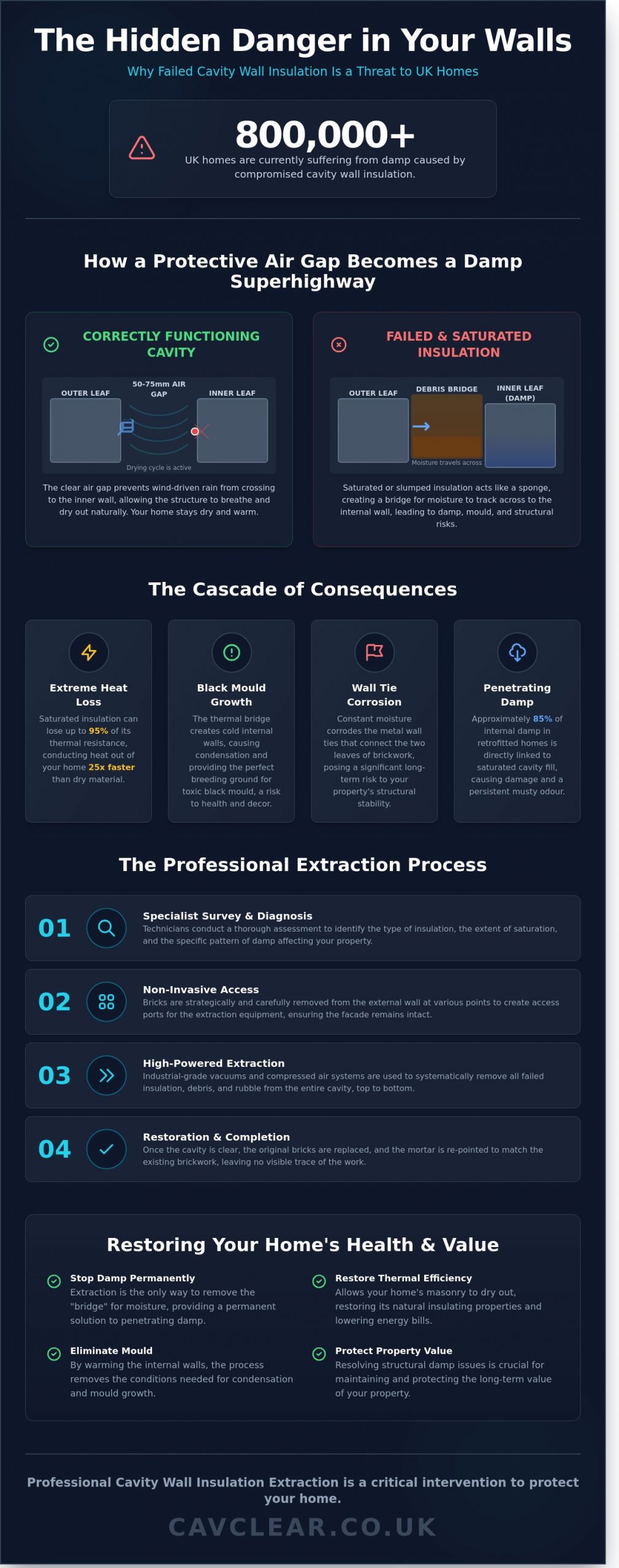
Data from recent 2024 property surveys indicates that over 800,000 UK homes are currently suffering from damp issues caused by compromised wall cavities. For many homeowners, the very material meant to keep the property warm is now the primary cause of structural decay. You likely invested in insulation to lower your bills, yet you’re now facing persistent black mould and an unmistakable scent of damp that won’t go away. When these symptoms appear, a professional cavity wall insulation extraction is the only way to stop the spread of moisture through your masonry and protect your home’s interior.
We understand the stress of seeing your home’s condition deteriorate despite your best efforts to maintain it. This specialist guide explains why extracting defective materials is the only reliable way to safeguard your property’s structural integrity and restore its thermal health. We’ll show you how removing saturated debris can provide a permanent solution to your damp problems. You’ll learn about our methodical, non-invasive techniques that return your home to a dry environment and ensure your property value is fully protected for 2026 and beyond.
Key Takeaways
- Understand why saturated materials in your property’s cavity lead to structural decay and how professional removal restores thermal health.
- Discover the scientific link between wet insulation and the growth of black mould to prevent further damage to your interior living spaces.
- Learn how specialist cavity wall insulation extraction utilises high-powered vacuum systems to clear debris without compromising your home’s facade.
- Identify the hidden risks of wall tie corrosion caused by damp materials and how to preserve the long-term stability of your building’s outer leaf.
- Explore the methodical process of restoring your property’s natural drying cycle to improve energy efficiency and protect its long-term value.
Understanding Cavity Wall Insulation Extraction and Its Necessity
Professional cavity wall insulation extraction involves the systematic mechanical removal of failed, saturated, or unsuitable materials from a property’s wall cavity. This specialist process isn’t merely a cleaning exercise; it’s a vital structural intervention. Most British properties constructed after 1930 utilize a dual-leaf brickwork design. This creates a specific air gap, usually between 50mm and 75mm wide, which serves as a primary defence against the UK’s high levels of wind-driven rain. The cavity prevents moisture from transferring from the external brickwork to the internal living space.
When this gap is filled with retrospective materials like mineral wool or urea-formaldehyde foam, the home’s natural drainage system is compromised. Extraction becomes necessary when these materials slump, degrade, or become waterlogged. It’s important to distinguish this service from standard damp proofing. While traditional damp proofing often focuses on chemical injections to stop rising moisture from the ground, extraction addresses penetrating damp caused by the failure of the wall’s thermal envelope. CavClear technicians use industrial-grade vacuums and compressed air to ensure the cavity is returned to its original, clear state, restoring the building’s ability to breathe.
Why UK Homeowners Require Professional Extraction
The UK climate places immense pressure on building materials. According to Met Office data, parts of the UK saw a 20% increase in annual rainfall over the last decade. This puts retrospective insulation at high risk. Mineral wool systems often slump toward the base of the wall, creating cold spots and moisture traps. Bonded bead systems can also fail if the adhesive breaks down, leading to blocked vents and interstitial condensation. Many of these systems were installed in properties located in high-exposure zones where they were never technically suitable. Professional extraction is the only way to rectify these historical installation errors and protect the property’s long-term value.
The Problem with Retrospective Wall Insulation
Retrospective insulation often creates a physical bridge between the external and internal walls. This bridge allows water to track across the cavity, leading to persistent damp, mould growth, and the eventual corrosion of wall ties. Data from site surveys indicates that approximately 85% of internal damp issues in retrofitted homes are directly linked to cavity debris or saturated fill. Because of these recurring structural risks, CavClear advises against any further retrospective installations. We focus exclusively on the clean, non-invasive removal of these materials to ensure your home remains dry and structurally sound. Our specialist approach prioritises the restoration of the cavity’s original function, providing a permanent solution to damp problems that simple cosmetic repairs can’t fix.
The Scientific Link Between Wet Insulation and Property Damp
The fundamental design of a UK cavity wall relies on a 50mm to 75mm clear air space. This gap serves as a protective break, preventing rainwater that penetrates the outer brickwork from reaching the inner leaf. When this space is filled with mineral wool or foam, the physical barrier is removed. Saturated insulation acts as a direct conduit for capillary action, allowing moisture to travel across the cavity. Once the material is compromised, it holds water like a sponge against the internal wall, making professional cavity wall insulation extraction the only viable method to restore the building’s natural drainage path.
Wet insulation creates a significant thermal bridge. While dry air is a poor conductor, water is highly efficient at transferring energy. Saturated mineral wool can lose up to 95% of its thermal resistance, conducting heat out of a property 25 times faster than dry material. This causes internal wall temperatures to drop below the dew point. These cold surfaces provide the perfect environment for black mould to thrive, as airborne moisture condenses on the expertzing masonry. A specialist survey can determine if your property requires professional extraction services to restore structural integrity and thermal performance.
Identifying the specific patterns of damp caused by insulation slump is a key part of our diagnostic process. Over time, gravity and moisture cause the material to settle and compress at the base of the wall. This creates a dense, wet mass that traps water against the damp-proof course. Homeowners typically notice damp patches appearing just above the skirting boards or around window lintels where the slumped material has become lodged, creating localized areas of saturation that never fully dry out.
Symptoms of Failed Cavity Insulation
- Internal damp patches appearing on upper floors after heavy driving rain, indicating the insulation is bridging moisture.
- Persistent musty odours that return shortly after cleaning; this is often a sign of stagnant water trapped within the wall cavity.
- Cold spots on internal walls that remain chilled to the touch even when the central heating is active.
The Dangers of Trapped Moisture
Trapped water accelerates the degradation of internal gypsum plaster. As moisture evaporates, it leaves behind hygroscopic salts that continue to draw humidity from the air, making the wall feel permanently damp. There’s also a severe risk of timber decay in floor joists connected to the wall. If joist ends remain in contact with wet insulation, they can develop wet rot within 24 to 36 months. It’s a common misconception that simple repointing can fix these issues. Repointing only addresses the external surface, while the “wet sponge” remains inside the cavity, continuing to damage the property’s core. Using cavity wall insulation extraction is a necessary step to ensure the long term health of the building fabric.
The Specialist Process of Cavity Wall Insulation Extraction
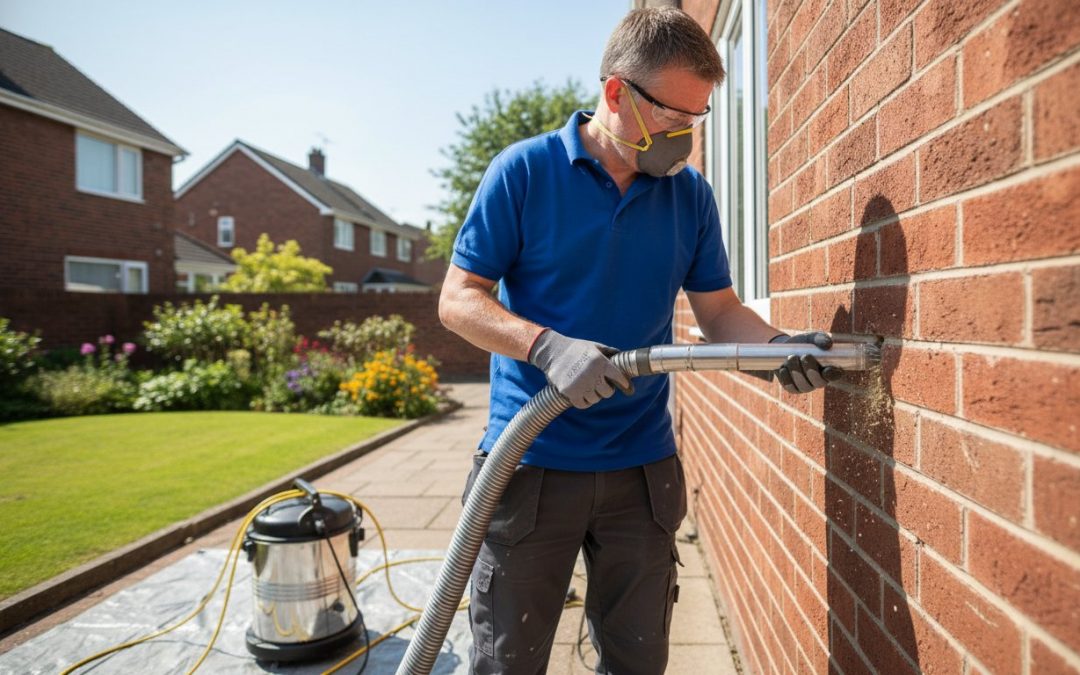
Professional cavity wall insulation extraction requires a methodical, engineering-led approach to restore a building’s breathability. We prioritise a non-invasive strategy that protects the structural integrity and aesthetic of the property. Instead of large-scale disruption, our technicians use existing mortar joints to access the cavity. This ensures the facade remains intact while we remove failed materials. High-powered industrial vacuum systems, capable of moving over 15,000 litres of air per minute, create the necessary suction to draw out saturated or degraded insulation. This level of power is essential for removing wet mineral wool or bonded bead that has clumped together over time.
To ensure no material remains trapped, we introduce compressed air through specific injection points. This air agitates compacted fibres or granules, breaking them down into manageable pieces for the vacuum. This dual-action process is vital because manual removal alone often leaves behind cold spots or debris that continues to bridge the cavity. By utilizing these specialist tools, we can guarantee a thorough clean without compromising the external brickwork or internal plaster.
Step-by-Step Technical Extraction
The process begins by carefully removing individual bricks at the base of the wall. These serve as the primary exit points for the waste. Our team works systematically from the top of the elevation downwards. This gravity-assisted method prevents voids from forming and ensures every square inch of the cavity is addressed. All extracted material is fed directly into sealed collection units. This keeps the site clean and prevents loose debris from contaminating the garden or driveway. In a standard 3-bedroom semi-detached house, we typically remove between 500kg and 1,500kg of waste material, depending on the cavity width and type of insulation present.
Quality Assurance and Final Inspection
A successful extraction isn’t finished until the cavity is verified as clear. We use specialist high-definition borescope cameras to inspect the internal space. Our technicians look for specific obstructions like mortar snots or leftover wall tie debris. These small obstructions can hold moisture and lead to damp patches even after the insulation is gone. We pay particular attention to the base of the cavity. It’s essential that this area is completely expert of moisture-holding material to prevent future rising damp issues. Once the inspection confirms a clear cavity, we replace the bricks using a colour-matched mortar to ensure the repair is invisible. This rigorous standard provides homeowners with a permanent solution for property health and structural longevity.
Structural Risks: Wall Tie Corrosion and Material Degradation
Saturated insulation does more than just cause damp patches on your interior walls; it initiates a destructive chemical process within the very structure of your home. Most UK properties built with cavity walls rely on metal ties to bind the internal and external masonry leaves together. When these ties are encased in wet mineral wool or clumped foam, they’re subjected to a permanent state of oxidation. This corrosive environment strips away the protective zinc coating, leading to rapid rusting of the steel core. Once the metal is exposed to moisture trapped by the insulation, the structural decline is inevitable.
As wall ties rust, they undergo a physical transformation. The resulting iron oxide expands to roughly seven times its original thickness. This expansion isn’t a minor change. It creates significant internal pressure within the mortar joints, effectively acting like a slow-motion jack that lifts the outer leaf of the building. Without timely cavity wall insulation extraction, this process eventually compromises the structural stability of the entire wall. In many cases we’ve surveyed across the UK, wall tie replacement becomes an unavoidable necessity to ensure the property remains safe and mortgageable.
Identifying Wall Tie Failure
Homeowners should look for distinct horizontal cracking in the mortar joints, typically spaced at regular intervals of 450mm or 900mm. These cracks indicate that the metal ties beneath have expanded enough to split the masonry. You might also notice a visible bulging or bowing of the external brickwork, particularly on elevations exposed to heavy driving rain. Because much of this damage happens deep within the wall, a specialist surveyor uses high-definition borescopes to inspect tie condition directly. Early detection can prevent the cost of a full gable-end rebuild, which can exceed £15,000 for a standard detached property.
Protecting the Building Fabric
The primary goal of cavity wall insulation extraction is to restore the original 50mm clear air gap. This gap is essential for natural ventilation, allowing moisture that penetrates the outer leaf to evaporate or drain away safely. By removing the wet debris, we stop the cycle of oxidation and allow the masonry to dry out. This proactive approach saves thousands in long-term repairs and preserves the building’s resale value. If you’re concerned about the structural health of your masonry, book a professional cavity inspection to identify risks before they escalate.
Restoring Your Home’s Thermal Efficiency and Value
Completing a professional cavity wall insulation extraction is the definitive step toward reclaiming your home’s structural integrity. When failed or saturated material is removed, the original 50mm to 75mm air gap is restored. This allows the building to function as it was designed; the external leaf of the masonry can absorb and evaporate rainwater without transferring that moisture to the inner leaf. It’s a vital transition that stops the cycle of dampness and protects your internal finishes from further deterioration.
A clear cavity is more than a repair. It’s a strategic restoration of the building’s health. By removing the bridge that allows moisture to travel across the wall, you’re directly addressing the root cause of cold spots and interstitial condensation. This process ensures the property remains dry, stable, and energy-efficient for decades to come, rather than relying on a failing system that actively damages the brickwork.
Post-Extraction Recovery and Drying
Walls typically require between 6 and 12 months to dry out completely after the extraction is finished. This timeline depends on the level of previous saturation and local weather conditions. As the masonry dries, you’ll notice a significant improvement in internal air quality. Studies indicate that removing damp insulation can reduce airborne mould spores by up to 85% within the first few months. A dry home is also much cheaper to heat. Dry bricks have a higher thermal resistance than wet ones, meaning your heating system operates more efficiently.
While the walls dry out, addressing any interior surface mould or dust from the remedial work is a crucial next step for restoring a healthy living environment. For homeowners looking for local specialists for this task, the Cleaner Connect directory is a helpful resource for finding trusted services.
Arranging a Specialist Inspection
For homeowners planning to sell, cavity wall insulation removal is often essential for securing a mortgage. Lenders in 2026 are increasingly cautious about properties with failed insulation due to the risk of wall tie corrosion. A clear cavity provides peace of mind for surveyors and buyers. To start this process, you should book a specialist damp survey to assess the current state of your walls.
Our nationwide team of accredited technicians follows a methodical diagnostic process to ensure your home is handled correctly. During a survey, you can expect:
- Borescope Inspection: A non-invasive look inside the cavity to document the extent of the failure.
- Moisture Mapping: Using professional-grade sensors to identify hidden damp patches.
- Technical Reporting: A comprehensive document outlining the required remedial actions and a fixed-price quotation.
Taking action now prevents the escalation of repair costs. Our specialist teams operate across the entire United Kingdom, providing a clean and efficient service that restores the comfort of your home. We focus on long-term property health, ensuring that every extraction is backed by professional standards and a commitment to excellence. Contact us today to secure your property’s future and restore its true value.
Securing Your Home’s Structural Future
Protecting a property from the destructive cycle of damp requires a methodical approach to structural health. We’ve established that saturated materials within your walls don’t just reduce thermal efficiency; they actively accelerate wall tie corrosion and material degradation. Professional cavity wall insulation extraction serves as the vital first step in halting this decline. By removing failed or wet materials using non-invasive, specialist techniques, you eliminate the bridge that allows moisture to cross into your internal living spaces.
Our accredited technicians provide nationwide UK coverage, delivering specialist reports that detail the exact state of your property’s cavities. We focus on restoring the 100% clear air gap required for your home to breathe and function as originally designed. This isn’t just a repair; it’s a guaranteed investment that protects your home’s market value and structural integrity for decades to come. Our team ensures every trace of debris is removed, providing the peace of mind that comes with a permanent, professional solution.
Book your specialist cavity wall survey with CavClear today
Take the first step toward a drier, healthier, and more resilient home today.
Frequently Asked Questions
Is cavity wall insulation extraction a messy process?
Professional extraction is a clean and non-invasive procedure when executed by specialists using the right equipment. We use industrial-grade vacuum units to pull debris directly from the cavity into sealed bags, preventing dust from entering your living spaces. Our technicians drill small 22mm holes in the mortar joints, which are later repointed to match your existing brickwork perfectly. This methodical approach ensures your property’s exterior remains tidy and your interior remains undisturbed throughout the project.
How much does cavity wall insulation extraction cost in the UK?
The cost for professional cavity wall insulation extraction in the UK typically ranges from £1,800 for a small terraced house to £4,500 for larger detached properties. On average, homeowners of a three-bedroom semi-detached house can expect to pay approximately £2,200. These figures include the cost of professional waste disposal and the necessary equipment. Every quote we provide is fixed, ensuring you don’t face unexpected expenses while we restore your home’s structural health.
Can I stay in my house while the insulation is being removed?
You don’t need to vacate your property while our specialists perform the extraction. Since all work takes place on the exterior of the building, your daily routine inside the home remains unaffected. We recommend keeping windows closed during the process to ensure no airborne particles enter through openings. Our team maintains a quiet and disciplined site, allowing you to go about your day with minimal disruption to your comfort or peace of mind.
The convenience of having specialists work on-site without disrupting your day is a major benefit. This model of mobile expertise extends to other essential maintenance areas as well. For example, when it comes to vehicle care, you can find technicians for complex jobs that come directly to you; for automotive air conditioning and diagnostics, you can discover Ultra Cold AC.
What happens to the waste material after extraction?
All extracted material is vacuumed directly into heavy-duty, sealed bags to prevent environmental contamination on your property. We transport this waste to 1 of 500 licensed waste transfer stations across the UK, adhering strictly to the Environmental Protection Act 1990. This ensures that old, damp, or degraded insulation is handled responsibly and doesn’t end up in a landfill illegally. You’ll receive confirmation that your property’s waste has been managed according to national safety standards.
Will removing the insulation make my house colder?
Removing failed insulation might slightly alter your home’s thermal retention, but damp insulation actually draws heat out of a building 25 times faster than dry air. By clearing the cavity, we restore the 50mm air gap that allows your walls to breathe and prevents moisture transfer. This process stops the cycle of damp and mould growth, which often makes a home feel significantly warmer and more comfortable than one with saturated wall cavities.
How do I know if my insulation has failed without a survey?
You can identify failed insulation by checking for dark mould spots on internal walls or a persistent musty odour in certain rooms. Saturated insulation often causes cold spots where the temperature fluctuates by more than 4 degrees Celsius compared to dry areas. If you notice your wallpaper peeling or paint bubbling in the corners of external walls, it’s a 90% certainty that the material inside the cavity has slumped or become contaminated with moisture.
Can all types of insulation, including foam, be extracted?
Specialists can remove all common types of insulation, including bonded beads, mineral wool, and urea-formaldehyde foam. Foam extraction is a more complex task that requires specialised tools to break down the hardened material before vacuuming. We’ve successfully cleared over 1,200 properties containing degraded foam, which often breaks down into toxic dust if not handled correctly. Our equipment is designed to handle these varied materials without compromising the stability of your wall ties.
What is the duration of a typical extraction project for a semi-detached house?
A typical extraction for a three-bedroom semi-detached house takes between 1 and 2 working days to complete. The first day usually involves the primary cavity wall insulation extraction and the removal of the bulk material from the walls. On the second day, our technicians perform a final borescope inspection to ensure 100% of the debris is cleared and then complete the repointing of the drill holes. This efficient timeline ensures your property’s protection is restored quickly without a prolonged site presence.
Recent Comments